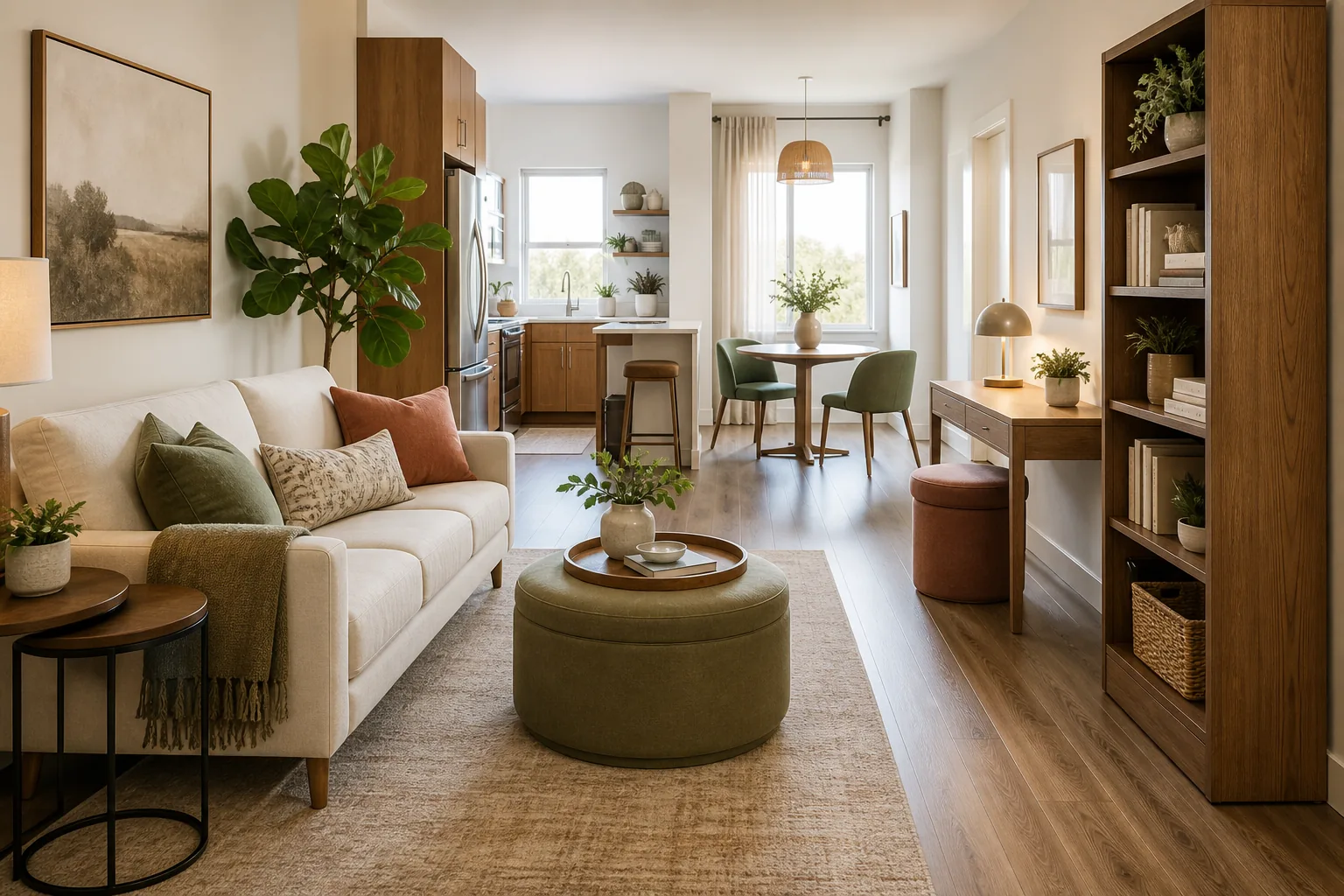
20 Small Space Furniture Ideas That Make Every Room Work Harder
Small space furniture ideas are not about filling a compact home with miniature versions of everything. The smartest pieces earn their footprint: they store, fold, extend, move, divide, or perform more than one job while still making the room look intentional.
This visual guide includes 20 practical furniture ideas for apartments, studios, rentals, dorm rooms, and small family homes. Use it as a menu rather than a shopping list. Start with the room’s biggest pressure point—seating, sleeping, dining, working, or storage—then choose the one piece that solves it without crowding the layout.
The small-space rule that changes everything
Measure the furniture in both its closed and fully open positions. Mark the footprint on the floor with removable painter’s tape, then check door swings, drawers, walking routes, outlets, vents, windows, and the space needed to use the piece comfortably.
Before buying anything, photograph the room and sketch the traffic path. If your space also needs a warmer overall look, pair these furniture solutions with our cozy apartment aesthetic ideas.
1. Choose an Apartment-Size Sofa With Visible Legs
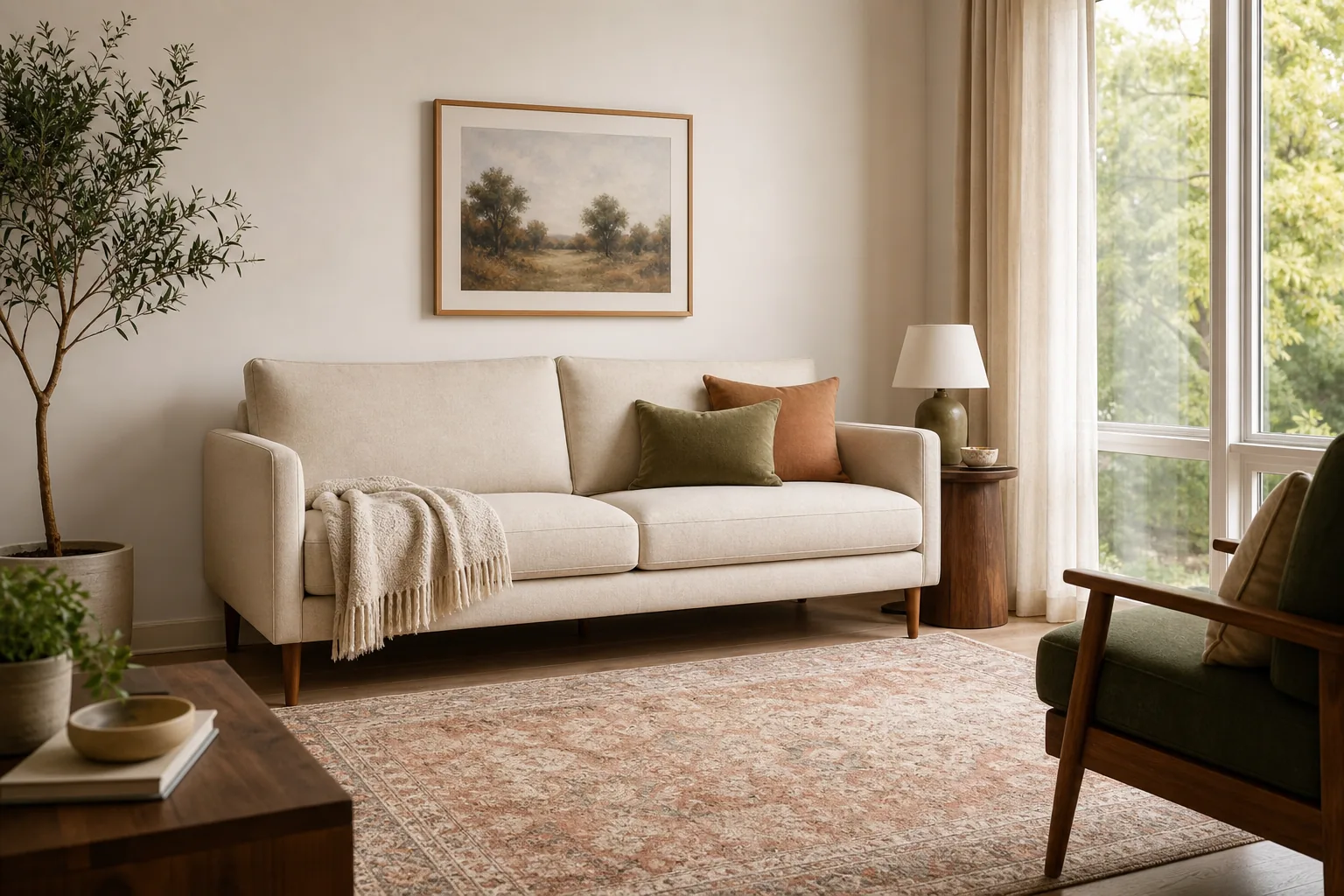
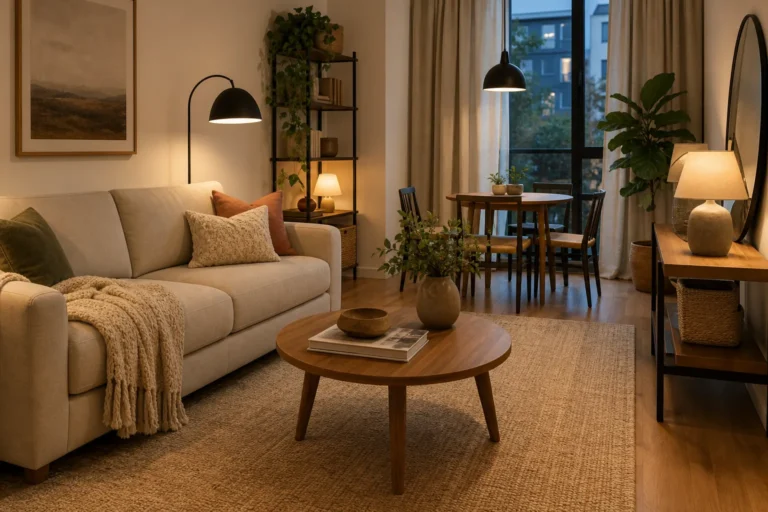
A sofa does not have to be tiny to work in a small living room, but its proportions should feel visually light. Look for slim arms, a shallower frame, and visible legs that allow more floor to remain in view. A loveseat or compact three-seat sofa can provide real comfort without becoming a wall of upholstery.
Compare the frame width with the actual seat width; bulky arms can consume valuable space without adding seating. Keep enough clearance for the main walkway and choose a sofa depth that still allows the coffee table or ottoman to function.
Best for: Small living rooms Look for: Slim arms, raised base, firm supportive cushions
2. Replace the Coffee Table With a Storage Ottoman
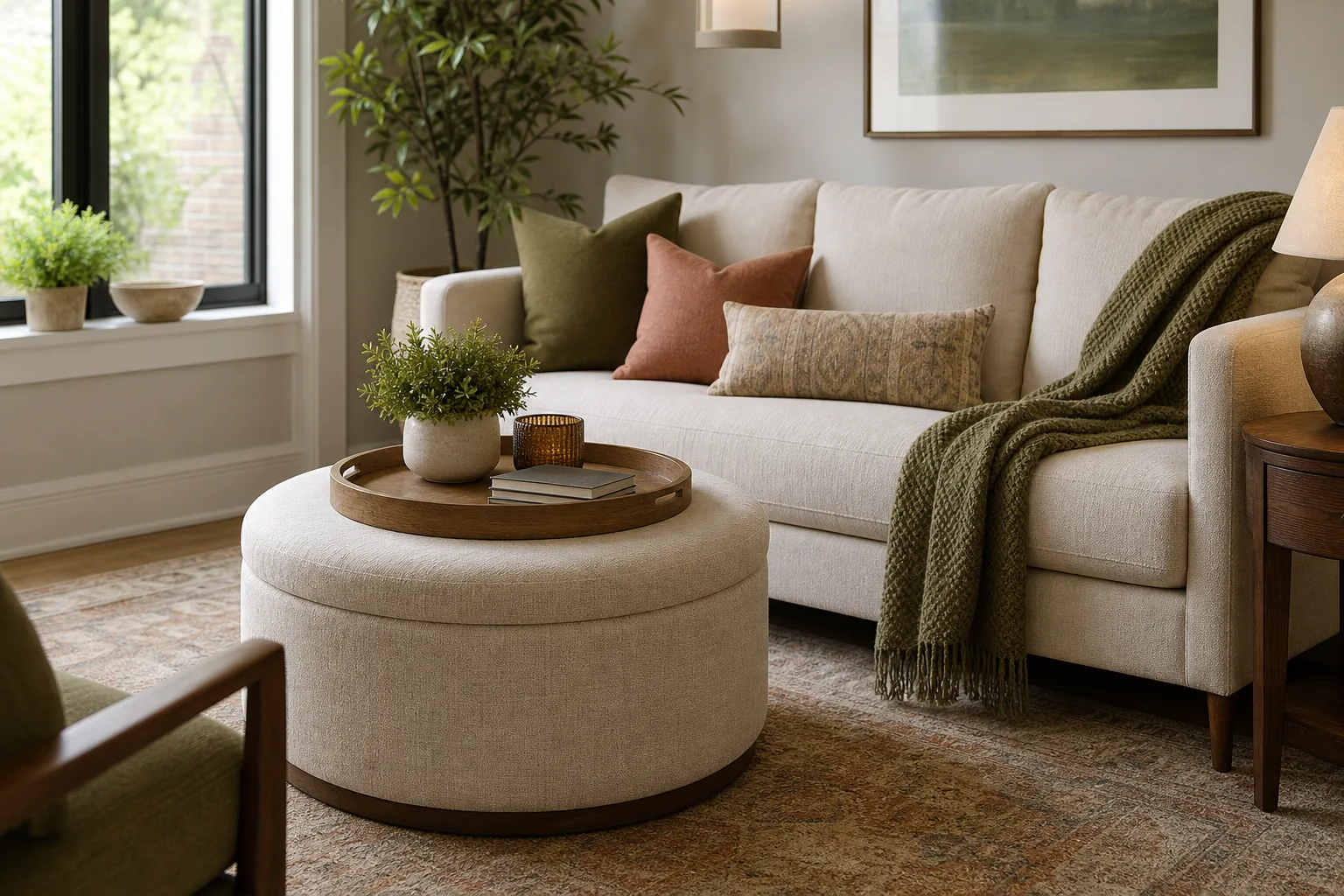
A storage ottoman can act as a coffee table, footrest, extra seat, and hidden home for blankets or games. A firm, flat top—or a removable tray—makes daily use easier, while a round shape softens a tight furniture arrangement and removes sharp corners from the traffic route.
Check the lid mechanism, interior ventilation, weight rating, and whether the upholstery can handle drinks and everyday wear. The ottoman should be slightly lower than the sofa seat and leave comfortable legroom around it.
Best for: Living rooms that need concealed storage Look for: Stable lid, easy-clean fabric, useful interior
3. Tuck Nesting Tables Into One Footprint
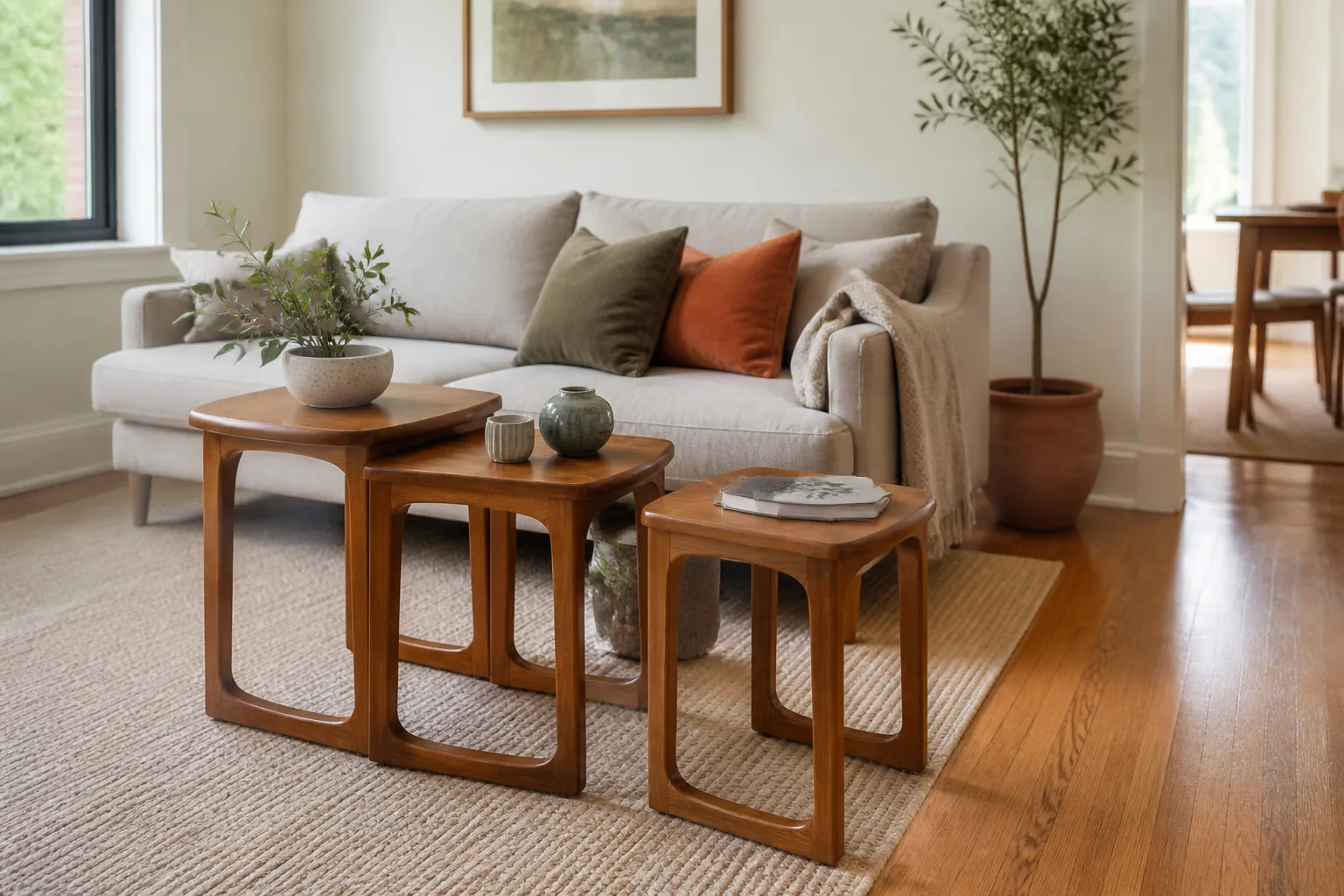
Nesting tables provide one compact surface on an ordinary day and two or three separate tables when guests arrive. They are easier to move than a large coffee table and can serve as drink tables, plant stands, or a temporary laptop perch.
Choose a set that slides together smoothly without trapping fingers or scratching the floor. Repeating one material—such as walnut, black metal, or light oak—keeps the layered shapes from looking busy.
Best for: Flexible entertaining Look for: Lightweight frames, stable tops, easy nesting
4. Slide a C-Table Beside the Sofa
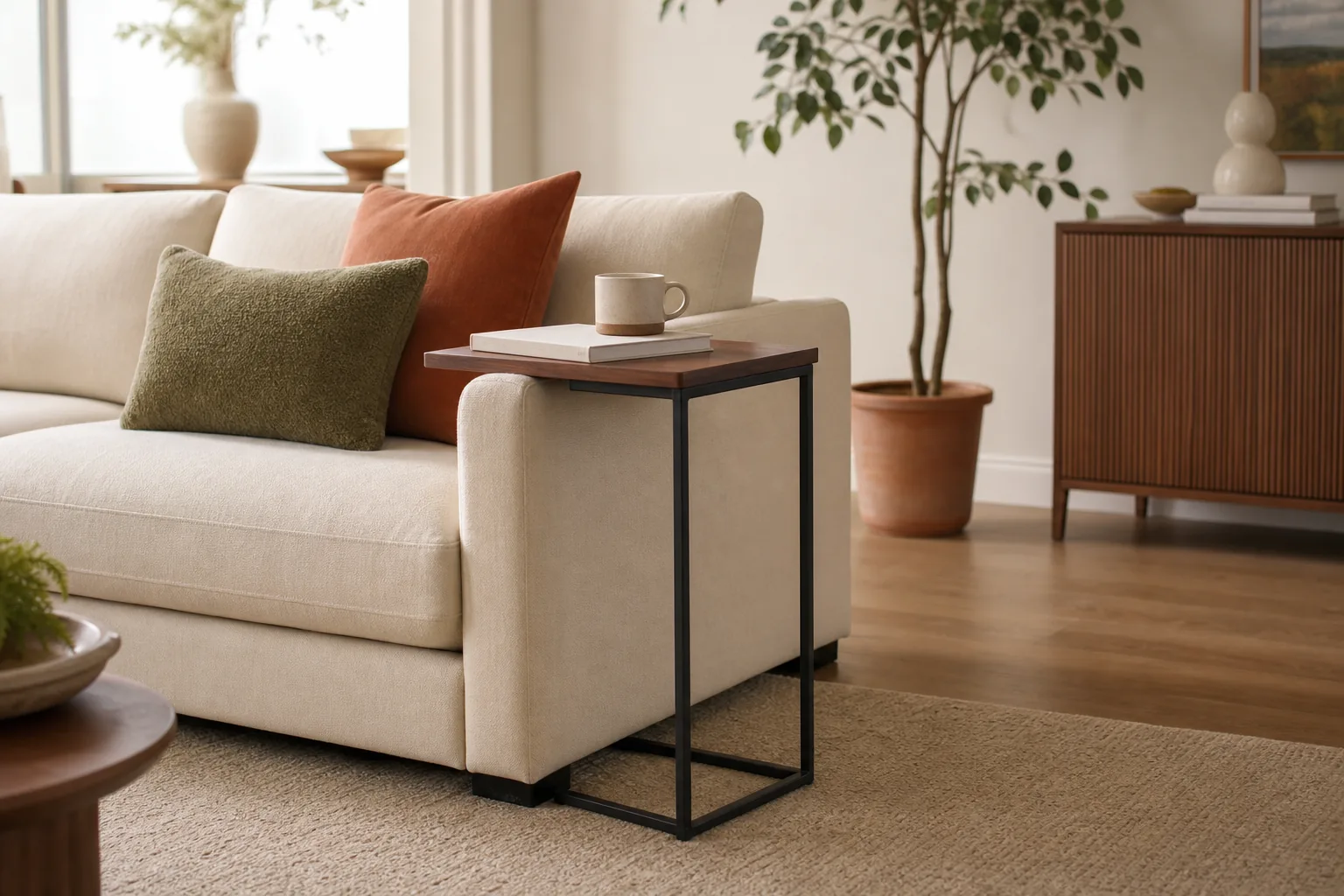
A C-shaped table slips partly beneath a sofa or chair, bringing a drink, book, or laptop close without requiring the full footprint of a side table. It is especially helpful in a narrow living room where there is no space between the sofa and wall.
Measure the sofa’s base clearance and arm height before choosing one. The table should slide in without pressing against upholstery, and its base should remain completely out of the walking path.
Best for: Narrow seating areas Look for: Correct sofa clearance, weighted base, rounded edges
5. Use a Drop-Leaf Table for Everyday Dining
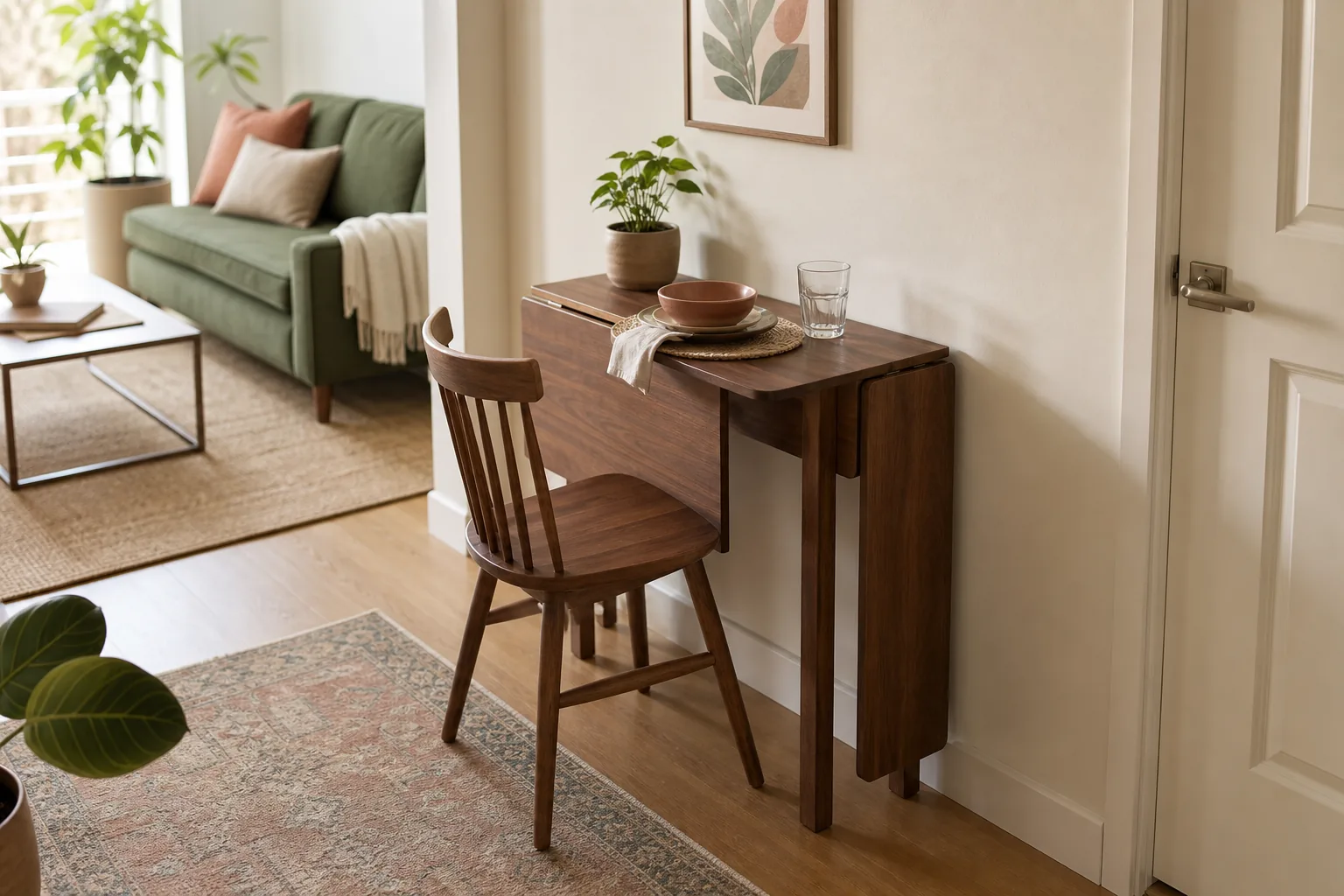
A drop-leaf table can stay narrow as a console or breakfast spot, then expand when more dining or project space is needed. A wall-side placement works well in a kitchen or studio, while a gateleg version can move into the center of the room for guests.
Test how easily the leaves open, where the legs land when extended, and whether chairs can pull out without blocking a doorway. Store only the number of chairs used every day and keep folding extras elsewhere.
Best for: Eat-in kitchens and studios Look for: Simple mechanism, stable leaf, practical chair clearance
6. Turn an Entry Bench Into Hidden Storage
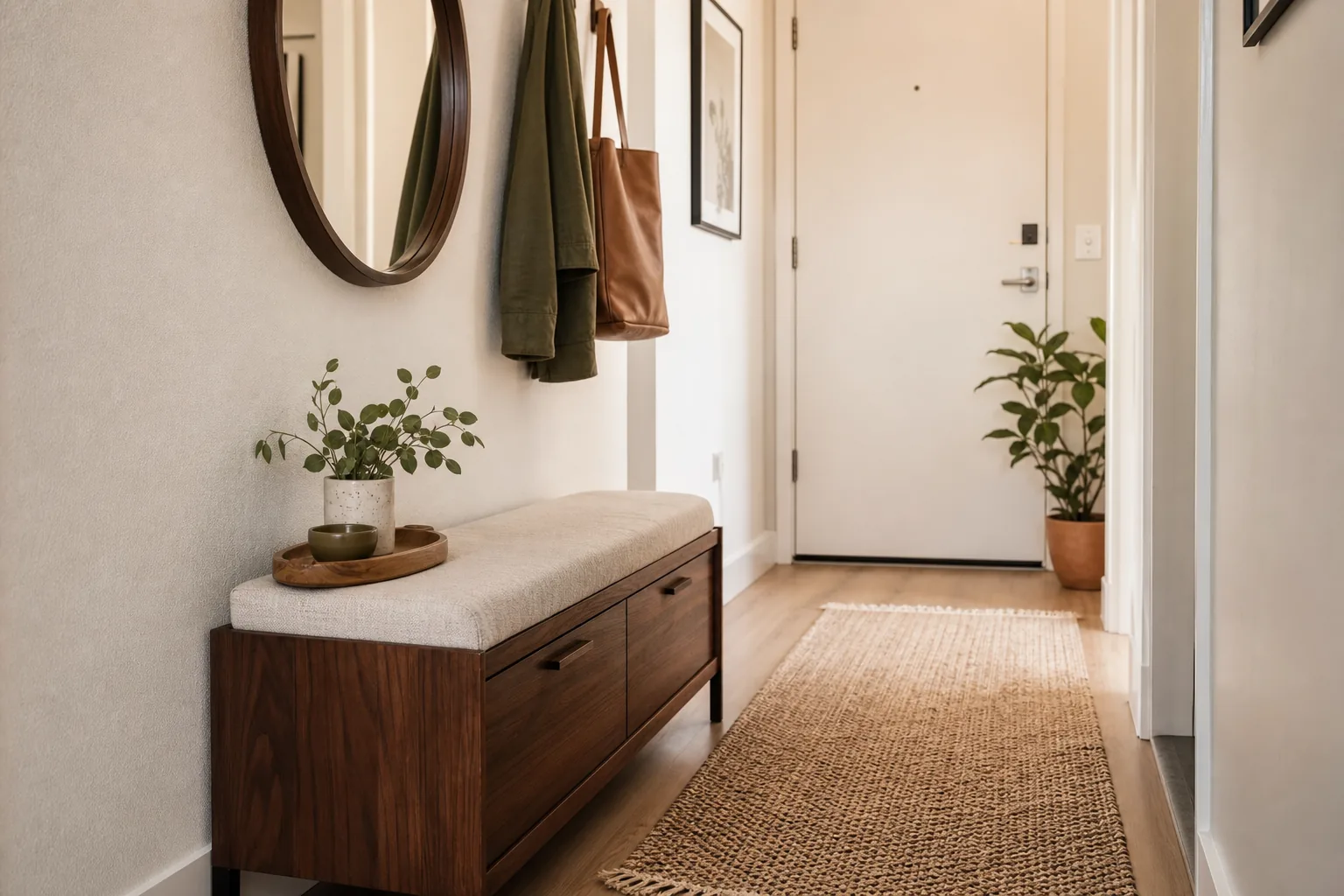
A slim storage bench creates a landing zone, a place to put on shoes, and hidden organization in one piece. Drawers are useful when the bench sits close to a wall, while a lift-up seat works where there is enough space above it.
Keep the bench shallower than the main walkway and avoid piling the top with decor. One cushion and a small wall hook arrangement can make it welcoming without reducing its everyday usefulness.
Best for: Small entryways and mudroom corners Look for: Shallow depth, durable top, accessible storage
7. Add a Sleeper Chair Instead of a Full Sofa Bed
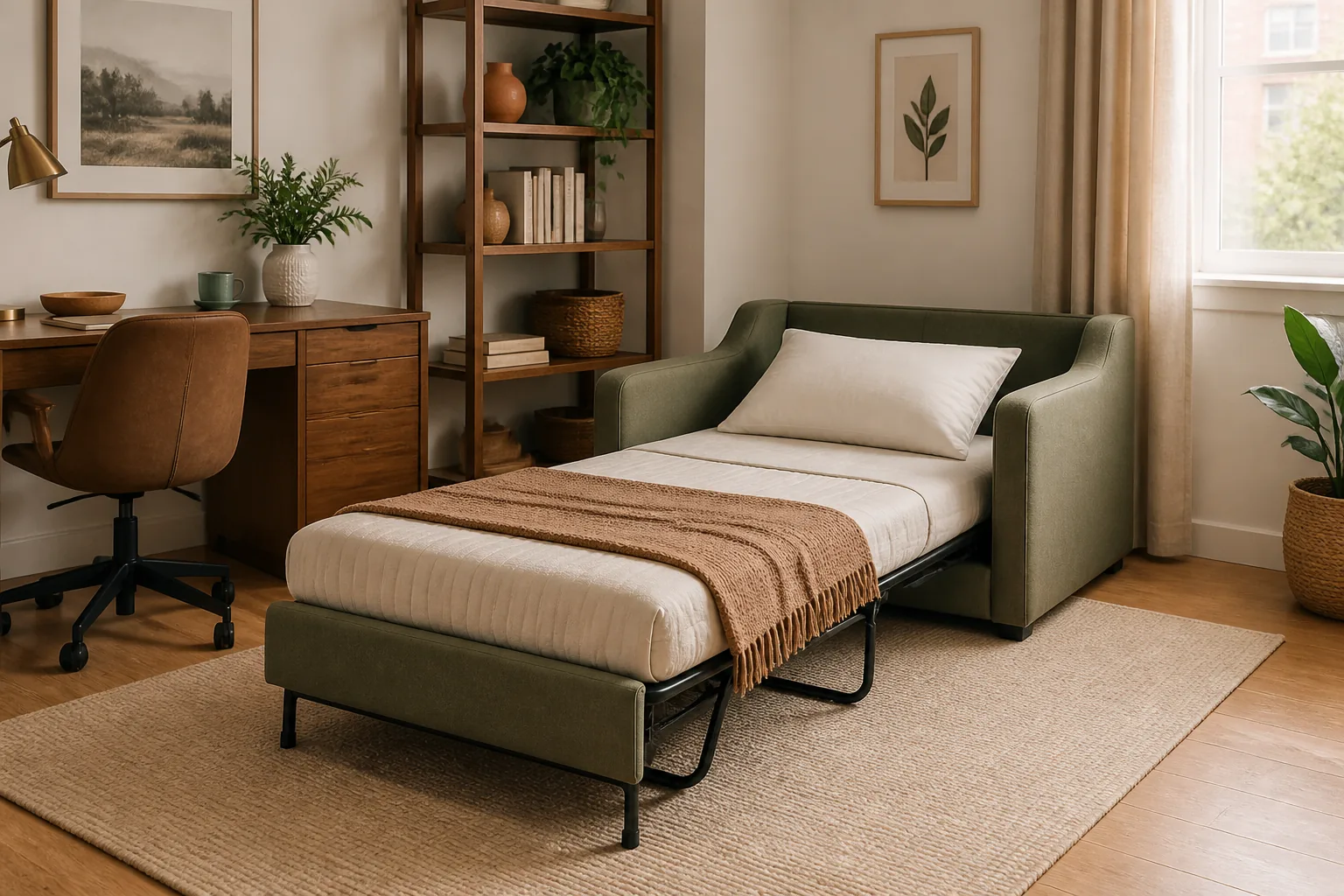
If overnight guests are occasional, a sleeper chair may be more realistic than a large pull-out sofa. Closed, it becomes a reading chair; open, it offers a single sleep surface without taking over the entire living room.
Measure the full open length and leave room to walk around it. Check mattress support, operating instructions, and weight limits, and make sure the mechanism is easy enough to use without moving several other pieces first.
Best for: Studios, home offices, and guest corners Look for: Easy conversion, supportive surface, washable cover
8. Build a Modular Sofa Around the Room
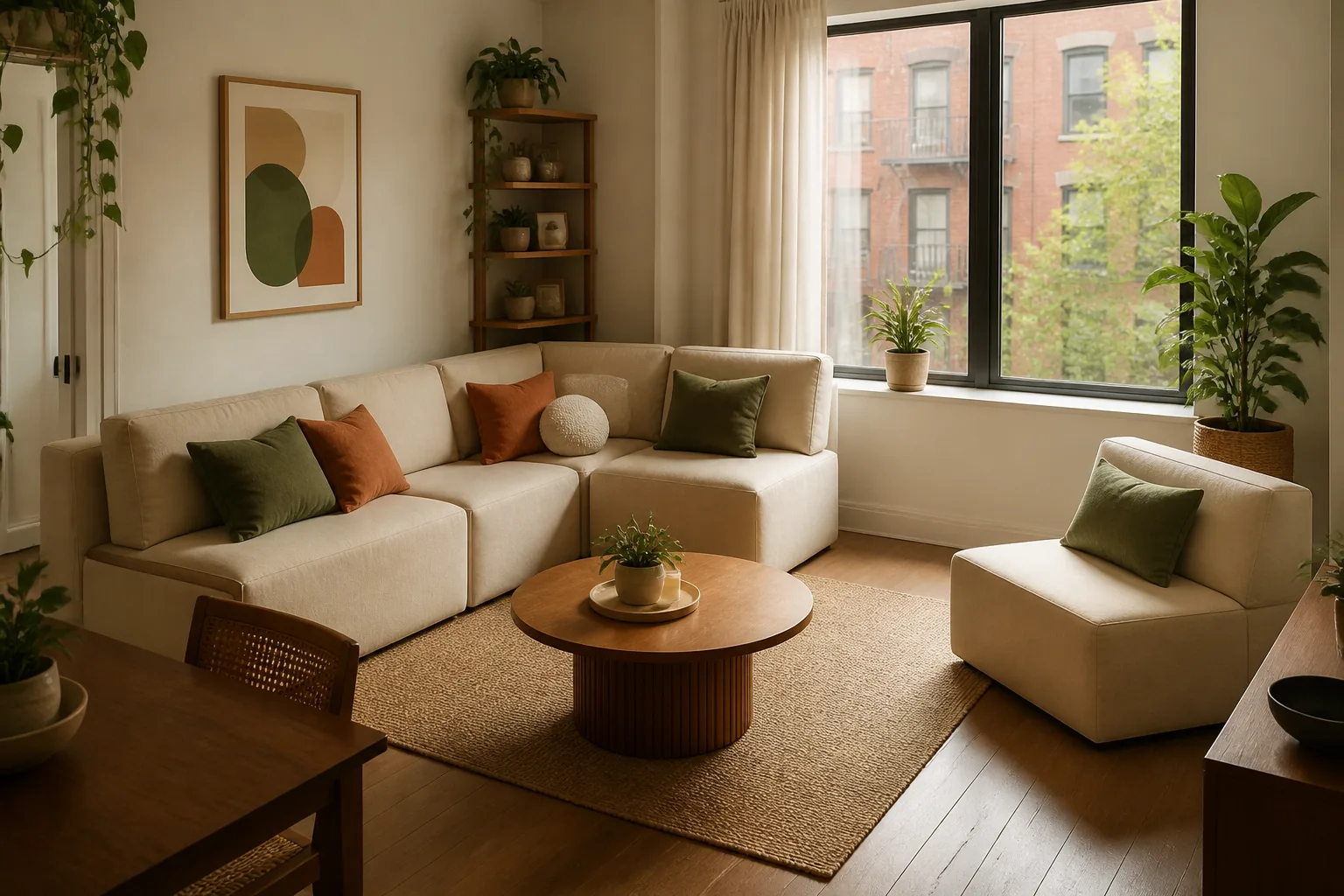
A modular sofa can adapt to an awkward corner, move to a new apartment, or split into separate seats when the layout changes. Two armless modules and one corner may offer more flexibility than a fixed sectional with the same overall width.
Confirm that the connectors hold sections securely and that the modules fit through doors, halls, and stairs. Avoid buying extra pieces “for later” unless there is a clear place to store them now.
Best for: Renters and changing layouts Look for: Secure connectors, manageable modules, replaceable covers
9. Mount a Fold-Down Desk on an Empty Wall
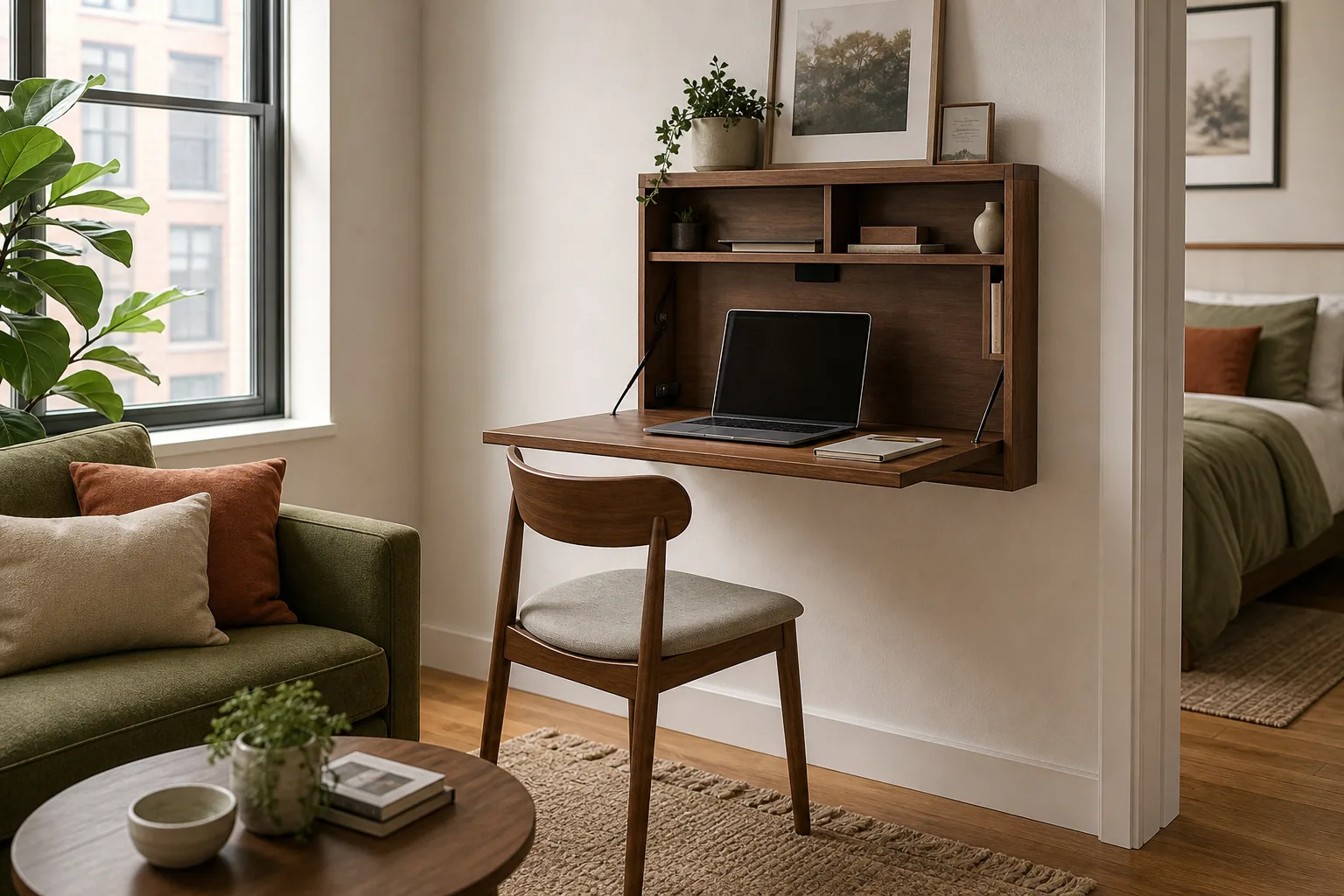
A fold-down desk can turn a hallway end, bedroom wall, or living-room corner into a workspace, then close when the workday ends. Designs with a shallow cabinet provide a little storage for a notebook, charger, and stationery without becoming a bulky office.
Wall-mounted furniture must suit the wall construction, hardware, and stated load. Renters should get permission where required or choose a freestanding alternative. Keep cords managed and maintain the required clearance when the desk is open.
Best for: Work-from-home corners Look for: Correct mounting system, usable work depth, cable route
10. Let a Slim Console Double as a Desk
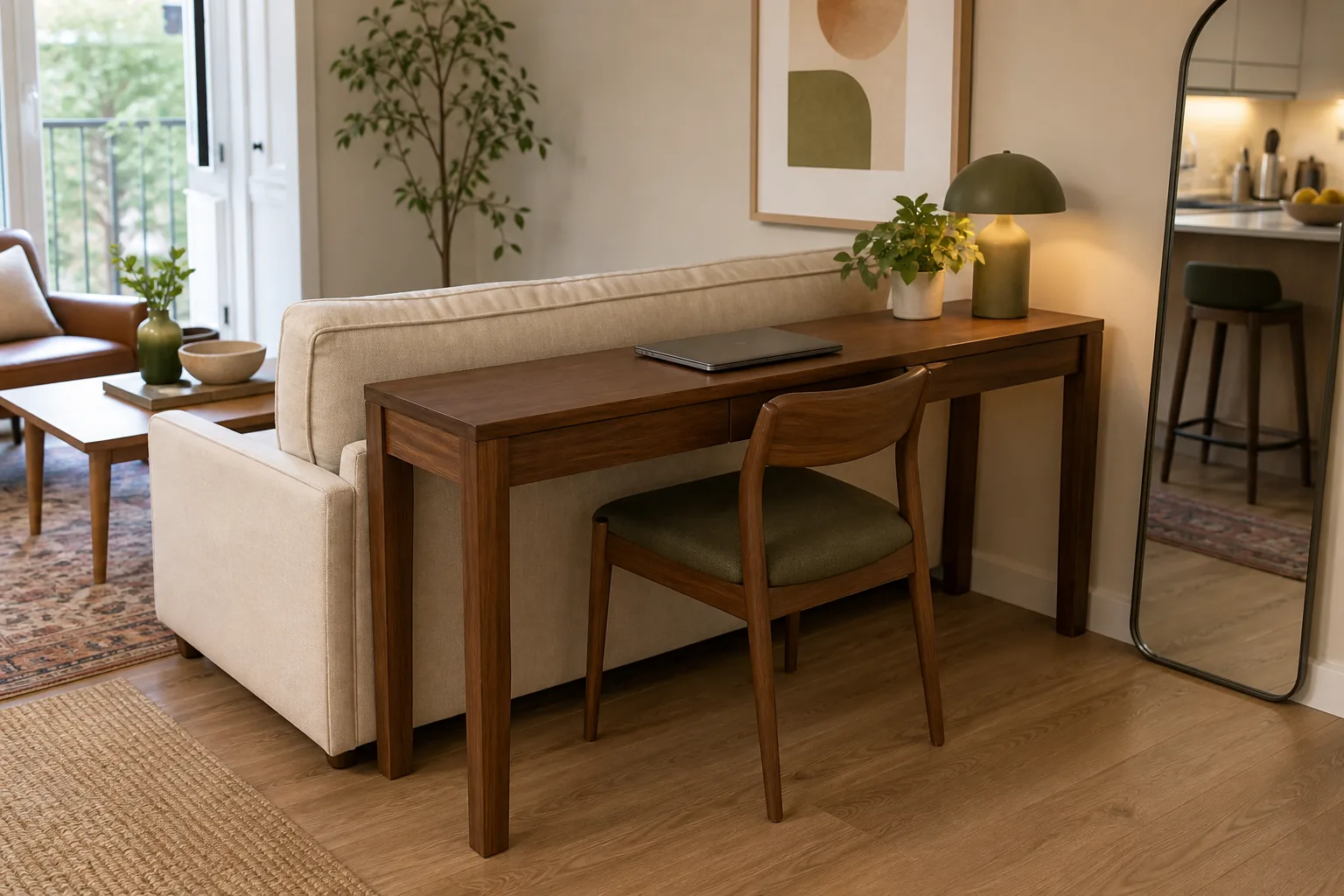
A narrow console can work behind a sofa, along a hallway wall, or below a window and become a desk when needed. Pair it with a comfortable chair or stool that tucks completely beneath the top so the walkway stays clear.
Desk comfort still matters: check the knee opening, surface height, monitor distance, and chair support. A console is best for lighter laptop tasks rather than an all-day setup that forces an awkward posture.
Best for: Occasional work and homework Look for: Open knee space, useful depth, hidden or tidy cables
11. Store Bulky Items Inside the Bed
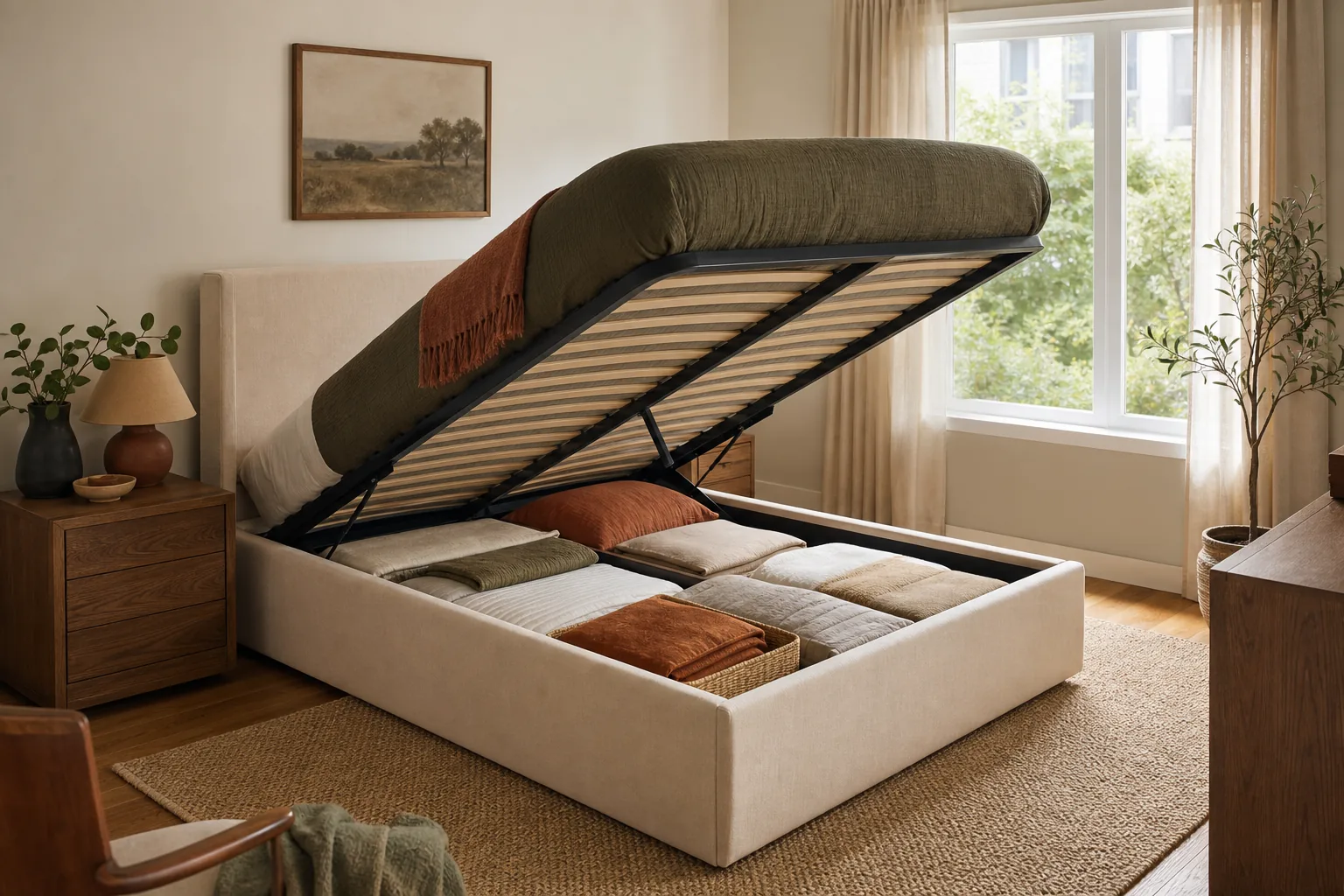
The bed usually occupies the largest footprint in a bedroom, so integrated storage makes that space work harder. Drawers are easy for daily access when there is clearance beside the bed; a lift-up platform can hold larger or seasonal items when side clearance is limited.
Check how the mechanism operates, whether the mattress weight is compatible, and how much room is needed to open it safely. Keep frequently used items within easy reach instead of overfilling a deep compartment.
Best for: Bedrooms with limited closets Look for: Safe lift support, usable compartments, adequate opening clearance
12. Raise the Coffee Table Into a Work Surface
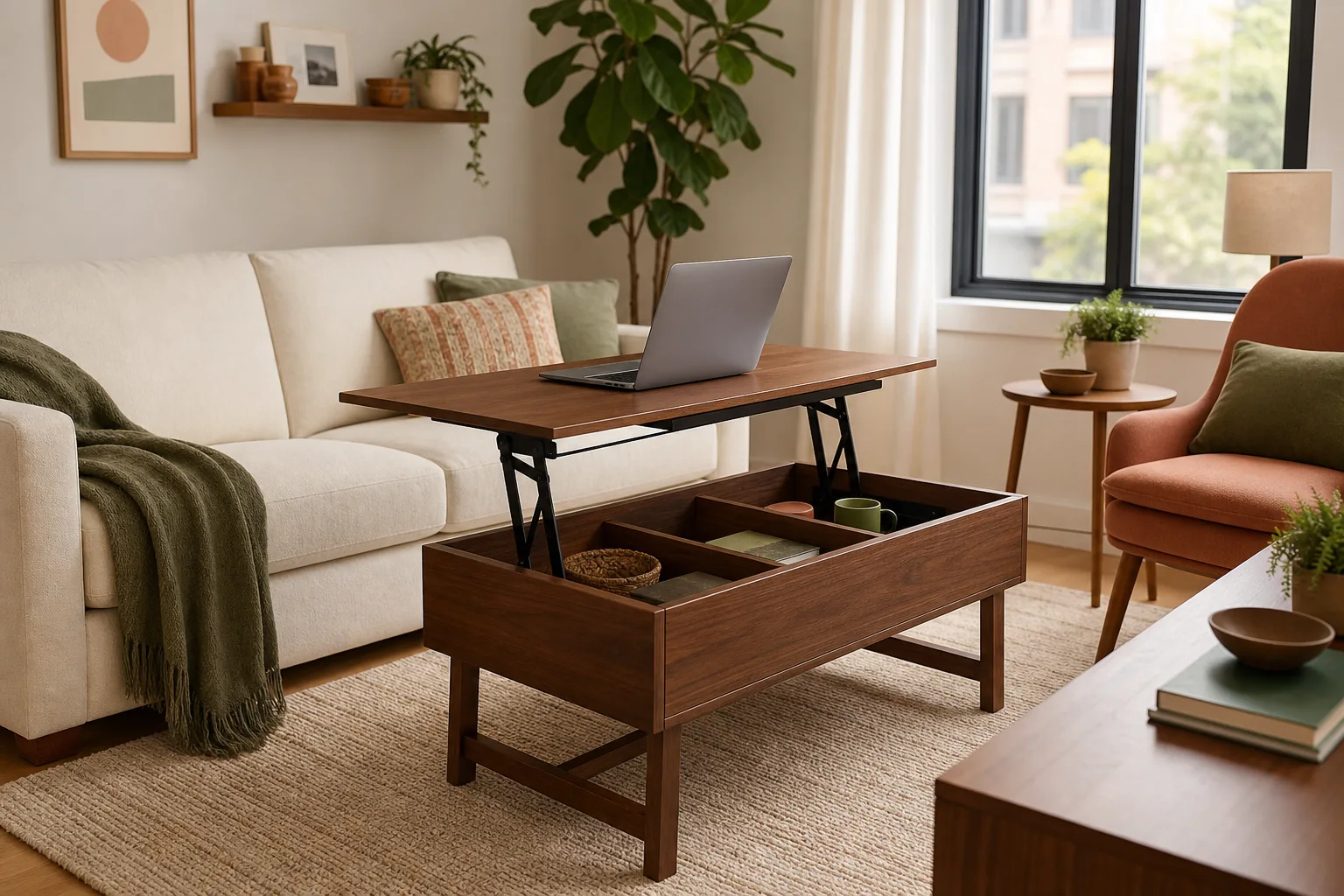
A lift-top coffee table creates a higher surface for a laptop, meal, puzzle, or craft while hiding remotes and small supplies below. It suits a living room that cannot accommodate a separate desk or dining table.
Test the top for wobble and pinch points, follow the manufacturer’s load guidance, and keep hot drinks away from moving edges. Make sure the table can open without hitting knees, the sofa, or nearby furniture.
Best for: Multipurpose living rooms Look for: Smooth lift, stable open position, divided storage
13. Float the Nightstand to Free the Floor
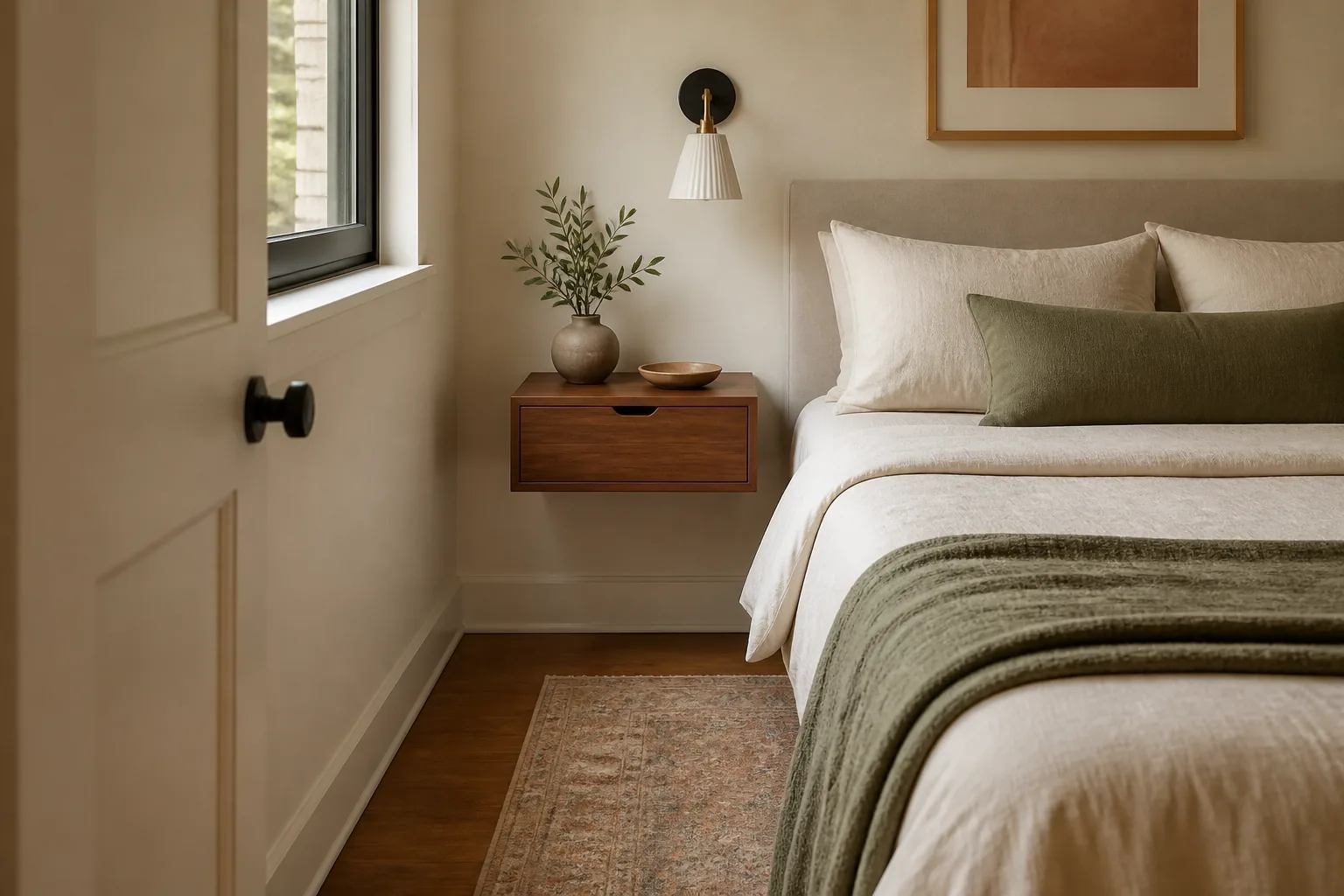
A floating nightstand keeps the floor visible and makes a narrow bedside gap easier to clean. Even a small wall shelf can hold a phone, book, and water without squeezing a conventional table between the bed and wall.
Choose a depth that does not project into the walking route and mount it at a comfortable height. Use hardware suited to the wall and expected load, or choose a slim freestanding pedestal if drilling is not appropriate.
Best for: Tight bedrooms Look for: Rounded corners, drawer or cable slot, correct mounting
14. Go Tall With a Narrow Bookcase
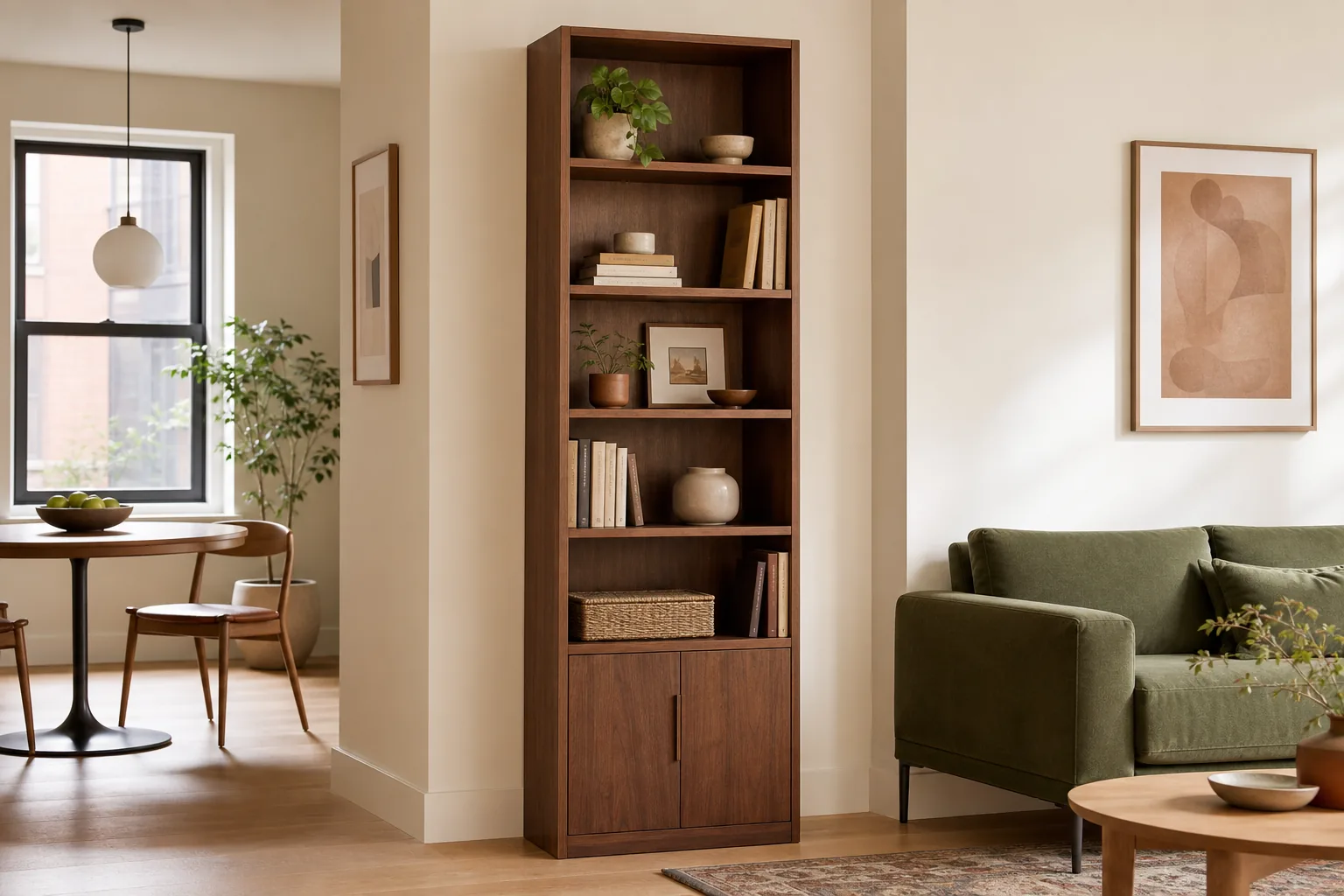
A tall, narrow bookcase uses vertical space while preserving more floor than a long, low cabinet. Closed storage on the bottom can hide practical clutter, while edited open shelves above keep the room from feeling heavy.
Place heavier items low, respect shelf weight limits, and anchor furniture when required. Leave open gaps between groups instead of packing every shelf; visible breathing room makes the whole wall feel wider.
Best for: Living rooms, bedrooms, and home offices Look for: Small footprint, mixed open/closed storage, stable construction
15. Move Storage Where You Need It With a Rolling Cart
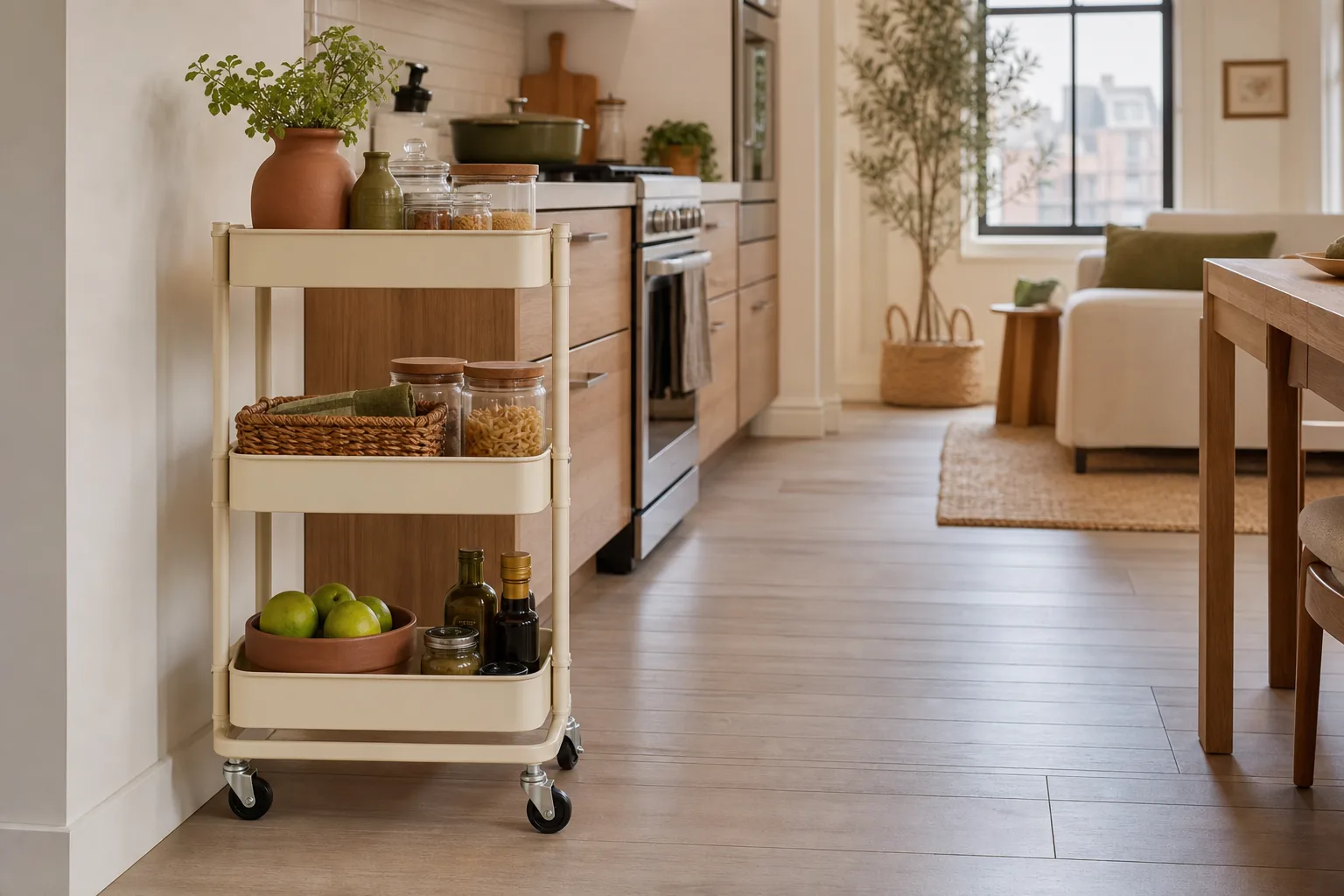
A narrow rolling cart can serve as a pantry extension, art station, bathroom cabinet, plant stand, or bedside table. It is useful in a rental because it changes jobs without installation and can move out of the way when floor space is needed.
Choose locking wheels, distribute weight evenly, and avoid loading the top with tall unstable objects. Measure the cart’s handle and wheel width—not only the shelves—if it needs to fit inside a particular gap.
Best for: Kitchens, bathrooms, playrooms, and dorms Look for: Locking casters, raised shelf edges, easy-clean finish
16. Keep Folding Chairs for Extra Guests
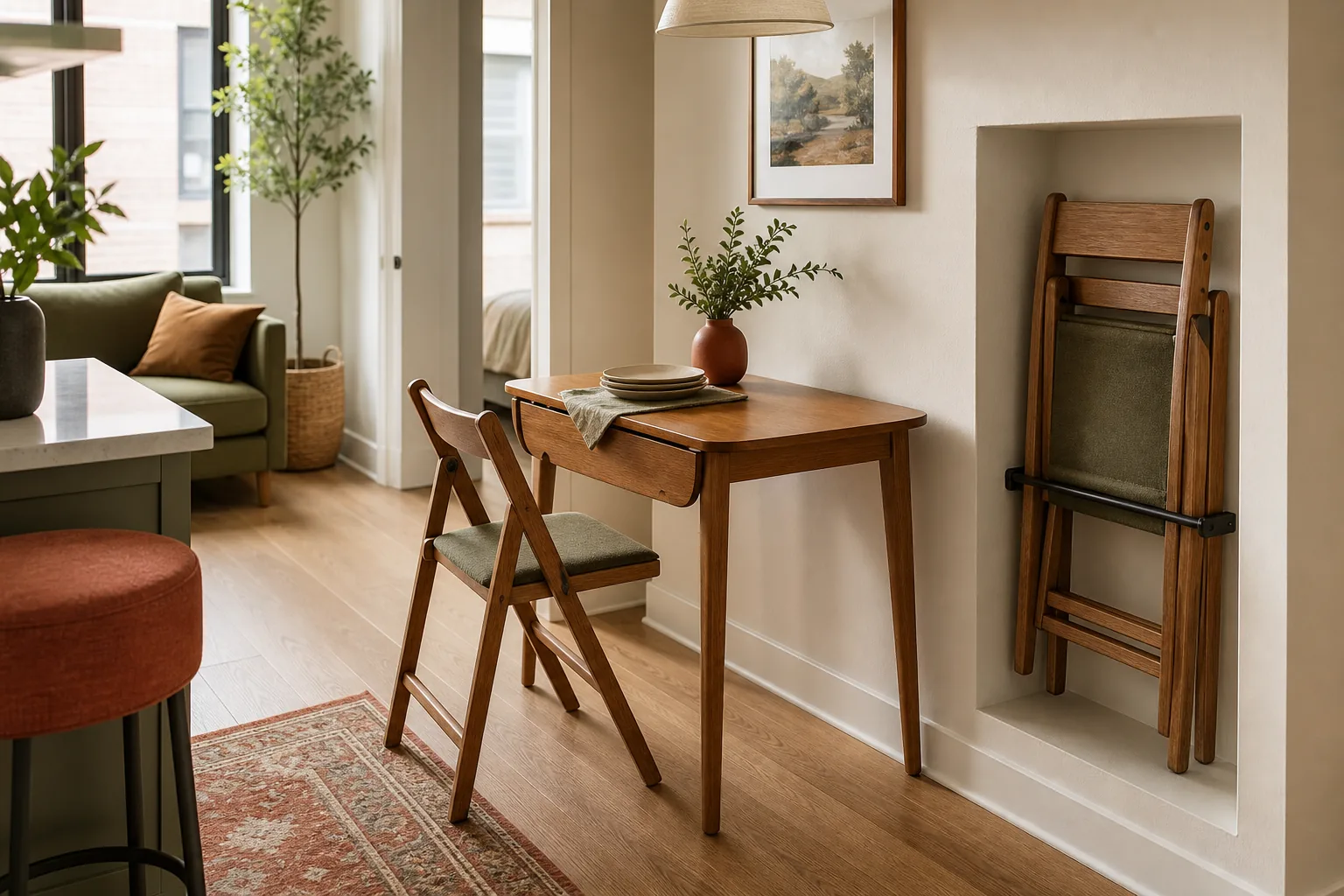
Extra dining chairs do not need a permanent place around the table. A pair of comfortable folding chairs can store in a closet or approved wall rack, then appear only when guests arrive. Choose a finish that relates to the everyday chairs so the mix feels intentional.
Check the locking mechanism and weight rating each time the chairs are opened. Store them securely so they cannot fall, block a doorway, or become difficult to access.
Best for: Occasional entertaining Look for: Secure lock, slim folded profile, comfortable seat
17. Expand the Dining Table Only When Hosting
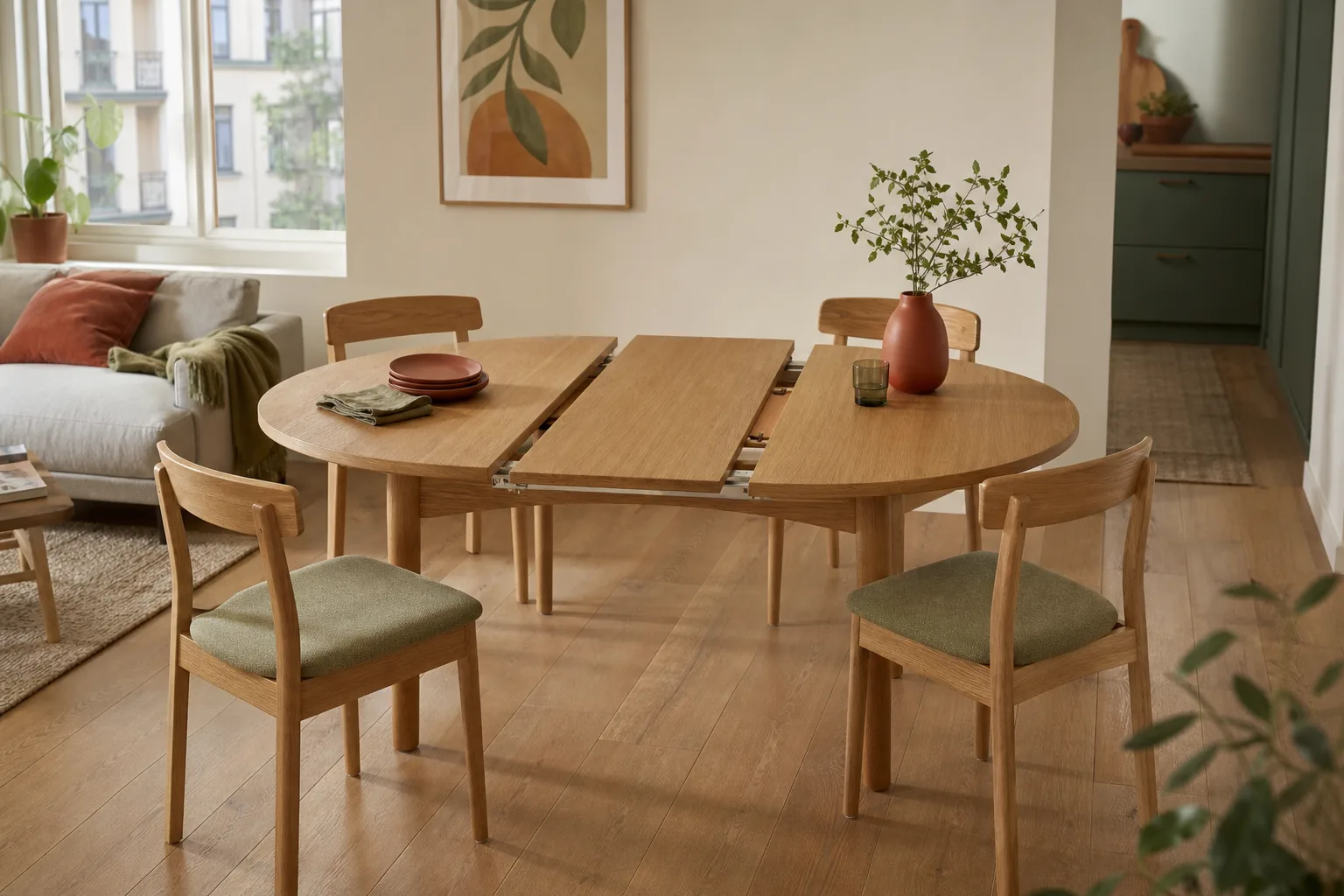
An expandable table offers a compact everyday footprint and a larger surface for holidays, work, or dinner with friends. Round pedestal tables are easy to circulate around, while rectangular extendable tables fit neatly against a wall.
Measure the fully extended table with every chair pulled out. Store leaves where they remain flat and protected, and choose a mechanism one person can operate safely without dragging the table across the floor.
Best for: Small dining rooms that still host Look for: Easy extension, practical leaf storage, flexible base
18. Hide an Office Inside a Cabinet
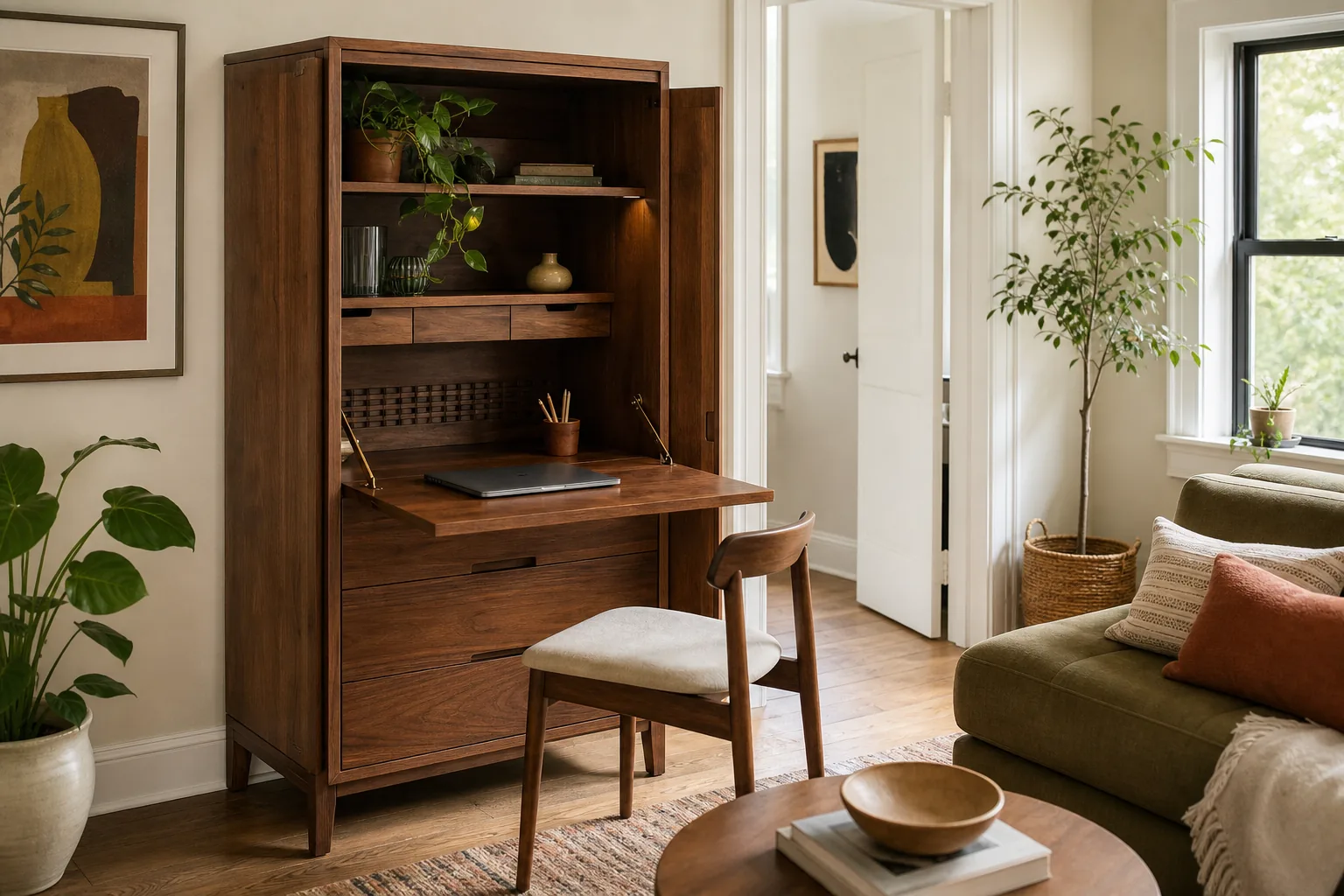
A secretary desk or office cabinet can hide work supplies behind doors and help a living room or bedroom switch back into relaxation mode. The best versions include a pull-out or fold-down work surface, adjustable shelves, and a safe path for cables.
Check ventilation for electronics, desk height, and the clearance needed to open every door. A tall cabinet must be stable and anchored according to its instructions.
Best for: Living-room offices and studio apartments Look for: Cable management, ventilation, supportive work height
19. Divide a Studio With an Open-Back Shelf
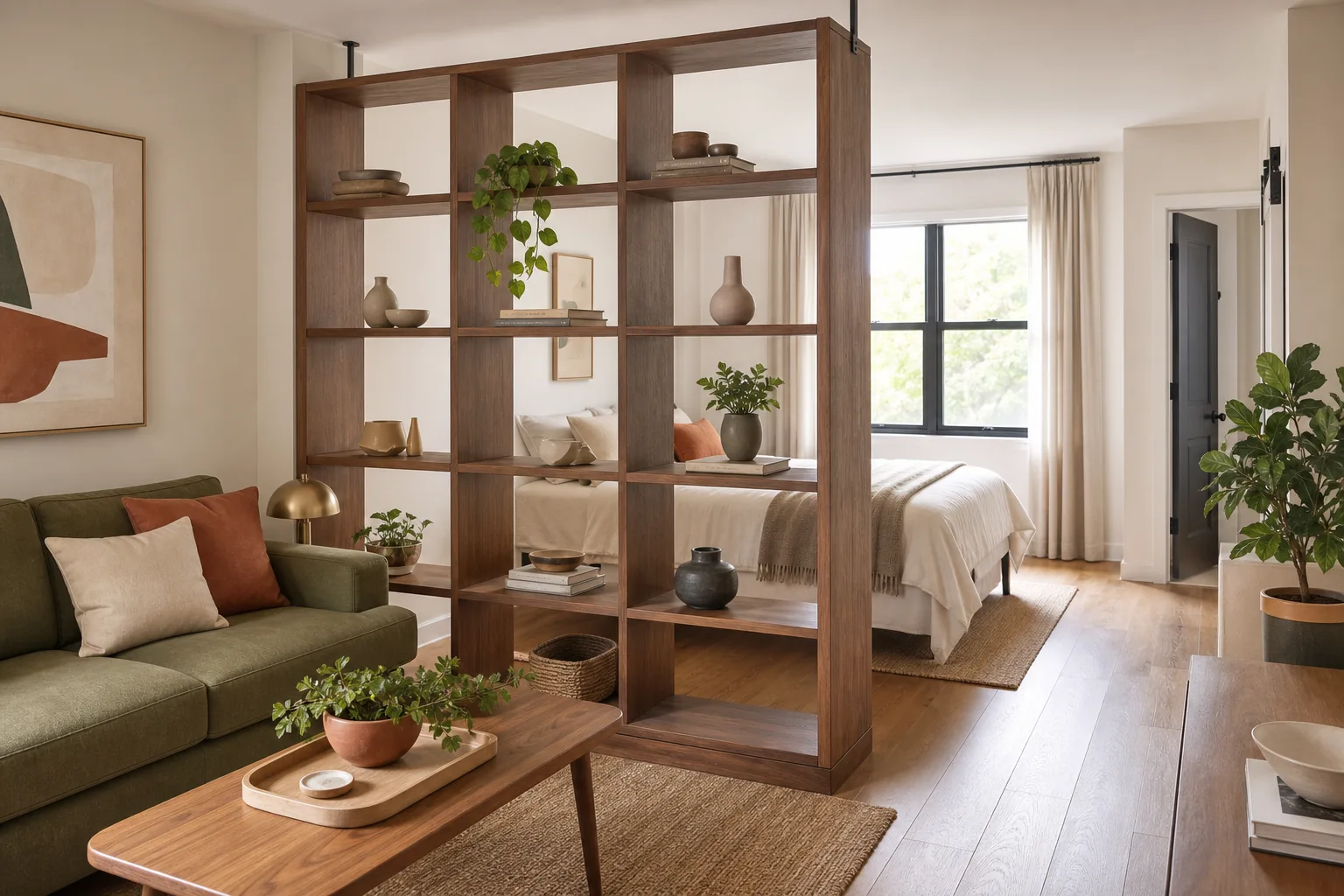
An open-back shelving unit can separate sleeping, living, and work zones without building a solid wall or blocking all the light. Style both sides and leave many cubes open so the divider feels airy rather than like a packed storage barrier.
Use only a stable unit designed for the location and secure it as required. Keep the route around it generous, place heavy objects low, and avoid positioning it where it could obstruct an exit, sprinkler, vent, or window.
Best for: Studios and multipurpose rooms Look for: Finished back, stable base, open visual rhythm
20. Use a Slim Shoe Cabinet as an Entry Console
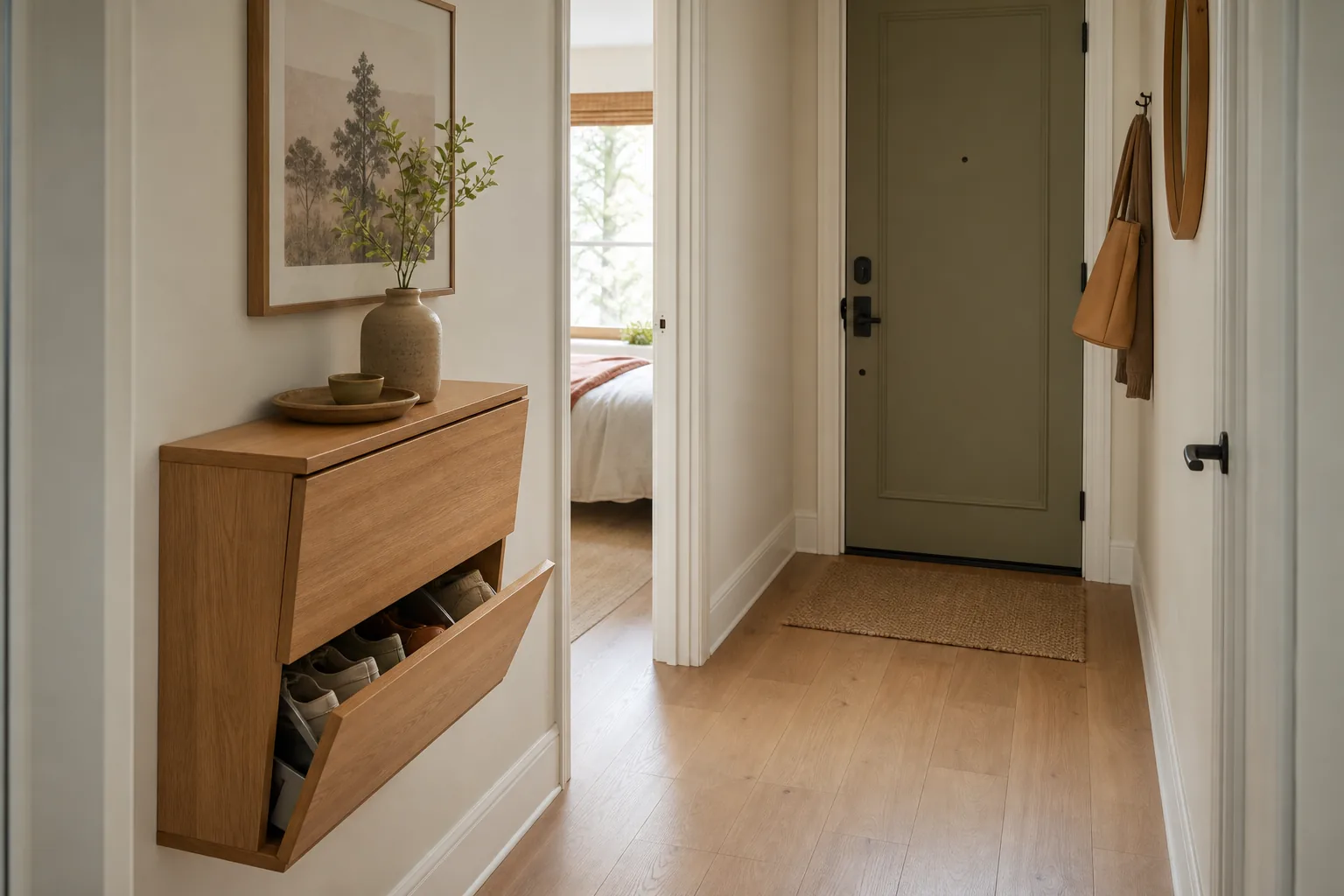
A tilt-out shoe cabinet can be much shallower than a traditional dresser, making it useful in a narrow hall. The top becomes a landing strip for keys and mail, while the closed front keeps visual clutter under control.
Measure the cabinet with every compartment open and confirm that the door can still swing freely. Wall attachment may be required because of the shallow profile, so follow the product instructions and rental rules.
Best for: Narrow entrances and hallways Look for: Shallow body, easy-clean interior, secure installation
How to Choose Furniture for a Small Space
- Measure the route first. Confirm the piece can pass through the entrance, hallway, stairs, and elevator—not only fit in the final room.
- Map the open position. Include drawers, doors, leaves, sleeper mechanisms, desk panels, and pulled-out chairs.
- Protect the main walkway. A clever piece is not useful if daily movement becomes awkward.
- Prioritize the real problem. Choose storage furniture only when storage is the problem; otherwise comfort or flexibility may matter more.
- Prefer visual lightness. Raised legs, open bases, pale-to-medium finishes, and a controlled palette help more floor remain visible.
- Plan where moving parts go. Folding furniture still needs safe operating and storage space.
A Simple Small-Space Furniture Shopping Order
- Fix the layout and traffic path using the furniture you already own.
- Choose the main sleeping or seating piece.
- Add one concealed-storage piece where clutter naturally collects.
- Solve dining or work with a folding, extendable, or double-duty surface.
- Add vertical storage only after the floor plan feels comfortable.
- Wait before buying extra stools, tables, or organizers.
Common Small-Space Furniture Mistakes
- Buying several tiny pieces instead of one well-proportioned anchor.
- Measuring furniture only when closed.
- Choosing storage that is difficult to open or access.
- Ignoring sofa depth, arm width, and actual usable seat space.
- Filling every wall with tall storage and making the room feel enclosed.
- Using too many different wood tones, finishes, or leg styles in one view.
- Mounting or anchoring furniture without following product and wall requirements.
- Forgetting where folded chairs, table leaves, or guest bedding will live.
For more compact-room planning ideas, continue with our small living room decor guide. Students and first-apartment renters may also find useful solutions in our dorm decor ideas.
Small Space Furniture FAQs
What furniture makes a small room look bigger?
Furniture with visible legs, a controlled color palette, slim arms, open bases, and appropriate proportions allows more floor and wall to remain visible. One larger, well-scaled piece can look calmer than several undersized items.
What is the best multifunctional furniture for a small apartment?
The best choice solves the apartment’s biggest daily problem. A storage bed is valuable when closets are limited, a drop-leaf table helps when dining space is missing, and a storage ottoman suits a living room that needs both seating and concealed organization.
Should furniture touch the walls in a small room?
Not automatically. A small gap can make the arrangement feel less cramped, while floating one compact piece may create a clearer zone. The priority is a comfortable traffic path and access to doors, windows, outlets, and vents.
Is modular furniture good for renters?
Modular furniture can be useful because it adapts to new rooms and may be easier to move in smaller sections. Check module dimensions, connectors, total weight, and whether replacement covers or individual parts are available.
How do I measure for convertible furniture?
Record the closed footprint, fully open footprint, operating clearance, and the space needed to sit, walk, or pull out a chair. Mark both positions on the floor before buying and confirm the piece can travel through every doorway on the delivery route.
How can I furnish a small apartment on a budget?
Start with layout changes and pieces you already own. Buy the main sofa or bed first, add one practical storage item, and use flexible secondhand pieces such as nesting tables, folding chairs, slim consoles, and rolling carts. Avoid buying organizers before deciding what genuinely needs storage.
Final Thoughts
The best small space furniture ideas do not try to make a compact home behave like a large one. They support the life that actually happens there. A sofa should provide comfortable seating, a table should open only when needed, and storage should be easy enough to use every day.
Choose one hardworking piece, protect the walking path, and leave some empty space. A small room feels generous when every item has a clear role and nothing makes daily life harder.