
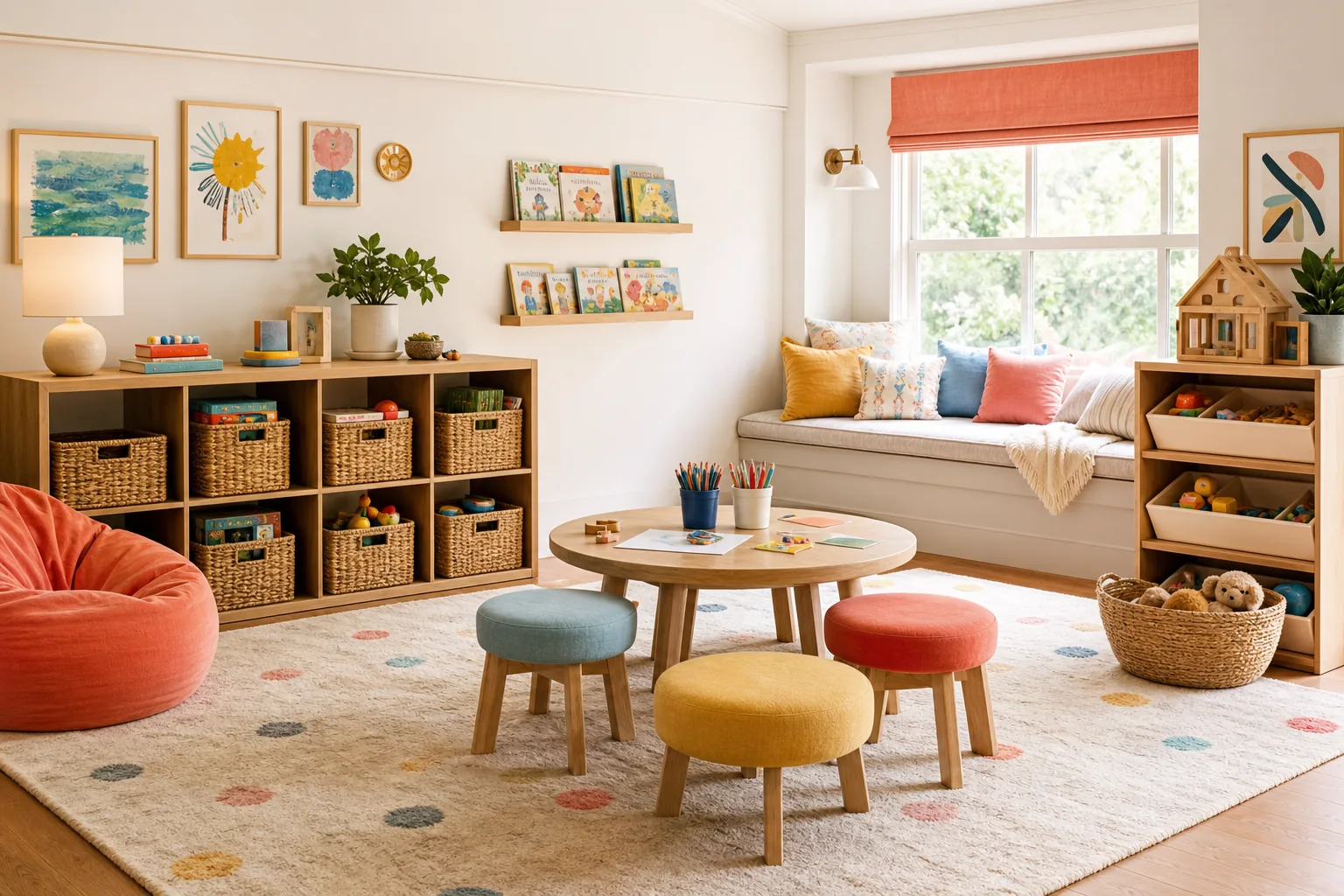
21 Playroom Inspiration Ideas for a Fun, Organized and Beautiful Kids’ Space
A great playroom does more than hold toys. It gives children space to build, read, imagine, move, and create while making everyday cleanup easier for the adults who share the home. The best playroom inspiration balances those two needs: joyful enough to invite play, but organized enough to feel calm when the day is over.
These 21 ideas work for dedicated playrooms, basement family rooms, shared bedrooms, and small living-room corners. Each design combines an attractive look with practical storage, age-flexible furniture, and a clear purpose, so you can choose what fits your children, your available space, and your budget.
Design safety first
Anchor storage and furniture according to the manufacturer’s instructions, keep blind cords and small choking hazards out of reach, cover outlets where appropriate, and choose age-suitable play equipment. Check current product guidance and local safety recommendations before installing climbing features, swings, lofts, or heavy wall decor.
If you enjoy creating rooms that feel personal as well as practical, browse our collection of bedroom decor ideas for more color, layout, and storage inspiration.
1. Divide the Playroom Into Clear Activity Zones
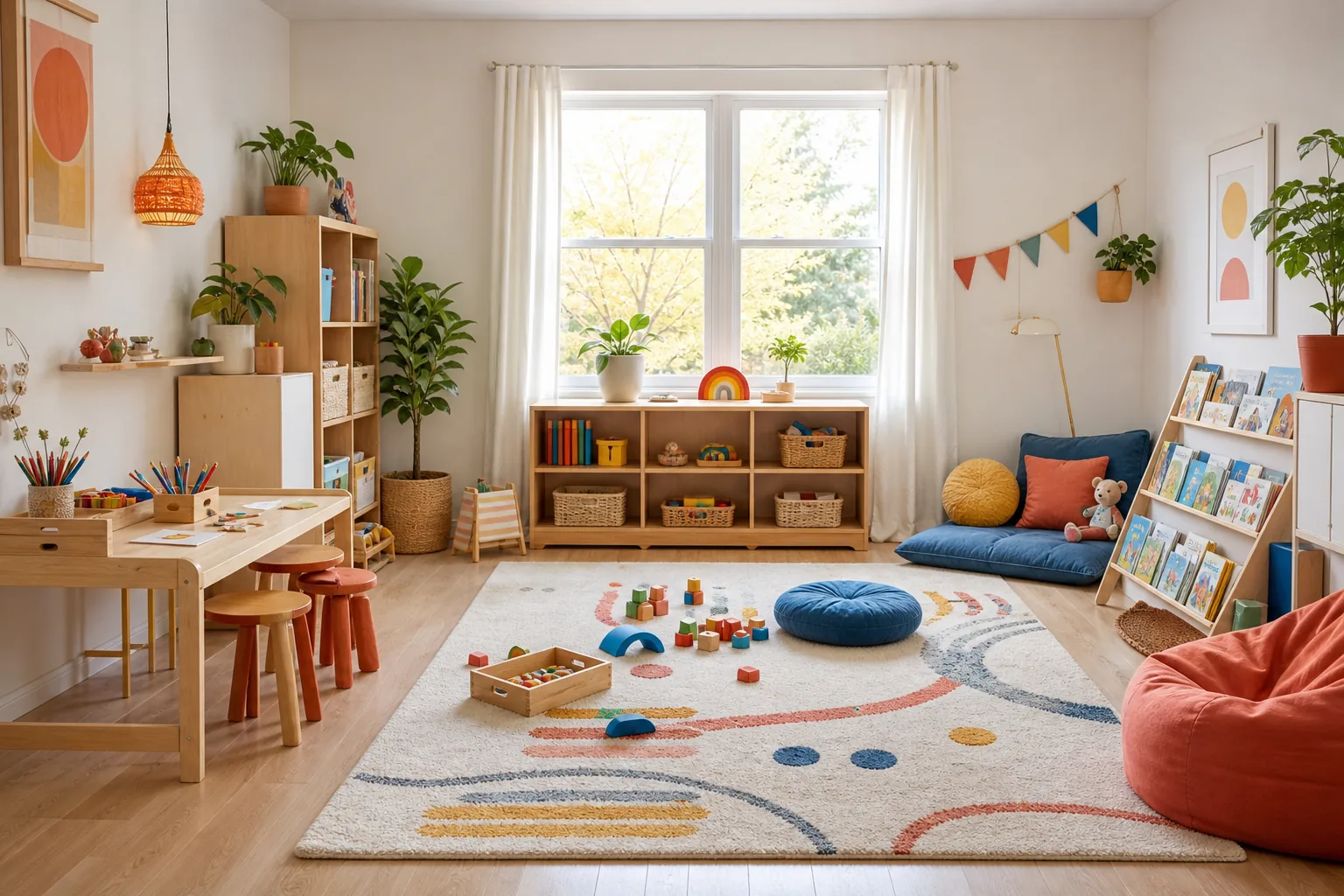
Start with activities instead of furniture. Most family playrooms need three basic zones: open floor for active or building play, a table for art and puzzles, and a softer corner for books or quiet time. Defining these areas makes a mixed-use room feel intentional and helps children understand where different objects belong.
A rug can outline the active zone, a washable mat can protect the craft area, and a book ledge can signal the reading corner. Leave clear paths between zones and avoid filling every wall. The empty floor is not wasted space—it is one of the most useful features in the room.
Simple plan: Map the zones with painter’s tape before purchasing furniture.
2. Use Low, Open Storage Children Can Reach
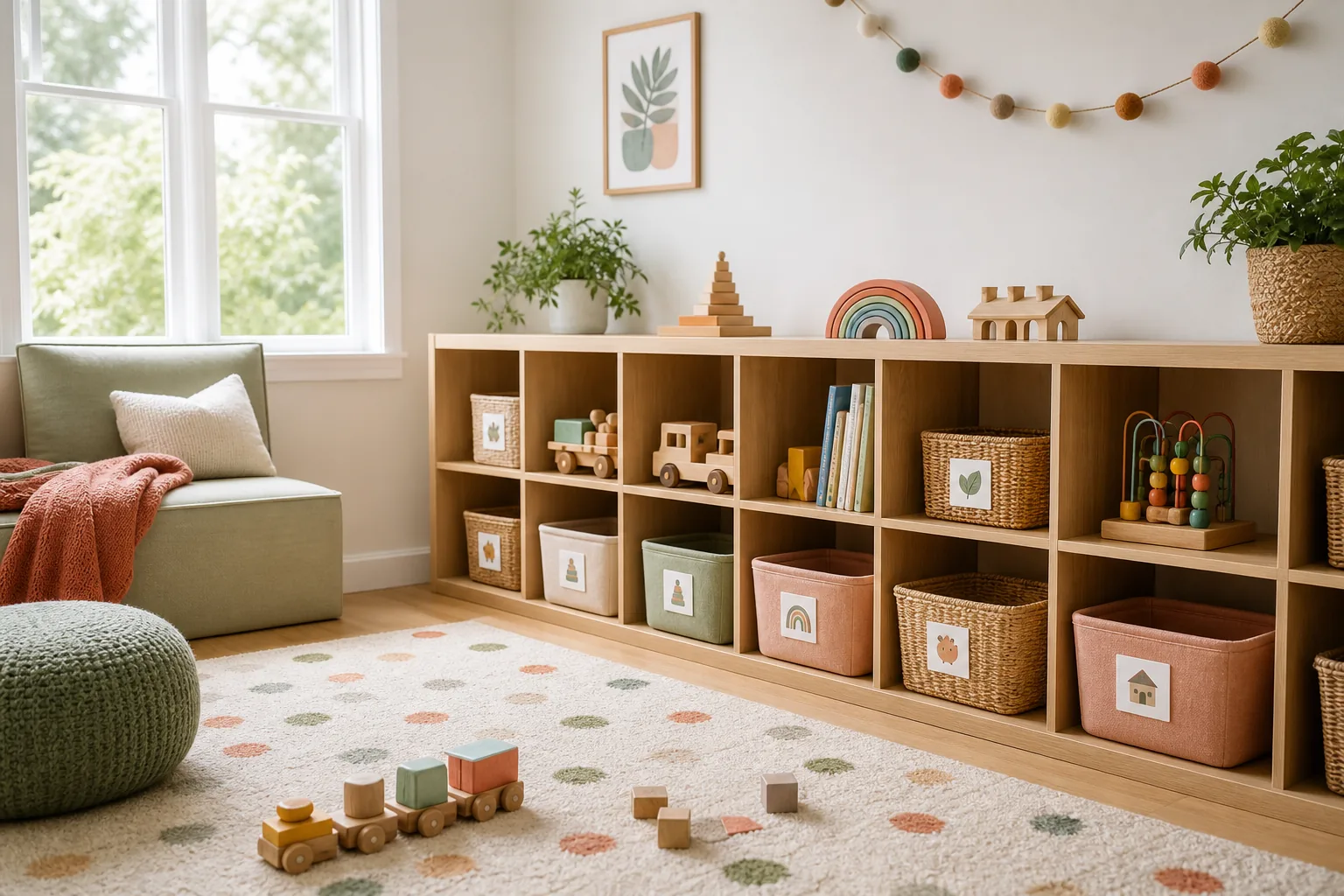
Storage works best when children can see it, reach it, and return items without adult help. Low cubbies with lightweight open baskets make everyday toys easier to manage than deep boxes filled with unrelated pieces. Give each container one broad category such as blocks, vehicles, dolls, animals, or art supplies.
Use picture labels for younger children and combine pictures with words as reading skills develop. Store adult-supervised materials higher or behind a secure door. Keep the top of the unit edited so it does not become another surface for clutter.
Cleanup rule: Fewer, wider categories are easier to maintain than dozens of tiny labels.
3. Create a Cozy Reading Nook
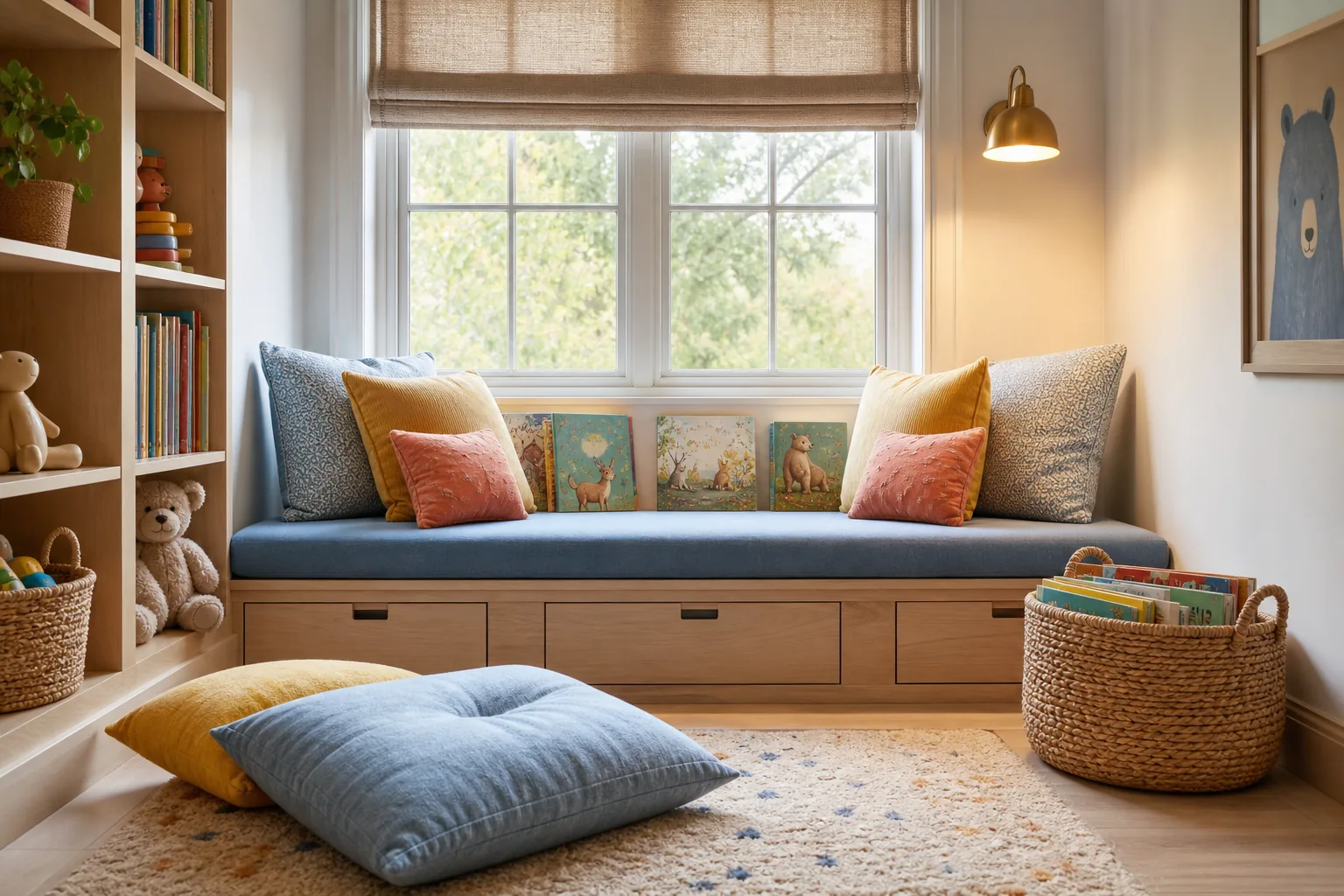
A reading nook needs only comfortable seating, accessible books, and useful light. Place a small bench, beanbag, or washable floor cushion beside front-facing book ledges so covers are easy to browse. A nearby basket can hold the current favorites without overcrowding the display.
Choose a corner away from the busiest active-play route. Add one warm lamp that meets your household’s safety needs, plus a soft rug or curtain to reduce visual noise. The result feels like a destination, even when it occupies only a few square feet.
Easy refresh: Rotate the displayed books by season, topic, or current interest.
4. Build an Easy-Clean Art and Craft Station
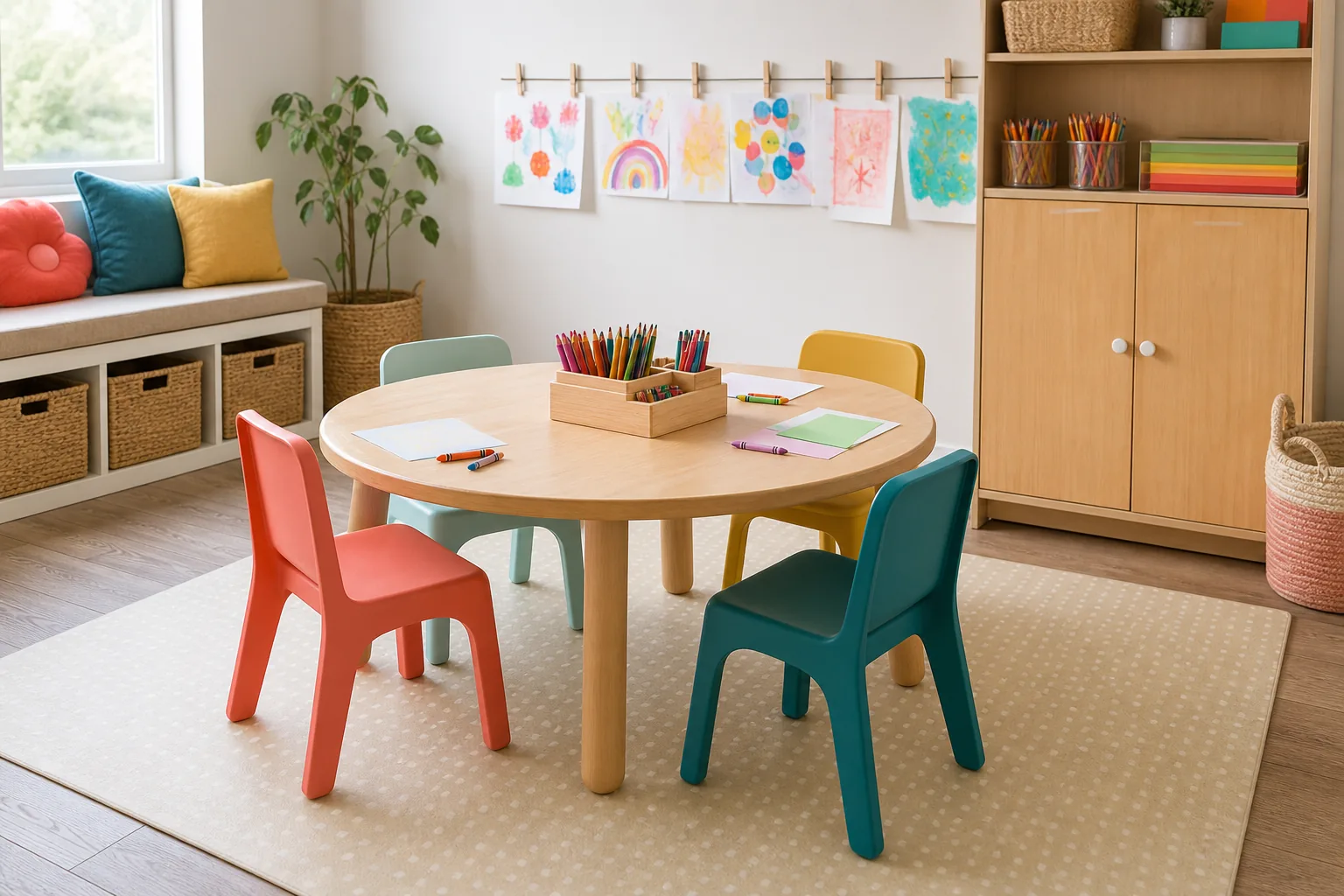
Give creative mess a defined home with a child-height table, sturdy chairs, and supplies grouped by task. Keep everyday paper, crayons, and washable markers accessible, while scissors, paint, glue, and small materials can live in supervised storage appropriate to the child’s age.
Protect the floor with a wipeable mat and keep a small cleanup caddy nearby. A cork strip, clip rail, or magnetic display surface turns finished artwork into changing decor and prevents paper from taking over the refrigerator.
Best setup: Store the most-used supplies closest to the table and special projects out of sight.
5. Protect Open Floor Space for Active Play
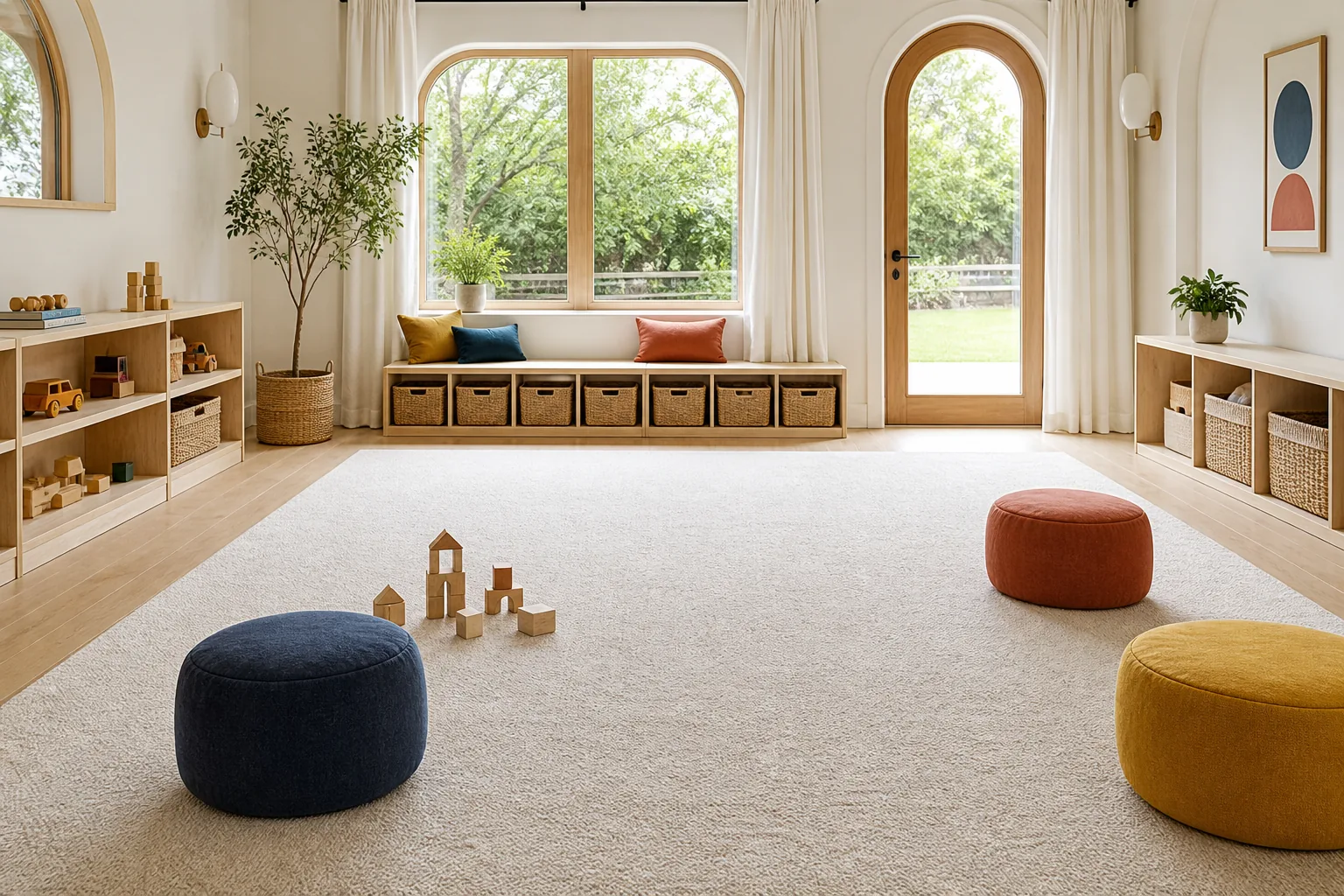
Children often need floor space more than they need another piece of furniture. Push storage toward the perimeter and keep the center open for train tracks, blocks, movement games, or large imaginative setups. A dense, nonslip rug adds comfort and visually anchors the space.
Choose lightweight seating that can be moved without scraping the floor. Avoid placing sharp corners or unstable objects beside the active zone. When the room serves several ages, use furniture placement to keep fast movement away from baby or quiet-play areas.
Measure first: Preserve the largest possible uninterrupted rectangle in the layout.
6. Start With a Calm Base and Add Playful Color
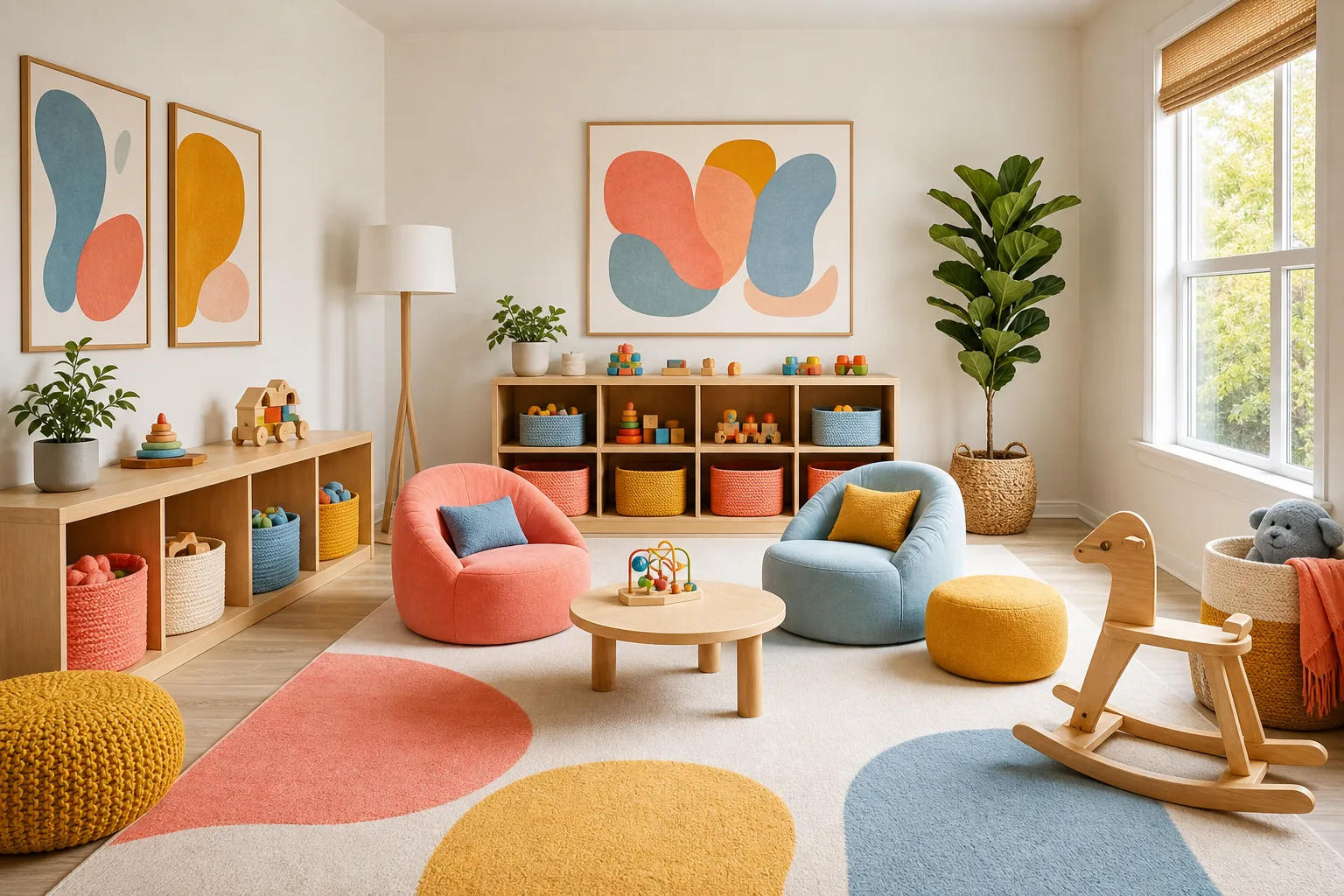
A neutral playroom does not have to feel colorless, and a colorful playroom does not have to feel chaotic. Use warm white, pale beige, or soft gray on the largest surfaces, then repeat three lively colors through the rug, baskets, chairs, artwork, and cushions.
This approach lets toys provide part of the color story without competing with a dozen permanent finishes. Coral, soft blue, and mustard feel energetic; olive, rust, and sky blue feel more grounded. Repeat each accent at least twice so the palette looks planned.
Flexible formula: Calm background + natural wood + three repeated accent colors.
7. Anchor the Room With a Washable Statement Rug
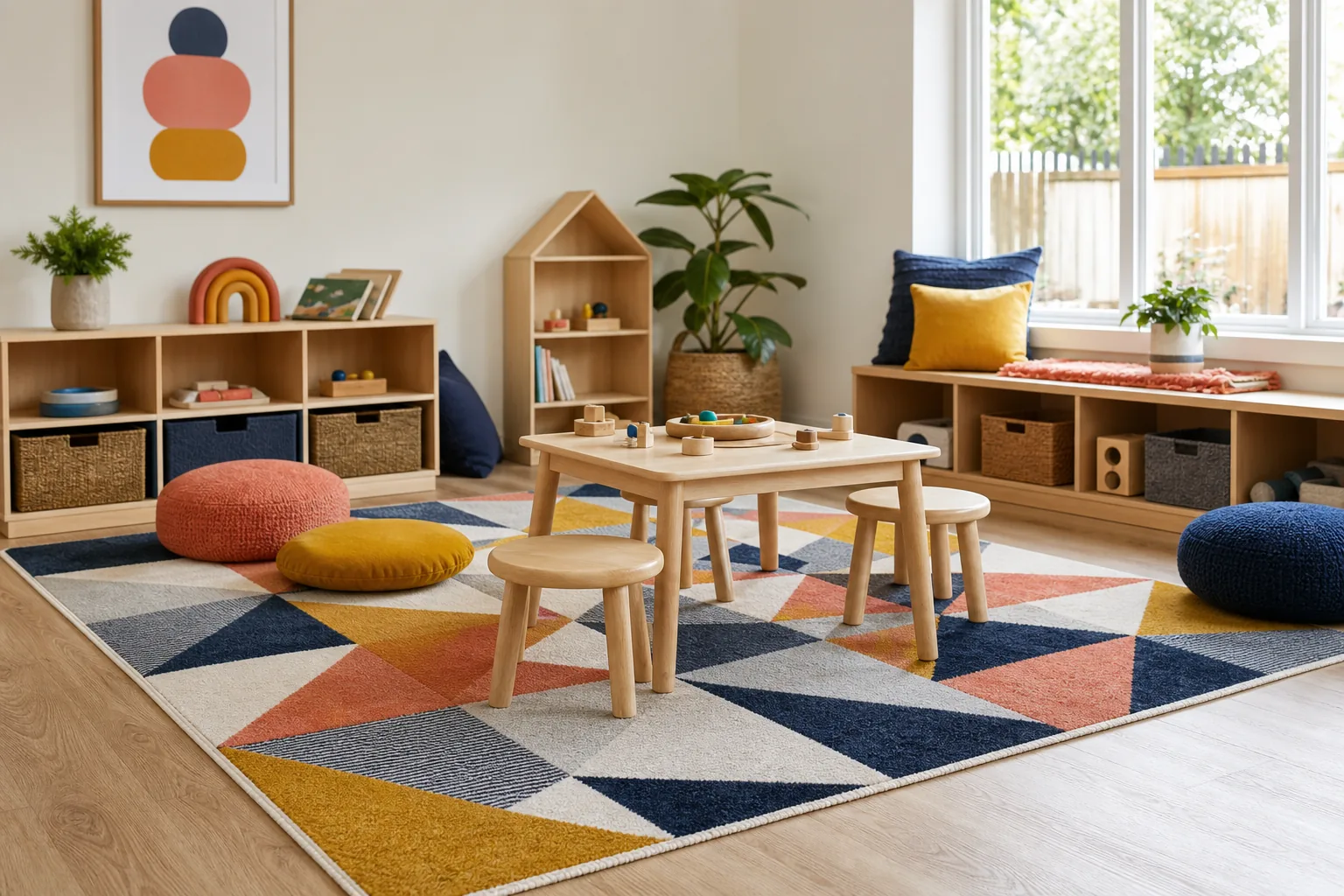
A rug instantly makes a playroom feel warmer and can define the main activity zone without adding walls. Choose a low-pile, washable design that suits your cleaning routine and stays secure on the floor. A medium-scale pattern hides everyday marks better than a very pale solid.
Use the rug as the palette guide for smaller accessories. Pull two or three colors from its pattern for baskets, art, and seating, then keep the largest furniture pieces quieter. Leave enough flooring visible around the rug so the room does not feel cramped.
Practical choice: Comfort, cleanability, and secure placement matter more than trend.
8. Add a Playful Half-Wall Color Treatment
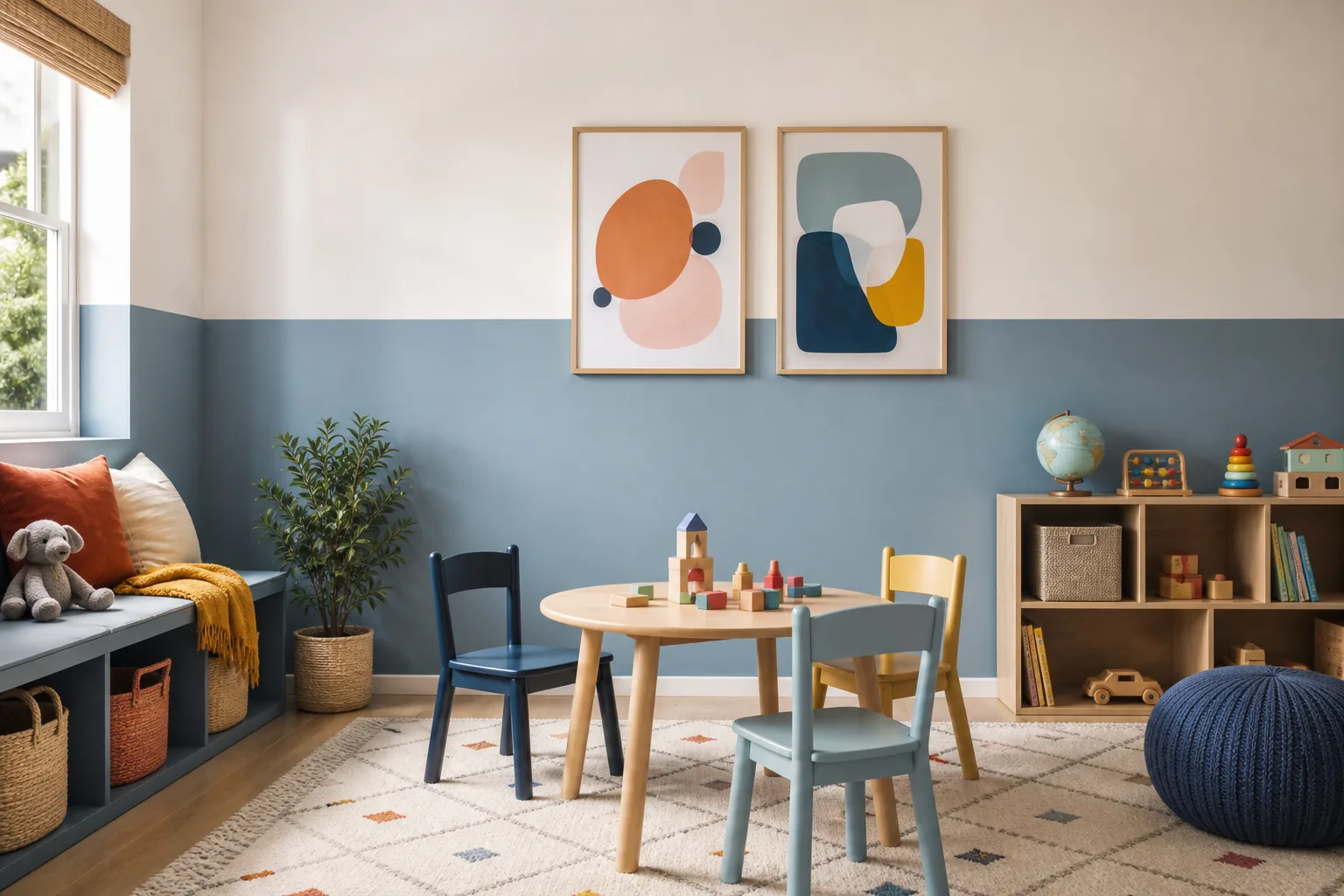
A painted half wall introduces color while keeping the room bright. Place the darker or more saturated shade below and a light neutral above; the horizontal line makes a tall room feel cozier and protects the most frequently touched part of the wall visually.
If painting is not possible, use removable options approved for the surface and your home. Simple scallops, broad stripes, or one oversized arch can create more impact than many small decals. Keep furniture and art relatively simple so the wall remains the focal point.
Designer tip: Test the color in morning and evening light before committing.
9. Turn Children’s Artwork Into Rotating Decor
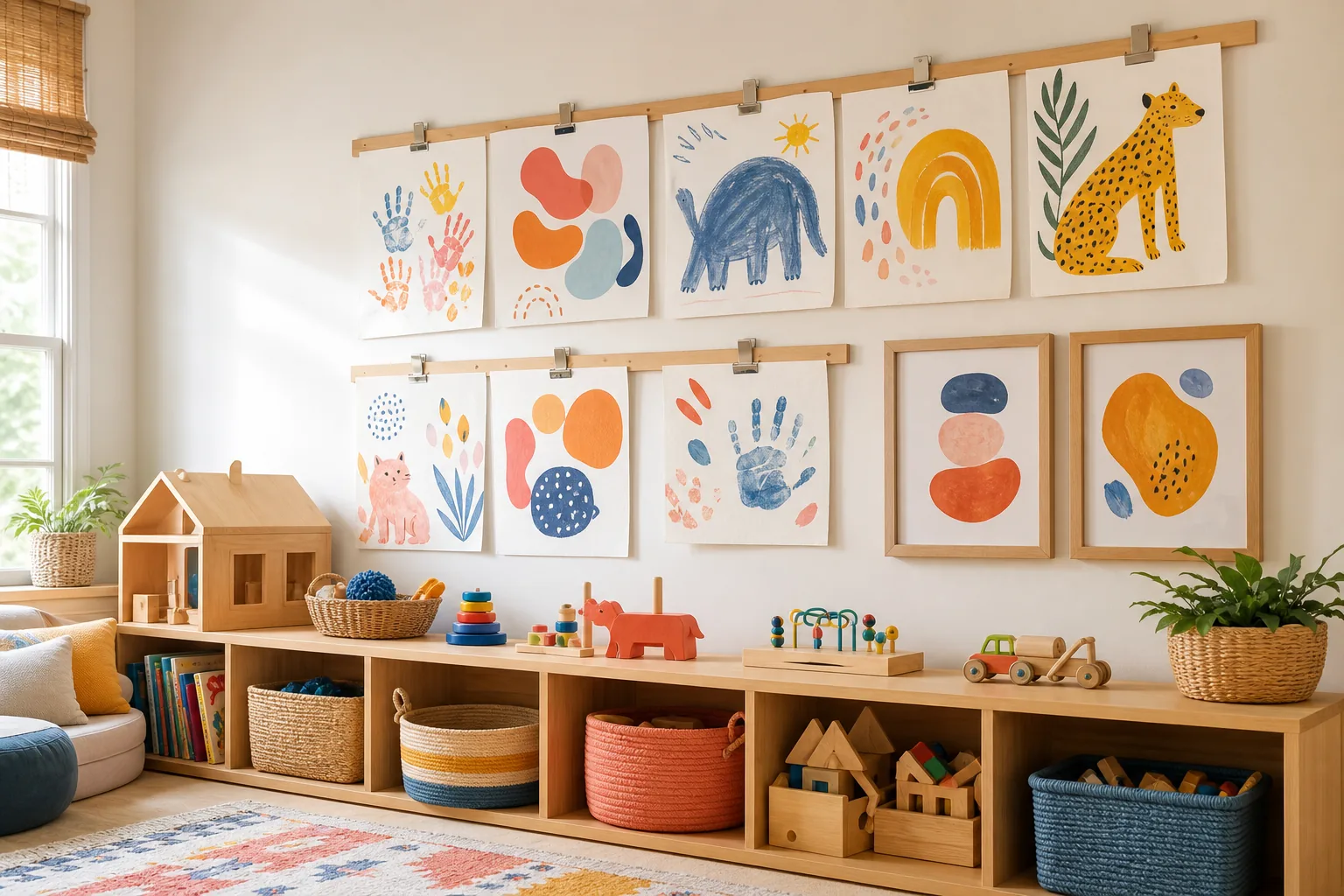
Children’s artwork adds personality that no store-bought print can match. Create one defined display area with clip rails, a corkboard, or lightweight frames that open easily. Limiting the gallery to a clear boundary makes even a colorful collection feel organized.
Keep a portfolio box for meaningful pieces and photograph oversized projects before recycling them. Refresh the display together every few weeks. The process celebrates creativity while teaching children that collections can be edited rather than endlessly expanded.
Cohesive look: Repeat one frame or clip finish around all the different colors.
10. Choose a Modular Play Sofa
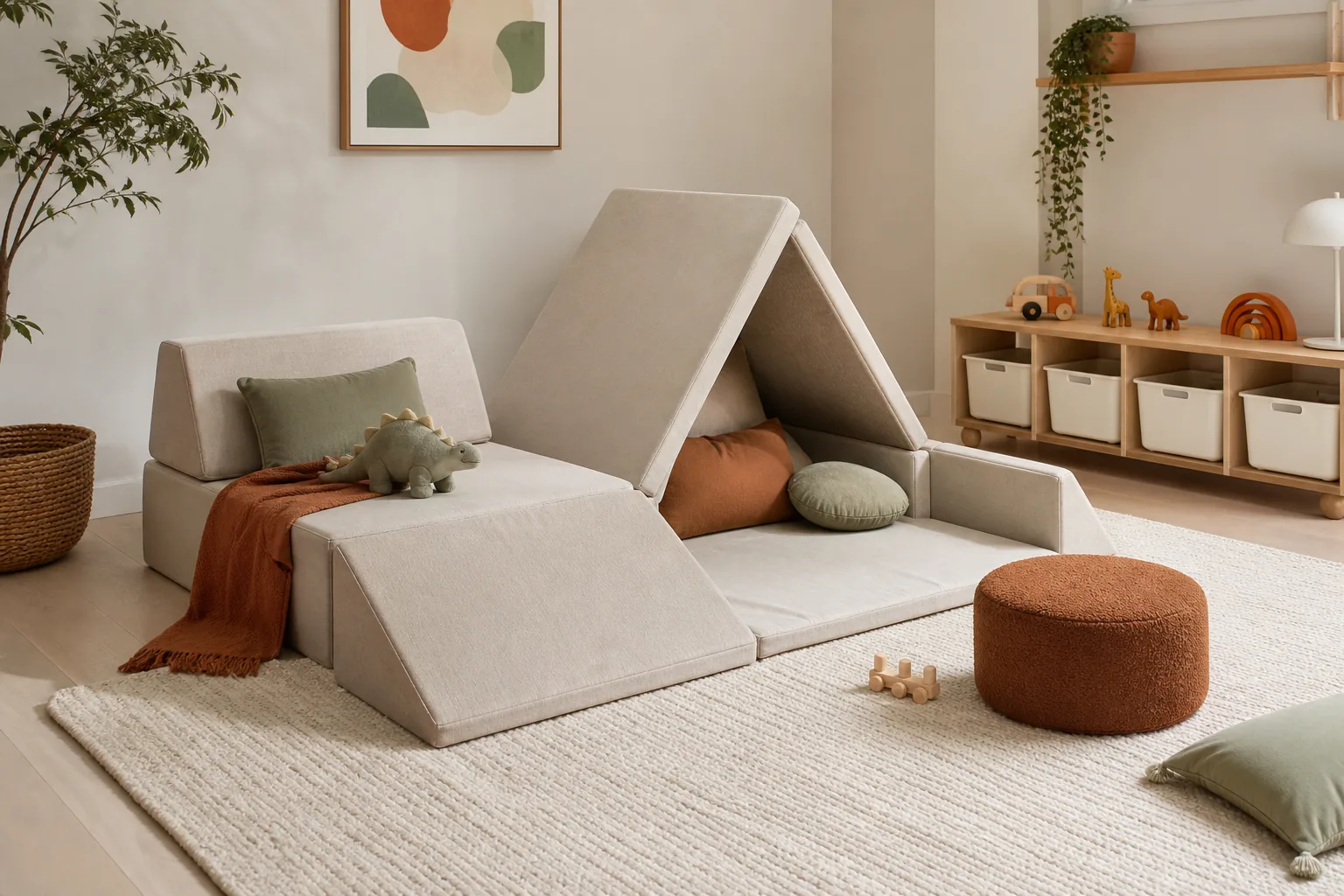
A modular foam sofa can serve as seating, a reading spot, a fort, or a soft building material. Select a size that can be stacked neatly against one wall and a durable cover that can be removed and cleaned. Leave enough space around it for children to reconfigure the pieces safely.
Choose a restrained color that works with future room updates, then bring brighter shades through washable cushions. Follow the product’s age, use, and safety guidance, and keep active arrangements away from windows, stairs, sharp furniture, and fragile decor.
Long-term value: Multi-use pieces usually outlast furniture designed for one narrow activity.
11. Design an Imaginative Pretend-Play Corner
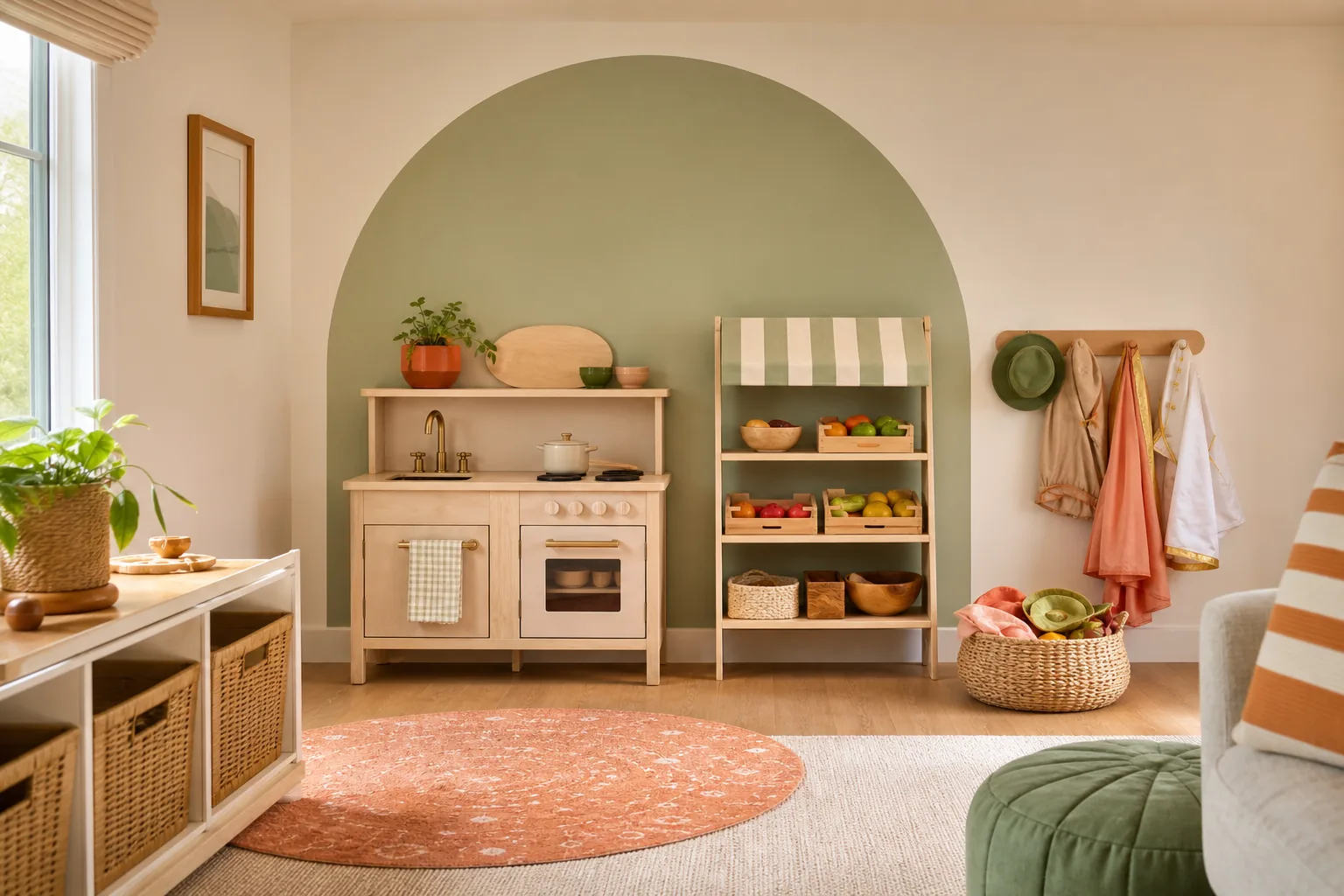
Concentrate pretend-play pieces in one corner so the setup feels like a miniature world rather than scattered toys. A compact play kitchen, market shelf, doll area, or workbench can sit beside one basket of related props. A small wall treatment or canopy can define the scene without consuming floor space.
Resist buying every accessory. Everyday household objects, wooden food, fabric scraps, and a rotating set of costumes often support more open-ended stories. Keep small pieces appropriate to the children using the room and supervise as needed.
Rotation idea: Change the theme from café to clinic, shop, or workshop using the same base furniture.
12. Include a Quiet Sensory Retreat
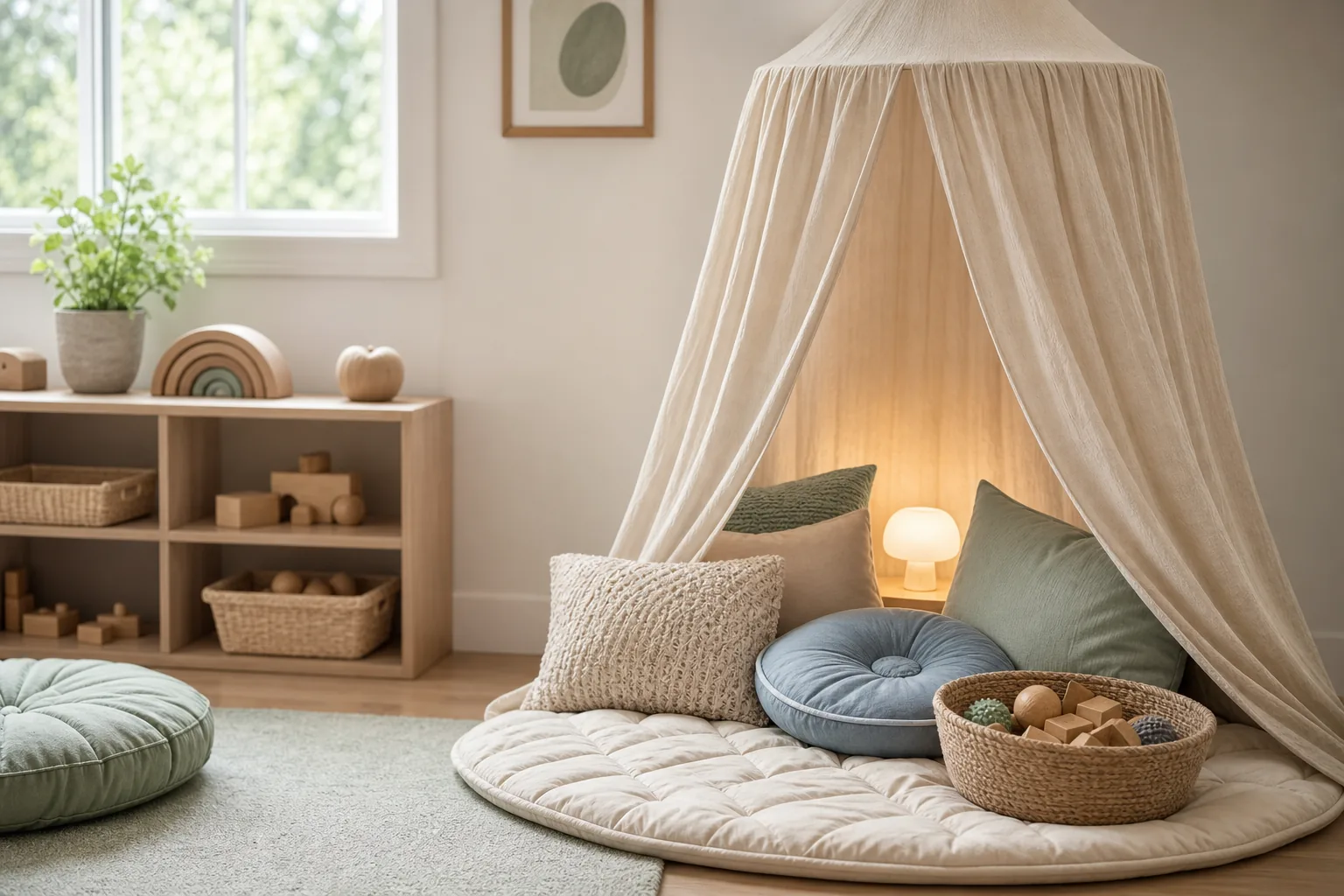
A busy playroom benefits from a place to pause. Use a small canopy, corner mat, or partially enclosed nook with soft seating and a limited selection of calming objects. Keep the palette muted and the visual display simple so the zone feels distinct from active play.
Every child’s sensory needs are different, so observe what helps rather than assuming one setup works for everyone. Avoid suspended equipment unless it is professionally specified and installed. The goal is a comfortable retreat, not an overloaded sensory gym.
Keep it calm: One basket of carefully chosen items is often enough.
13. Transform a Small Corner Into a Mini Playroom
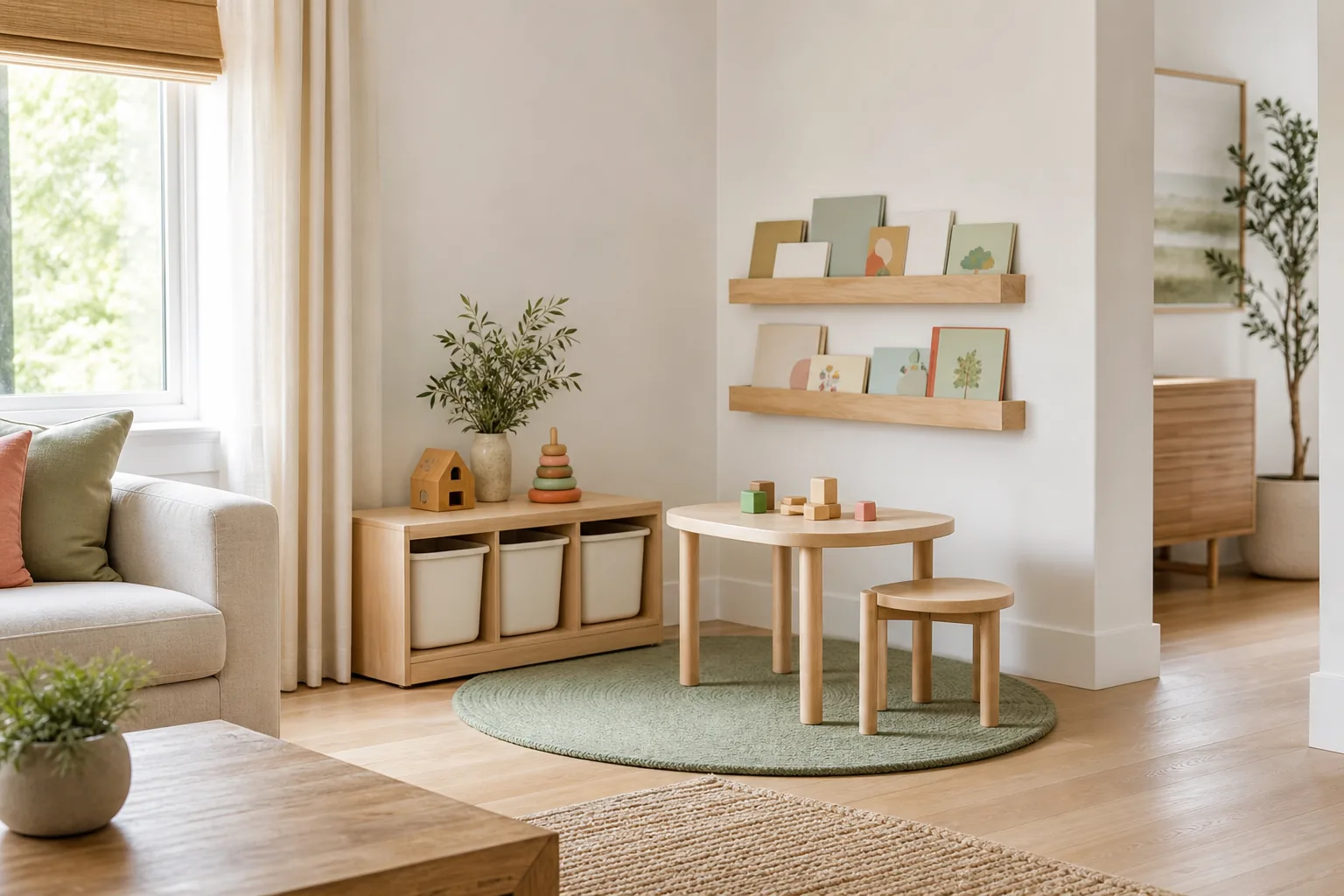
You do not need a dedicated room to create a useful play space. A low shelf, small washable rug, wall-mounted book ledges, and a compact table can turn an unused corner into a complete mini playroom. Match the main room’s materials so the children’s zone feels integrated.
Limit the available toys to what fits comfortably and rotate extras from closed storage. A lidded basket or cabinet helps the space reset quickly before guests arrive. Use vertical wall space for display, but keep heavy objects and climbing temptations out of reach.
Small-space rule: Every item should support play, storage, or both.
14. Blend a Playroom Into the Living Room
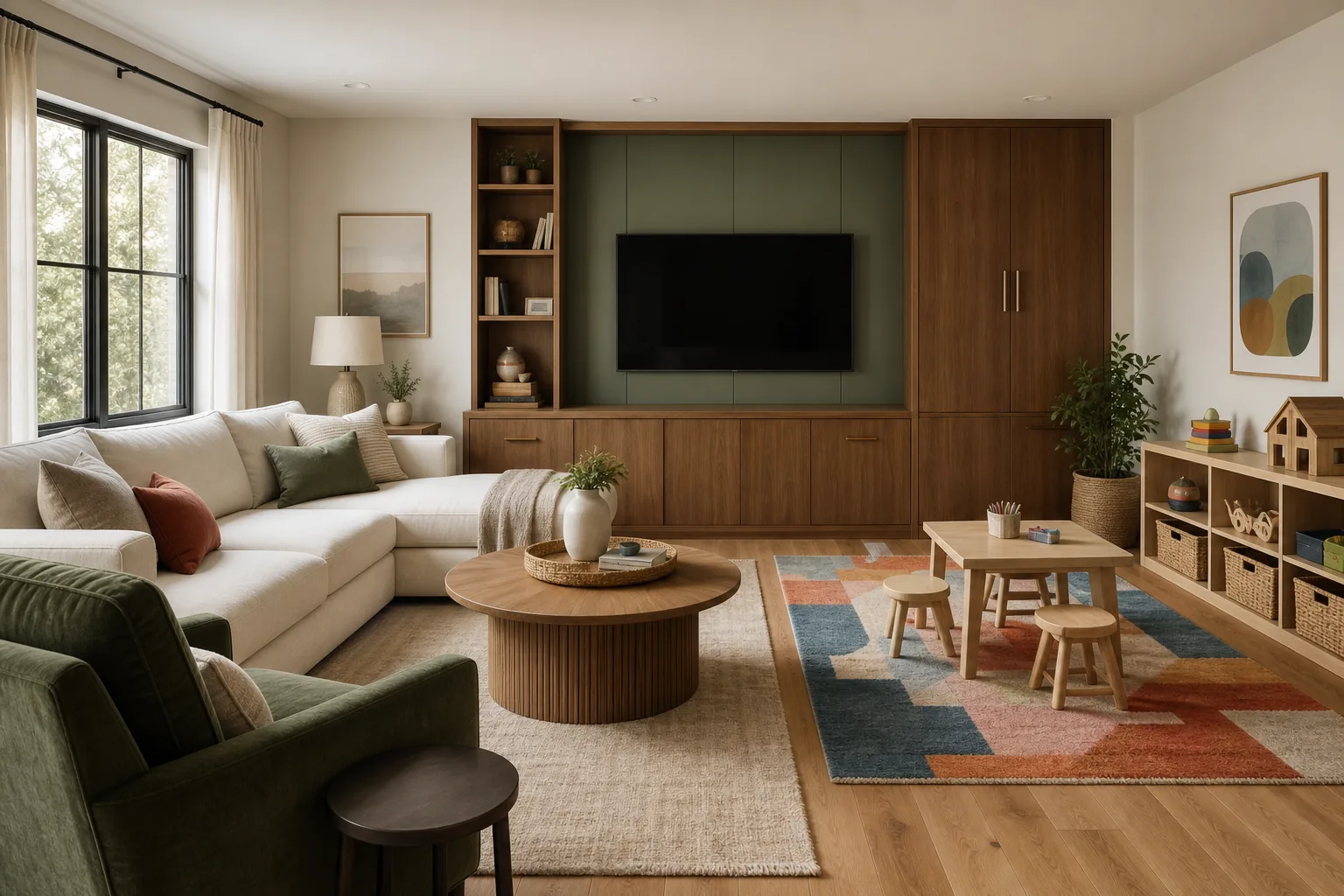
For an open-plan home, connect the play area to the living room through color and materials. Repeat the sofa’s wood tone or upholstery color in the toy storage, then give children one clearly defined rug and activity surface. Closed cabinets can conceal visual clutter, while a few open baskets keep current favorites accessible.
Choose furniture that still works when the toys are removed, such as a bench with storage or a low cabinet that can later hold books and media. This makes the shared room feel welcoming to the whole family instead of divided into adult and child halves.
Visual balance: Keep the adult seating calm and let the play zone carry the brighter accents.
15. Make a Basement Playroom Feel Bright
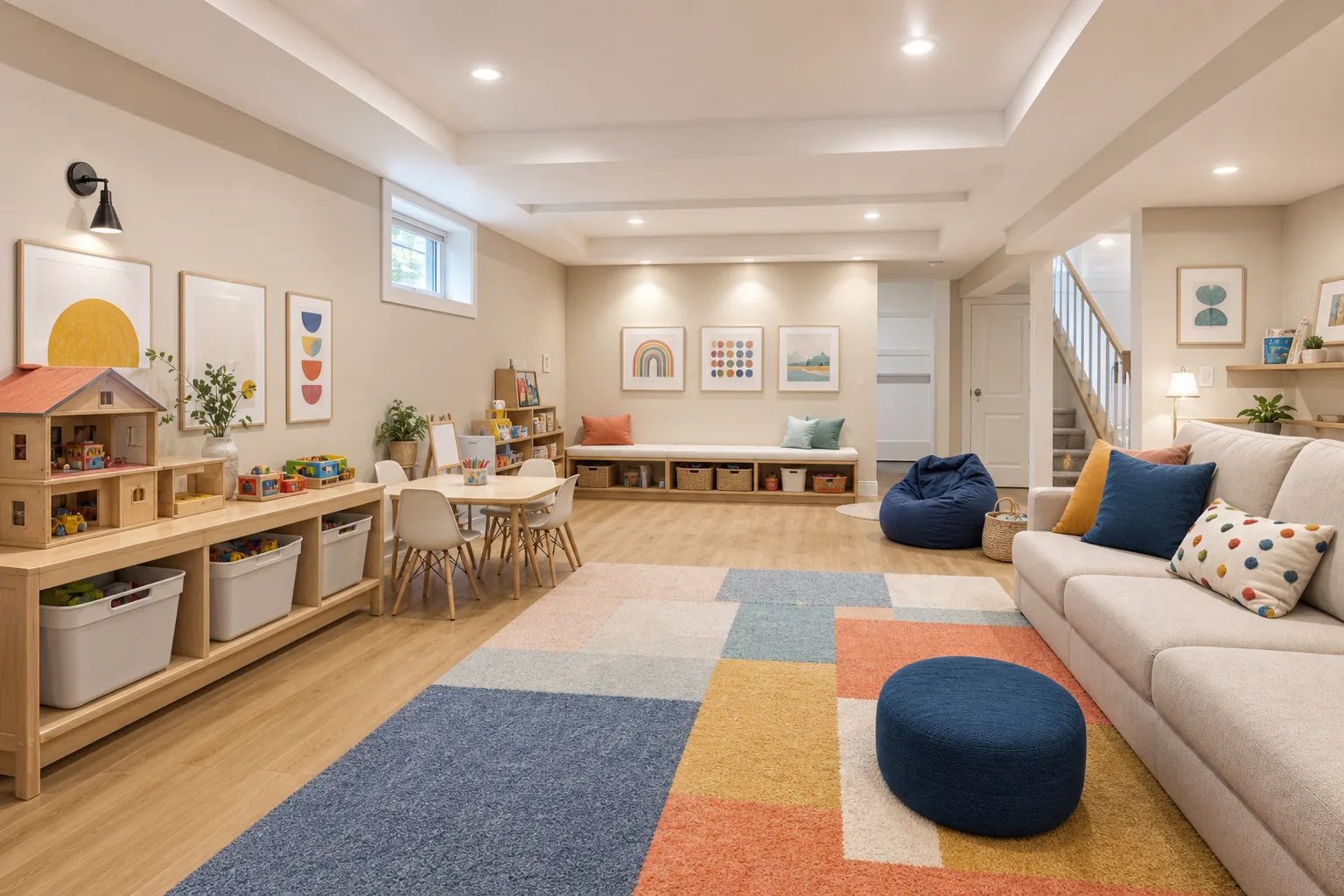
Basements often offer valuable floor space but need extra attention to light and comfort. Use a pale warm wall color, several approved light sources, and a cheerful rug to counter low natural light. Position quiet activities near any available window and keep tall storage from blocking it.
Before decorating, address moisture, ventilation, temperature, exits, and other building-safety considerations with qualified guidance. Once the room is suitable for use, divide the larger footprint into clear zones so it feels structured rather than like a toy warehouse.
Lighting plan: Combine broad ambient light with focused lamps at reading and craft areas.
16. Create a Playroom That Grows With Different Ages
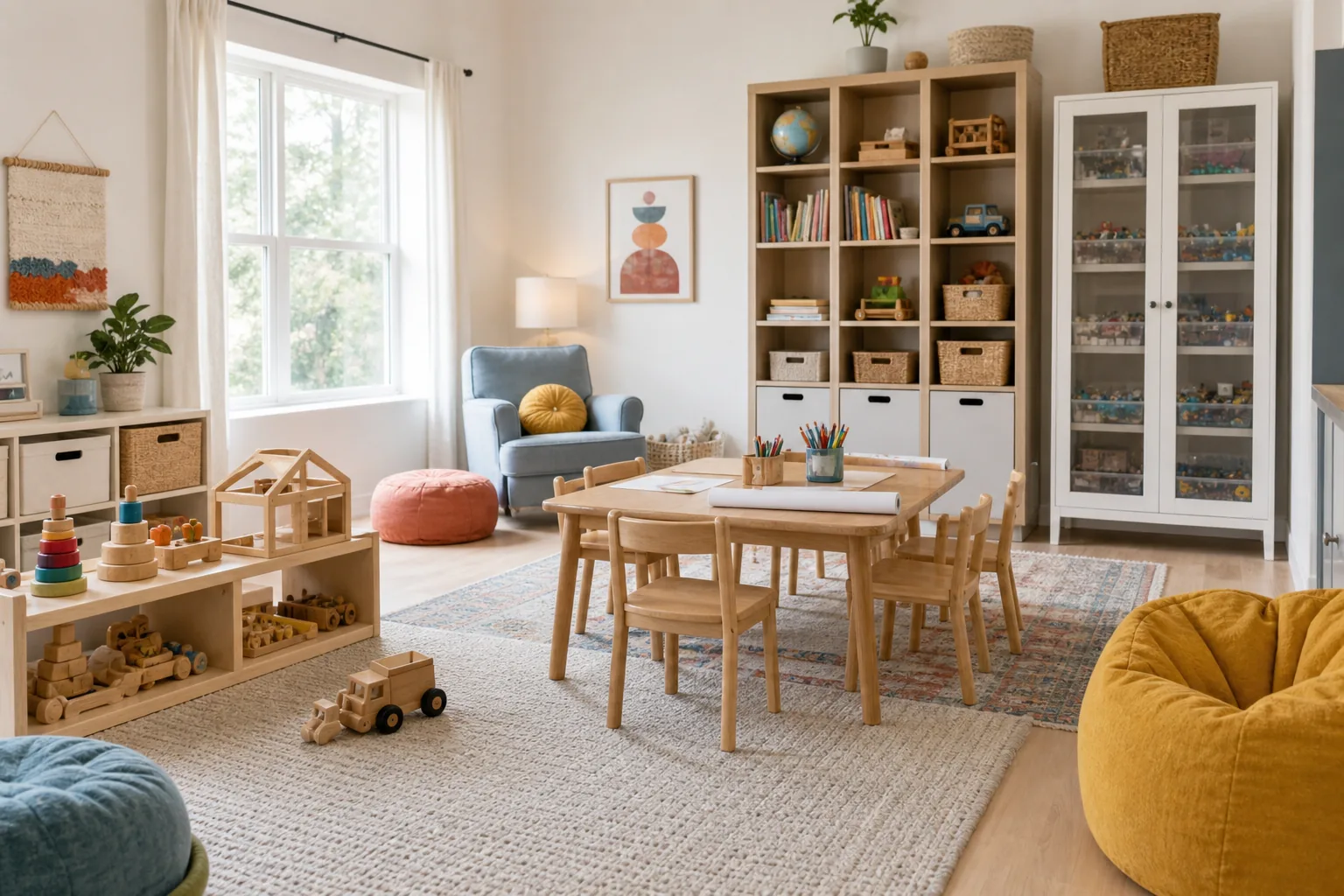
A shared-age playroom needs common space plus a few protected categories. Keep universal materials—books, blocks, art, and dress-up items—in central zones. Place older children’s small pieces, special projects, and electronics in secure storage that younger siblings cannot access.
Choose full-size storage and adaptable tables instead of overly themed toddler furniture. Neutral foundational pieces can move from toys to school supplies as children grow. Give each child one shelf, drawer, or display area that feels personally theirs.
Roommate principle: Share the major zones, personalize the smaller storage and display areas.
17. Add a Flexible Homework and Learning Station
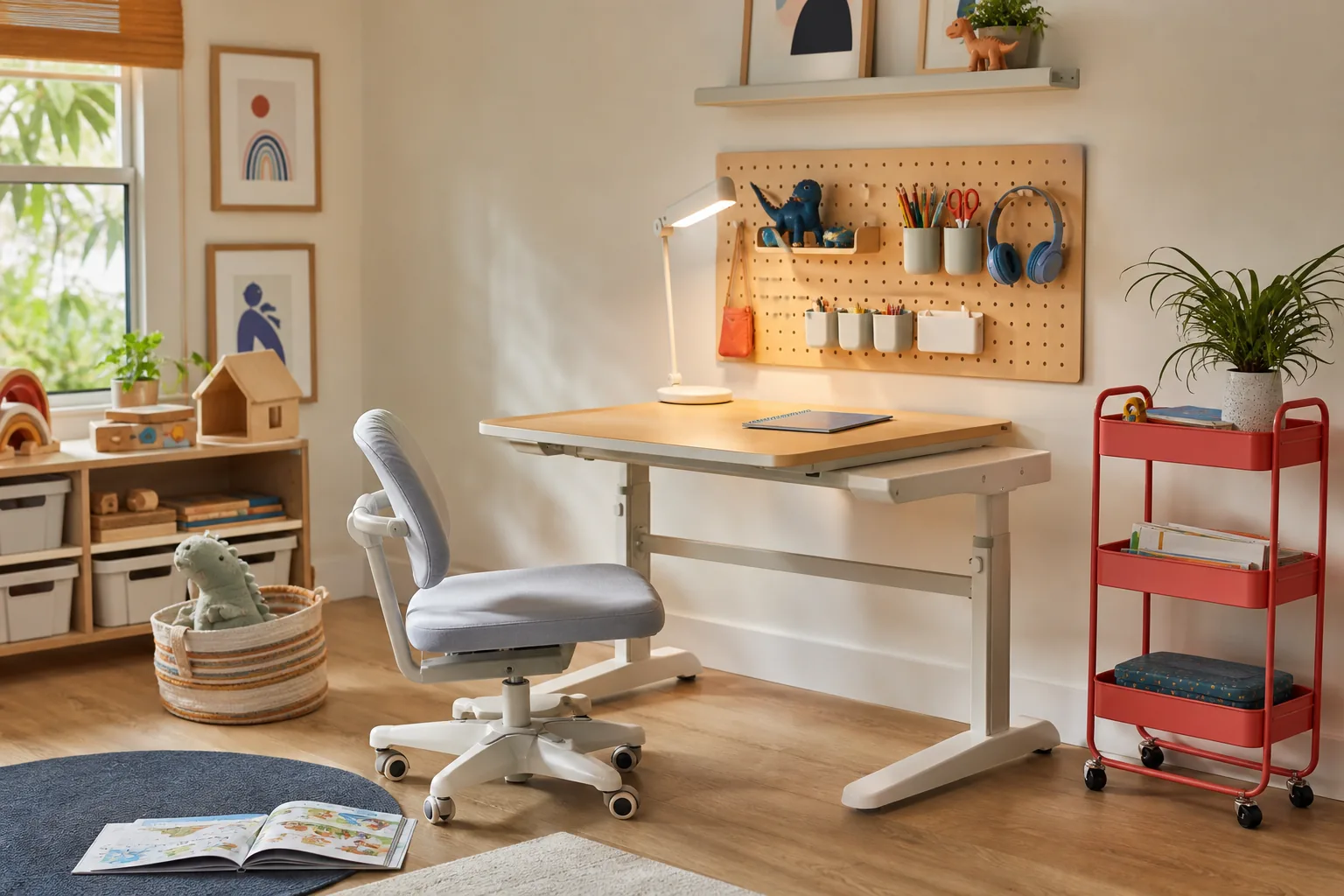
A school-age playroom can support focused work without losing its playful character. Position a simple desk or shared table near useful light, provide comfortable age-appropriate seating, and keep only current school supplies within reach. A pegboard or shallow organizer prevents the desktop from becoming a storage shelf.
Use a rolling cart if the room needs to switch quickly between homework and crafts. Keep the wall directly in front of the work area relatively calm, then display creative work on a side wall. Good task lighting matters more than decorative desk accessories.
Daily reset: Clear the work surface at the end of each session.
18. Organize a Dress-Up and Costume Station
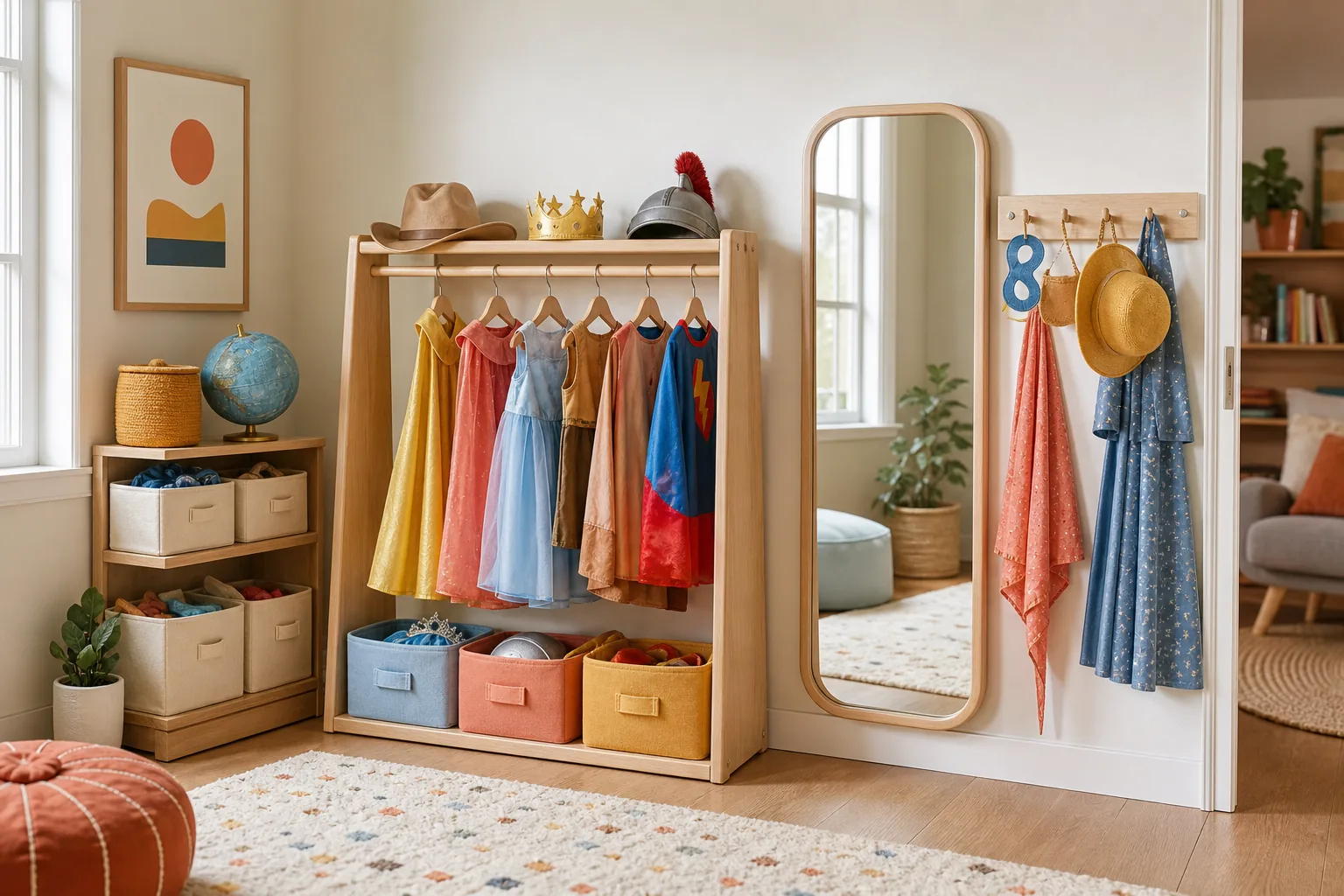
Make costumes easy to see by hanging a small edited collection on a low rail or sturdy hooks. Add a basket for hats and soft accessories, plus a securely installed child-safe mirror appropriate to the room. Keeping the selection visible encourages independent storytelling and simplifies cleanup.
Store seasonal or less-used costumes elsewhere and rotate them. Avoid long cords, sharp accessories, and items that create entanglement or trip hazards. The station should feel like a creative invitation, not an overflowing closet.
Display tip: Organize by type rather than by complete costume so pieces can mix into new characters.
19. Rotate Toys Instead of Displaying Everything
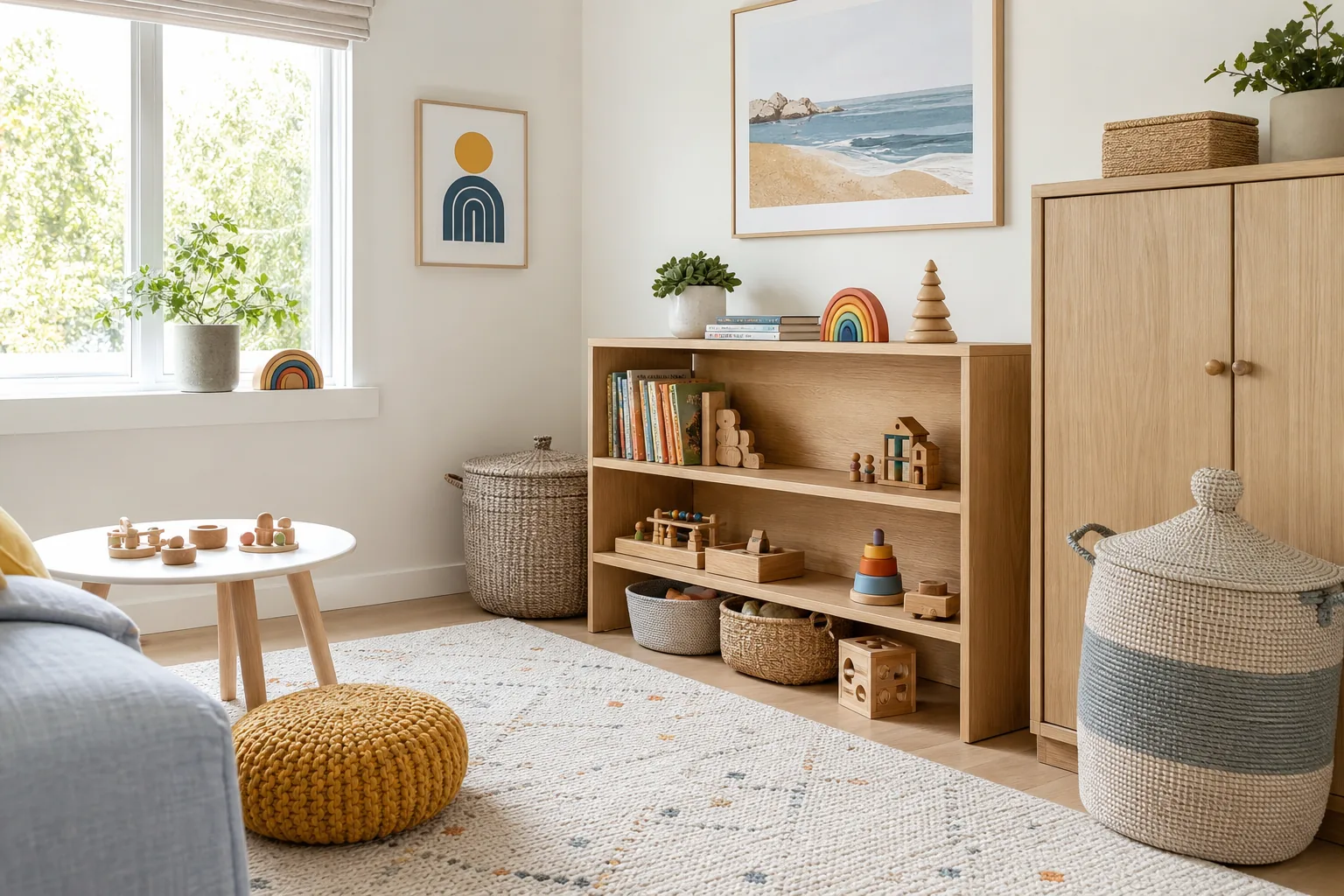
A smaller visible collection makes it easier for children to choose, play deeply, and put things away. Keep current favorites on open shelves and store the rest in clearly grouped containers outside the main play area. Rotate a few categories when interest fades rather than replacing the entire room at once.
Do not make rotation into a rigid schedule. Follow the child’s current interests and keep beloved comfort items available. Use the process to remove broken pieces, reunite sets, and donate age-outgrown toys in good condition.
Good starting point: Leave breathing room around every displayed activity.
20. Choose Durable, Easy-Clean Materials
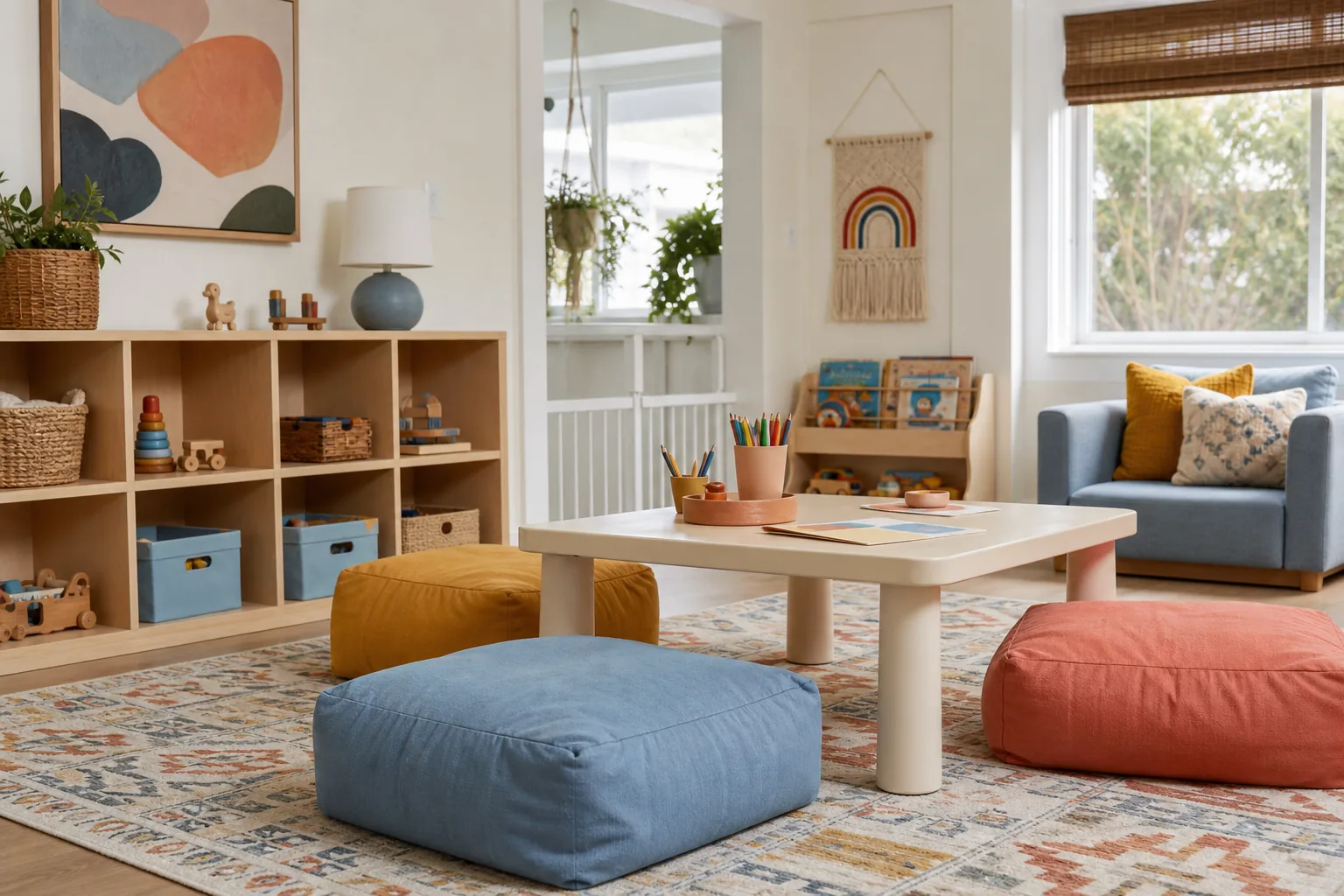
Beautiful playrooms stay beautiful when the materials match real family life. Look for washable textile covers, wipeable table surfaces, durable sealed storage, and rugs that suit your cleaning equipment. Mid-tone patterns and natural textures disguise minor everyday wear better than bright white upholstery.
Avoid finishes that require constant protection or products with unclear care instructions. Round or softened furniture profiles can be useful in high-traffic layouts, but product suitability still depends on age and use. A room that can be cleaned quickly is more likely to stay available for play.
Buying question: Can this item be cleaned, repaired, or repurposed easily?
21. Complete a Playroom Makeover on a Realistic Budget
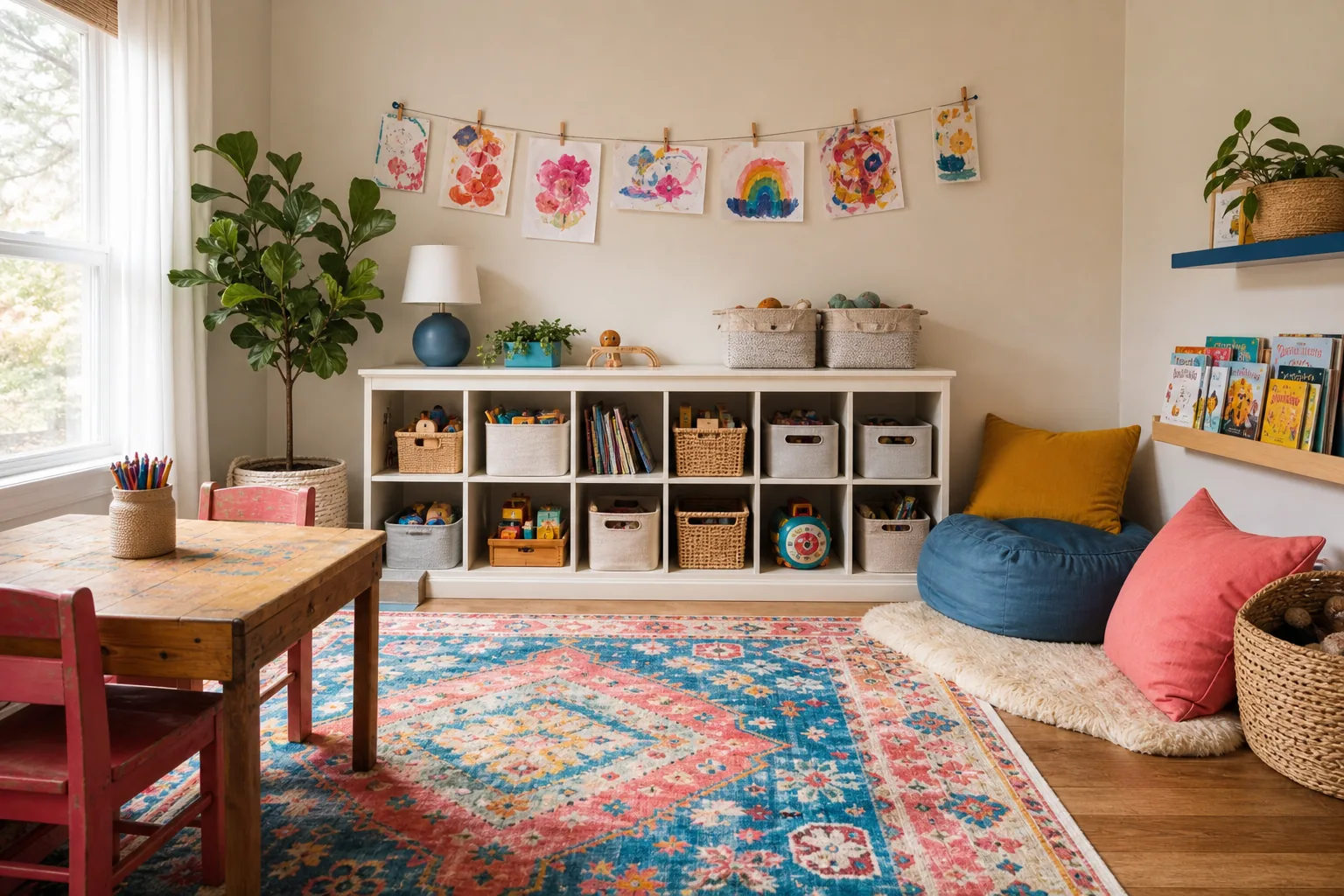
Spend first on the elements that improve the whole room: secure storage, a comfortable floor surface, and useful activity furniture. Reuse an existing bookcase at child height if suitable, shop secondhand for a sturdy table, and create decor from children’s artwork. Matching baskets can make mixed furniture feel cohesive.
Paint or one removable wall feature provides more impact than dozens of themed accessories. Add new pieces slowly after watching how the room is used. A practical $300 plan might reserve $100 for storage, $80 for a washable rug, $60 for a table or seating, and $60 for lighting, art display, and supplies.
Budget priority: Solve the mess and layout before buying decorative extras.
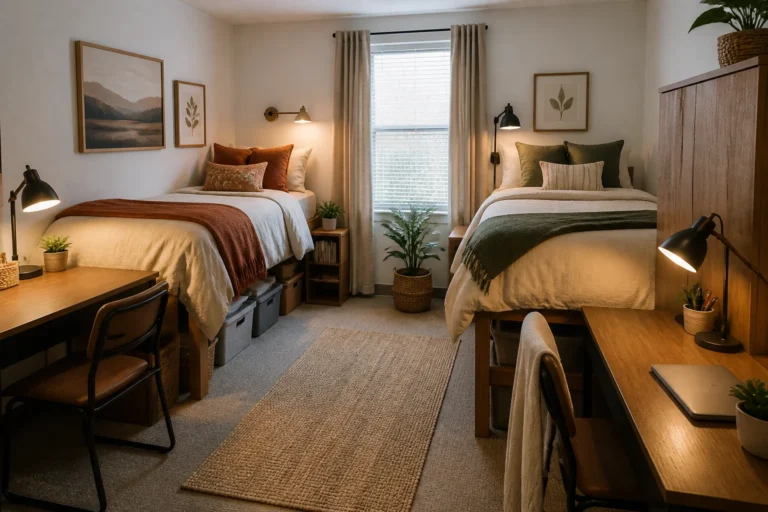
Small multifunctional rooms use many of the same principles as college spaces. Our guide to dorm decor ideas includes more inspiration for compact storage, flexible furniture, and organized study zones.
Playroom Planning Checklist
- List the children’s current activities, ages, and storage needs.
- Measure the complete room, doors, windows, outlets, and clear walkways.
- Plan active, creative, and quiet zones before buying furniture.
- Anchor and install furniture according to current manufacturer guidance.
- Keep small parts, cords, heavy decor, and supervised supplies appropriately secured.
- Choose washable, durable materials and a realistic cleanup system.
- Leave open floor space and room for interests to change.
Common Playroom Design Mistakes
- Displaying every toy: Too many choices create clutter and make cleanup harder.
- Buying storage before sorting: First decide what the room actually needs to hold.
- Using only adult-height storage: Everyday items should be accessible where appropriate.
- Forgetting open floor space: Children need room for play setups and movement.
- Choosing style over cleaning: Delicate finishes rarely suit a high-use family room.
- Ignoring changing ages: Flexible foundations last longer than heavily themed furniture.
- Treating safety as decoration: Secure installation and age suitability require specific attention.
Playroom Inspiration FAQs
What should every playroom include?
Most playrooms benefit from open floor space, accessible storage, a comfortable reading or quiet area, and a table for building or creative work. The exact mix should reflect the children’s ages, interests, and the activities that happen most often.
How can I make a playroom look less cluttered?
Reduce the number of toys on display, use broad storage categories, repeat a limited color palette, and leave empty space on shelves. Closed storage can hold visually busy items, while a smaller curated selection remains accessible.
How do I create a playroom in a small space?
Use one low storage unit, a compact table, wall-mounted book ledges, and a washable rug to define a corner. Choose items that serve more than one function and rotate toys instead of storing the full collection in the active area.
What colors work best in a playroom?
A calm neutral base with two or three repeated accent colors is flexible and easy to update. Warm white with coral, blue, and mustard feels cheerful, while cream with olive, rust, and sky blue creates a softer natural look.
How can a playroom grow with children?
Choose adaptable storage, full-size foundational furniture, and simple finishes. A low toy shelf can later hold books, a craft table can become a homework station, and neutral seating can move into a family room or bedroom.
How do I make a playroom safe?
Follow current manufacturer guidance for anchoring and assembly, keep cords and age-inappropriate small objects secured, maintain clear exits and walkways, and choose equipment suited to the child’s age and abilities. Seek qualified guidance for climbing, hanging, electrical, or structural installations.
Final Thoughts
The best playroom is not the room with the most toys or the most expensive built-ins. It is a space that supports the way children actually play while giving the family a workable system for storage, supervision, and cleanup. Begin with zones and safety, then add color, texture, and personality one useful layer at a time.
Choose the ideas that solve your room’s real problems. A low shelf may be more valuable than a mural, and an open patch of floor may inspire more play than another activity table. When fun, flexibility, and organization work together, the playroom can become one of the most loved spaces in the home. Explore more evolving family-friendly styles in our home decor trends collection.
One Comment