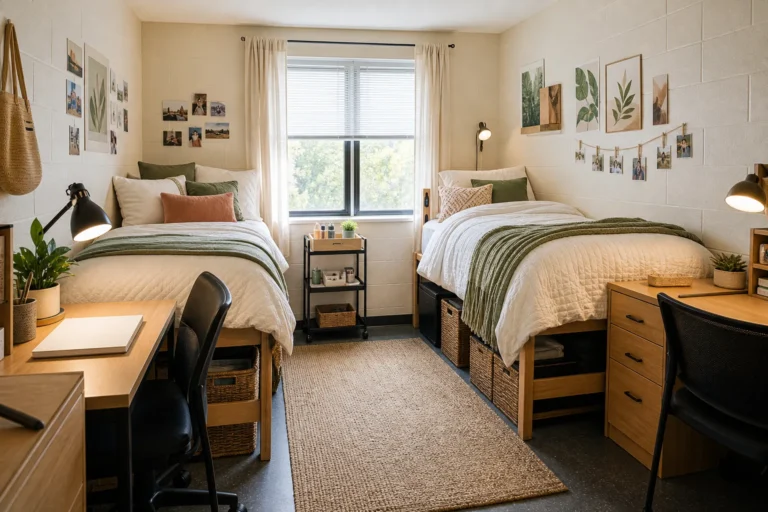
21 Small Dorm Decor Ideas That Feel Cozy, Stylish, and Clutter-Free
A small college room has to do an unreasonable number of jobs. It is a bedroom, study zone, snack station, dressing room, and hangout spot—often shared with another person. The best dorm decor ideas make those jobs easier while adding warmth and personality. They do not cover every surface, block a walkway, or depend on permanent changes your residence hall may reject.
This guide focuses on attainable choices that work in real dorms: a controlled color palette, softer lighting, vertical storage, damage-free wall decor, and useful pieces that earn their footprint. You can use the full plan for move-in or choose two or three updates for a weekend refresh.
The simple dorm formula: Choose one quiet base color, add two accent colors, repeat three useful materials, and leave roughly one-third of each visible surface clear. The repetition makes the room feel cohesive; the empty space keeps it functional.
A Quick Plan Before You Decorate
| Zone | Start With | Add for Style | Keep Clear |
|---|---|---|---|
| Bed | Comfortable bedding | One throw and 2–3 pillows | The floor beside it |
| Desk | Task lamp and organizer | One framed print or small plant | Half the work surface |
| Walls | Removable hooks or putty | A compact gallery or textile | Vents, outlets, and safety equipment |
| Closet | Matching slim hangers | Labeled soft bins | Door swing and ventilation |
| Entry | One hook zone | Small mirror or tray | The exit path |
Before buying anything, check the room dimensions and your housing rules. Confirm whether you can loft the bed, use removable adhesive, bring extension cords, or add appliances. Many residence halls prohibit candles, overloaded power strips, fabric near sprinklers, and anything that narrows the exit route. When in doubt, choose battery-operated lighting, approved surge protection, and decor that can be removed in minutes.
1. Build the Room Around a Three-Color Palette
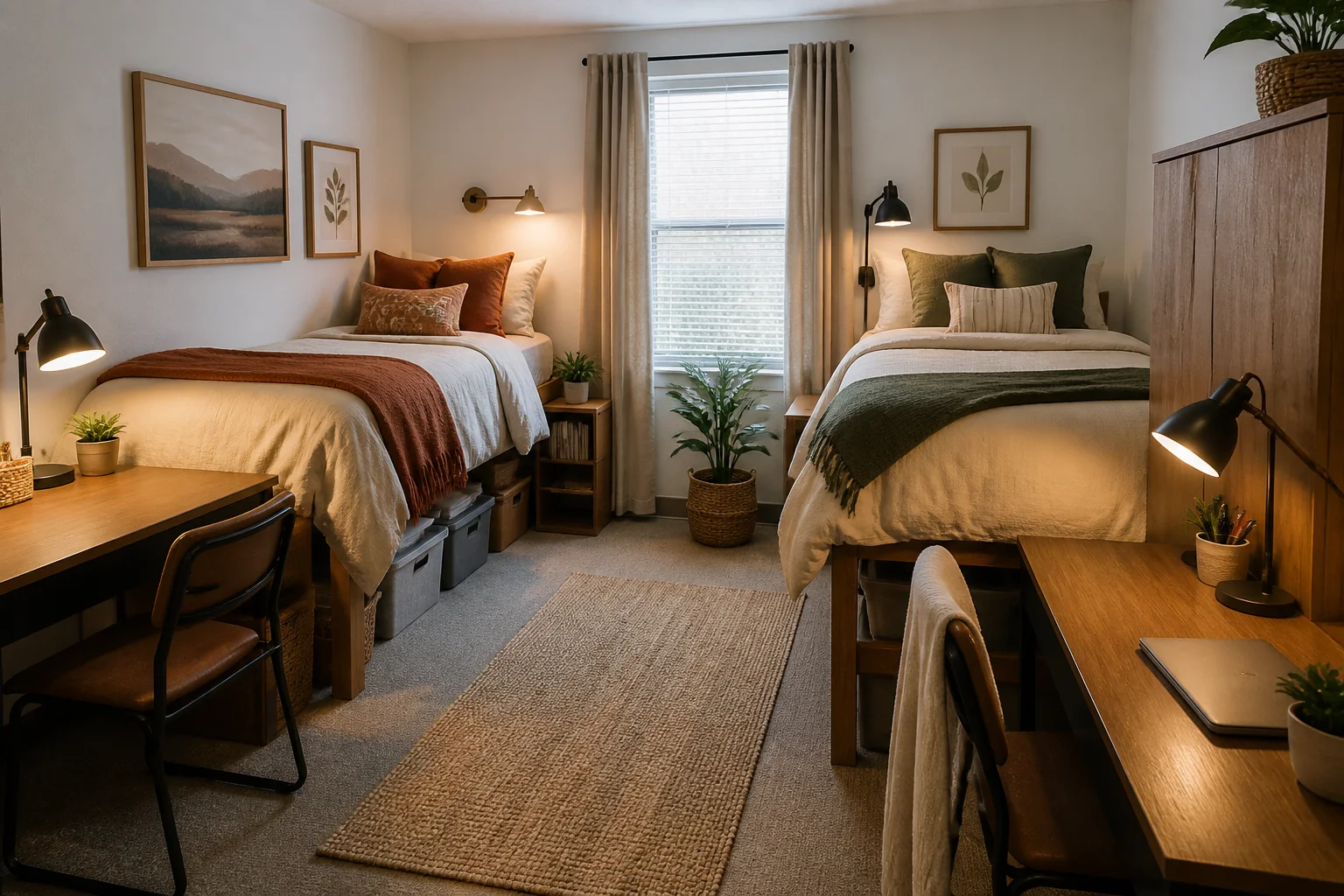
A limited palette helps mismatched dorm furniture feel intentional.
Begin with the largest item you already own, usually the comforter or rug. Use one calm base—cream, oatmeal, soft gray, or warm white—then select two accents such as rust and olive, plum and camel, or blue and chocolate. Repeat each accent at least twice in small doses. A rust pillow can echo a framed print; an olive throw can connect to a desk cup. This is cheaper and calmer than buying a complete themed set, and it gives hand-me-down furniture a shared visual language.
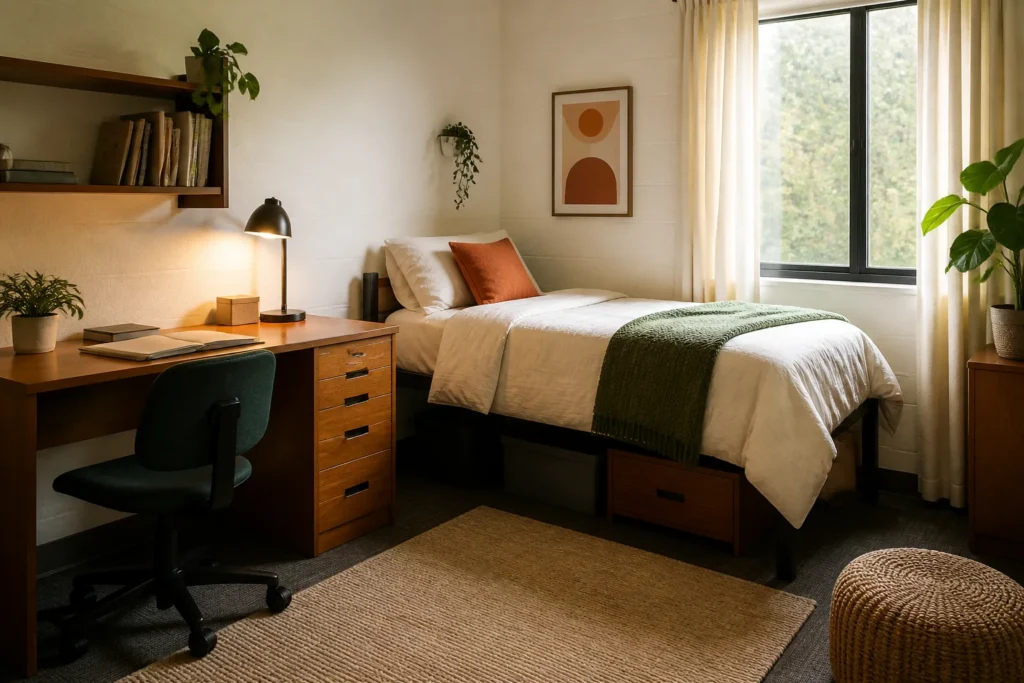
2. Choose Bedding That Adds Texture, Not Bulk
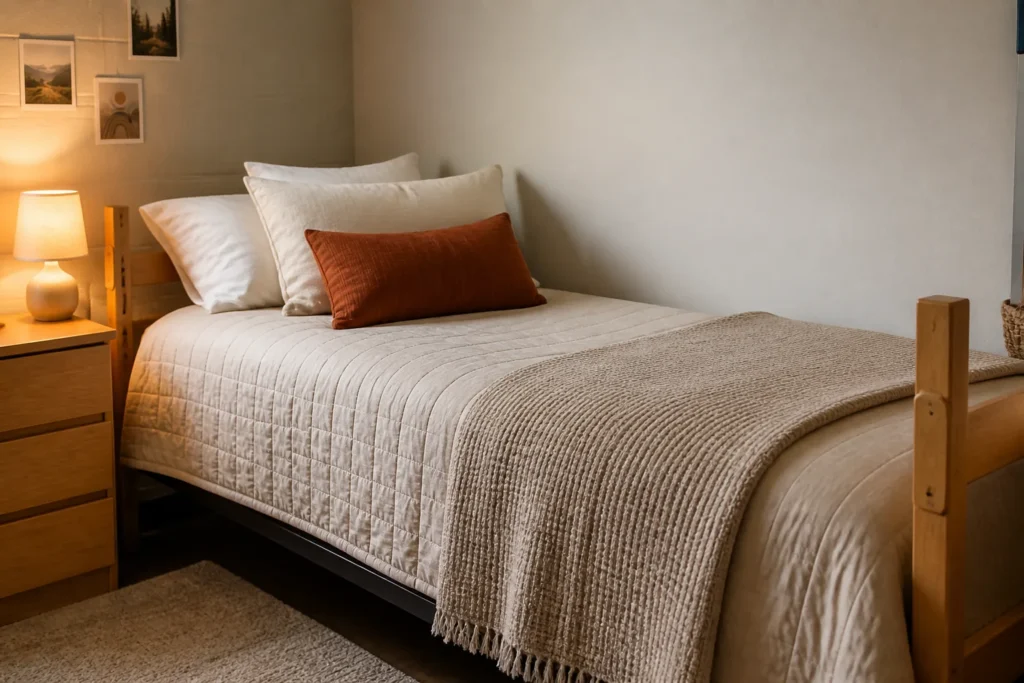
A quilt and one soft throw create comfort without swallowing a twin XL bed.
The bed is usually the room’s biggest visual block, so let it carry the style. Start with washable sheets and a simple quilt or duvet, then add one folded throw and two or three pillows in different textures. Linen-look cotton, waffle weave, and a small amount of velvet feel collected without becoming fussy. Avoid an oversized mountain of cushions that must land on the floor every night. If you want a polished neutral look, borrow the restrained layering approach from these modern neutral bedroom ideas.
3. Add a Removable Upholstered Headboard
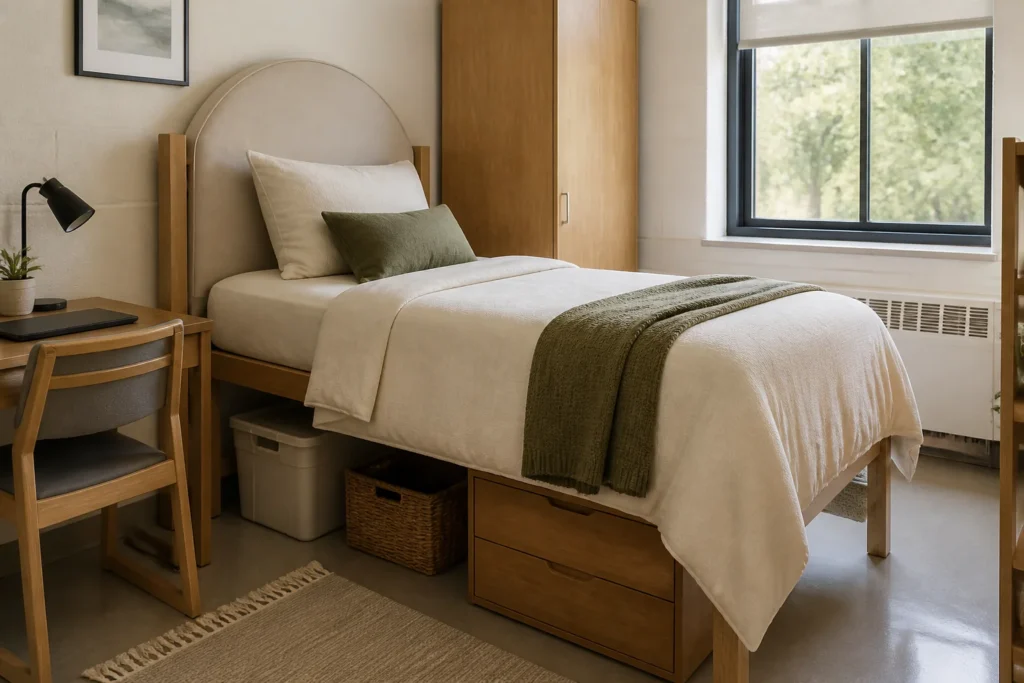
A lightweight headboard gives a standard dorm bed a finished focal point.
A dorm-safe headboard softens the wall and makes sitting up to read more comfortable. Look for a lightweight style that straps to the bed frame or rests securely between the mattress and wall. A DIY version can use a thin foam board wrapped in batting and durable fabric, but keep it stable and away from outlets or heating units. Choose a simple arch or rectangle rather than an oversized shape; the goal is definition, not lost floor space.
4. Warm Up Harsh Lighting in Layers
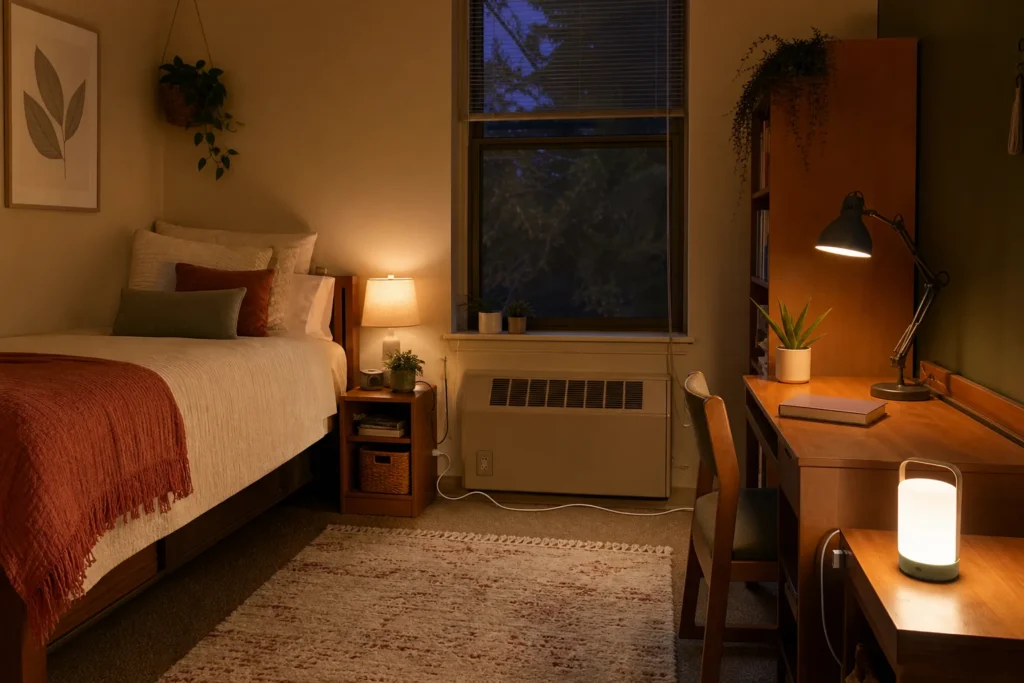
Three modest light sources feel softer than one bright ceiling fixture.
Use a focused desk lamp for studying, a shaded bedside lamp for evenings, and one approved ambient source such as a rechargeable lamp. Select bulbs in a warm white range so bedding and wood tones look comfortable rather than washed out. Clip lamps are useful when the nightstand is tiny. Skip open flames and check whether string lights are permitted; never run cords beneath rugs or across the walkway. Lighting should make the room easier to use, not create a trip or electrical hazard.
5. Create One Damage-Free Gallery Wall
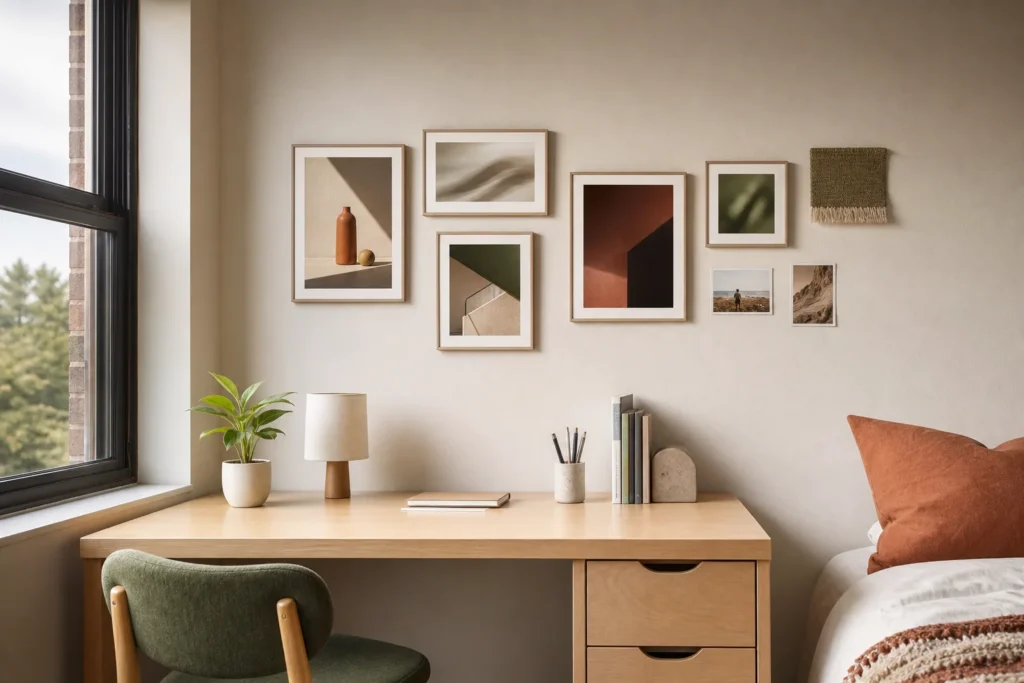
One edited gallery has more impact than dozens of scattered prints.
Choose a contained rectangle above the bed or desk and arrange five to nine lightweight pieces inside it. Mix personal photos, postcards, small prints, and one textile sample while repeating the same two or three colors. Lay the arrangement on the floor first, photograph it, and then install it with the method your housing office approves. Do not attach anything to sprinklers, smoke detectors, or ceilings. Leaving space around the collection makes each piece easier to see and keeps the wall from feeling chaotic.
6. Use a Washable Rug to Define the Floor
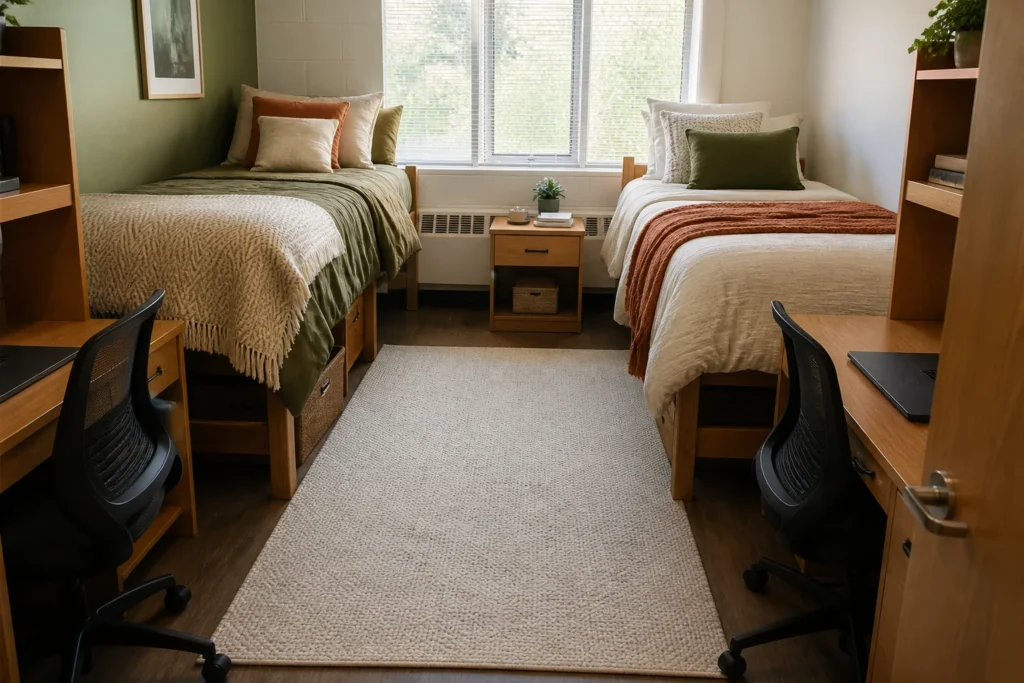
A low-pile rug adds softness while keeping doors and desk chairs moving freely.
A rug can hide institutional flooring and visually connect two sides of a shared room. Measure the door swing, bed clearance, and chair path before choosing a size. Low-pile, washable designs are easier to vacuum and less likely to curl at the corners. If a large rug costs too much, use one runner beside the bed or a compact rug in the center rather than several unrelated mats. Secure it with a dorm-approved nonslip pad, never loose tape that can damage flooring.
7. Turn Under-Bed Space Into a Hidden Storage Zone
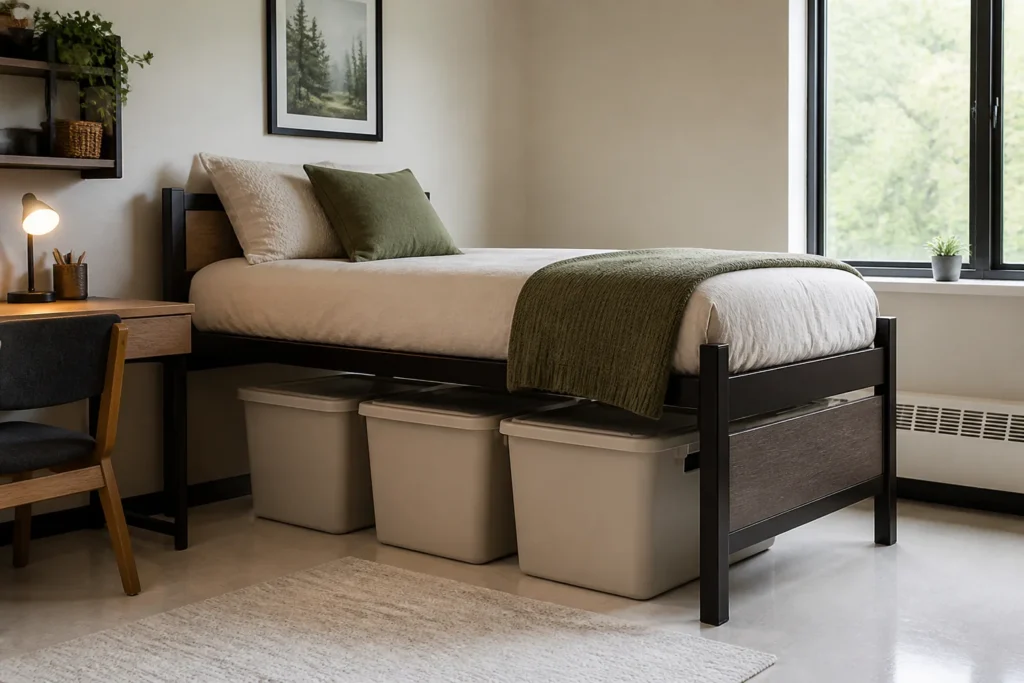
Matching bins make deep storage look calm and easy to access.
Reserve under-bed storage for bulky or less frequently used items: extra linens, off-season clothing, shoes, and move-in supplies. Measure the actual clearance after the bed is set to its approved height, then choose two or three bins that slide out from the same side. Labels on the short ends prevent rummaging. A simple bed skirt can conceal the zone, but keep fabric clear of heaters and avoid packing so tightly that airflow disappears. For more adaptable pieces, see these small-space furniture ideas.
8. Replace Random Containers With a Matching Bin System
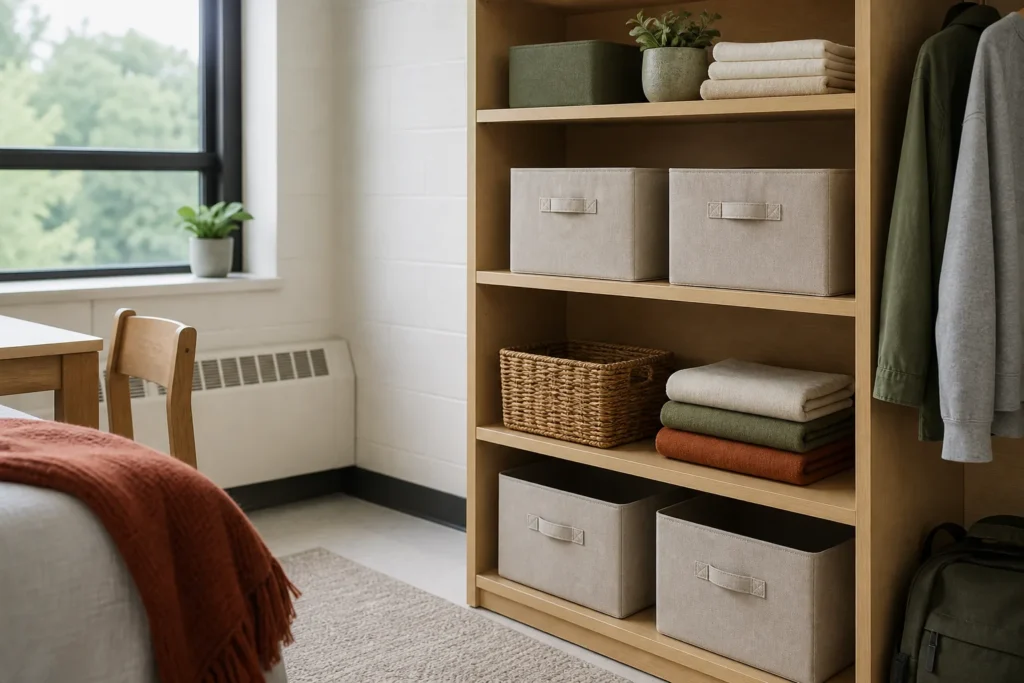
Consistent containers reduce visual noise on open dorm shelving.
You do not need to hide everything, but identical containers make necessary storage look deliberate. Pick one bin style in a neutral shade and use it for categories such as tech, snacks, toiletries, and cleaning supplies. Soft-sided bins are lightweight, fold flat for moving, and are forgiving in oddly sized closets. Keep daily items in open baskets and occasional items in lidded boxes. Before buying a set, measure shelf depth; oversized bins waste space and are frustrating to pull out.
9. Give the Desk a Vertical Organization Rail
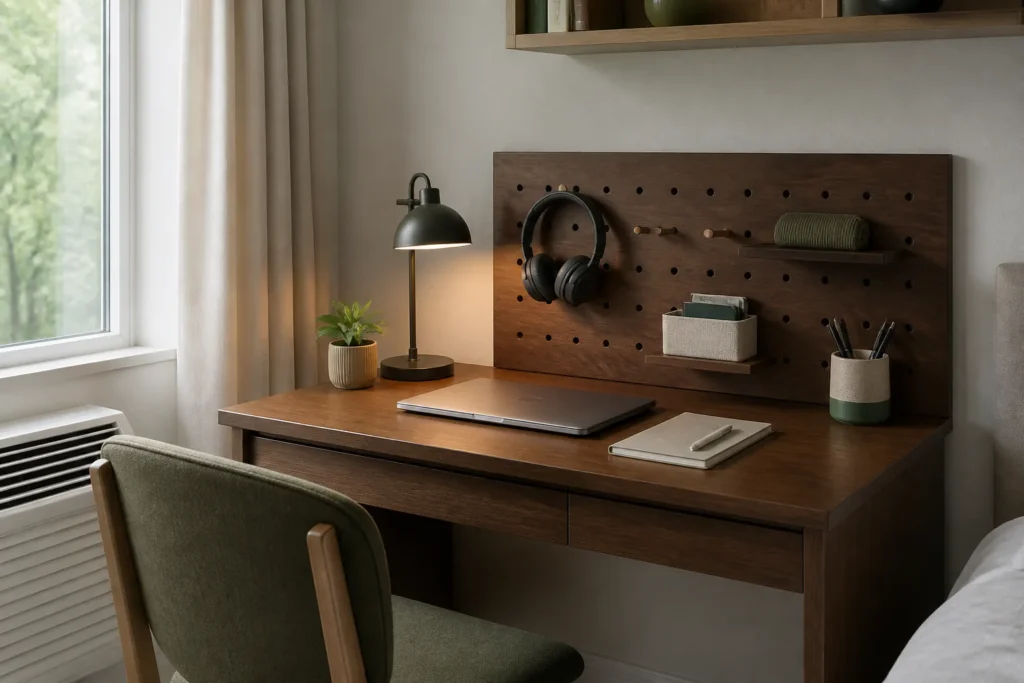
A freestanding pegboard moves supplies upward instead of across the desktop.
A desk works best when at least half its surface stays open for a laptop and notebook. Use a freestanding pegboard, narrow desktop shelf, or permitted wall grid to hold scissors, headphones, reminders, and pens. Keep the arrangement practical rather than filling every hook. Place the lamp on the side opposite your writing hand to reduce shadows, and route cords along the back edge with removable clips. A small tray for loose items makes a two-minute nightly reset much easier.
10. Style a Functional Bedside Caddy
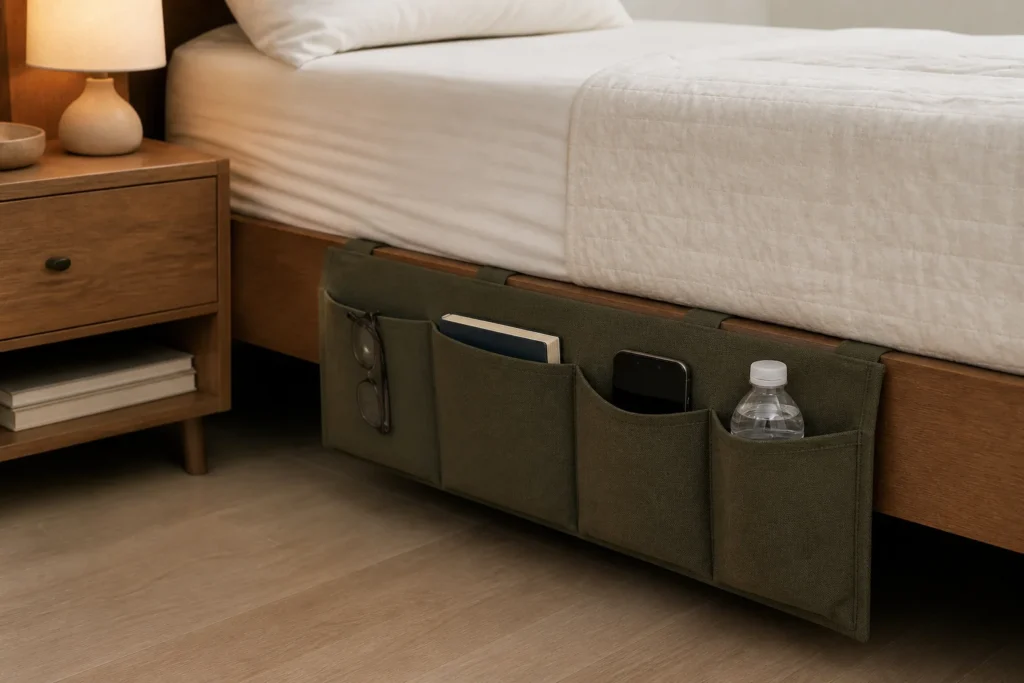
A slim caddy replaces a nightstand where floor space is tight.
If there is no room for a table, slide a sturdy fabric caddy beneath the mattress or attach an approved organizer to the bed frame. Limit it to genuine nighttime essentials: phone, glasses, lip balm, one book, and perhaps a small water bottle. Heavy objects can pull the organizer out of place, so keep chargers connected to a nearby approved outlet rather than tangled inside. Choose a color close to the bedding so the caddy visually recedes.
11. Add a Full-Length Mirror Where It Reflects Light
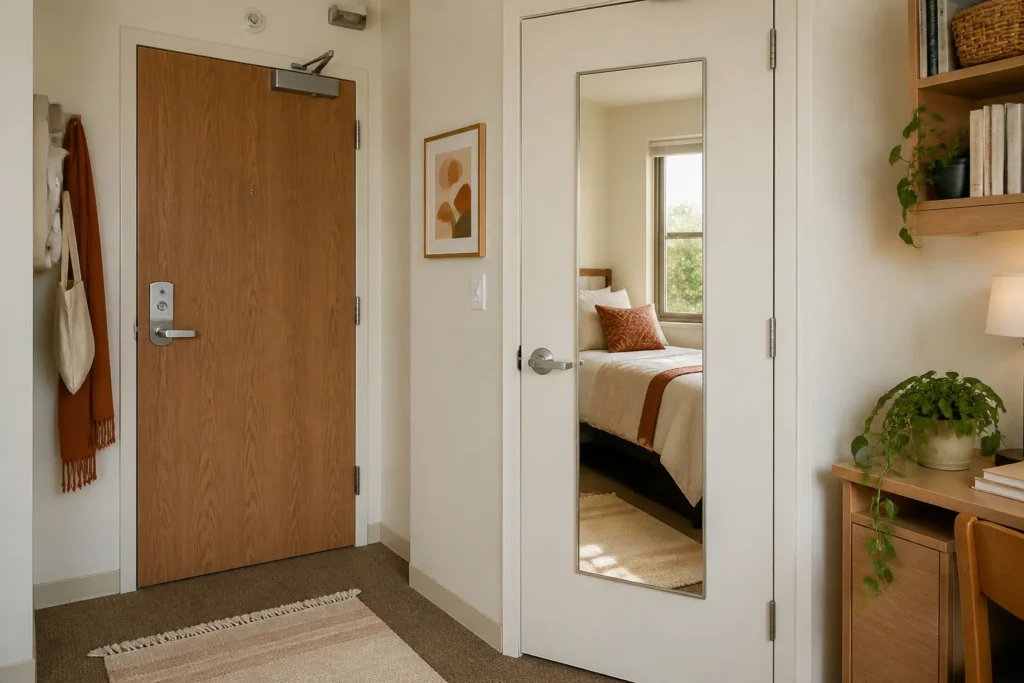
A well-placed mirror brightens the room without adding another pattern.
Position a lightweight mirror on a closet or door only if the mounting method is permitted and does not interfere with hinges. Across from or beside a window, it can bounce daylight deeper into the room and make the narrow floor area feel more open. Avoid placing it where it reflects desk clutter or shines directly into the bed at night. An over-the-door model is a renter-friendly option, but test that the door still closes smoothly and quietly.
12. Make a Compact Coffee and Snack Station
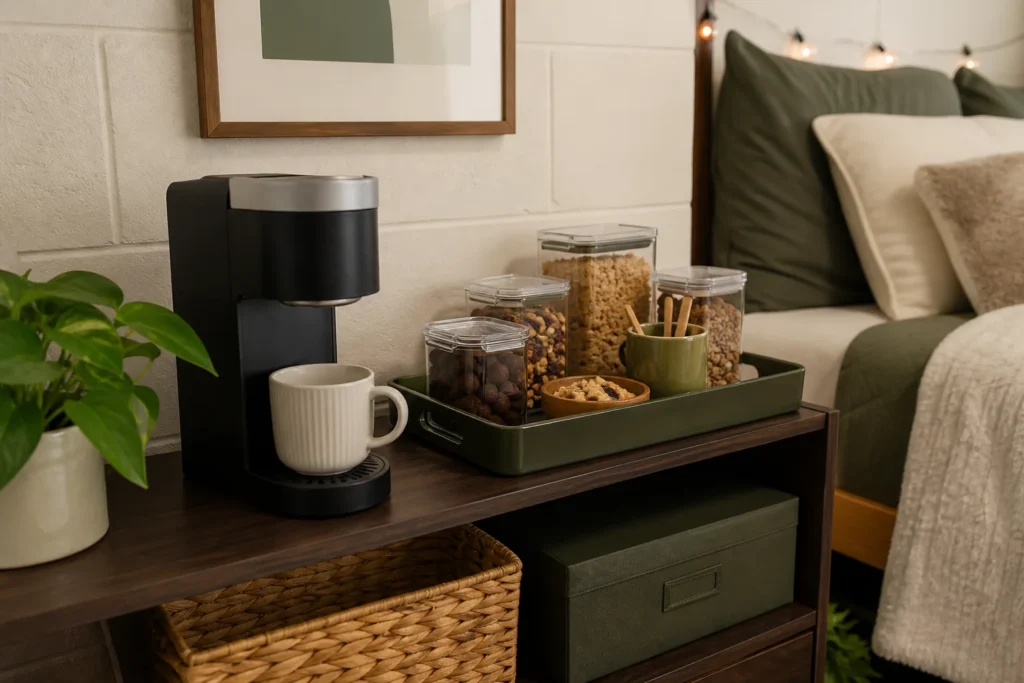
One contained food zone keeps wrappers and dishes away from the study desk.
Use a rolling cart or one section of a shelving unit for shelf-stable snacks, mugs, napkins, and any appliance your residence hall allows. Keep food in sealed containers to reduce odors and pests, and place a washable tray beneath drink supplies. Do not crowd appliances against fabric or plug high-wattage items into an unapproved extension. If kettles, coffee makers, or microwaves are prohibited, create a no-appliance station with a water bottle, tea bags, and grab-and-go snacks.
13. Use a Rolling Cart as Flexible Storage
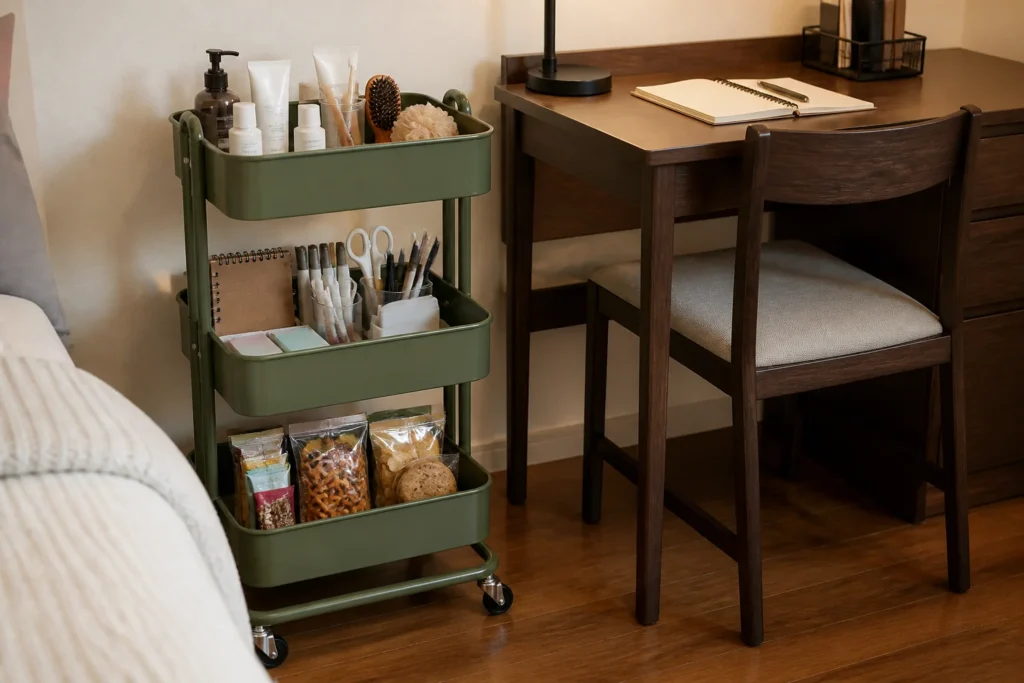
A narrow cart can change jobs as your routine becomes clearer.
A three-tier cart earns its footprint because it can serve as a nightstand, study station, bathroom caddy, or snack shelf. Assign one category to each level and avoid piling objects above the rim. Wheels should lock or remain stable on uneven floors. In a shared room, a cart can mark your side without installing anything permanent. Choose a simple finish that matches the desk or bed frame so it feels like furniture rather than utility equipment.
14. Hang One Textile as a Soft Focal Point
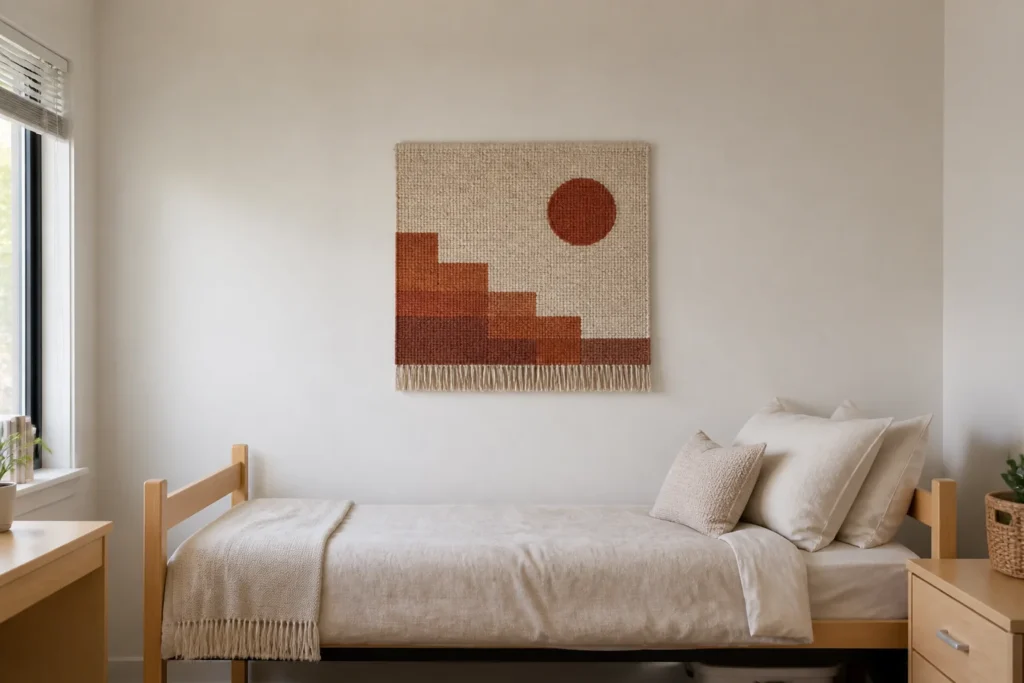
One compact textile introduces softness without covering the whole wall.
A woven panel, lightweight quilt square, or attractive scarf can absorb some visual harshness and add pattern. Keep it smaller than the bed width and mount it only with an approved method. Fabric must remain well away from sprinklers, smoke detectors, lights, outlets, and heating equipment. Avoid draping a large tapestry across the ceiling or over electrical cords. A single edited textile looks more grown-up and is easier to pack than an entire wall covering.
15. Bring in Low-Maintenance Greenery
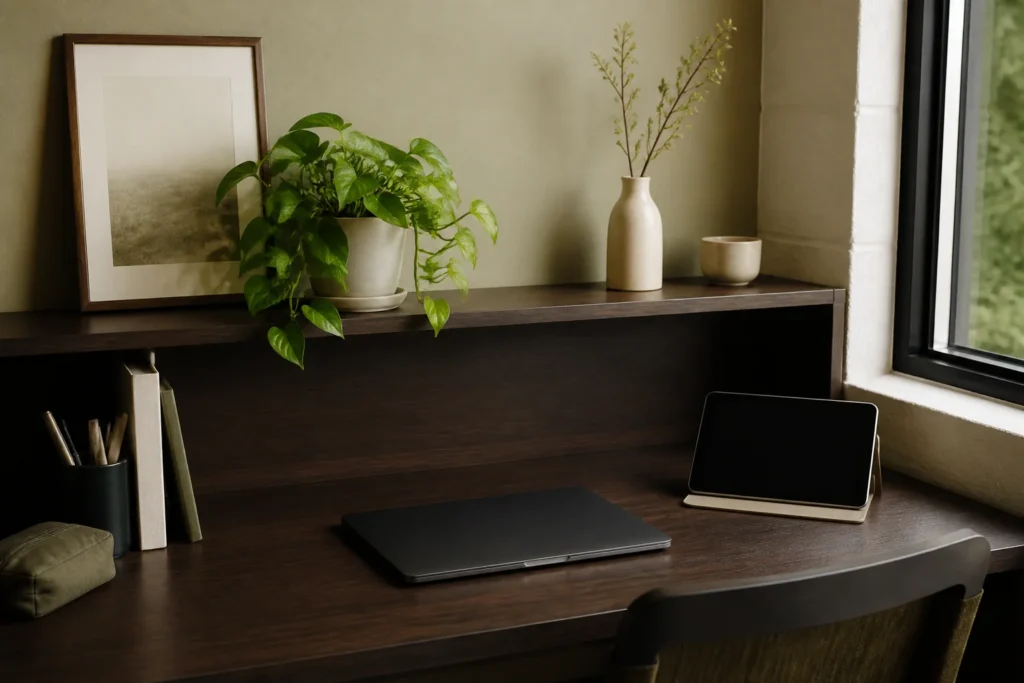
One or two plants add life without turning the desk into a garden.
Choose plants based on the actual window, not the look you saved online. Pothos, snake plants, and ZZ plants tolerate many indoor conditions, but even easy plants need suitable light and drainage. If your room is dark or you travel frequently, use one convincing faux stem in a ceramic vase. Keep pots on waterproof saucers and away from electronics. One medium plant usually creates more impact—and less maintenance—than a collection of tiny pots.
16. Coordinate With a Roommate Without Matching Everything
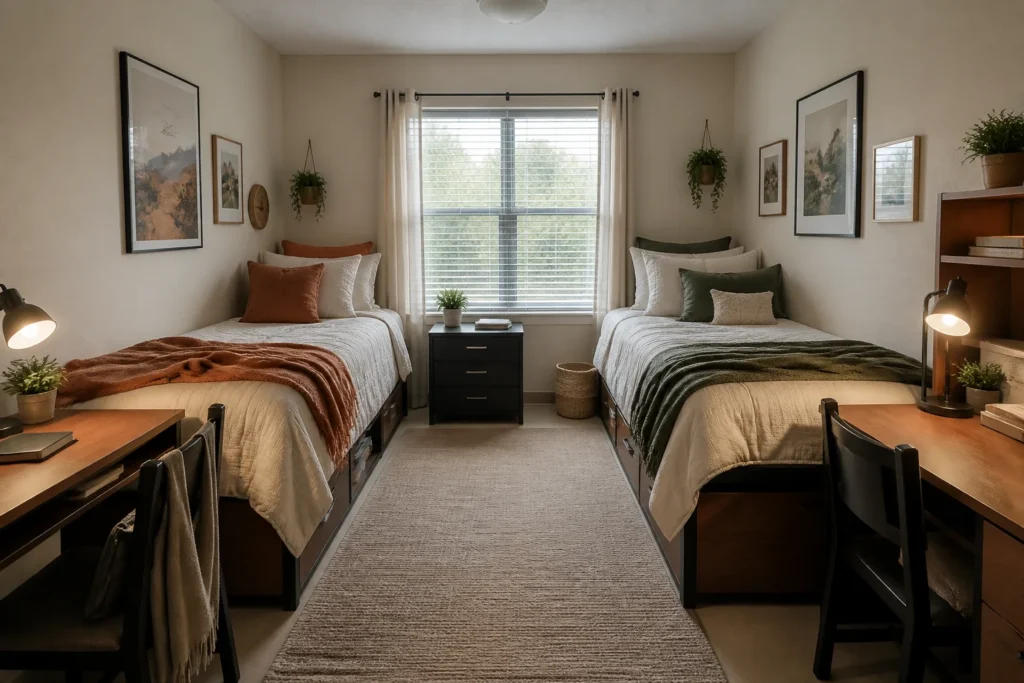
Shared base colors create unity while separate accents preserve personality.
Agree on the few things both sides can share visually: perhaps cream bedding, warm wood, and black frames. Then let each person choose a different accent color and personal art. This prevents two complete themes from competing while avoiding a staged, identical look. Discuss the rug, curtains if permitted, lighting, and shared storage before move-in so you do not buy duplicates. If one roommate loves bold color, a contained palette like these black and hot pink room ideas can inspire an accent zone rather than taking over the entire room.
17. Create a Calm Study Corner With One Visual Boundary
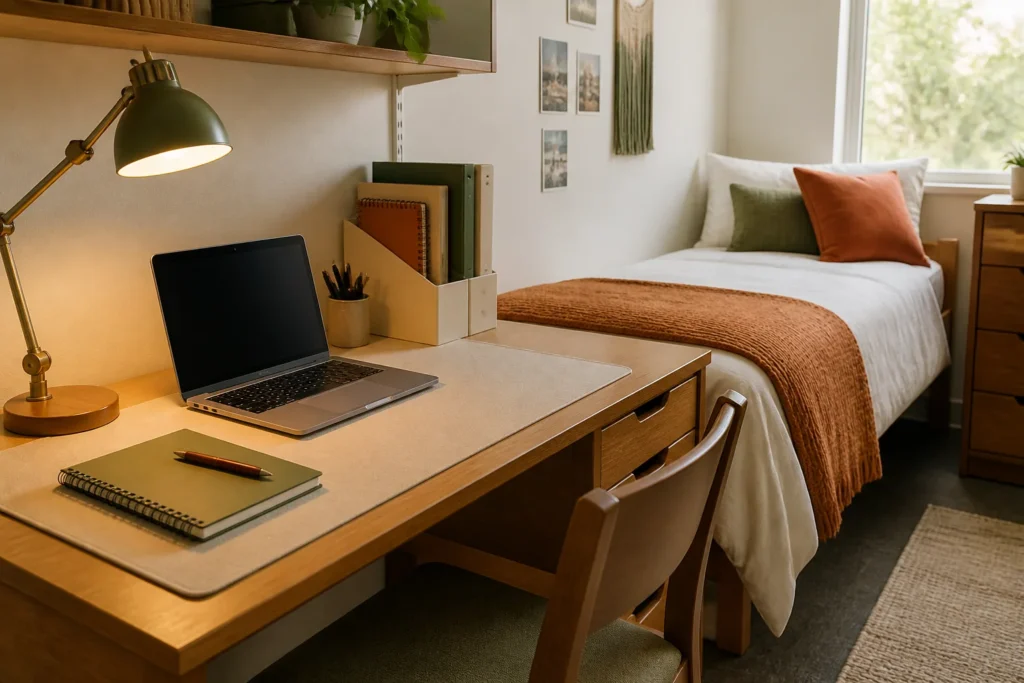
A desk mat and focused light signal work mode without adding furniture.
Define the study zone with a desk mat, compact task light, and one vertical organizer. Store entertainment devices out of immediate sight during focused work, and keep only the current class materials on the desk. If the bed is directly beside the workspace, angle the lamp toward the desk and use headphones rather than building a bulky divider. A visually quiet study corner makes a tiny room feel more organized because work has a clear home.
18. Use the Back of the Door Carefully
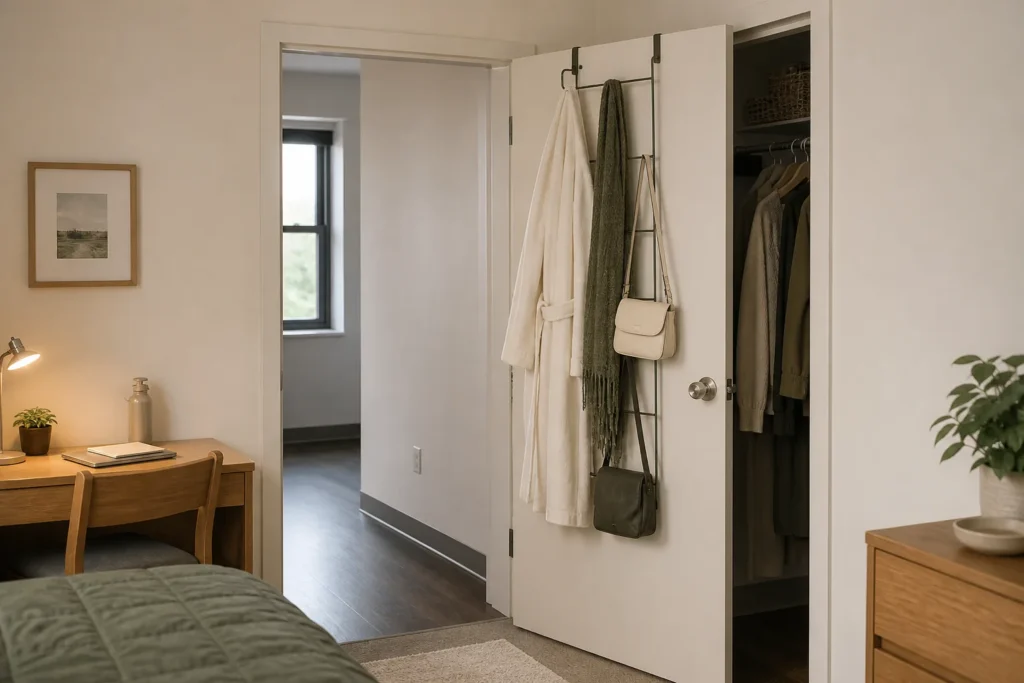
The door can hold light accessories when the organizer does not affect closing.
An over-door rack can store bags, caps, scarves, or a robe, but it should not become a heavy wall of belongings. Check the door thickness, top clearance, and fire-safety rules before installation. Felt pads can reduce rattling, and slim hooks help the door close properly. Never hang storage on an exit door if it slows opening or narrows the path. For bathrooms down the hall, a separate portable shower caddy is more hygienic than storing damp towels in a packed organizer.
19. Display Sentimental Items in One Curated Zone
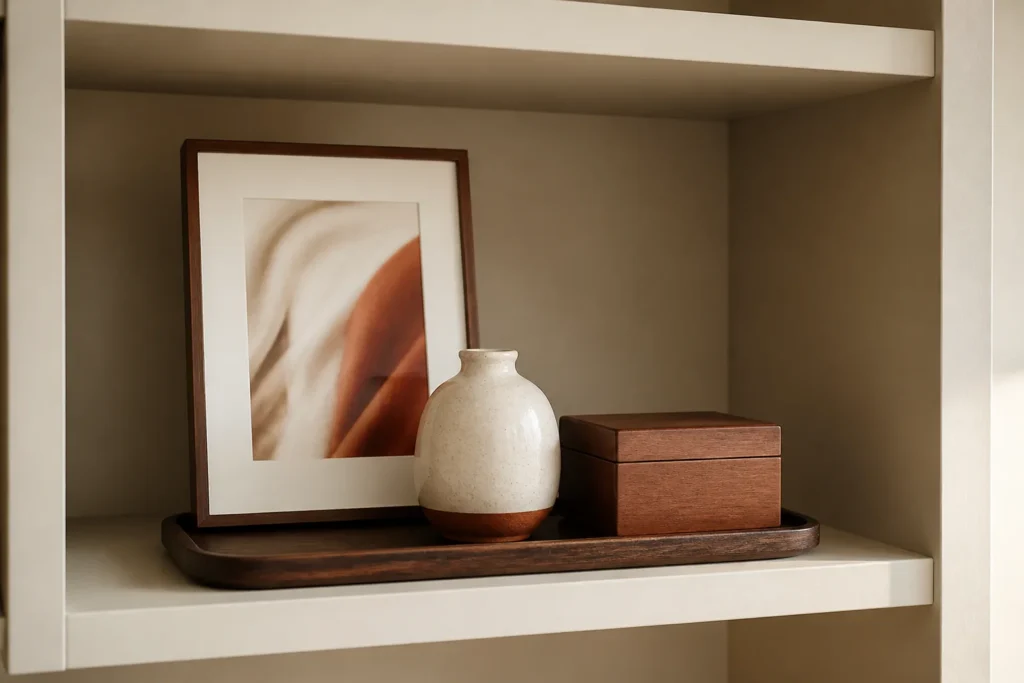
A small memory shelf feels personal without creating scattered clutter.
Select a few objects that genuinely help the room feel like home: one framed photo, a small keepsake, and a box for letters or tickets. Grouping them on one shelf or tray gives the eye a place to pause. Rotate items during the semester instead of displaying every souvenir at once. This collected-not-crowded approach also works beyond campus; the same principle appears in these cozy apartment aesthetic ideas.
20. Hide Cords Without Blocking Access
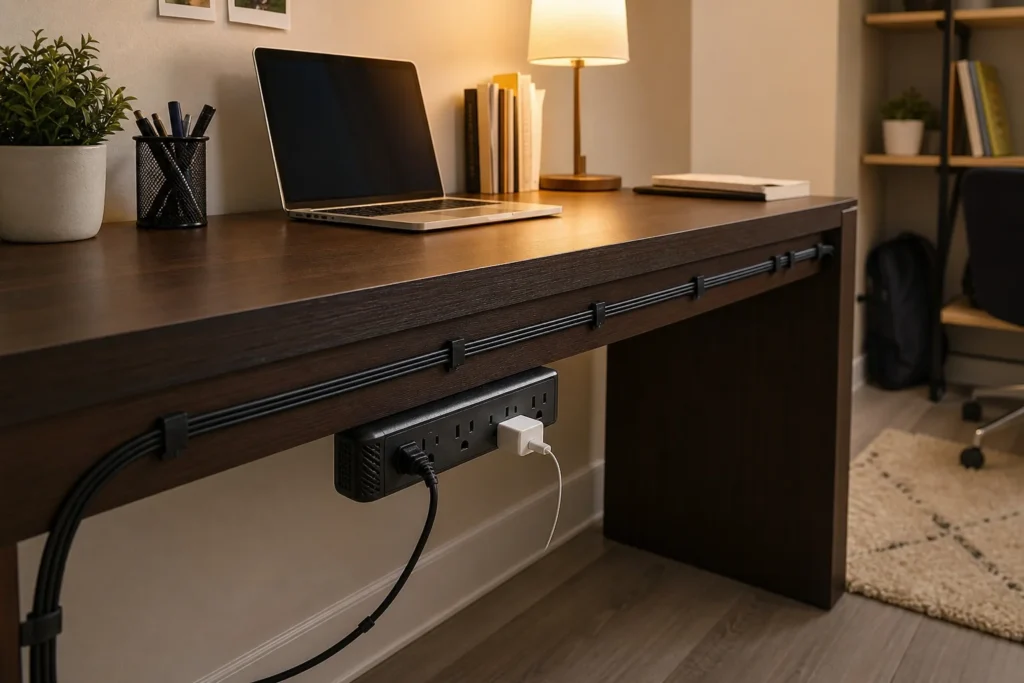
Simple cord routing makes a desk look calmer and reduces tangles.
Use removable clips to guide charging cords along the back or underside of the desk, leaving enough slack to connect devices comfortably. Label both ends if several cables look alike. Plug electronics into residence-hall-approved surge protection and keep power strips visible, ventilated, and accessible—never buried under bedding, rugs, or storage bins. Cord management is partly visual, but the real goal is a safer route that does not cross the floor.
21. Finish With a Weekly Five-Minute Reset Basket
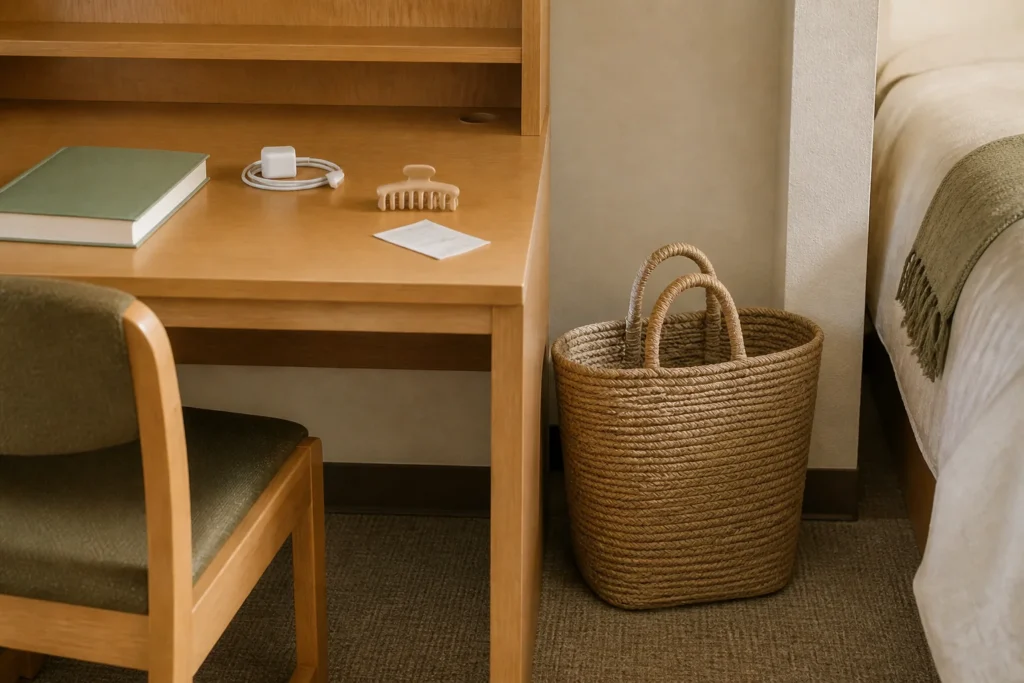
A small reset basket keeps temporary clutter from spreading across the room.
Place one handled basket near the entry or beside the desk for objects that belong elsewhere. During the week, drop in the stray charger, library book, hair accessory, or receipt instead of abandoning it on a surface. Empty the basket at a set time every few days. It is not permanent storage; it is a short-term landing zone that keeps the room functional when classes get busy. Pair it with a clear-desk rule and your decor will stay visible instead of disappearing beneath daily life.
Styling Mistakes That Make a Dorm Feel Smaller
- Buying before measuring: Even a cute cart is clutter if it blocks a drawer or door.
- Using every vertical surface: Empty wall space gives art and furniture room to breathe.
- Adding too many micro-organizers: Several tiny containers often create more visual noise than one useful bin.
- Ignoring residence-hall rules: A damage charge or safety violation is never worth the aesthetic.
- Choosing decor with no second job: In a tiny room, a cart, mirror, lamp, or basket should improve daily function.
- Copying a showroom literally: Real dorms need space for laundry, class materials, food, and a roommate.
If you want a more elevated look on a student budget, focus on proportion, repeat finishes, and keep visible storage consistent—the same ideas used in these small bedroom designs that look expensive.
Frequently Asked Questions
How can I decorate a dorm room without damaging the walls?
Use only the removable hooks, strips, putty, or over-door products your housing office approves. Test adhesive in a discreet spot if permitted, follow weight limits, and remove it exactly as directed. Freestanding frames, pegboards, leaning mirrors, and bed-frame headboards reduce the need to attach items to walls.
What should I buy first for a small dorm room?
Start with bedding, a task lamp, approved power protection, laundry storage, and measurements for under-bed bins. Live in the room briefly before purchasing extra furniture. Your daily habits will reveal whether you actually need a cart, bedside caddy, shelf, or additional organizer.
How do I make a dorm room cozy without clutter?
Use texture and lighting instead of many decorative objects. Layer a quilt, one throw, a low-pile rug, and warm task lighting. Repeat a limited color palette and group personal items in one curated zone. Leave part of every major surface empty.
How can roommates coordinate dorm decor?
Agree on a shared base palette and the few items that affect both sides, such as a rug or ambient lamp. Keep individual art, pillows, and accents distinct. Coordinated materials usually look more natural than identical bedding sets.
Are peel-and-stick wallpaper and string lights safe for dorms?
Rules vary by campus. Some adhesives can lift paint, and some residence halls prohibit certain string lights or wall coverings. Check the written housing policy before purchase. Never cover safety equipment, place fabric near heat, or run electrical cords beneath rugs.
Start With the Biggest Visual Change
You do not need all 21 updates at once. Begin with the bed, lighting, or under-bed storage—the area causing the most visual or practical frustration. Then add one personal wall moment and a simple reset system. The most successful dorm decor ideas make a small college room feel like yours while preserving clear surfaces, safe pathways, and enough flexibility for real student life.