
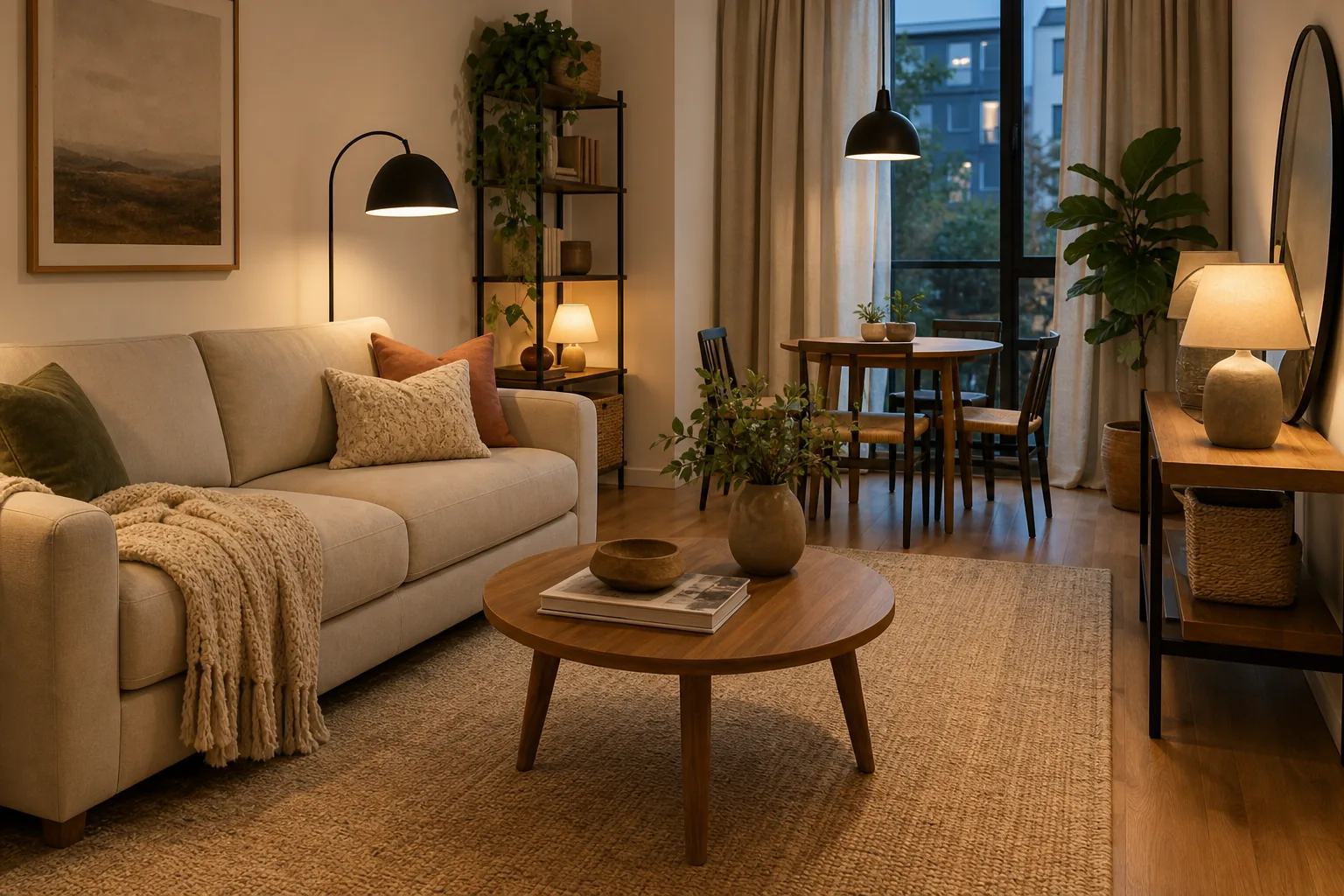
22 Cozy Apartment Aesthetic Ideas That Feel Warm, Not Cluttered
A cozy apartment aesthetic is not created by filling every surface with blankets, candles, and beige accessories. The most inviting small homes feel warm because light, texture, color, scale, and everyday function work together. They look personal and lived in while still leaving enough breathing room to move, relax, and reset the space easily.
The 22 ideas below show how to make a rental, studio, or compact apartment feel softer and more welcoming without an expensive renovation. Use them as a visual menu rather than a shopping list: begin with lighting and layout, add useful layers, then stop before coziness becomes clutter.
Before adding decor
Protect clear walking routes, door and window access, ventilation, heaters, electrical equipment, and the limits of your lease. Follow manufacturer instructions for lighting, hanging hardware, furniture assembly, rugs, and textiles. Use landlord-approved, surface-appropriate methods for removable updates, and ask a qualified professional when electrical work, structural fixing, or safety is uncertain.
If your apartment needs practical storage before styling, these small-space decor ideas offer adaptable lessons for vertical storage and multifunctional layouts.
1. Begin With a Warm, Connected Color Palette
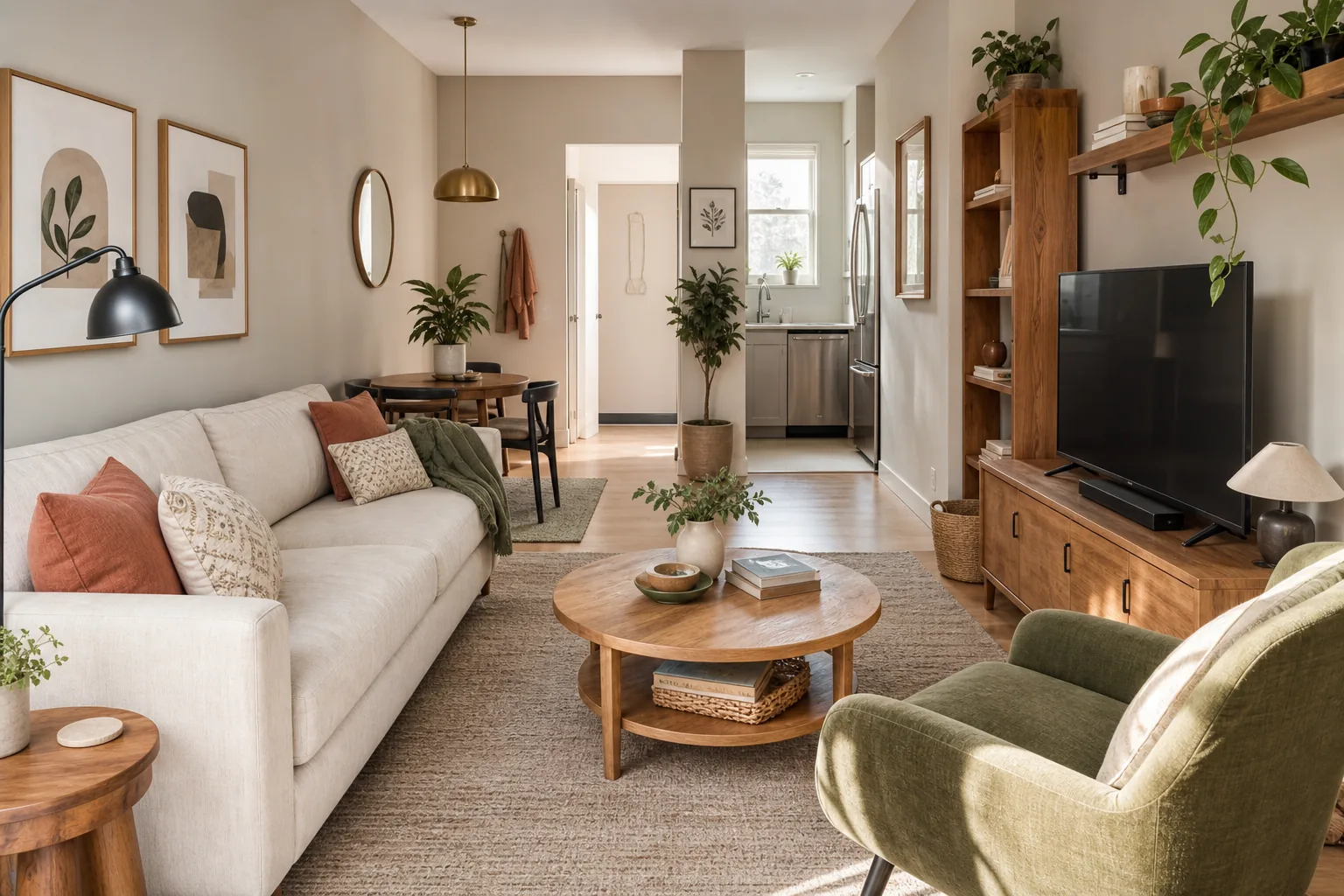
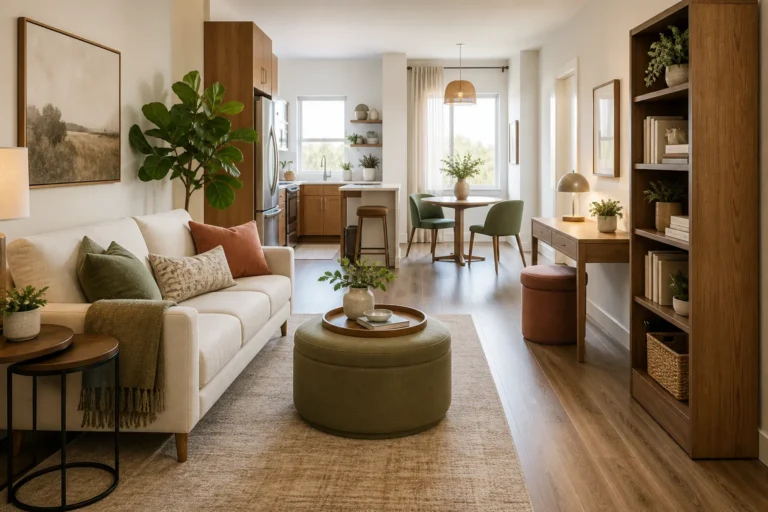
Warmth begins with the colors that occupy the largest surfaces. Cream, oatmeal, mushroom, sand, soft taupe, warm gray, and muted clay create a calm foundation without making a compact room feel visually heavy. Choose one main neutral, one wood tone, and one quiet accent color that can repeat throughout the apartment.
A connected palette is especially helpful in open-plan apartments because it allows the living, dining, and sleeping zones to feel related. The rooms do not need to match exactly. A terracotta cushion, warm brown frame, and rust-colored kitchen towel can carry one idea through the home without looking coordinated by a catalog.
Best for: Whole-apartment cohesion Budget: Free–low Renter-friendly: Yes
2. Layer Lighting at Three Different Heights
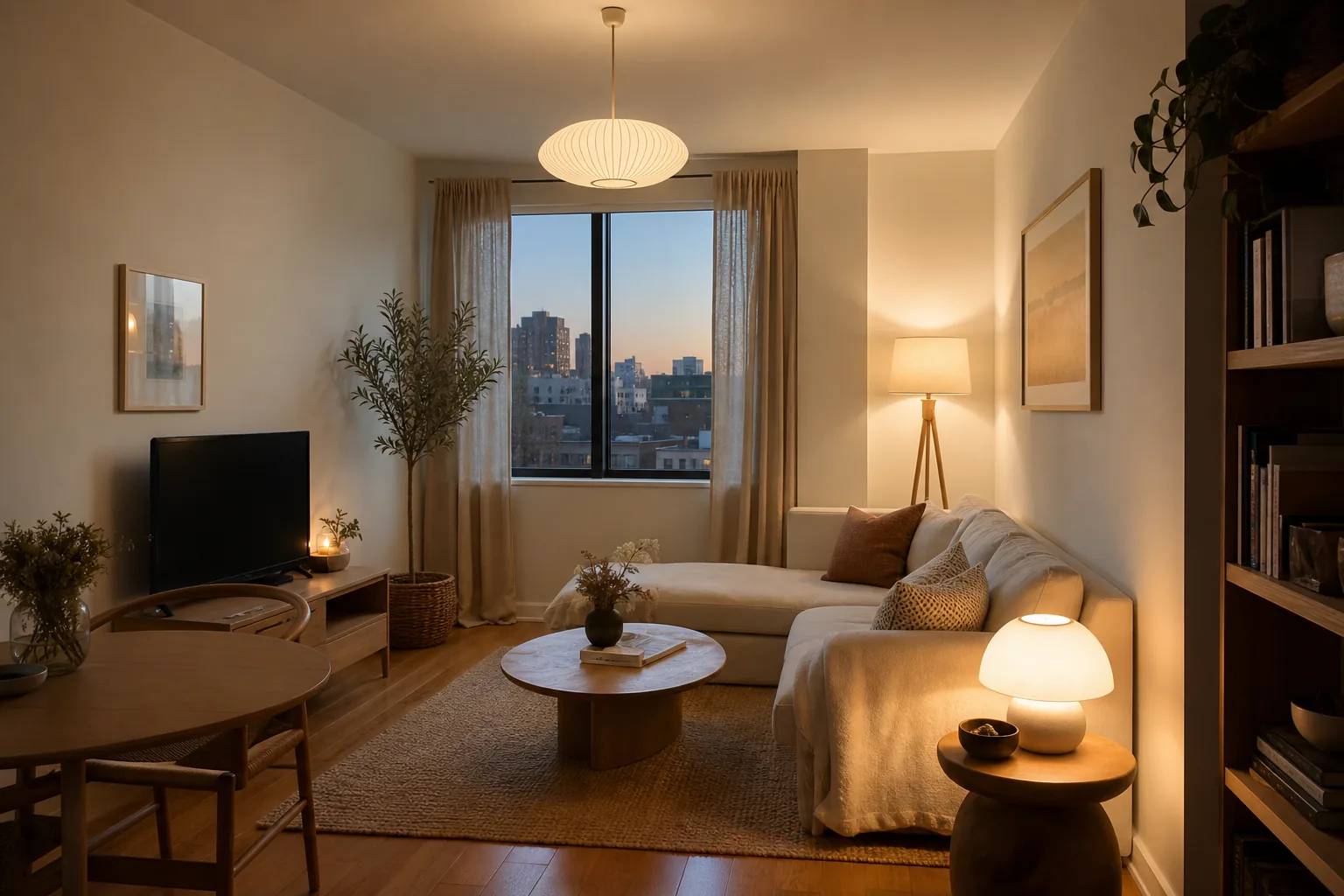
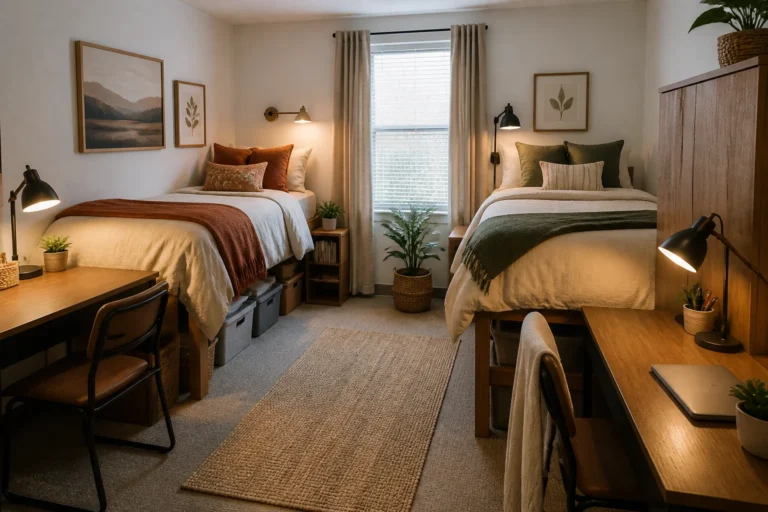
One bright ceiling fixture can make a room feel flat and exposed. A cozier scheme uses light at three heights: an overhead source for general visibility, a floor or wall-level source near seating, and a low table lamp that creates a gentle pool of light. The room instantly gains depth because not every surface is lit equally.
Choose bulbs and fixtures suitable for the location, follow wattage and clearance guidance, and keep cords away from walking routes. Warm-looking light can make wood, textiles, and skin tones feel softer, but the lighting should still support reading, cooking, and other tasks safely.
Best for: Fastest mood change Budget: Low–moderate Renter-friendly: Yes
3. Anchor the Living Area With One Generous Rug
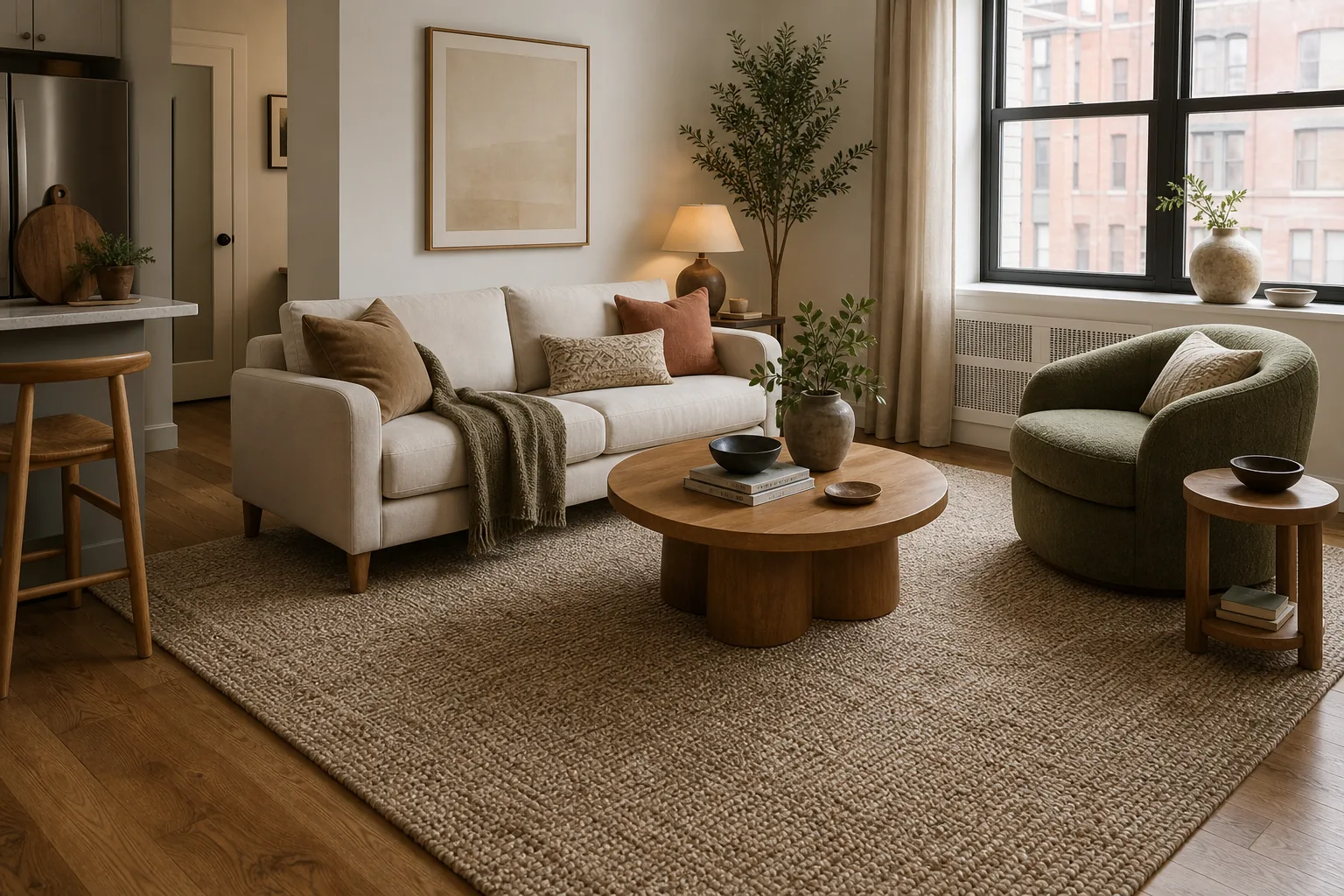
Several tiny rugs can divide an already compact room into disconnected pieces. One larger rug creates a visual island for the sofa, chair, and coffee table, making the living area feel settled and intentional. A low-contrast pattern or textured solid adds softness without competing with the rest of the apartment.
Measure the furniture arrangement rather than only the empty floor. Ideally, the rug should connect the main seating pieces instead of floating alone in the center. Use an appropriate rug pad or slip-resistant solution, keep door clearances in mind, and avoid curled edges that could create a trip hazard.
Best for: Open-plan apartments Budget: Moderate Renter-friendly: Yes
4. Soften Hard Edges With Full-Length Curtains
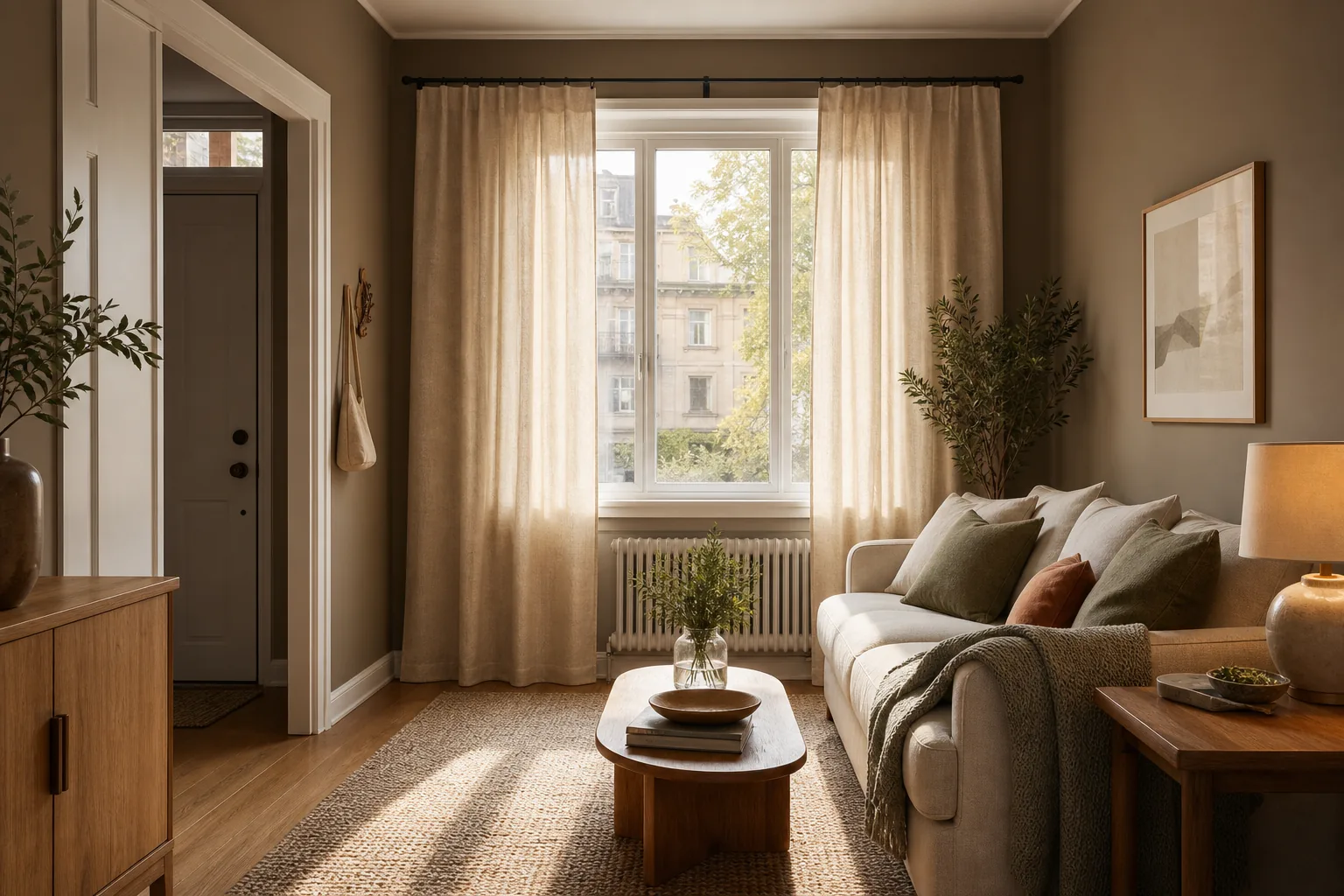
Curtains introduce vertical softness, gentle movement, and acoustic comfort to a room filled with hard walls and straight furniture. Hanging them slightly higher and wider than the window can make the wall feel taller while allowing more daylight to enter when the panels are open.
Choose a washable or maintainable fabric with enough body to drape well. Keep textiles safely away from heaters, cooking areas, and anything that requires ventilation. Renters can consider tension or landlord-approved mounting systems, provided they suit the window and weight of the curtain.
Best for: Boxy rooms and bare windows Budget: Low–moderate Renter-friendly: Usually
5. Make the Sofa Look Relaxed, Not Overfilled
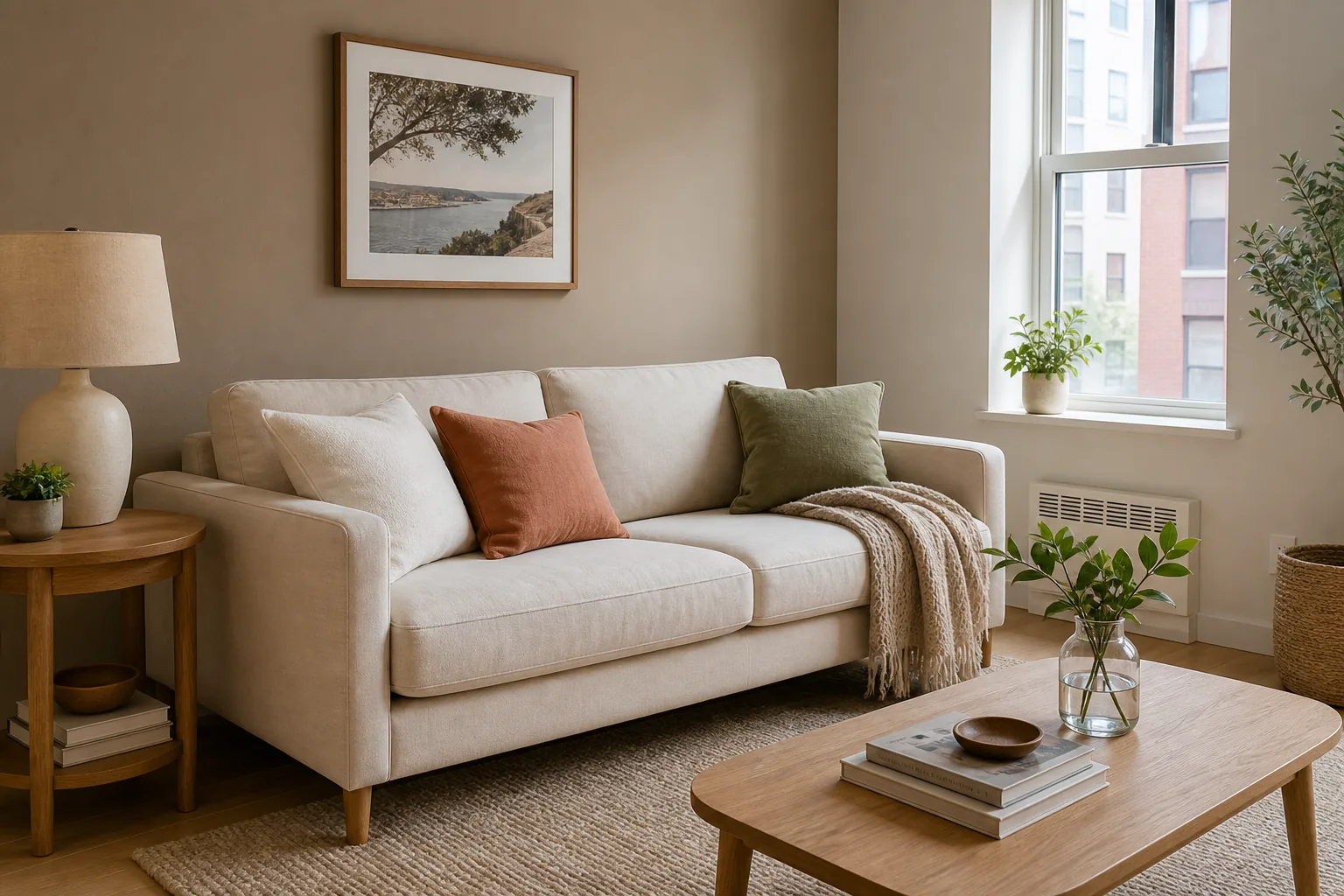
A cozy sofa should still have room for people to sit. Start with two or three pillows in related tones, then add one throw with visible texture. Mixing linen, velvet, boucle, cotton, or knit creates more depth than adding many pillows in the same fabric.
Allow the arrangement to look slightly informal instead of perfectly staged. Fold the throw loosely over one arm or place it inside a nearby basket when not in use. Limiting the palette keeps the sofa calm, while one muted olive, rust, or dusty blue accent prevents the room from feeling washed out.
Best for: Living-room comfort Budget: Low Renter-friendly: Yes
6. Add Texture Before Buying More Decorative Objects
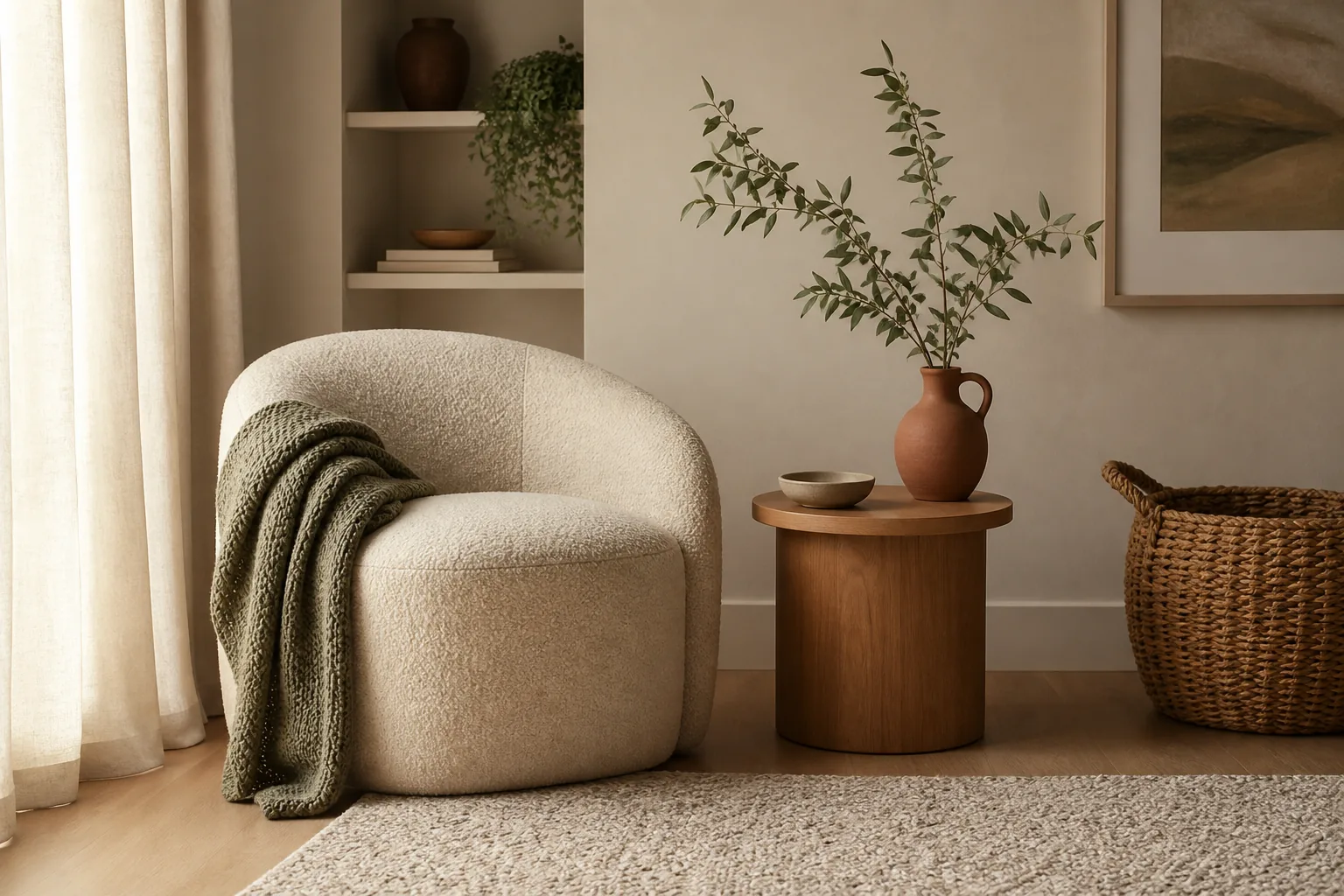
If an apartment feels sterile, more objects are not always the answer. Texture creates visual richness while allowing the color palette to remain restrained. Combine a few tactile materials such as linen curtains, a woven basket, wood grain, matte ceramic, boucle upholstery, and a knitted throw.
Spread the materials around the room rather than piling every texture onto the sofa. One woven element, one soft fabric, and one natural hard surface may be enough for a small zone. This approach makes the home look layered in photographs without sacrificing useful surfaces.
Best for: Neutral apartments Budget: Low–moderate Renter-friendly: Yes
7. Repeat One Warm Wood Tone Throughout the Apartment
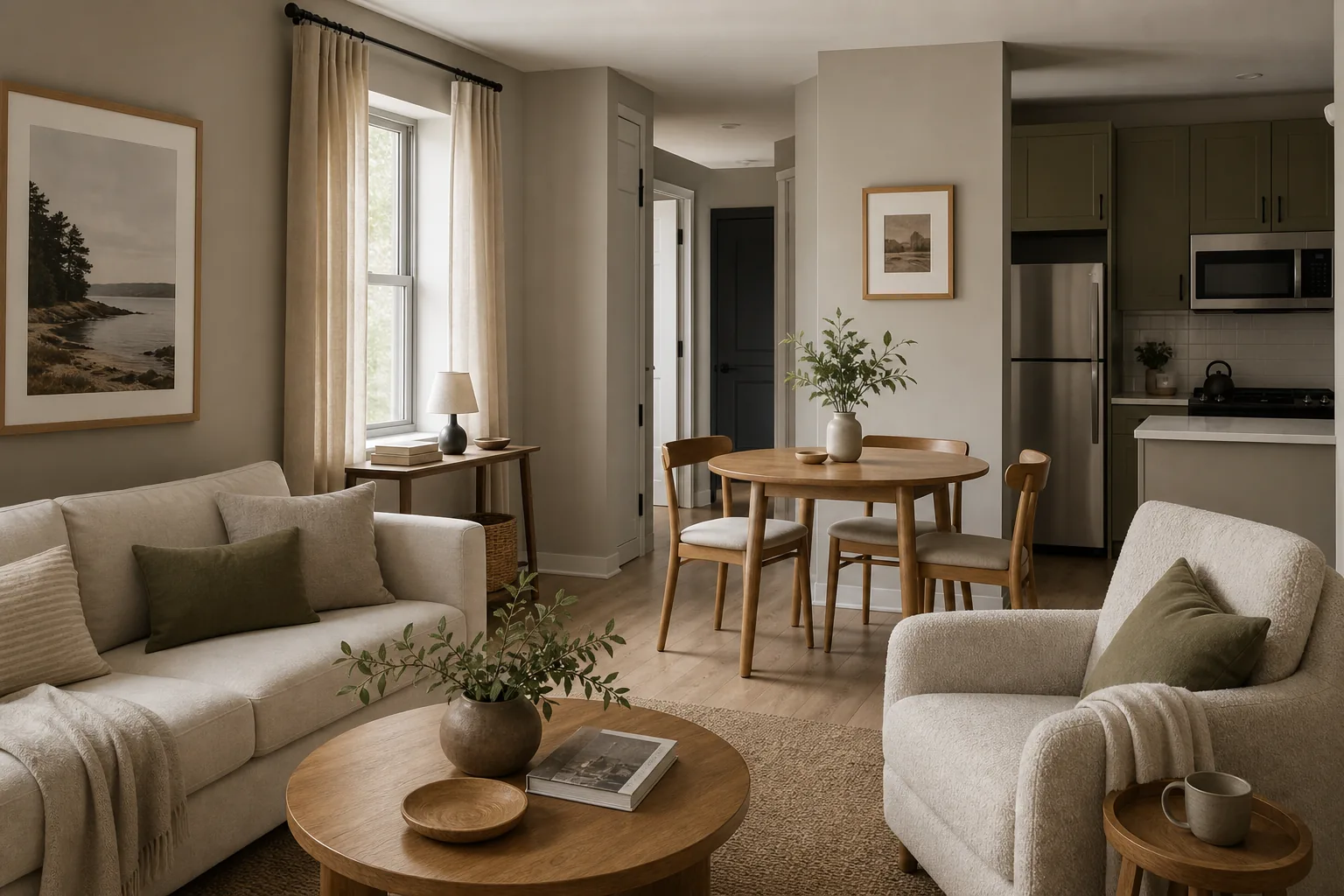
Repeated material creates connection between separate zones. Warm oak, walnut, teak, or medium-toned wood can appear in a coffee table, picture frame, stool, tray, or dining chair. The pieces do not need identical finishes; they only need to feel like members of the same warm family.
Balance wood with soft fabric and a few darker details so the room does not become one flat brown field. If the apartment already has cool flooring or gray carpet, warm wood is an effective bridge between the fixed finish and cozier textiles.
Best for: Creating visual flow Budget: Free–moderate Renter-friendly: Yes
8. Build a Tiny Reading Nook From Three Pieces
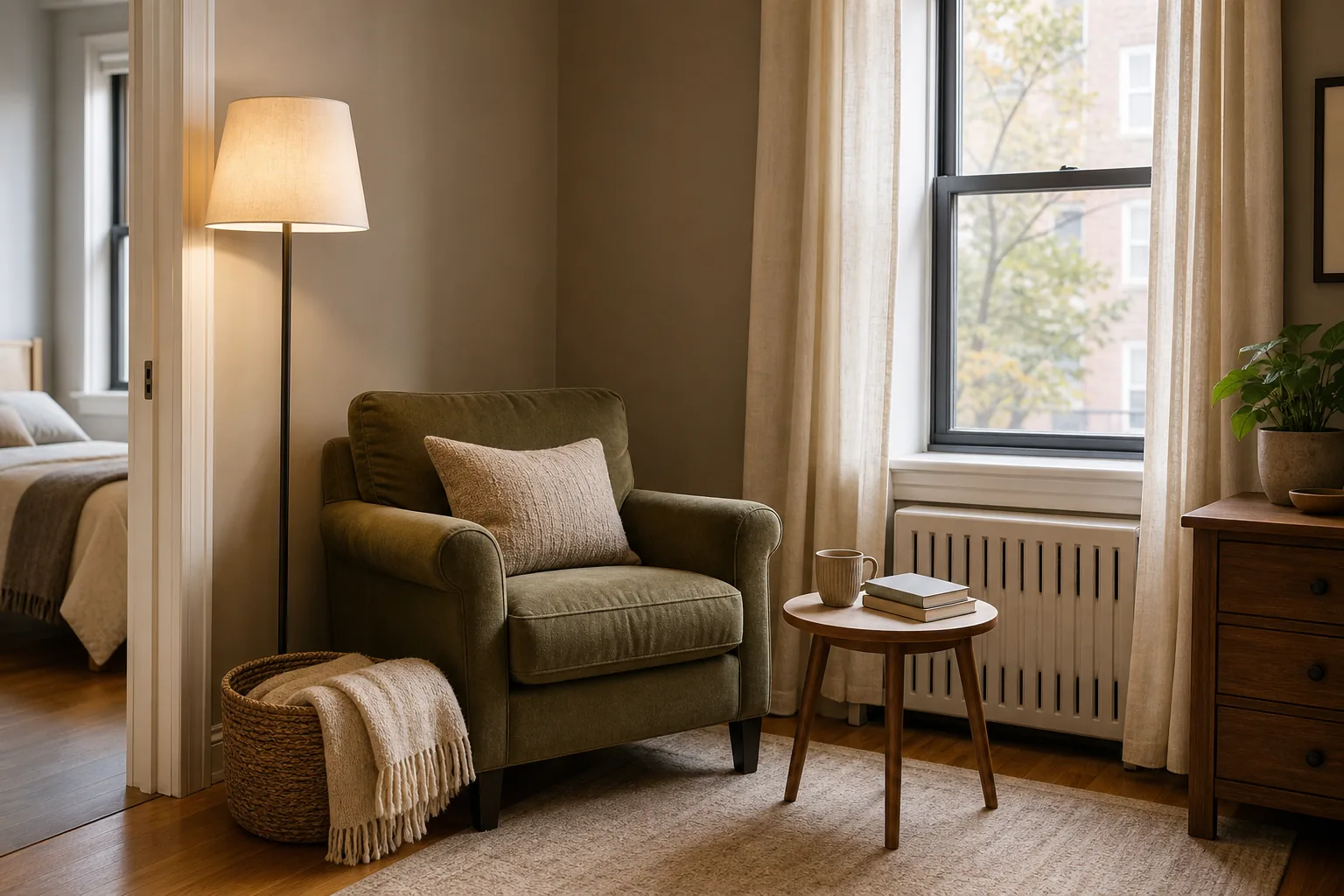
A reading nook needs only a comfortable chair, a useful light, and a surface for a book or drink. Place the trio near a window, at the end of a sofa, or in an underused bedroom corner. Giving the corner one clear purpose makes the apartment feel personal rather than merely decorated.
Choose a chair that fits the circulation space and a table with a small footprint. A wall-mounted or plug-in light can save floor area when installed safely and with permission. Add a basket for one throw, but leave enough empty space for the nook to remain easy to use.
Best for: Awkward empty corners Budget: Moderate Renter-friendly: Yes
9. Style the Coffee Table With Useful, Edited Layers
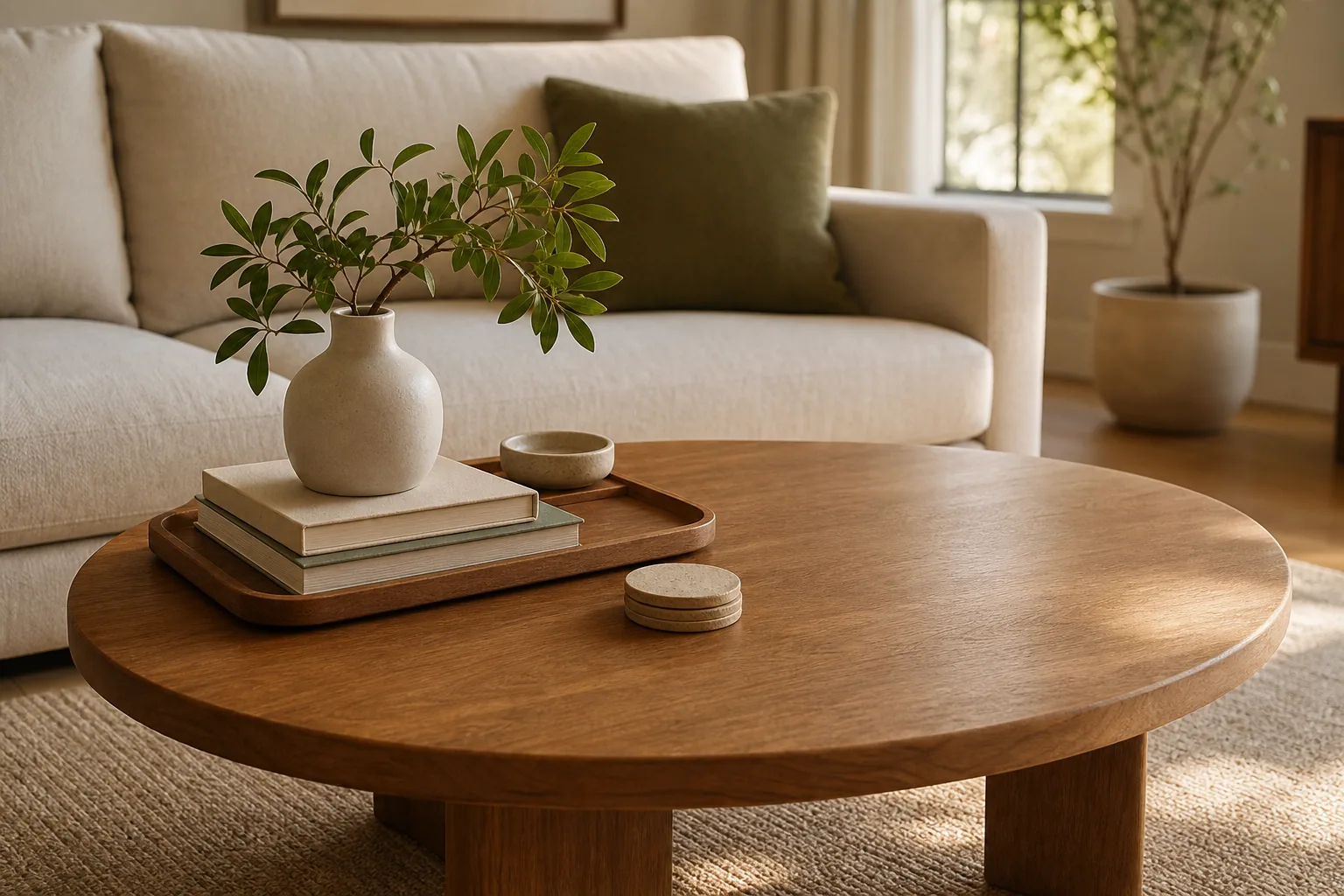
A tray gives small objects a visual boundary and makes them easy to move when the surface is needed. Combine one short book stack, a small vase or branch, and one practical item such as a coaster set or lidded box. Varying the height creates interest while a large section of empty tabletop protects function.
Rounded forms can soften the middle of a boxy room. A circular tray, curved bowl, or organically shaped vase works well against a rectangular table. Keep fragile objects stable and choose flame-free ambiance where an open flame would be unsafe or impractical.
Best for: A polished focal point Budget: Free–low Renter-friendly: Yes
10. Make the TV Wall Feel Softer and More Balanced
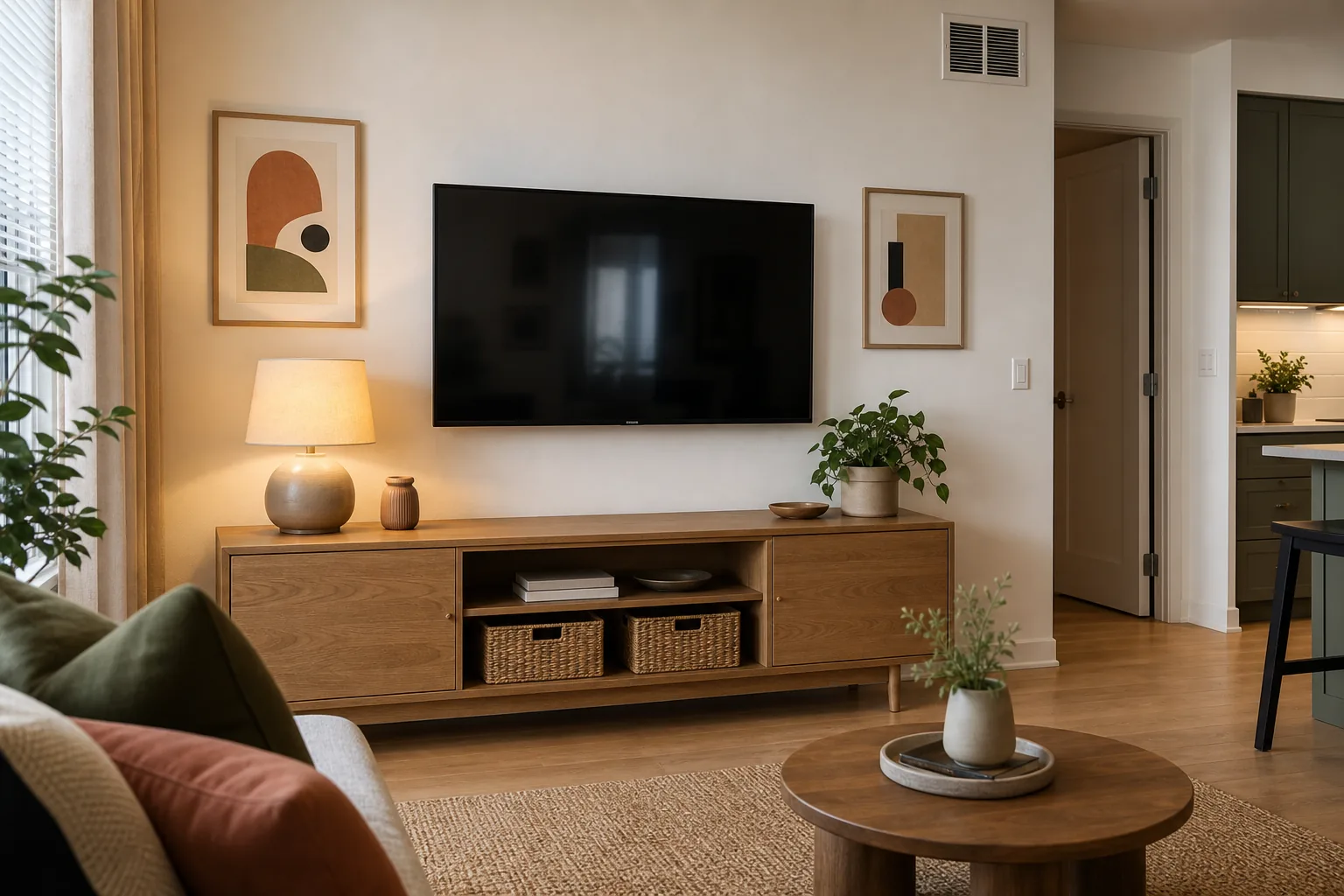
A television can dominate a small living room because it creates one large dark rectangle. Balance it with a warm wood console, a lamp positioned safely to one side, a few framed pieces, and closed or woven storage below. The goal is not to hide the screen but to connect it with the room.
Keep ventilation, equipment access, cords, and installation requirements in mind. Use fewer, larger objects rather than surrounding the TV with many tiny frames. An edited arrangement feels calm when the screen is off and remains functional when it is in use.
Best for: Media-focused living rooms Budget: Low–moderate Renter-friendly: Yes
11. Let Books Add a Lived-In Layer
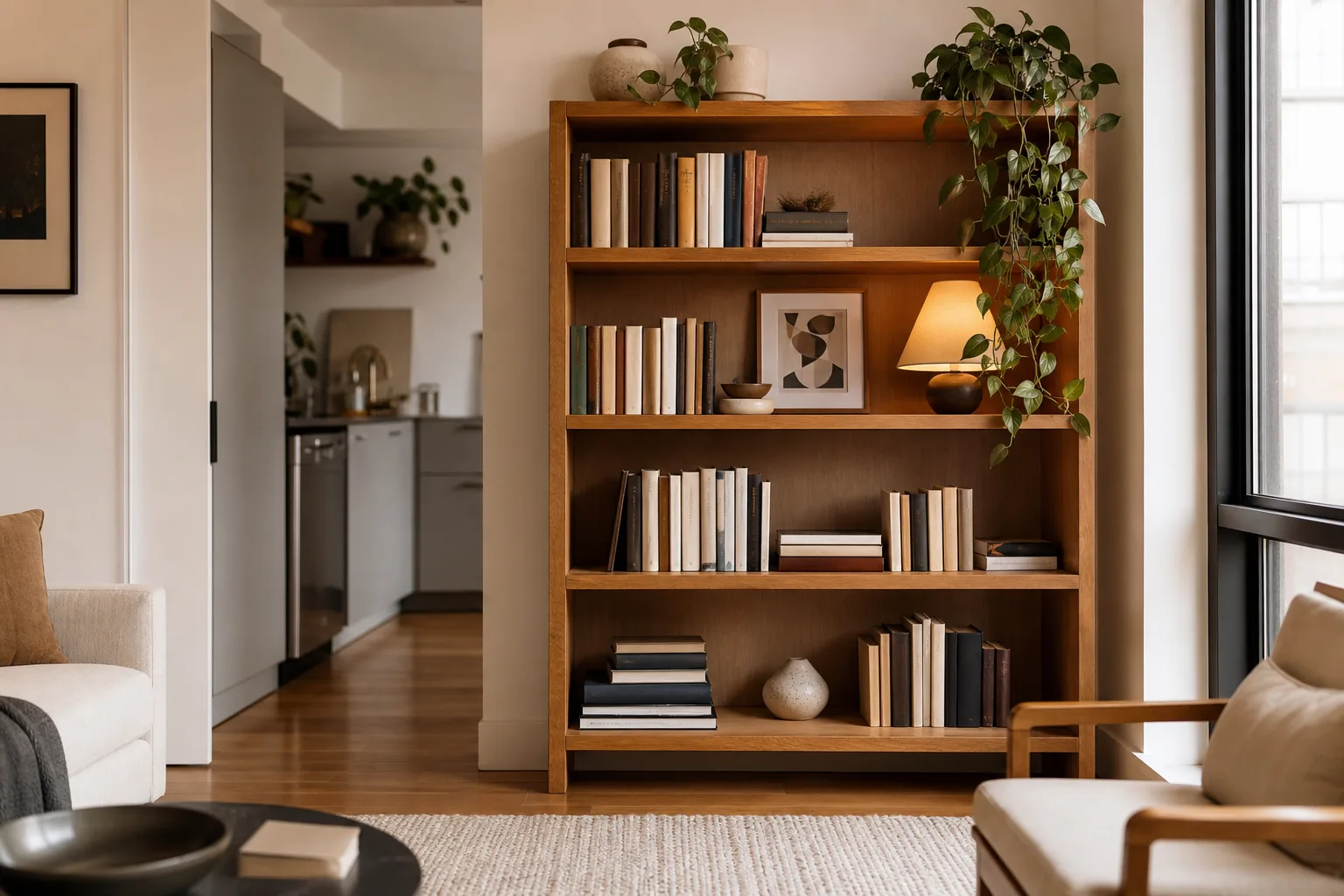
Books make a home feel inhabited because they suggest interests and routines. Arrange them where they are naturally used: beside the reading chair, on a low shelf, or in one short stack on a side table. Mix vertical rows with one horizontal stack to change the rhythm.
Leave visible gaps around decorative objects and avoid filling every shelf edge to edge. Place heavy volumes low, follow shelving load limits, and secure tall furniture as required. A small library feels warmer when it is accessible, not when it becomes a wall of visual pressure.
Best for: Personal character Budget: Free Renter-friendly: Yes
12. Create a Personal Gallery Wall With Breathing Room
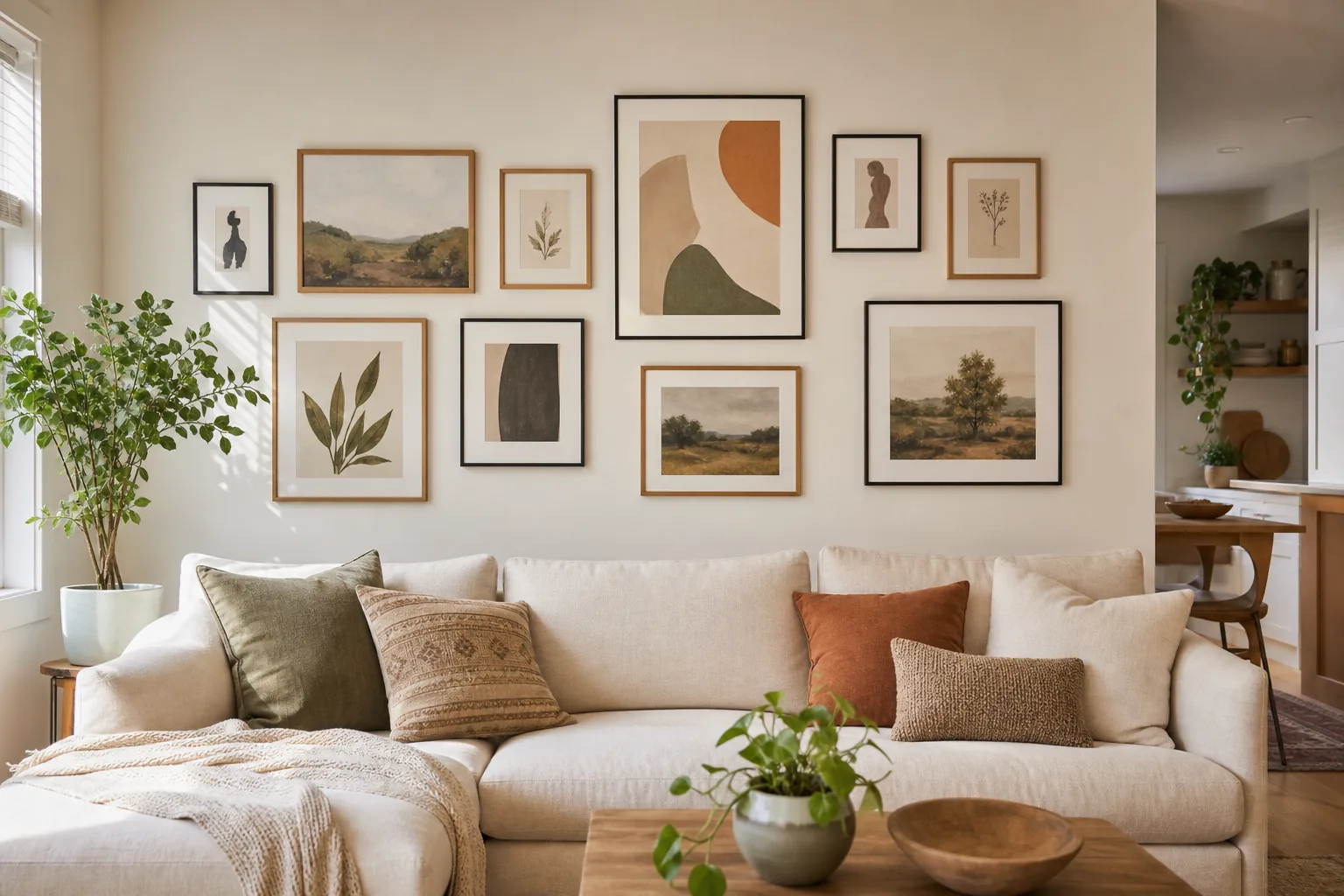
Personal photographs, travel prints, thrifted art, and small illustrations make an apartment feel emotionally warm. Choose a limited frame palette and plan the arrangement on the floor before hanging it. Consistent spacing creates order even when the art styles vary.
Use a compact collection with a clear outer boundary rather than spreading tiny pieces across every wall. Follow lease rules and product instructions for installation; not every removable strip suits every paint, frame weight, or surface. Leaving another wall quiet prevents the apartment from feeling crowded.
Best for: Meaningful personalization Budget: Low–moderate Renter-friendly: With approved hardware
13. Use a Mirror to Share Light, Not Just Fill a Wall
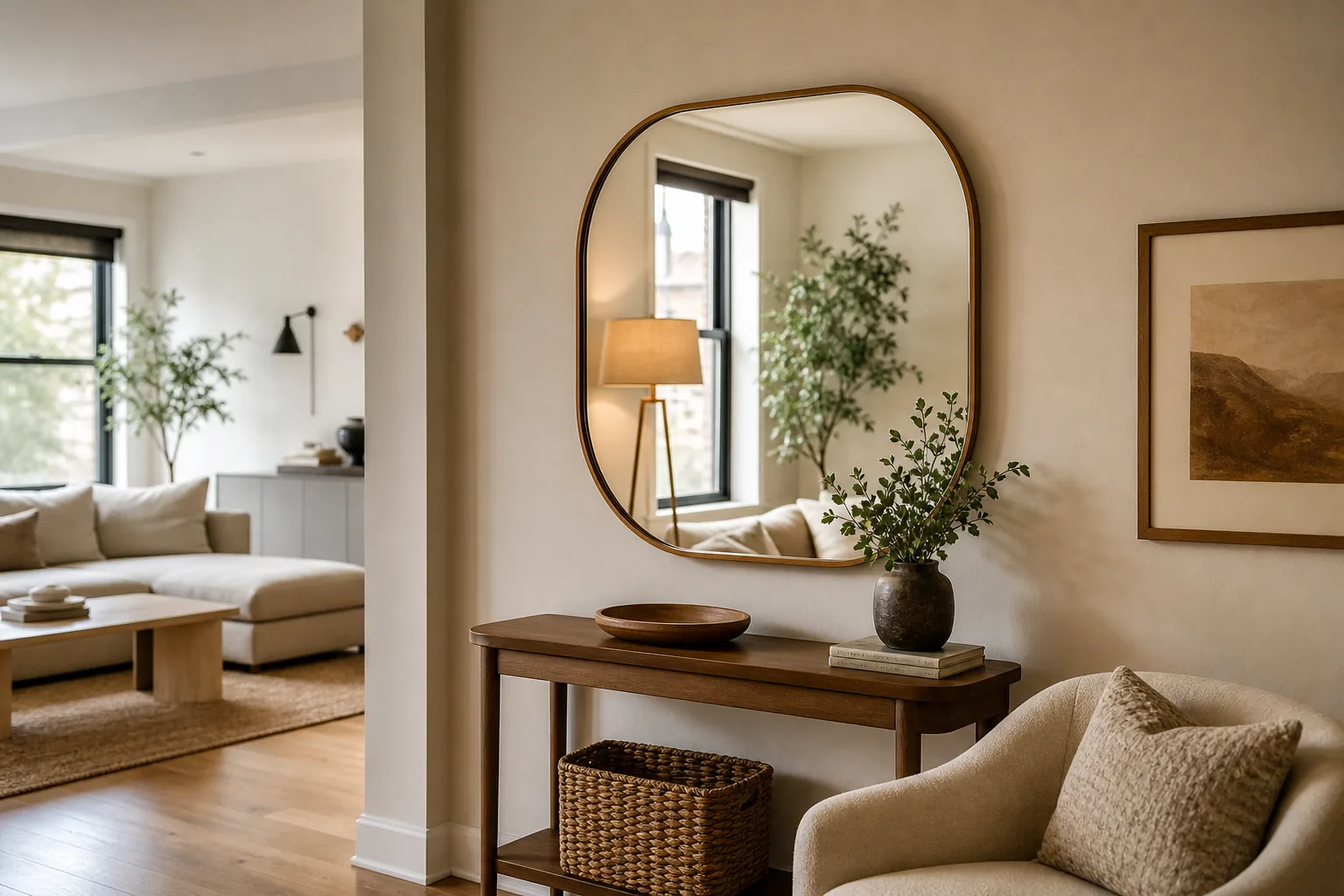
A mirror works best when it reflects something pleasant: a window, lamp, artwork, or leafy plant. This spreads light and depth through the room while supporting the cozy atmosphere. A warm wood, aged brass, or softly painted frame prevents the mirror from feeling cold or clinical.
Test the reflection before deciding on the final location. Avoid glare, distracting views, and placements that interfere with movement. Large mirrors must be installed or leaned only according to appropriate safety guidance, especially in homes with children or pets.
Best for: Dark or narrow apartments Budget: Low–moderate Renter-friendly: Usually
14. Hide Everyday Clutter in Soft-Looking Storage
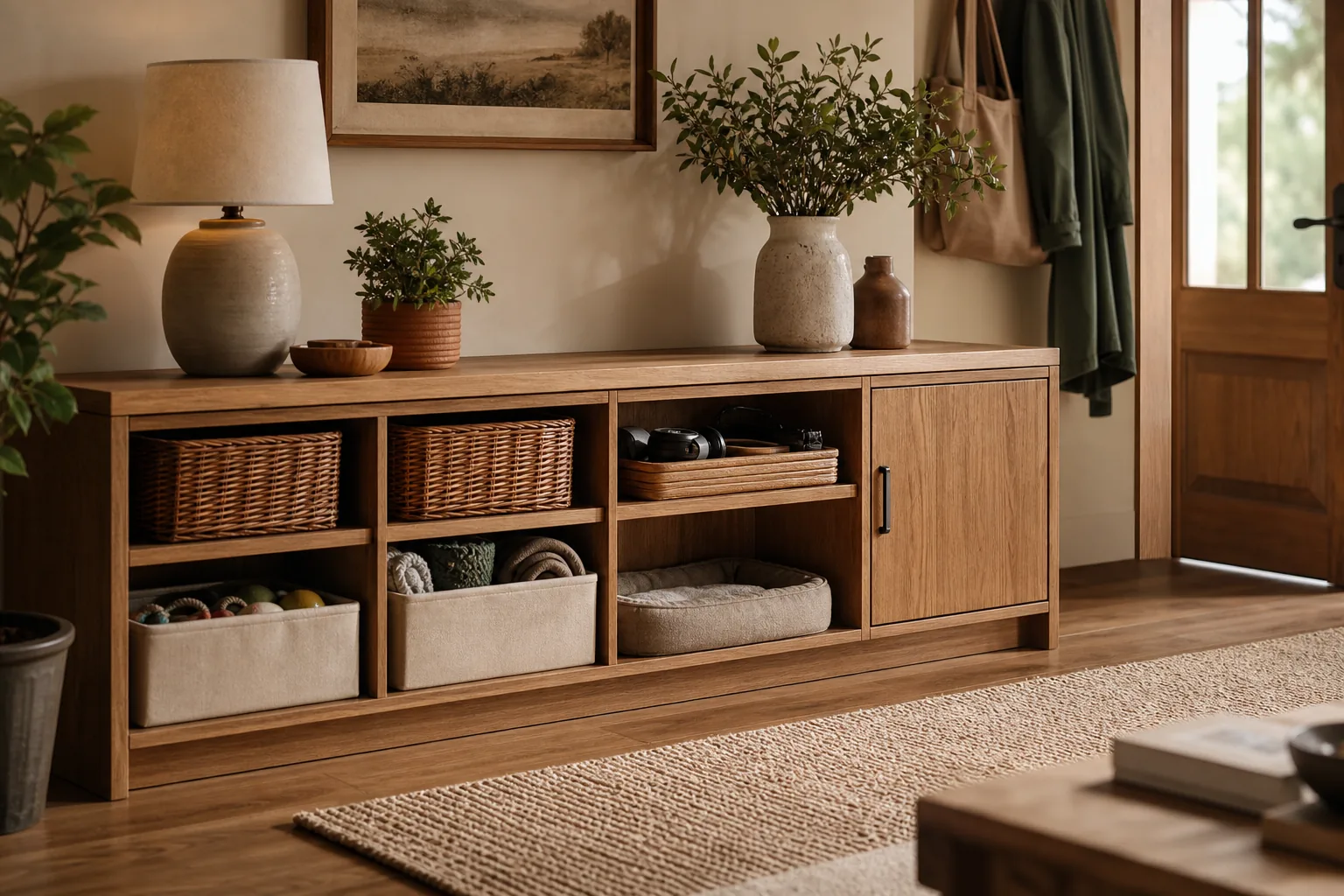
Woven baskets, fabric bins, lidded boxes, and warm wood cabinets control visual noise while contributing texture. Assign each container a narrow category such as electronics, pet supplies, entry accessories, or spare textiles so it remains useful instead of becoming a miscellaneous hiding place.
Choose containers that fit the shelf precisely and are suitable for what they hold. Frequently used items should be reachable without moving several boxes. When storage matches the room’s materials, practical organization becomes part of the aesthetic rather than something to disguise.
Best for: Daily clutter control Budget: Low–moderate Renter-friendly: Yes
15. Use Rounded Shapes to Soften a Boxy Layout
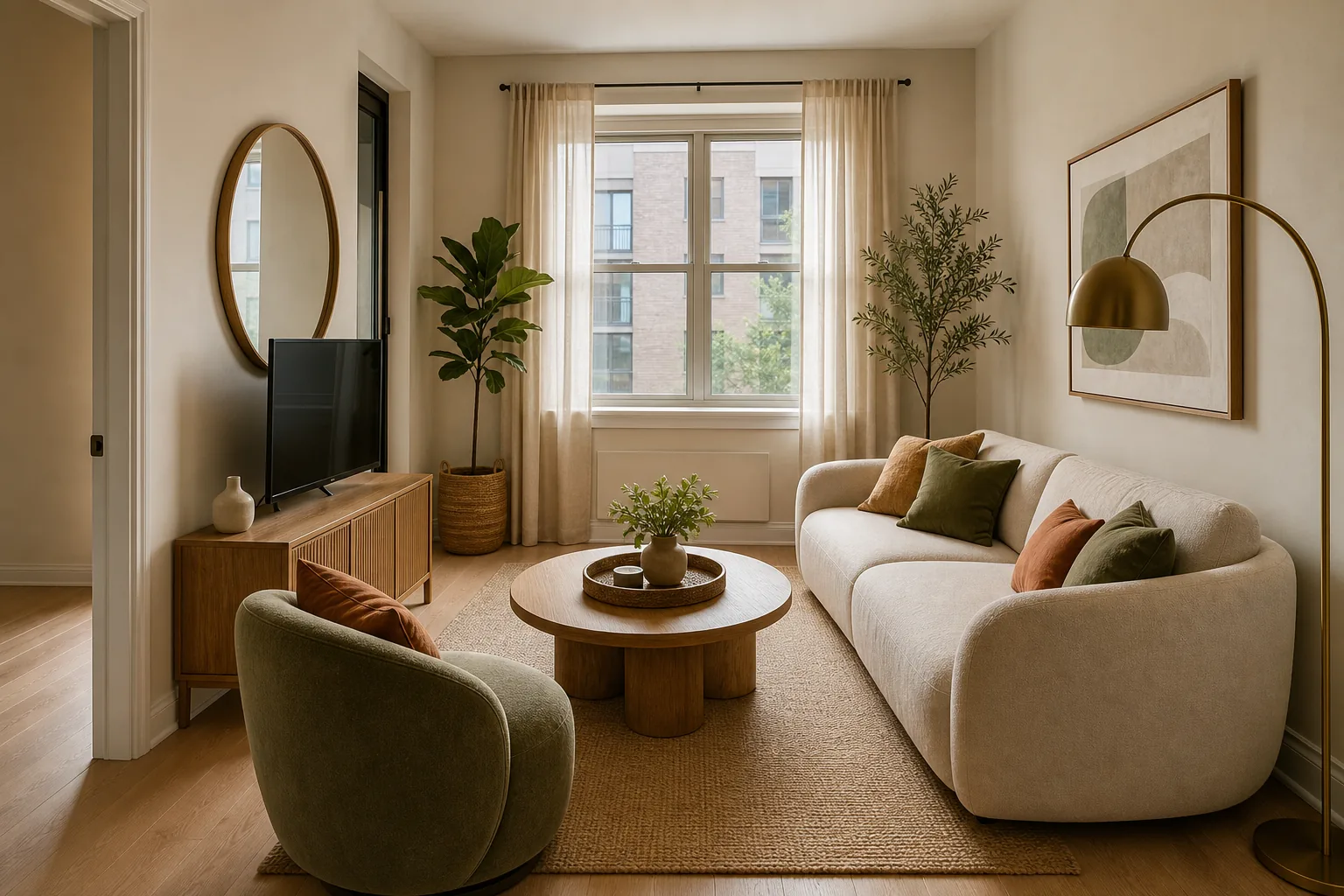
Apartments often contain a grid of square rooms, straight cabinets, and rectangular furniture. Introduce a round coffee table, curved chair, arched lamp, oval tray, or circular mirror to interrupt those hard lines. One or two rounded elements are enough to make the composition feel gentler.
Curves can also improve circulation because they remove sharp corners from tight walking routes. Measure carefully and protect the route between the sofa, doorway, and kitchen. The best piece supports movement as well as appearance.
Best for: Tight living rooms Budget: Free–moderate Renter-friendly: Yes
16. Turn a Small Dining Corner Into an Evening Nook
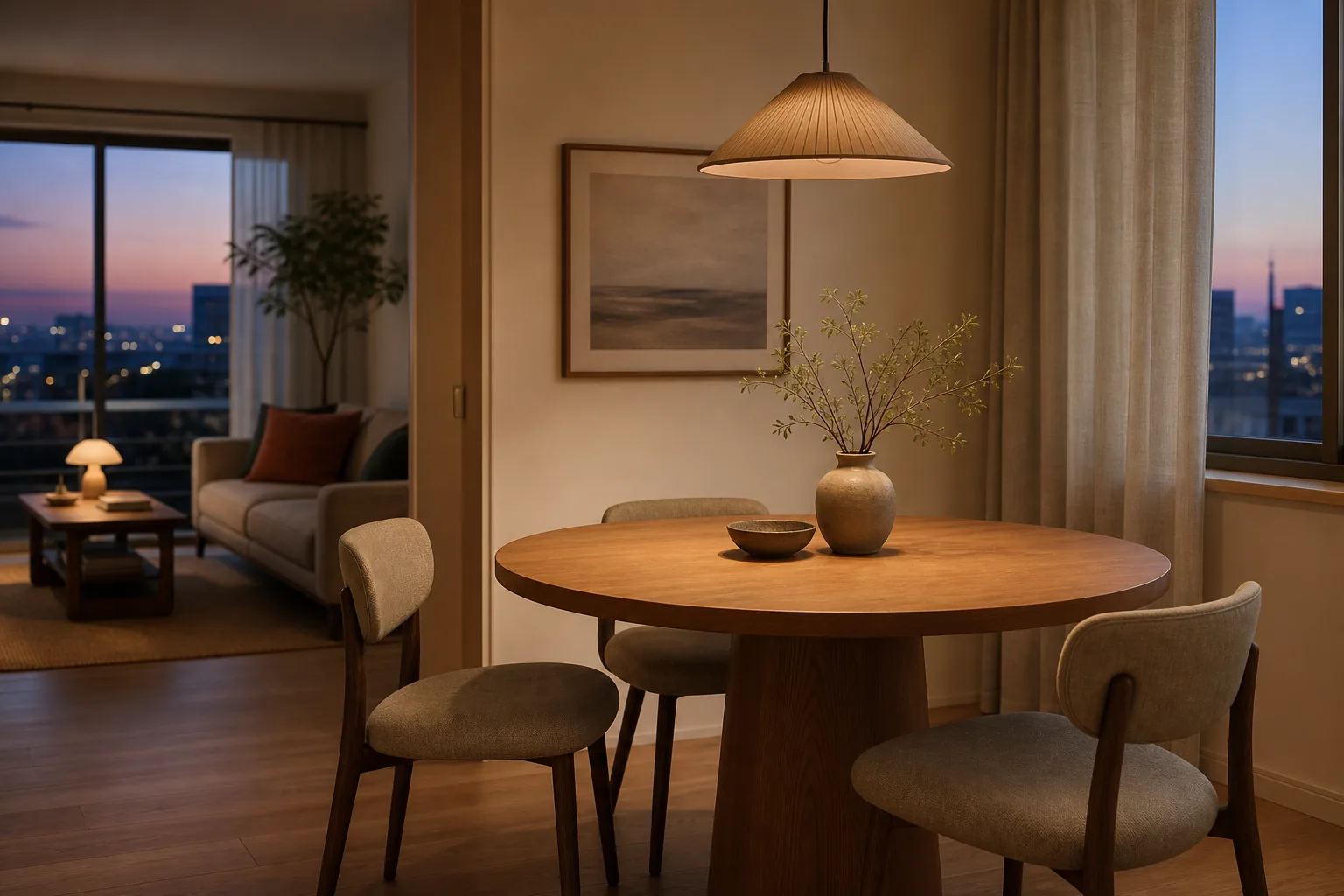
A compact dining area feels intimate when the furniture is scaled correctly and the lighting creates a clear zone. A round table supports circulation, while a small pendant, plug-in wall light, or nearby lamp can make dinner feel separate from the rest of the open-plan room.
Add softness through upholstered seat pads, a simple runner, or one piece of art. Keep the tabletop mostly open so the nook remains easy to use. For more ways to connect adjoining spaces, see our dining room decorating ideas.
Best for: Studio and open-plan layouts Budget: Low–moderate Renter-friendly: Yes
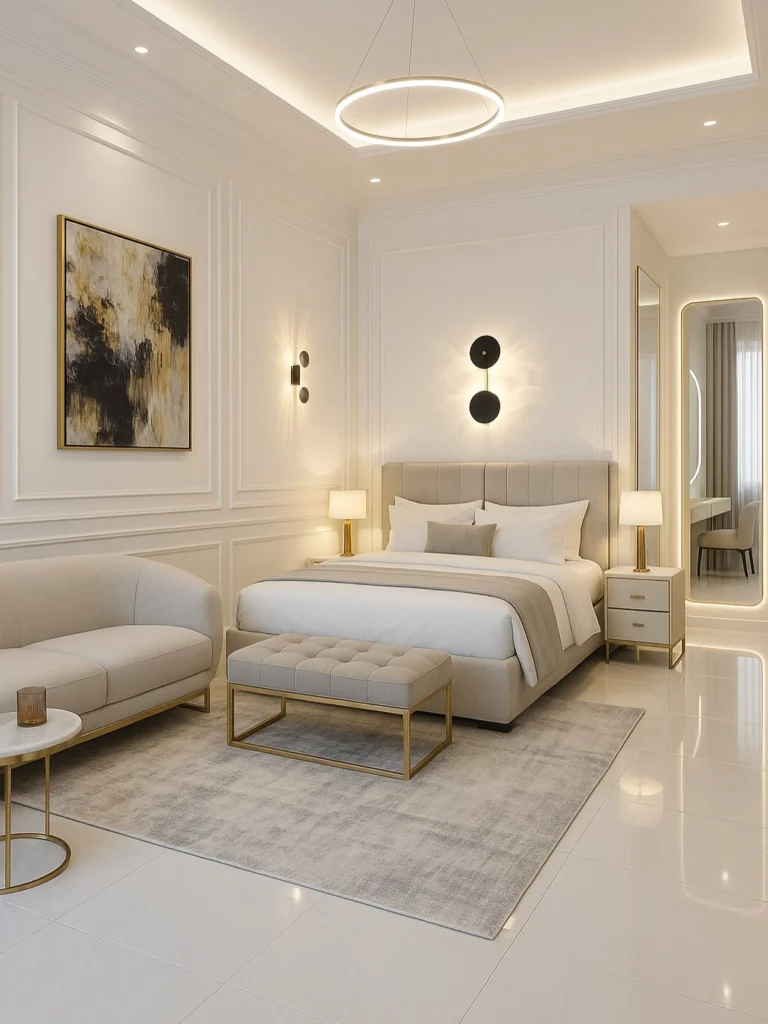
17. Make the Bedroom Feel Like a Soft Cocoon
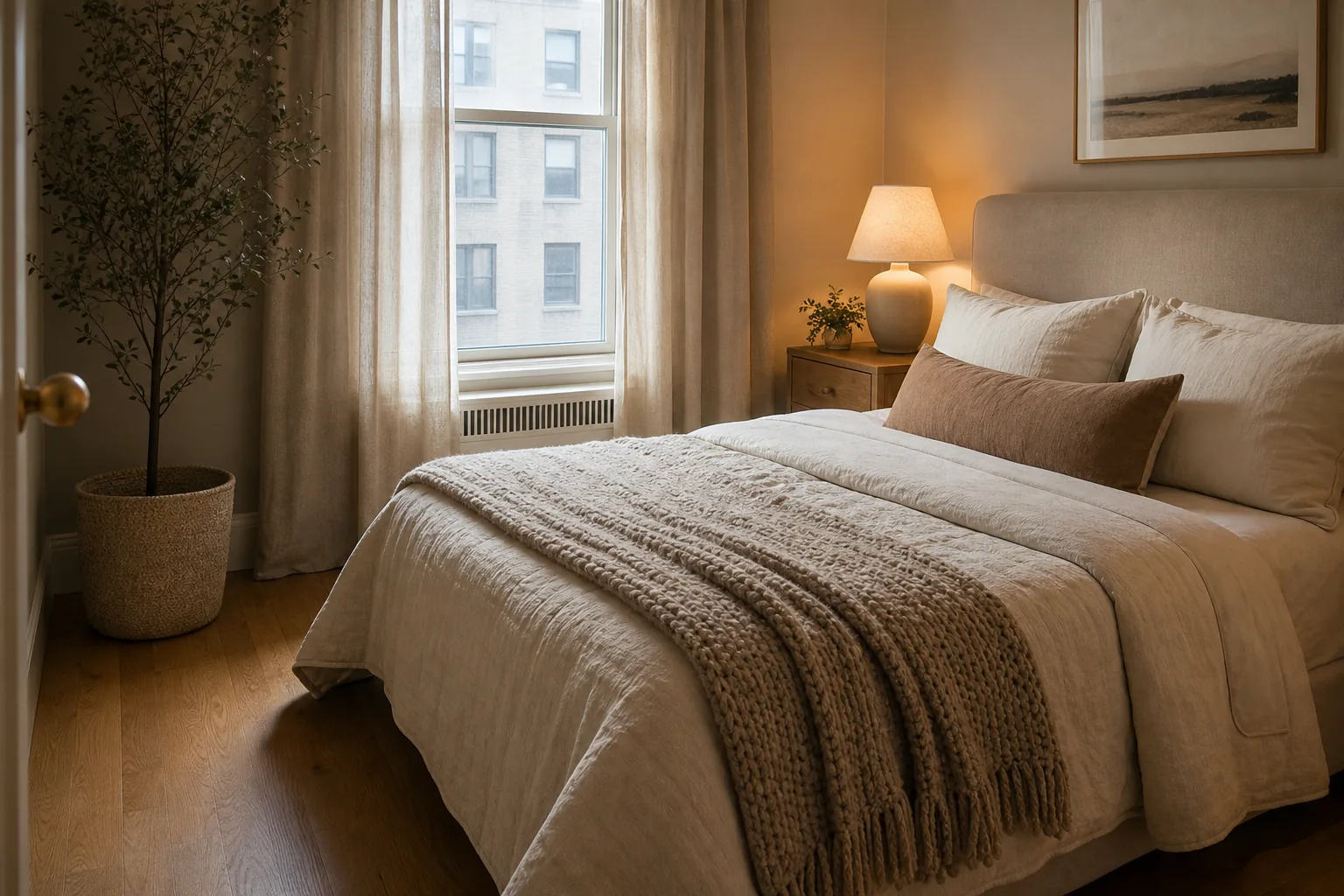
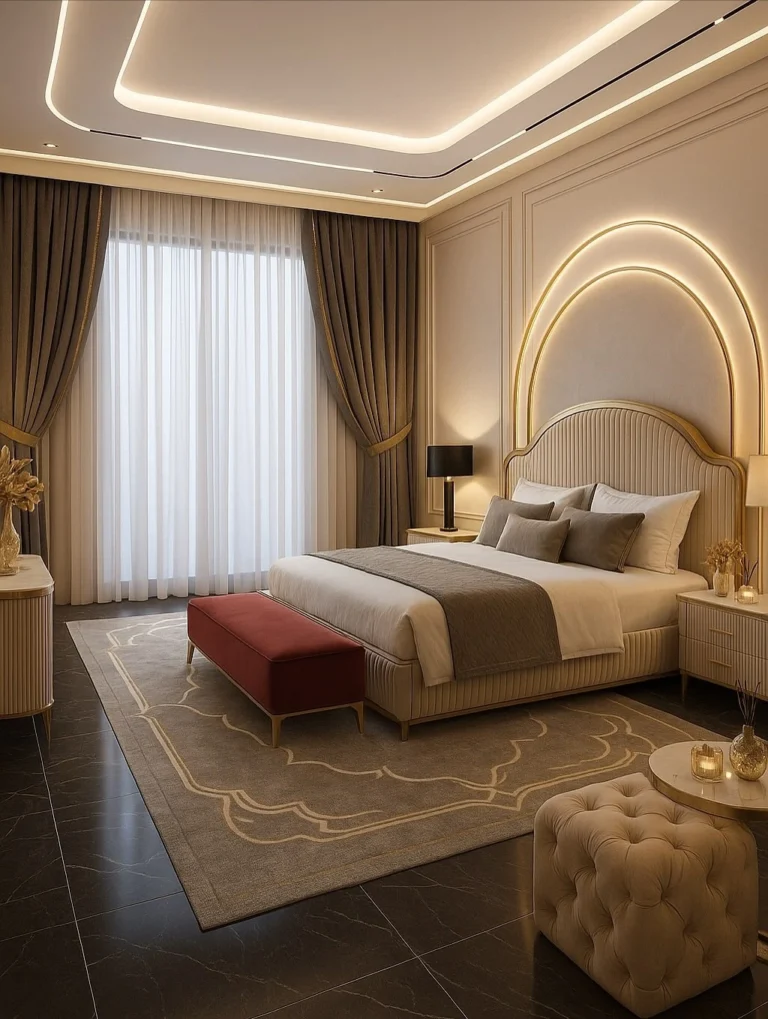
Layer the bed with simple sheets, a quilt or coverlet, one textured throw, and a restrained group of pillows. Tonal colors create depth without making a small room busy. A soft headboard, warm wood bedside table, and fabric curtain help absorb the harder edges around the bed.
Choose breathable, maintainable bedding suited to the season rather than stacking heavy layers for appearance. Keep the floor route clear and avoid decorative cushions that have nowhere to go at night. A bedroom feels cozier when the daily reset remains simple.
Best for: Restful bedroom atmosphere Budget: Low–moderate Renter-friendly: Yes
18. Add Renter-Friendly Bedside Lighting
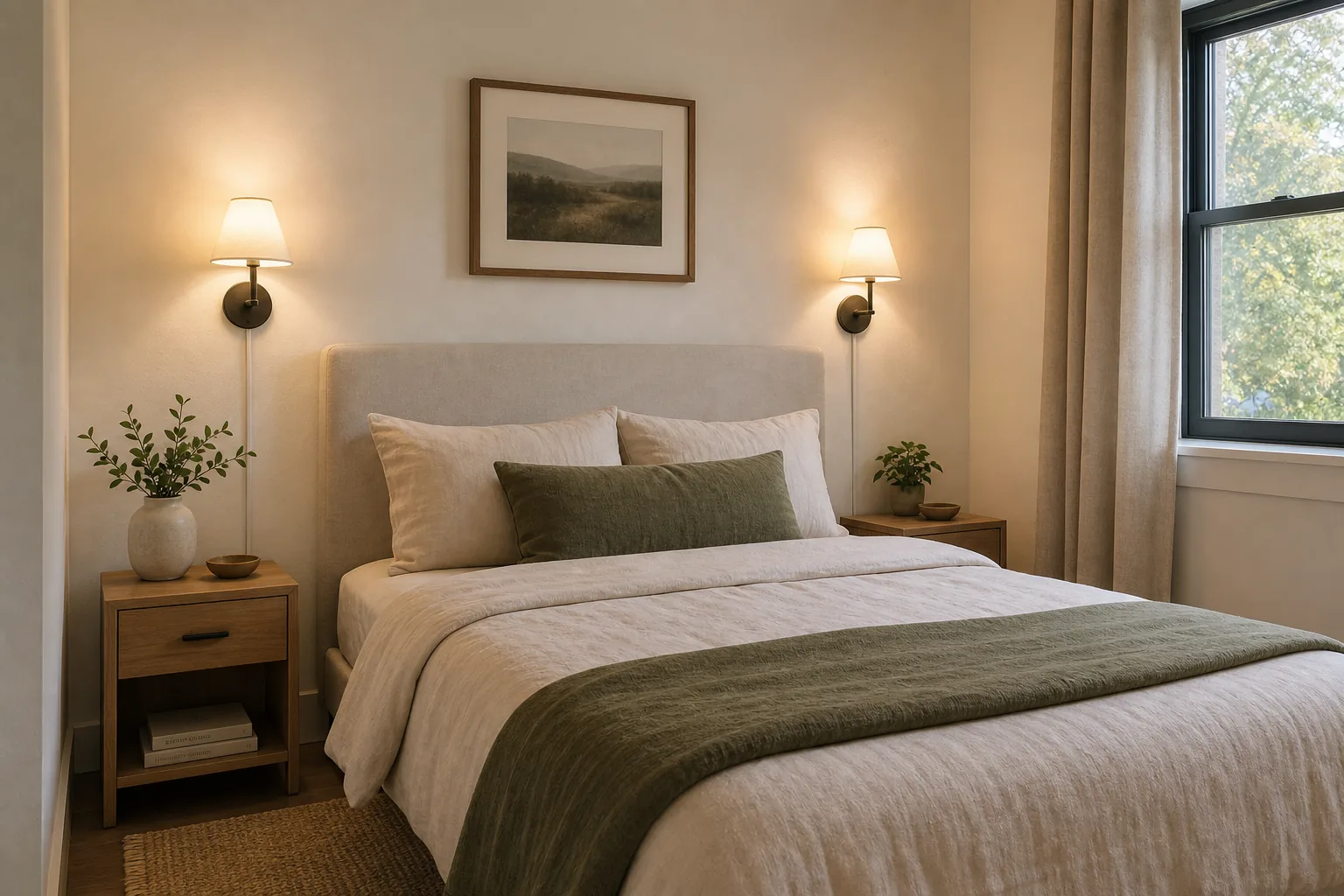
Bedside light makes an apartment bedroom feel calmer and more complete after dark. Table lamps are the simplest option, while suitable plug-in sconces can free the nightstand in a narrow room. Matching light levels on both sides create balance even when the furniture is not identical.
Use only fixtures intended for the installation method, follow cord and mounting instructions, and obtain permission when required. Keep fabric, bedding, and other materials clear of bulbs and heat. A warm glow should never compromise safe use.
Best for: Small nightstands Budget: Low–moderate Renter-friendly: Often
19. Treat the Entryway as a Warm Welcome
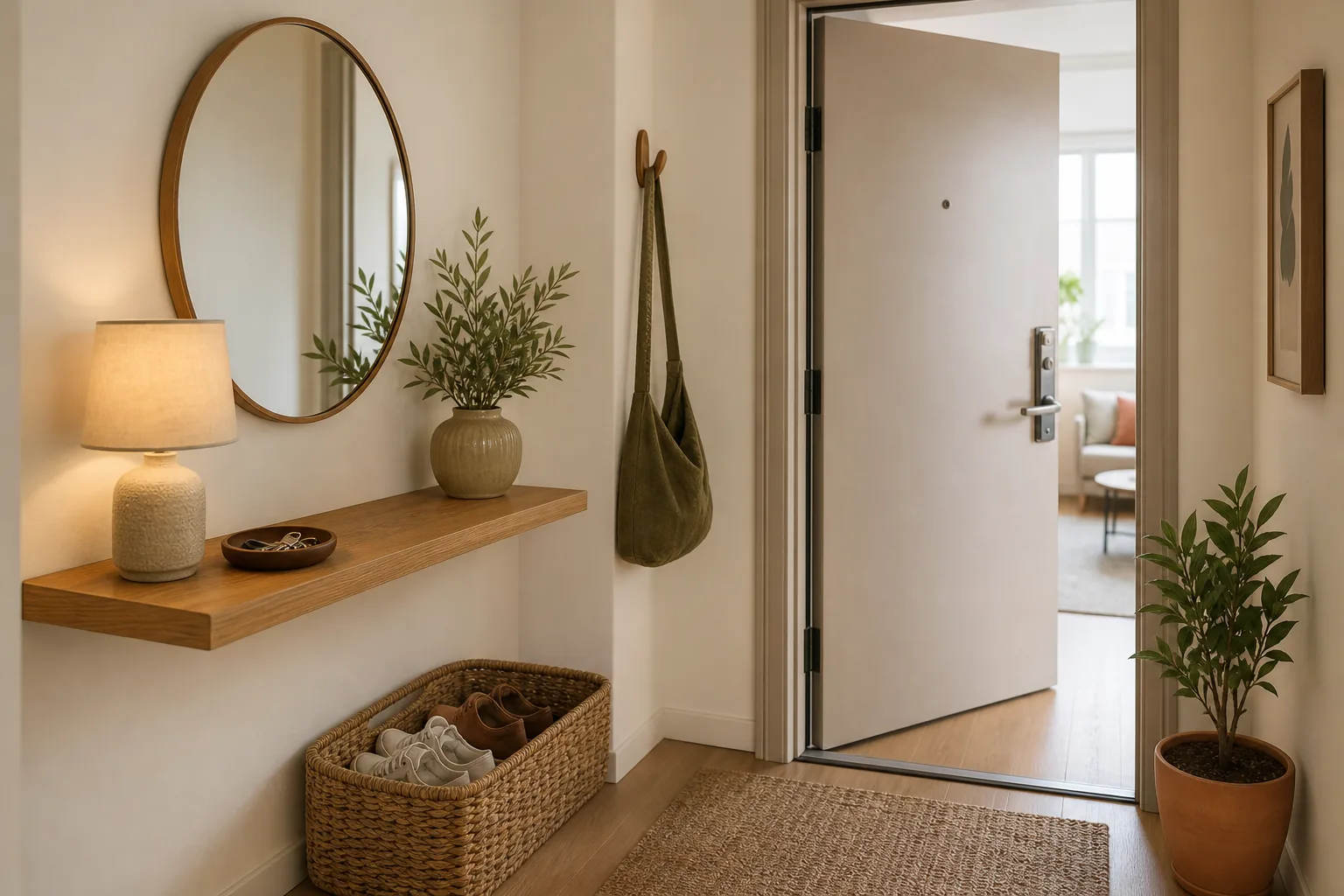
Even a narrow strip beside the front door can establish the apartment’s mood. Use a shallow shelf or compact console, a mirror, one small light, a tray for daily essentials, and a basket or closed shoe solution. Repeating the living room’s wood tone or accent color makes the entrance feel connected.
Protect the full door swing, lock access, ventilation, and required path of travel. Avoid placing unstable decor where it can be knocked during entry. The zone should make leaving and returning easier, not become another obstacle.
Best for: First impressions and routines Budget: Low Renter-friendly: Yes
20. Create a Window or Balcony Morning Corner
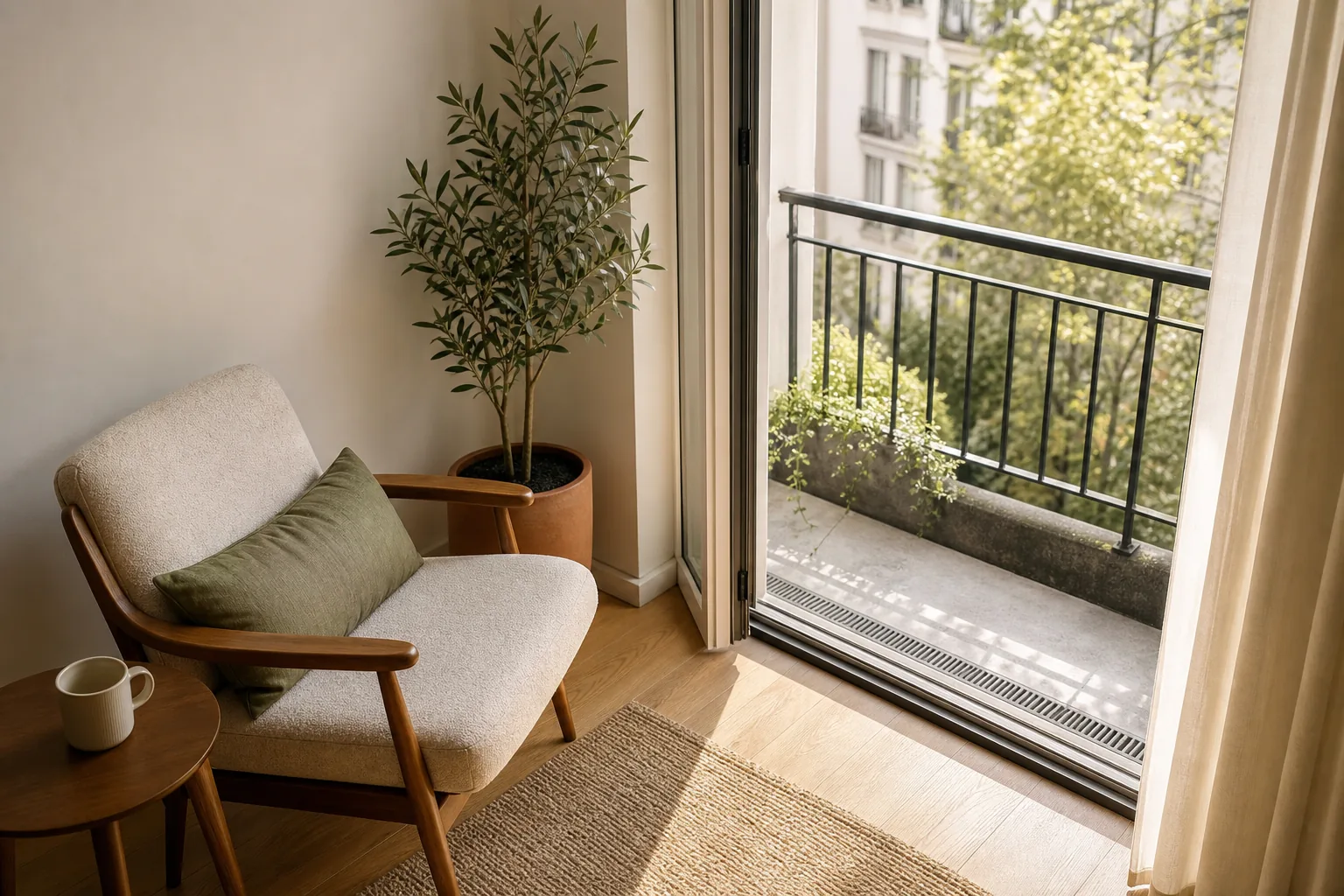
A chair or small bench near natural light can become a morning coffee, journaling, or quiet-viewing spot. Add a compact side table and one textile that can be moved easily. On a balcony, choose furnishings specifically suited to the location and building requirements.
Never block exits, windows, balcony drainage, railings, or required clearances. Secure lightweight outdoor items as appropriate and bring vulnerable textiles inside when needed. The coziness comes from the ritual and view more than from adding many accessories.
Best for: Underused bright corners Budget: Free–moderate Renter-friendly: Yes
21. Add One Natural Element With Presence
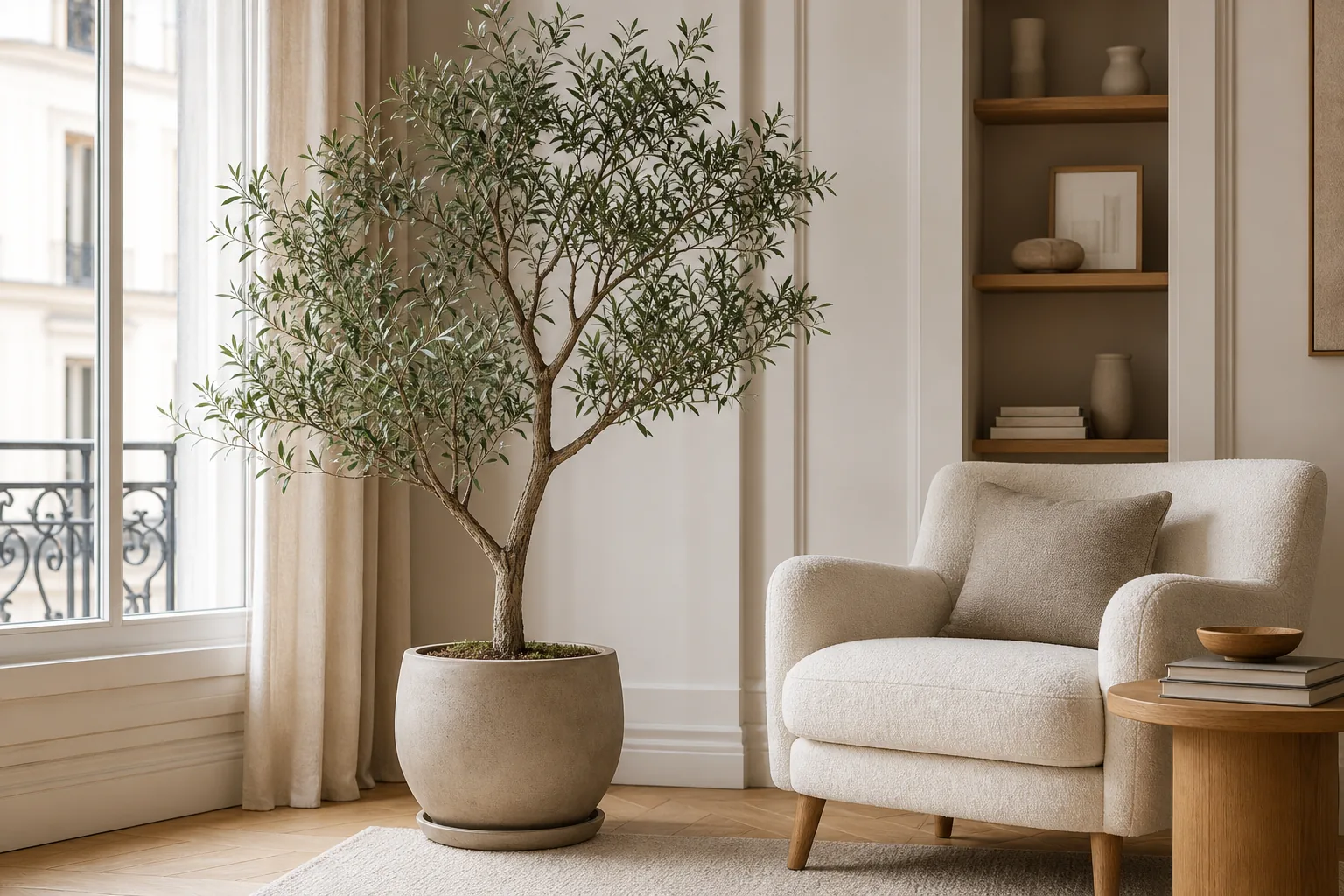
One leafy plant, branch arrangement, bowl of seasonal fruit, or grouping of dried stems can interrupt hard surfaces and bring movement into a small room. Choose one element with enough scale to register rather than scattering many tiny plants across every ledge.
Select plants and containers appropriate for the home, available light, pets, and maintenance routine. Protect surfaces from moisture and keep soil, leaves, and branches away from food-preparation areas or heaters. A healthy, well-placed natural element feels calmer than a crowded indoor jungle.
Best for: Bringing life to neutral rooms Budget: Low Renter-friendly: Yes
22. Finish With a Five-Minute Evening Reset
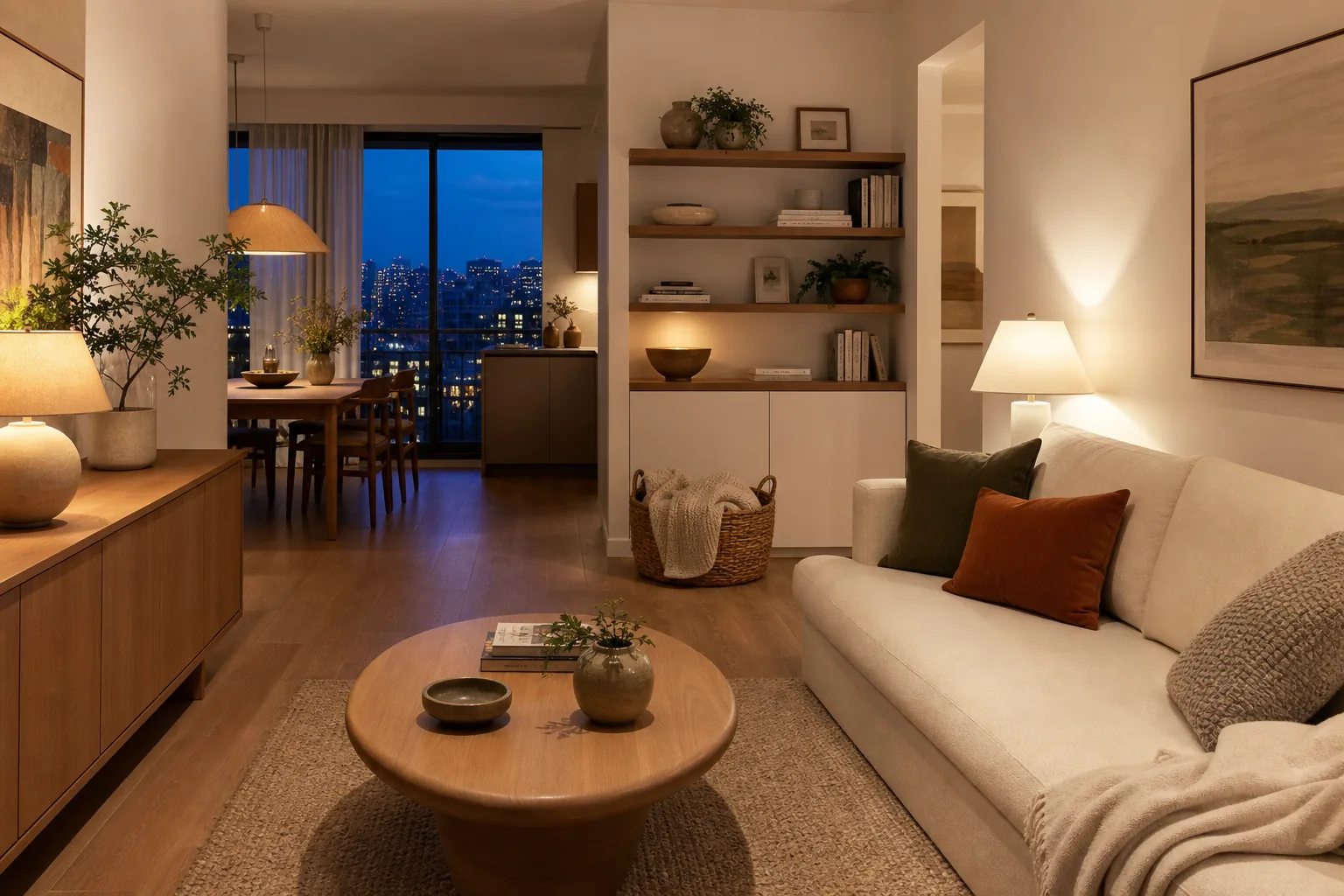
The most beautiful cozy apartment is one that can return to calm quickly. Before bed, fold the throw, return books to their shelf, clear the coffee table, place loose items in their assigned basket, and switch from task lights to one or two softer lamps.
Leave some empty capacity in storage and protect one clear surface in each room. These small limits keep the home feeling lived in without allowing every object to remain visible. For more seasonal ways to refresh the same foundation, explore our home decor trends.
Best for: Long-term maintenance Budget: Free Renter-friendly: Yes
Cozy Apartment Aesthetic Planning Checklist
- Choose one warm neutral, one wood tone, and one muted accent color.
- Improve lighting before purchasing decorative accessories.
- Measure furniture, rugs, windows, doors, and walking routes.
- Add texture through useful textiles and storage.
- Create one clear purpose for every small corner.
- Repeat materials instead of buying matching sets.
- Keep heaters, ventilation, electrical equipment, and exits clear.
- Use lease-approved installation methods and suitable products.
- Leave visible breathing room on walls, shelves, and tables.
- Plan a five-minute reset the household can maintain.
Common Cozy Apartment Decorating Mistakes
- Using only overhead lighting: One harsh source removes depth and softness.
- Buying many tiny accessories: Texture and a few larger objects create a calmer result.
- Choosing a rug that floats: A larger rug connects the furniture and defines the zone.
- Making every surface decorative: An apartment still needs clear places for daily life.
- Confusing beige with cozy: Warmth comes from light, texture, material, and personality.
- Ignoring circulation: Cozy furniture should never narrow an essential walkway.
- Copying a showroom exactly: Books, art, photographs, and routines make a home feel personal.
- Adding without editing: Remove visual noise before buying another storage basket.
Cozy Apartment Aesthetic FAQs
How can I make my apartment cozy without spending much money?
Begin with editing and rearranging. Move a lamp beside the sofa, group books where they are used, clear one surface, repeat a warm color, and bring a throw from another room. When spending, prioritize warm lighting, one appropriately sized rug, curtains, and storage that solves visible clutter.
What colors work best for a cozy apartment aesthetic?
Cream, oatmeal, mushroom, taupe, warm gray, muted clay, olive, rust, dusty blue, and natural wood are flexible choices. Use a limited palette that relates to the apartment’s fixed flooring, cabinets, and counters instead of following one color formula.
How do I make a small apartment cozy without making it cluttered?
Use atmosphere rather than volume: layered lighting, one larger rug, full-length curtains, a few tactile materials, and closed storage. Leave clear floor routes and open space around favorite objects. Coziness should make the room easier to use, not harder.
How can renters create a cozy apartment aesthetic?
Focus on portable layers such as lamps, rugs, curtains, bedding, baskets, furniture, artwork, and plants. Follow the lease and use only approved installation methods. Spend more on items that can move to the next home rather than on temporary clutter.
What lighting makes an apartment feel cozy?
A combination of general, task, and accent lighting usually feels warmer than one bright ceiling fixture. Place light at different heights and choose bulbs and fixtures appropriate for each activity and location. Follow all electrical, heat, and manufacturer guidance.
Can a cozy apartment still use color?
Yes. A calm neutral foundation can support muted olive, terracotta, burgundy, ochre, dusty blue, or even a deeper accent wall where permitted. Repeat the color two or three times in small amounts so it feels intentional rather than isolated.
Final Thoughts
A cozy apartment aesthetic is a feeling of warmth, comfort, and belonging—not a requirement to buy a particular sofa or cover every surface. Start with the elements that shape atmosphere and function: light, layout, textiles, storage, and a connected palette. Add personal objects only after the apartment already feels comfortable.
Choose three ideas from this guide, live with them for a week, and edit again. A warm lamp, one generous rug, softer curtains, and a basket that removes daily clutter may change the room more than an entire cart of decorative accessories.
3 Comments