
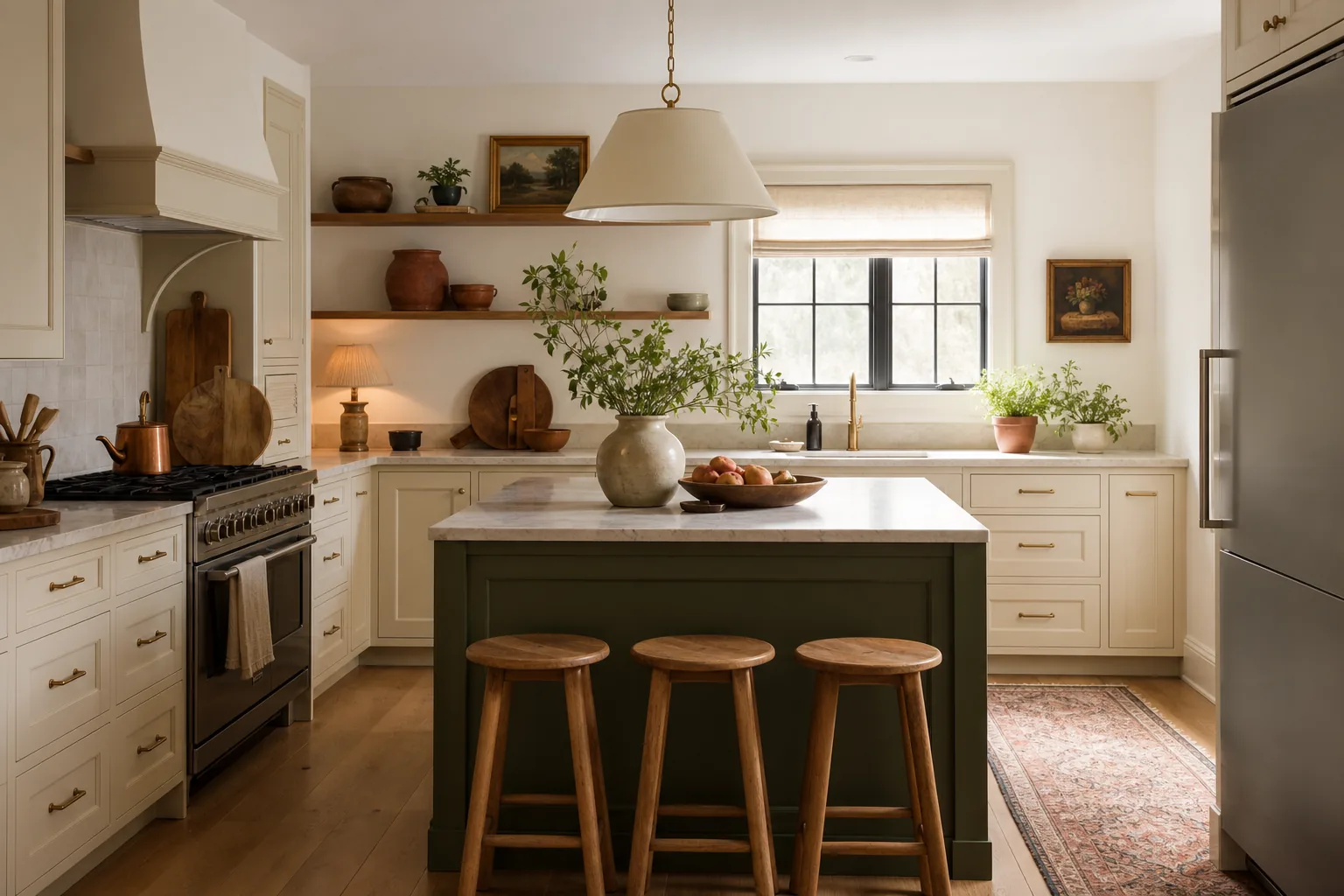
25 Beautiful Kitchen Decor Ideas for Countertops, Walls, Shelves and Small Spaces
The most inspiring kitchens are not simply beautiful—they are comfortable to cook in, easy to maintain, and full of details that feel personal. These kitchen decor ideas focus on that balance, helping you style countertops, walls, shelves, islands, and small spaces without sacrificing the room’s everyday function.
You do not need a complete remodel to create a kitchen that feels warmer and more finished. A well-placed lamp, a restrained countertop arrangement, useful objects in attractive materials, and one confident color can make a bigger difference than a collection of random accessories. Use the 25 ideas below as a menu: choose the ones that solve a real visual or practical problem in your kitchen.
Keep kitchen decor safe and functional
Keep decorative items away from burners, flames, hot appliances, sinks, and primary preparation zones. Do not block ventilation, outlets, controls, walkways, or access to frequently used tools. Follow product and manufacturer guidance for lighting, shelves, adhesives, and electrical accessories.
If you enjoy warm, practical rooms with a polished finish, explore our home decor trends for more ideas that can be adapted throughout the home.
1. Begin With a Warm, Practical Color Palette
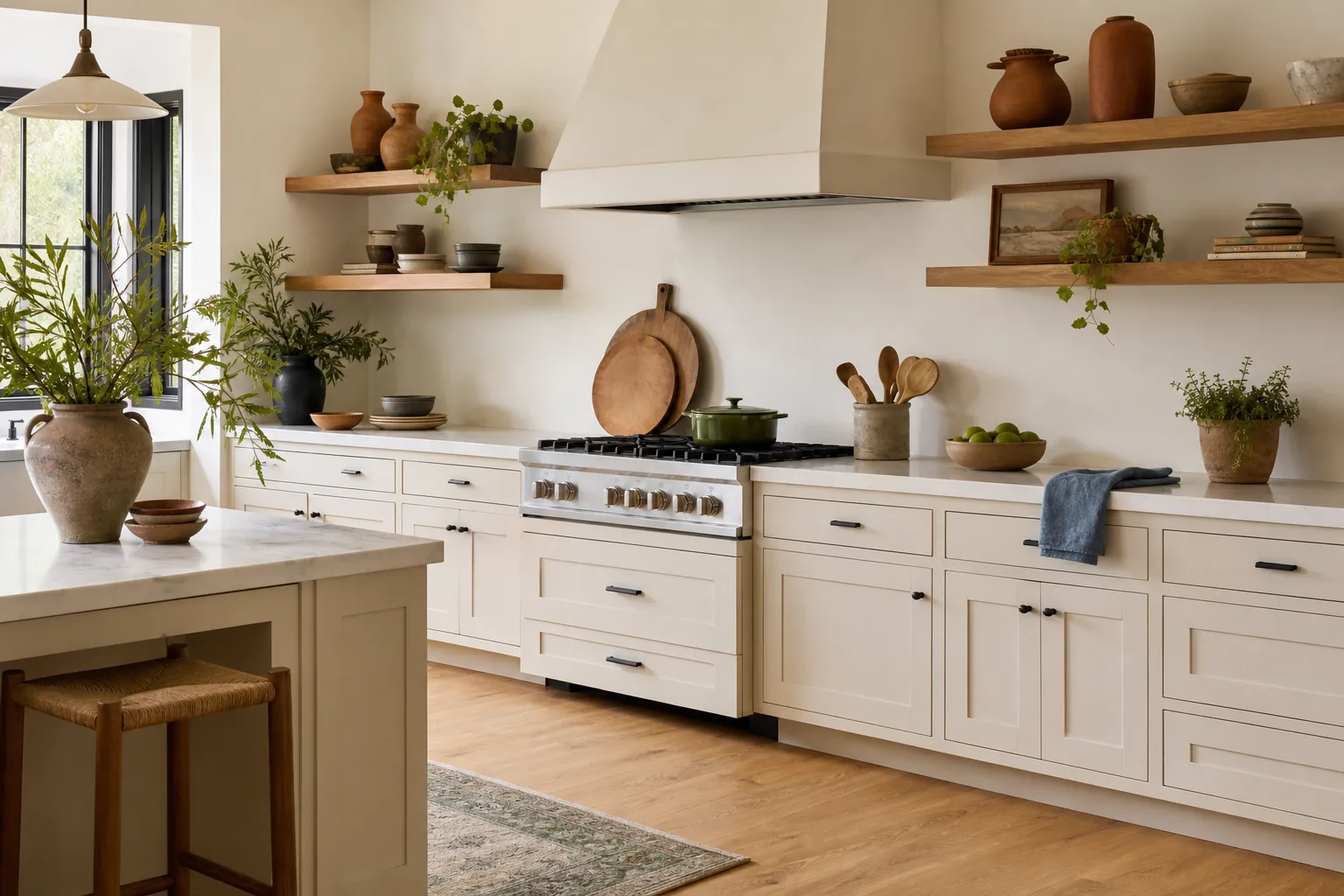
A limited palette makes small decorative choices feel intentional. Start with the fixed finishes already in the room—cabinetry, counters, backsplash, floor, and appliances—then choose two supporting colors. Cream, warm wood, and soft olive create a calm foundation, while terracotta, muted blue, butter yellow, or vintage pink can provide a controlled accent.
Repeat each accent two or three times through textiles, pottery, art, or a small appliance. Avoid trying to match every object perfectly; slight tonal variation gives the kitchen a collected look. If the room already contains strong color, let the remaining accessories stay quieter.
Easy formula: Use one dominant neutral, one natural material, and one accent color.
2. Create a Styled Countertop Tray
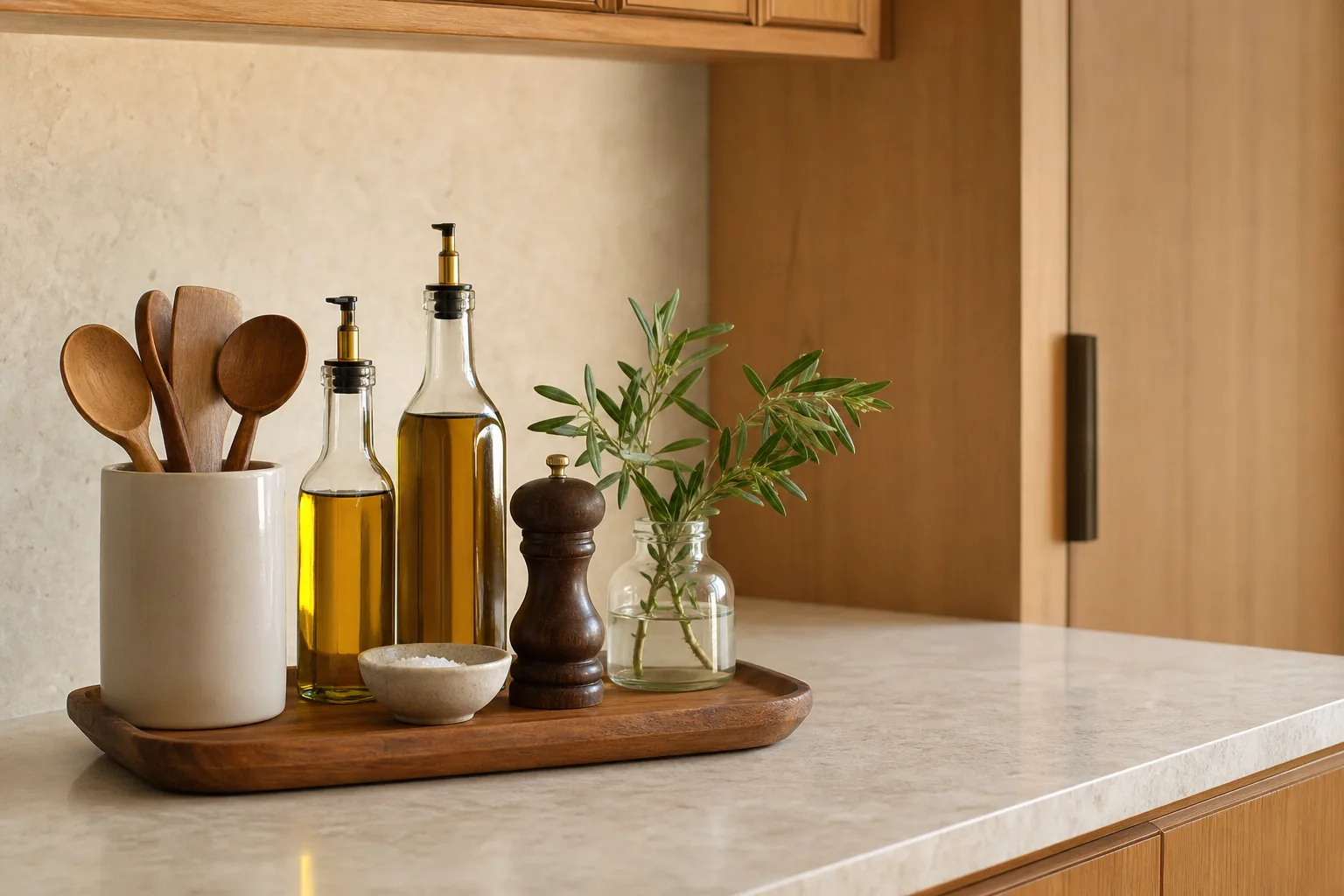
A tray turns separate objects into one calm arrangement and makes the counter easier to clean. Group only items that are genuinely useful in the same zone, such as oil, salt, a pepper mill, and a utensil crock beside the cooking area. A wood, stone, or metal tray adds texture while containing drips and visual clutter.
Keep the arrangement lower than nearby cabinets and leave clear space around it. Three to five objects are usually enough. Vary the heights with a tall bottle, a medium crock, and one low bowl so the display feels balanced rather than lined up.
Styling rule: The tray should simplify the counter, not become another place to store extras.
3. Layer Cutting Boards Like Functional Art
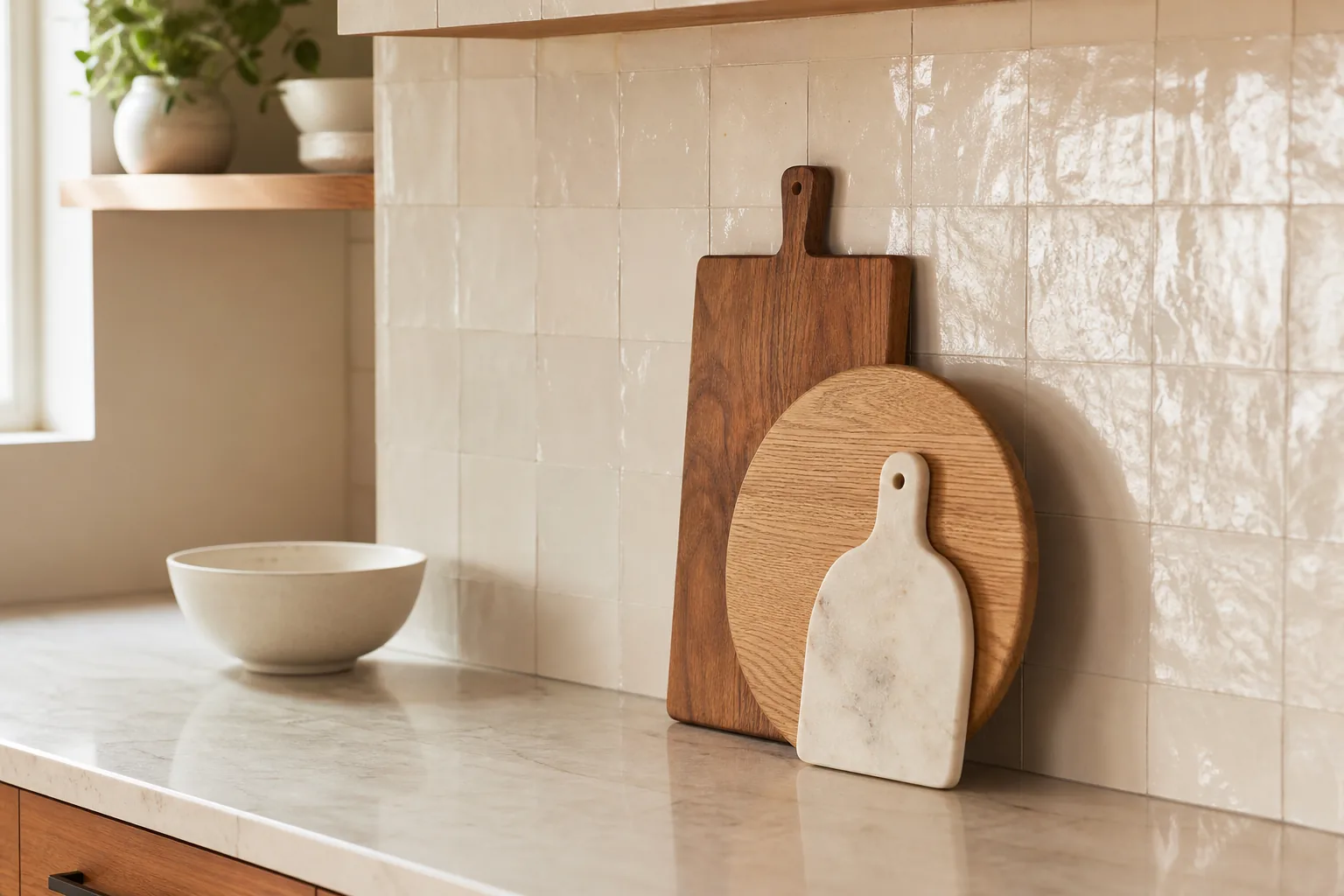
Cutting boards are useful, sculptural, and especially effective in a kitchen that needs warmth. Lean two or three boards against the backsplash, combining different heights and shapes. A round board softens rectangular cabinetry, while a marble board introduces a cool contrast beside warm wood.
Choose boards you actually use and clean them according to their material requirements. Avoid placing the arrangement behind a burner or where it will be exposed to constant splashes. One small crock or bowl can complete the composition without crowding it.
Best mix: Combine one tall wood board, one smaller round board, and one stone accent.
4. Add a Small Countertop Lamp
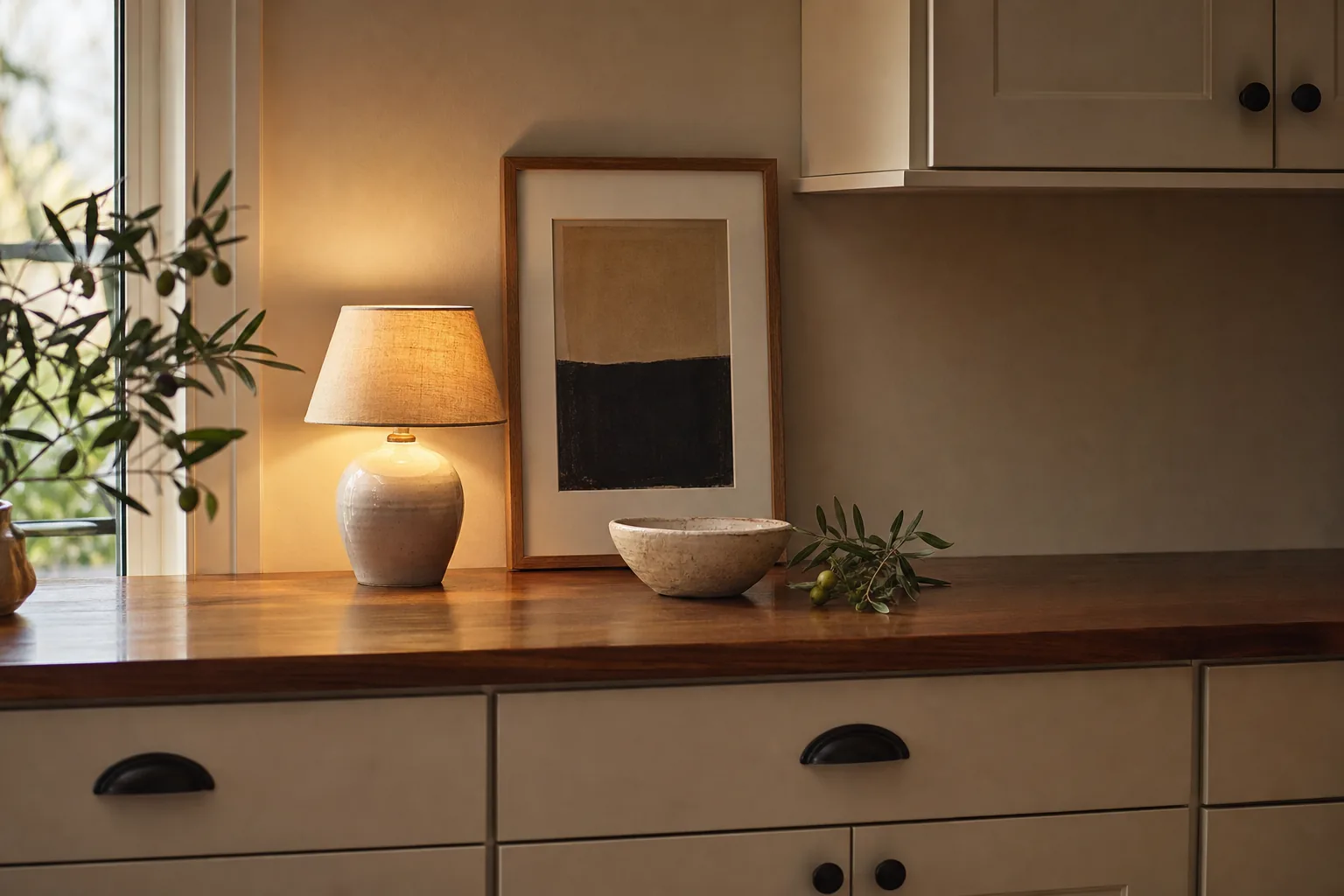
A small lamp changes the mood of a kitchen after sunset and makes the room feel more like a living space. Place it in a dry, low-traffic corner away from the sink, stove, and food-preparation area. A ceramic, wood, or aged-metal base can connect the lamp to the other finishes in the room.
Choose a compact shade and warm bulb, then check that the cord does not cross a walkway or work zone. If a plug-in lamp is not appropriate, consider a rechargeable design intended for the location and follow its charging and care instructions.
Finish the vignette: Pair the lamp with one small artwork or bowl, leaving the rest of the corner open.
5. Design a Compact Coffee Station
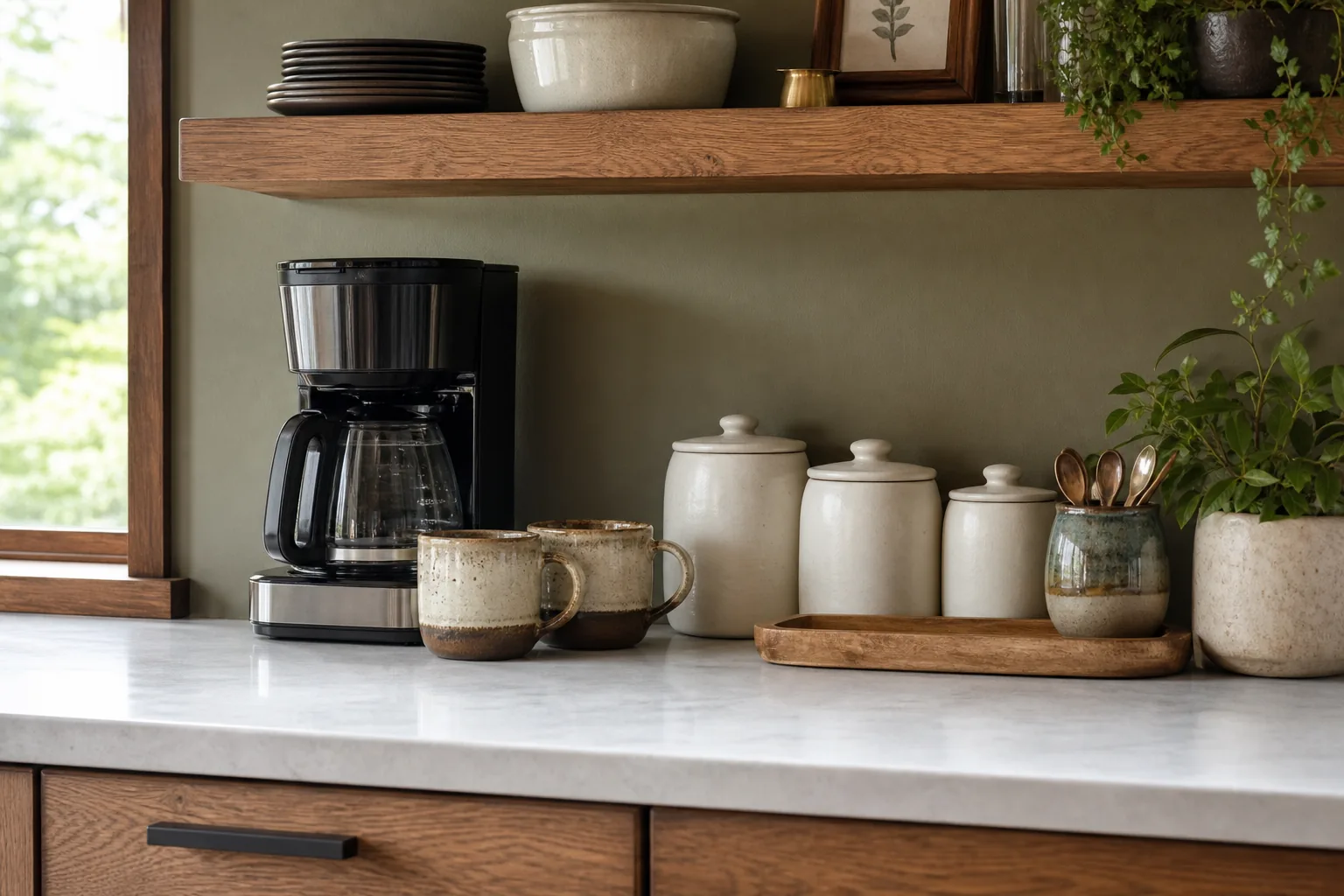
A coffee station looks best when it is arranged around the actual routine. Keep the machine, everyday mugs, coffee, and one spoon container together. Store backup supplies elsewhere, and use a tray to define the zone without taking over the counter.
Hang mugs only when the rail or hooks are properly installed and suitable for the weight. Otherwise, stack two attractive mugs on a shelf or place them beside the machine. Matching canisters create calm, but a coordinated mix of ceramic and glass often feels more personal.
Daily reset: Return the zone to four essentials after the last drink of the day.
6. Bring In Potted Herbs and Greenery
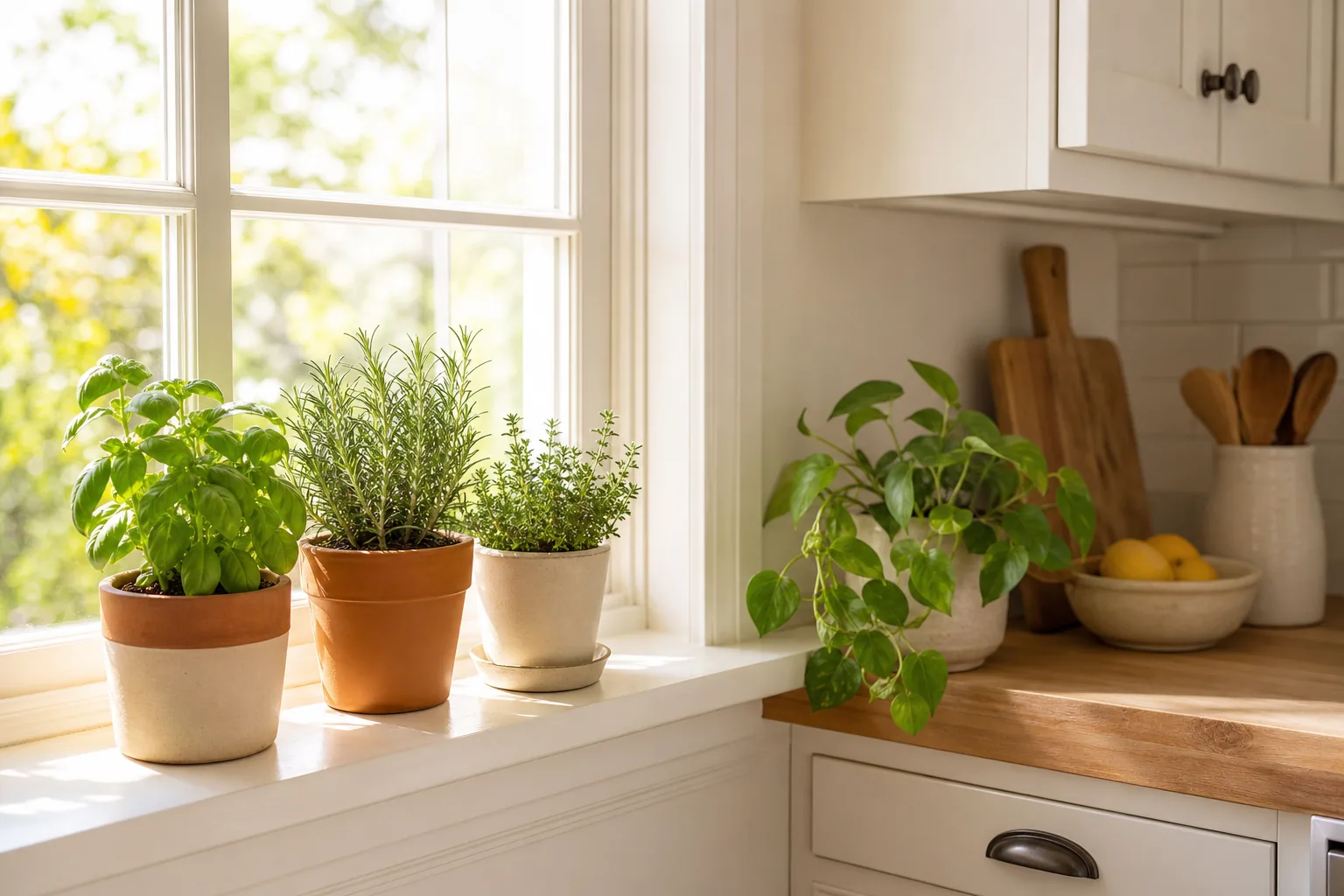
Greenery introduces life and softens a kitchen filled with hard surfaces. A small group of herbs near adequate natural light can be useful as well as decorative. Repeat similar pots in slightly different shapes, or place them inside one long planter for a cleaner line.
Select plants suited to the available light and keep them away from heat, food-contact surfaces, and areas where watering could damage finishes. If live plants are impractical, one convincing branch in a simple vase can deliver the same visual softness with less maintenance.
Keep it simple: Three small plants generally look more intentional than many unrelated pots.
7. Hang Modest-Scale Artwork
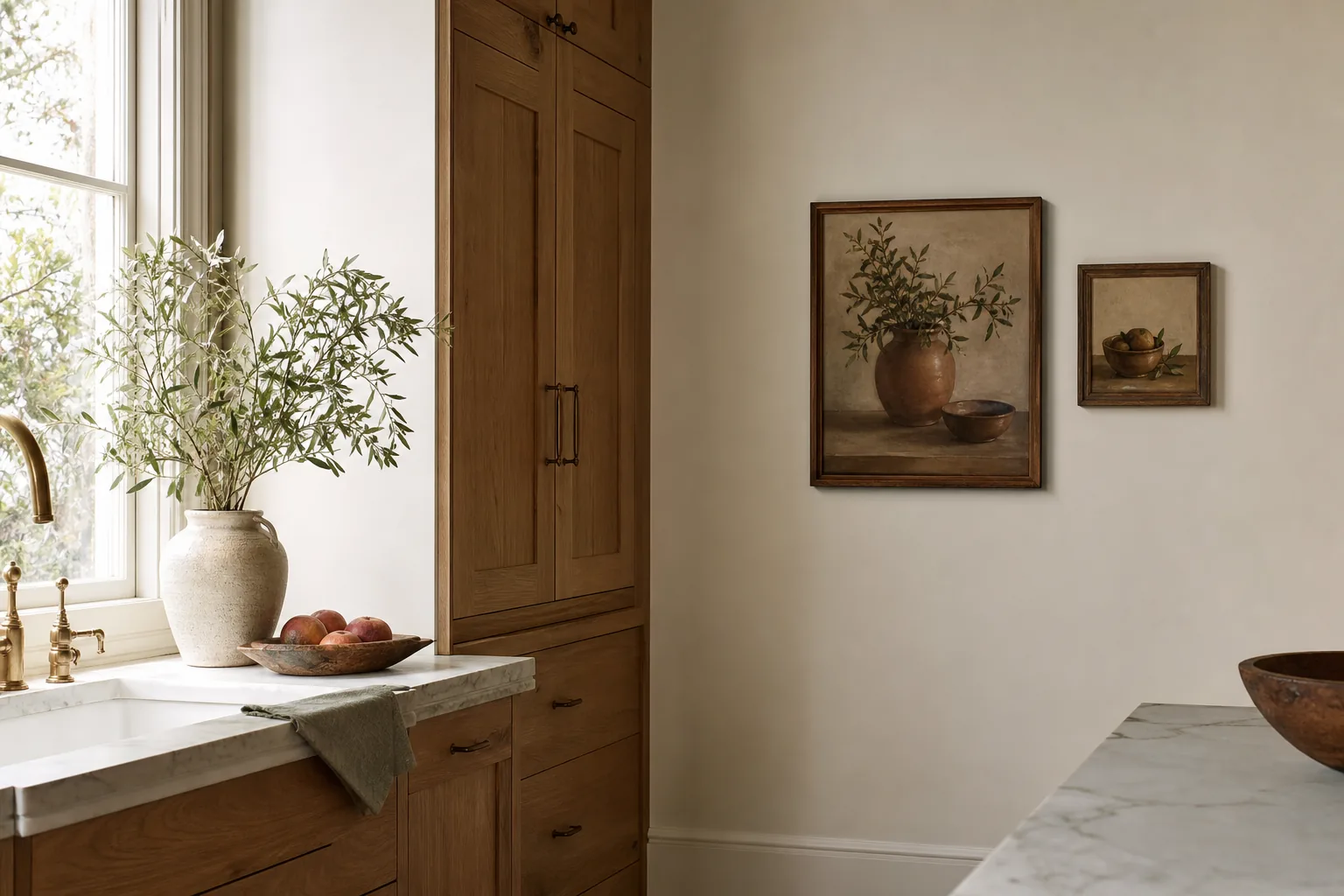
Artwork gives a kitchen personality without using valuable counter space. Look for a modest still life, landscape, botanical print, or abstract piece that repeats a color already present in the room. Smaller art usually feels more natural beside cabinets and shelves than one oversized piece competing with the architecture.
Choose a location away from direct steam, grease, and water, and use installation hardware appropriate to the wall and frame. A single piece can fill a narrow wall, while two related works can create a quiet pair near a breakfast nook.
Collected look: Vintage-style frames and modern art create an appealing contrast.
8. Install a Slim Picture Ledge
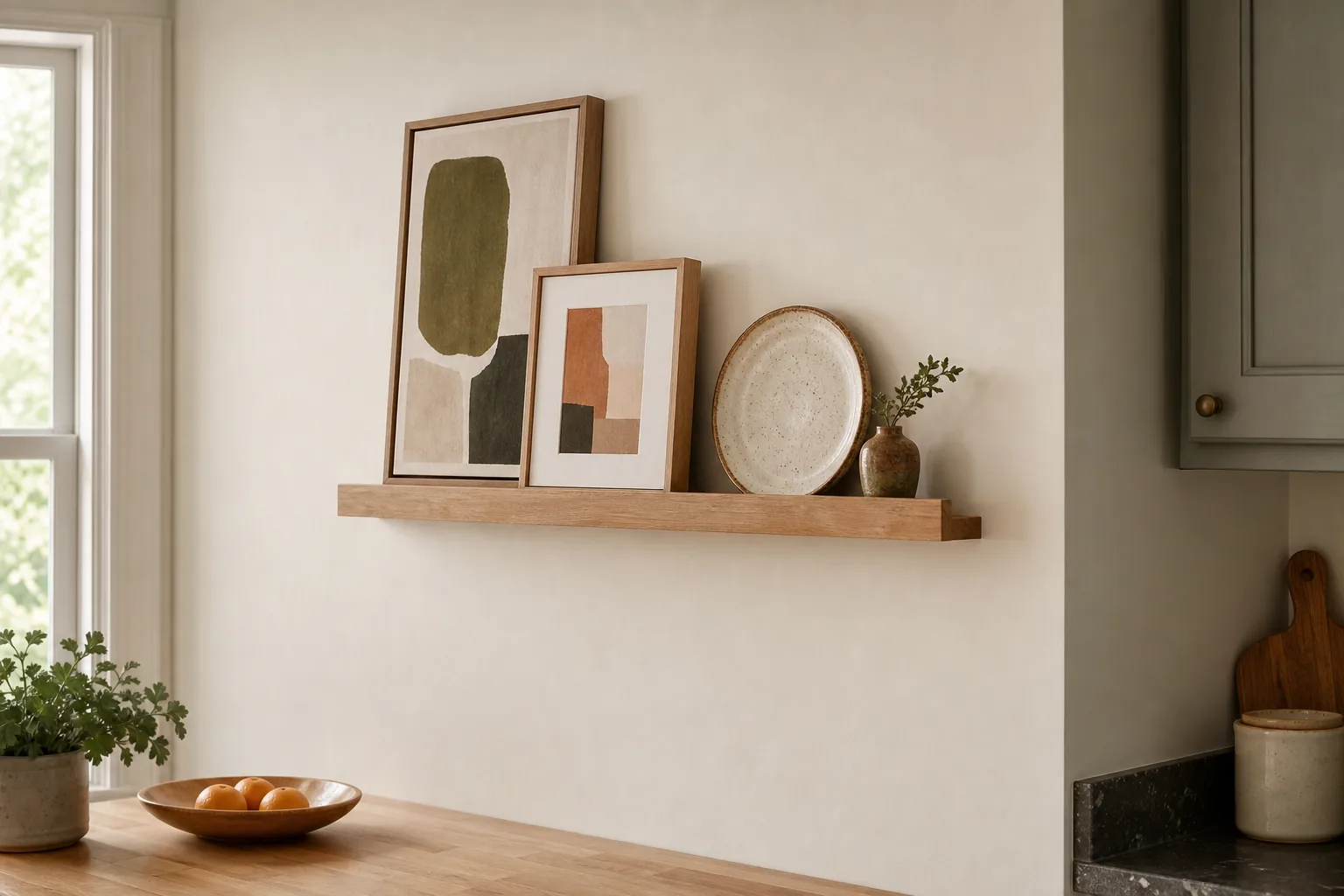
A narrow ledge provides flexible display space without the visual weight of a deep shelf. Layer two or three small frames with a decorative plate or tiny vase, keeping the composition shallow and secure. Because the pieces can move easily, the display is simple to refresh through the year.
Install the ledge according to its weight rating and keep it away from cooking and wet zones. Leave part of the ledge empty so every item remains visible. If the kitchen is small, match the ledge to the wall color for a quieter effect.
Balanced arrangement: Use one tall frame, one overlapping smaller piece, and one dimensional object.
9. Style Open Shelves Without Crowding Them
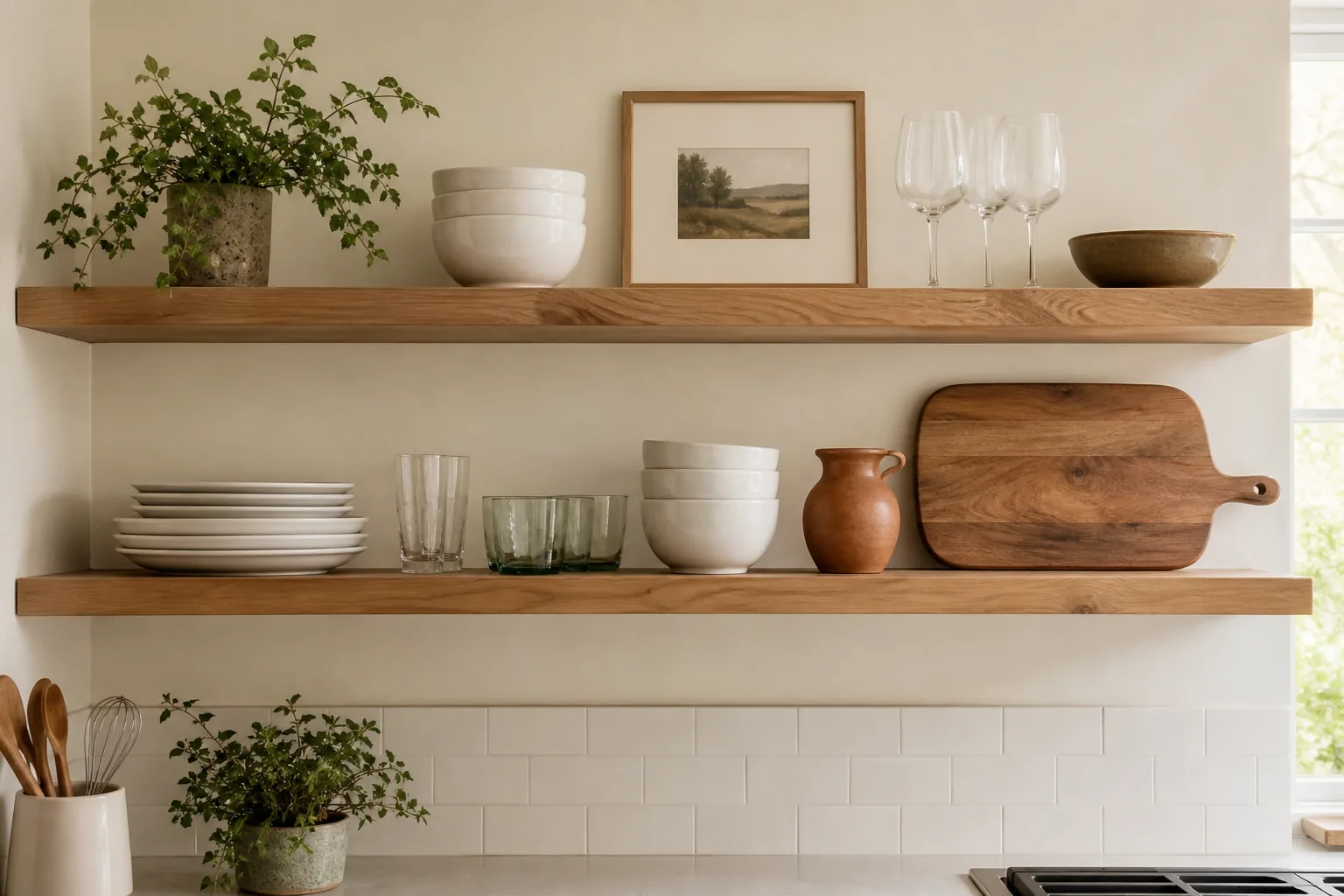
Open shelves work when they hold a restrained mix of useful and decorative objects. Begin with everyday dishes and glassware, then add one warm wood object, one piece of art, and a plant or ceramic accent. Repeat materials between shelves so the entire display feels connected.
Leave visible gaps instead of filling every inch. Store visually busy packaging behind closed doors and keep heavier objects on lower shelves. Shelf decor should remain easy to remove and clean, particularly in a room where cooking creates dust and residue.
Editing test: If removing one item makes the arrangement calmer, leave it out.
10. Display Everyday Dishware
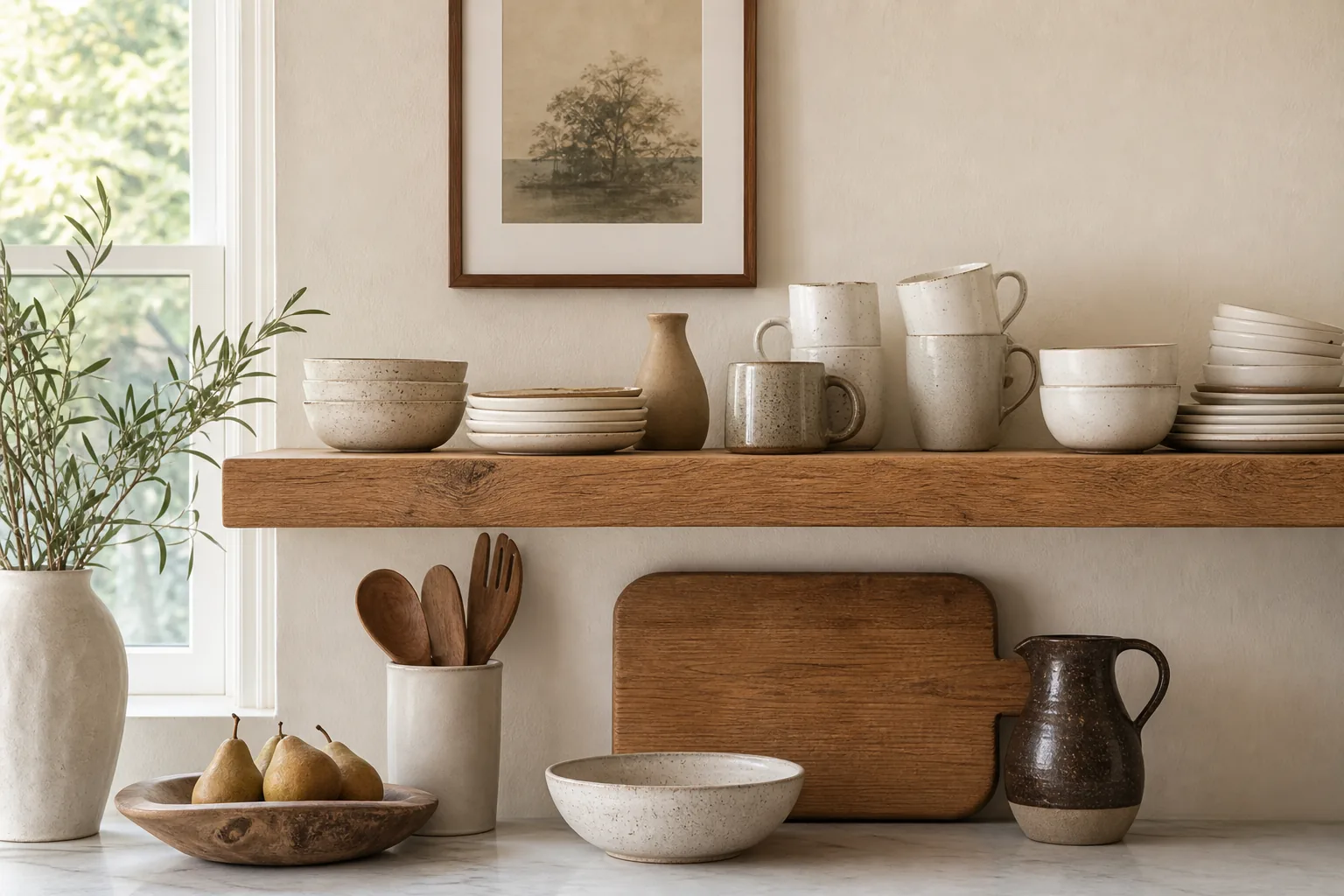
Attractive everyday dishes can become part of the decor instead of being hidden away. Stack bowls and plates by type, then group mugs in a short row or on sturdy hooks designed for the purpose. Keeping the palette consistent helps open storage feel calm even when the pieces are not identical.
Avoid displaying rarely used items that only collect dust. The best arrangement changes naturally as dishes are used, washed, and returned. Handmade ceramics add subtle variation, while plain white or cream pieces give colorful kitchens a visual pause.
Useful first: Display what the household reaches for every day.
11. Add Warm Wood Accents
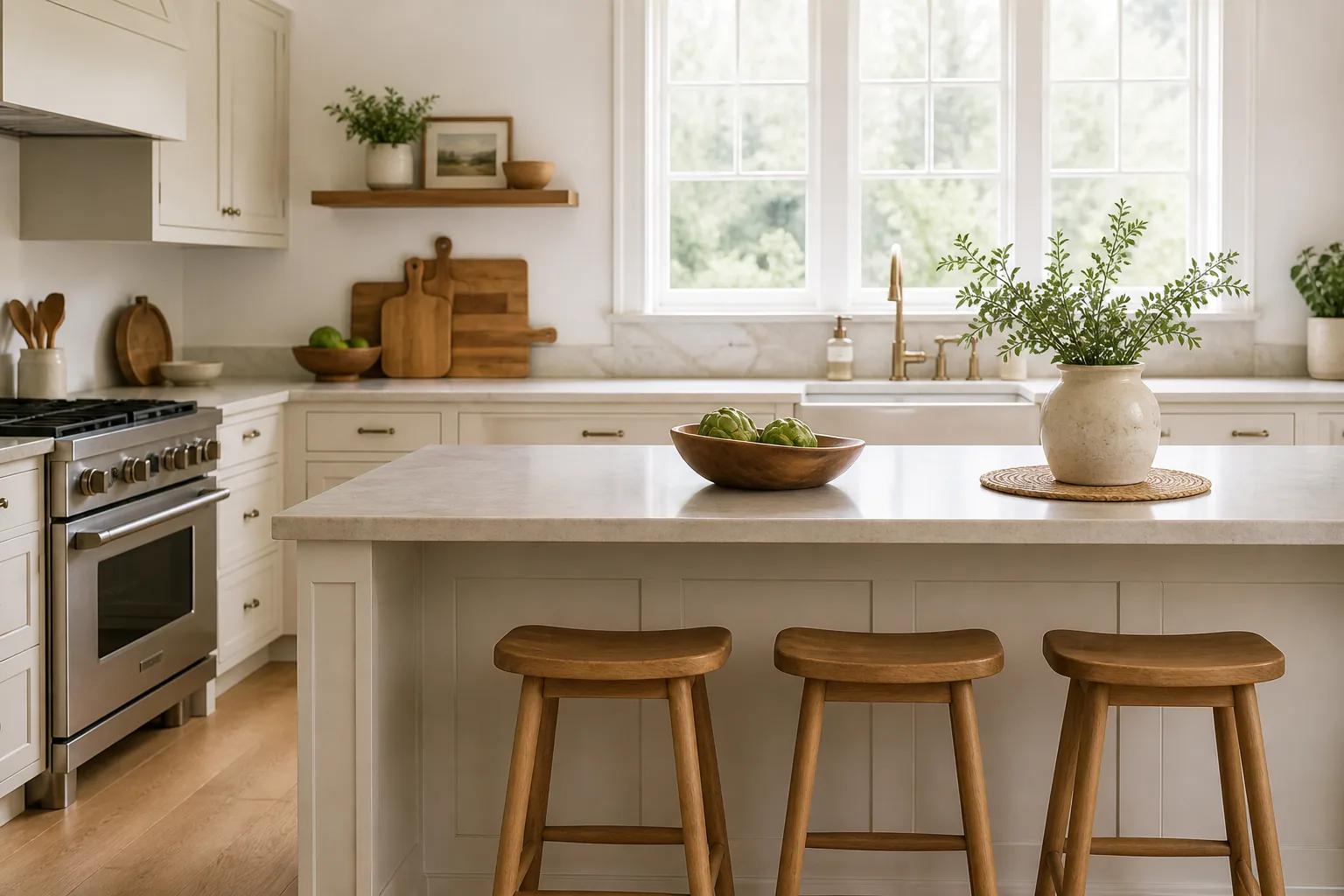
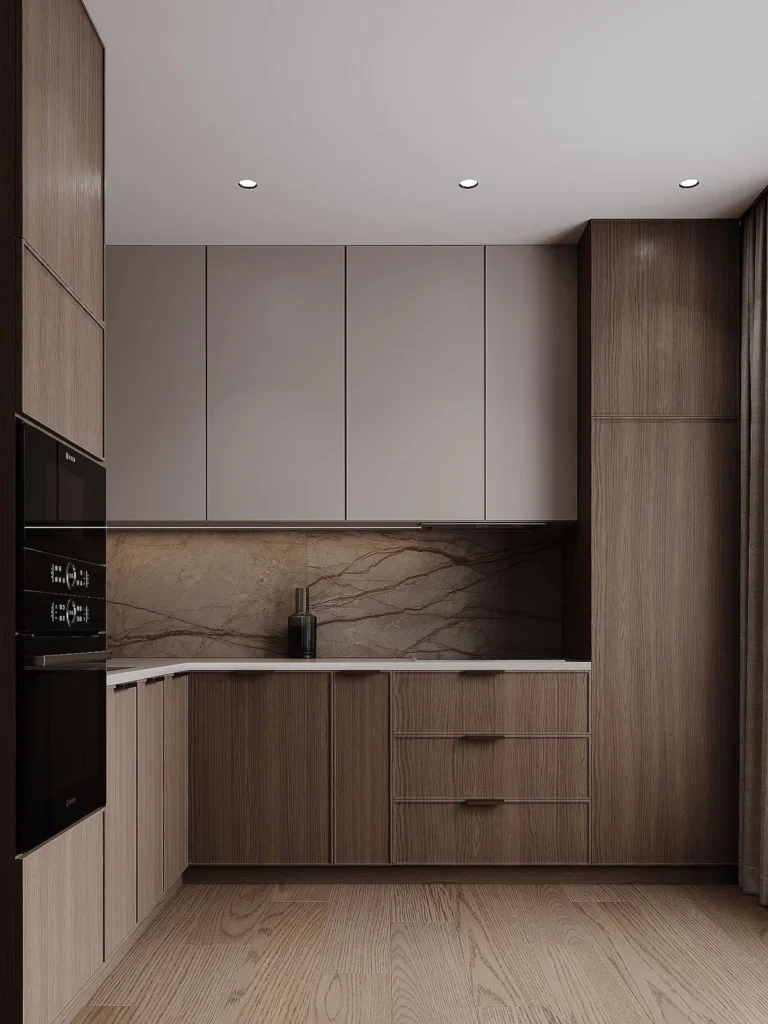
Wood makes white, gray, or high-contrast kitchens feel warmer. Introduce it through stools, cutting boards, a fruit bowl, a shelf, or a small framed artwork. The pieces do not need to match exactly; combining related warm tones often looks more natural than purchasing a full set.
Repeat wood at different heights so it feels integrated into the room. One board on the counter, a wood pendant detail, and stools at the island can create a visual path. Use finishes and products appropriate for their kitchen function and location.
For a modern look: Pair warm oak with cream, olive, aged brass, or soft black.
12. Mix Vintage Character With Modern Lines
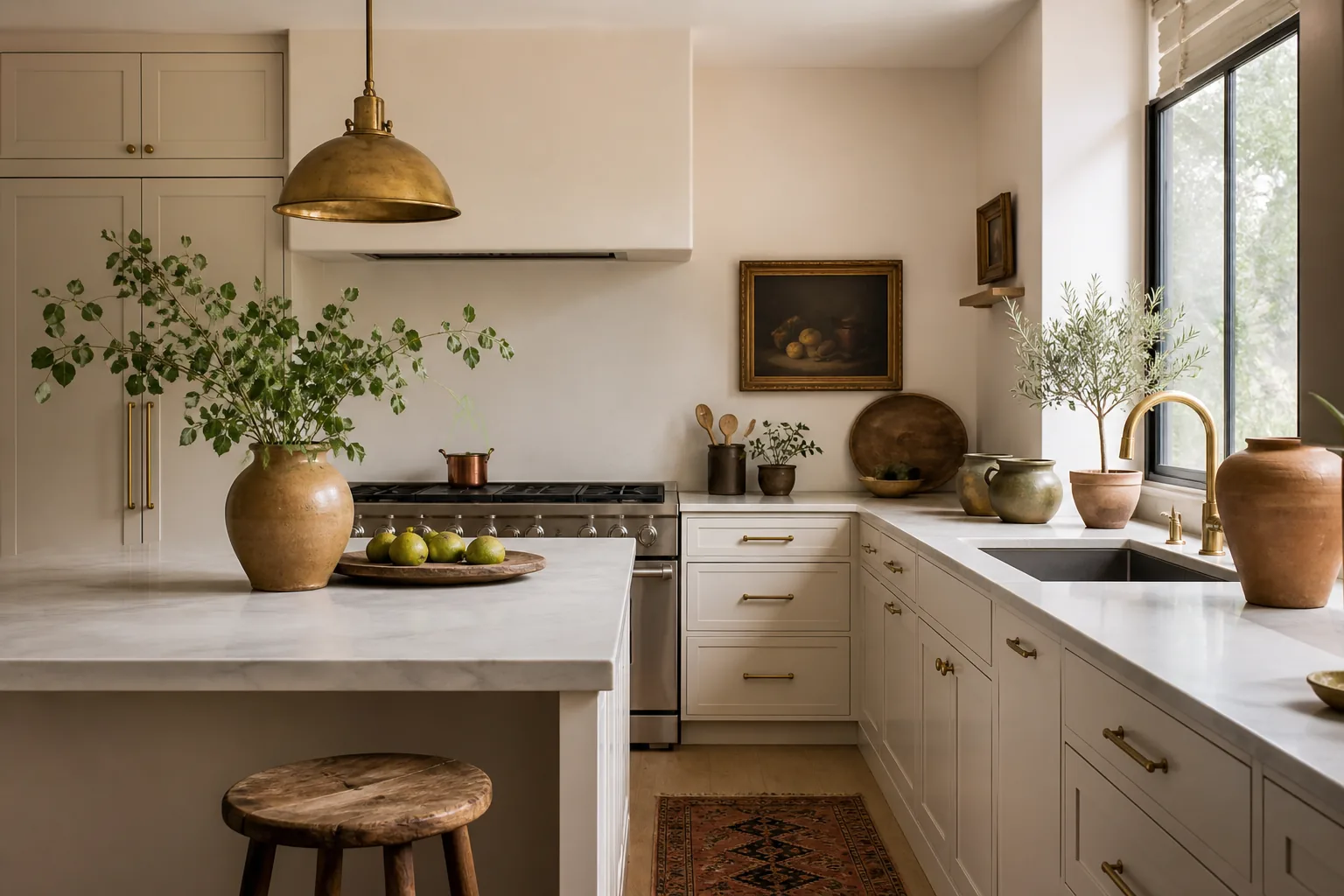
A few older pieces prevent a new kitchen from feeling like a showroom. Try an aged wood stool, vintage pottery, a small framed painting, or a weathered tray beside clean modern cabinetry. The contrast works best when the vintage objects are useful or personally meaningful.
Choose one or two pieces with patina instead of filling the room with a theme. Repeating a material—such as aged brass in the light fixture and a small bowl—helps the mix feel deliberate. Inspect secondhand items for stability and suitability before using them around food or heat.
Design balance: Let the architecture stay simple and use vintage accents for the story.
13. Choose a Sculptural Fruit Bowl
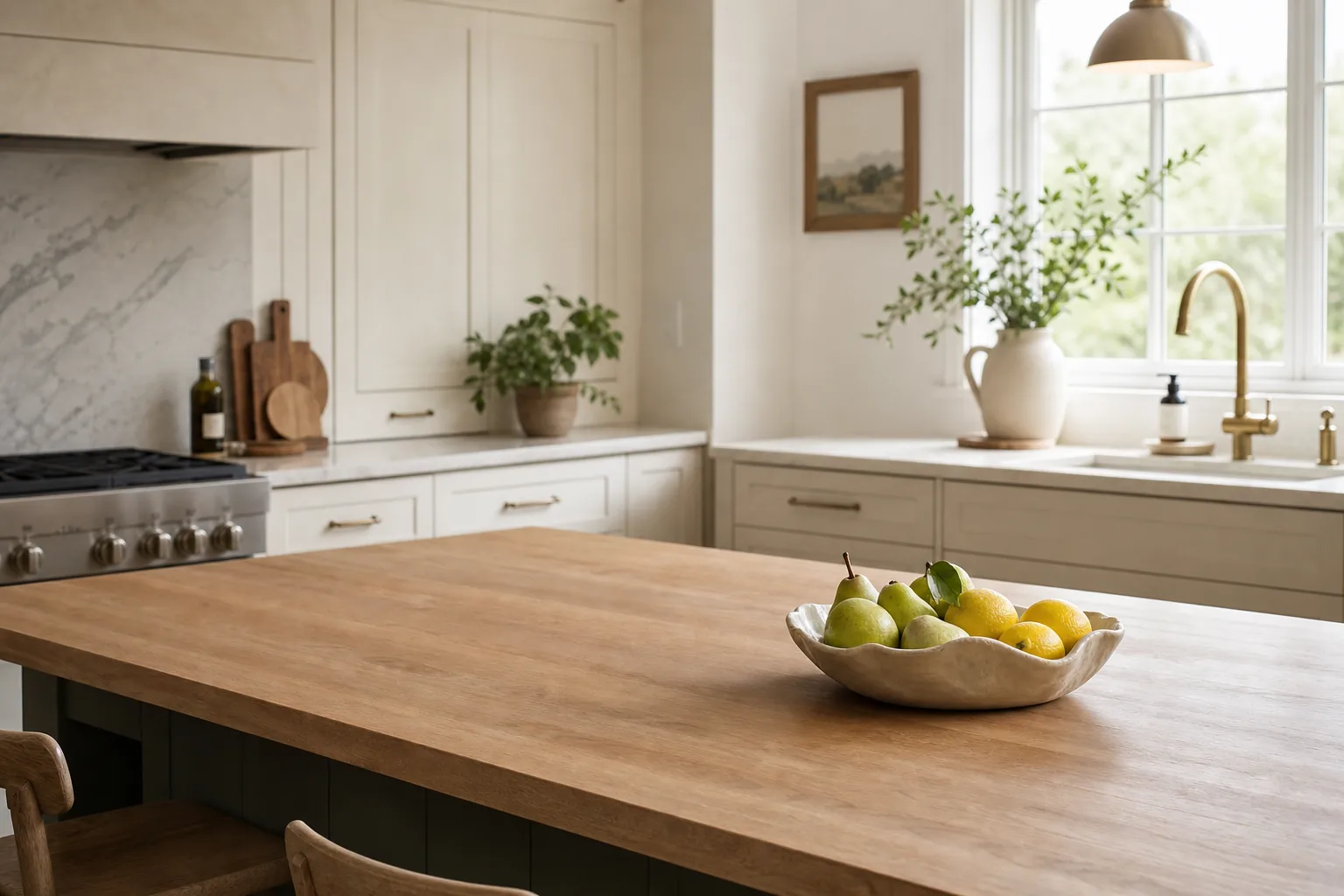
A fruit bowl is an easy centerpiece because it changes naturally and serves a purpose. Choose a shape that contrasts with the island or countertop: a rounded ceramic bowl softens a straight island, while a low footed bowl brings height without blocking sightlines.
Do not overfill it. A limited group of lemons, pears, or apples looks more intentional and allows air to circulate. If fruit is normally stored elsewhere, use the bowl for onions, napkins, or another item that suits the household routine.
Color opportunity: Let the fruit become the brightest accent in a neutral kitchen.
14. Soften the Floor With a Washable Runner
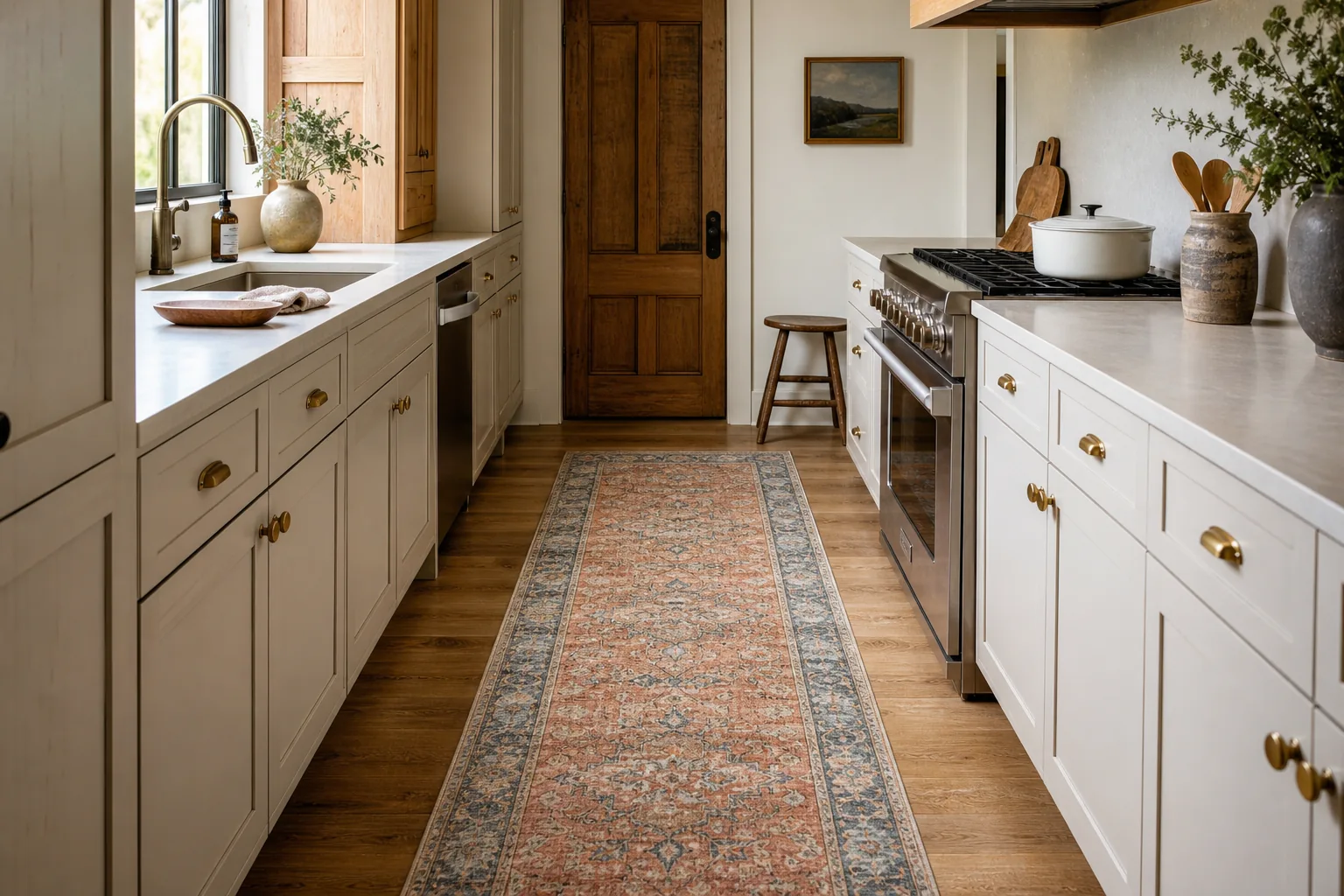
A runner adds color, pattern, and softness to a kitchen dominated by hard materials. Use it to connect the palette of nearby rooms or introduce a small amount of vintage character. Low-pile patterns are visually forgiving and generally easier to maintain than thick, light-colored rugs.
Measure door clearances and walking paths, choose a rug intended for the location, and use suitable slip resistance according to the product guidance. Avoid placements that create a trip hazard or interfere with appliances.
Visual trick: In a narrow galley, a lengthwise runner emphasizes the room’s clean central path.
15. Upgrade Towels and Soft Textiles
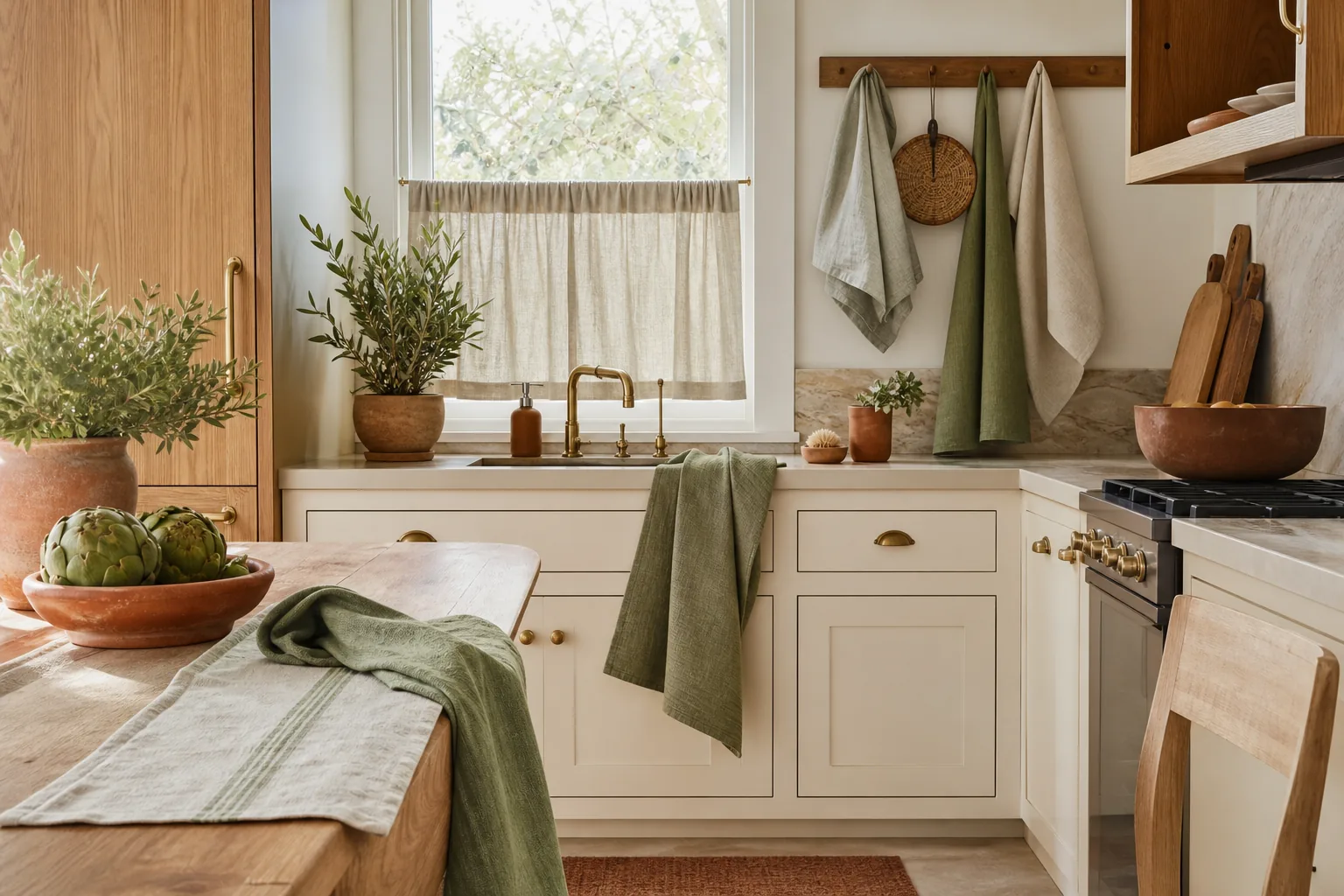
Textiles are the quickest way to refresh a kitchen without adding permanent decor. Coordinate everyday towels with a café curtain, seat cushion, or small runner in a related color. Linen, cotton, checks, and narrow stripes add texture while remaining visually quiet.
Limit the visible towels and keep clean backups inside a cabinet. Avoid hanging fabric where it could contact a flame, hot surface, or floor. Because textiles are easy to replace, they are an ideal place to experiment with a seasonal accent color.
Polished detail: Repeat one textile color in a vase, artwork, or bowl.
16. Layer Warm Under-Cabinet Lighting
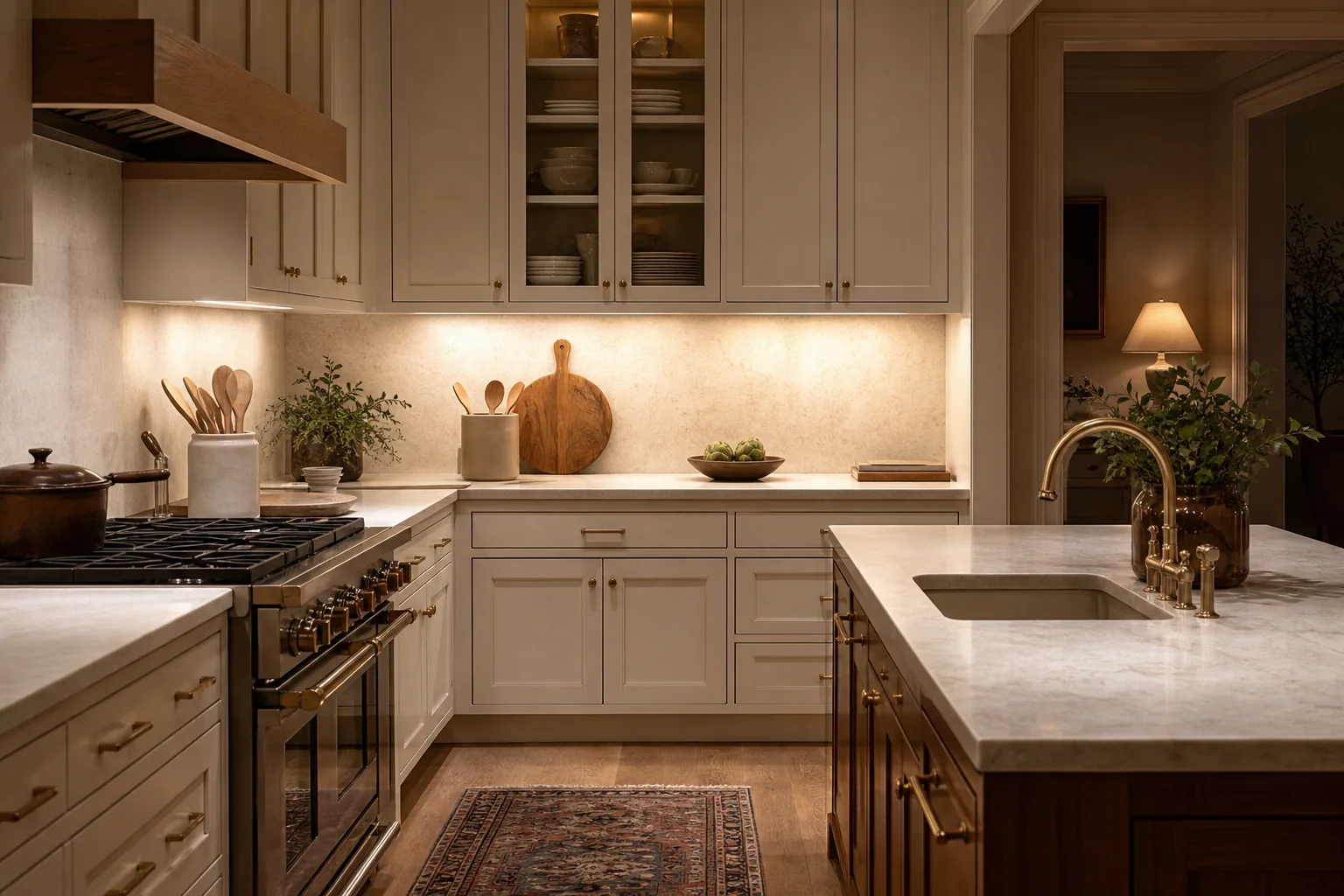
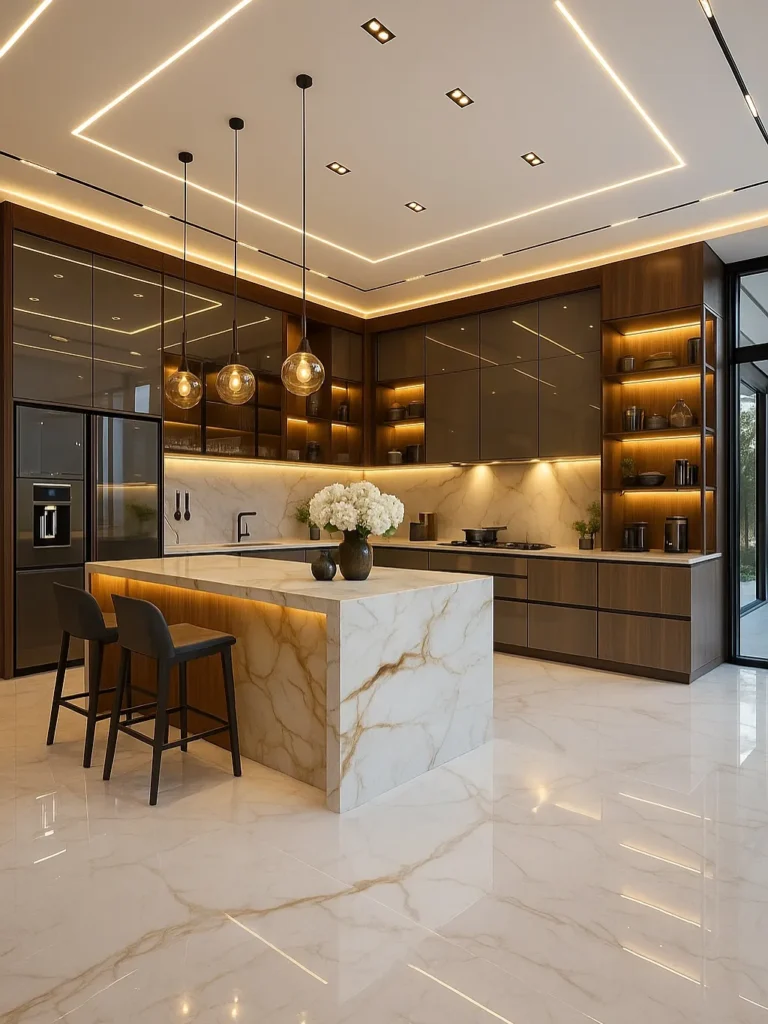
Good lighting is both practical and decorative. Under-cabinet illumination reduces shadows on work surfaces and makes the backsplash glow in the evening. A warm, consistent light temperature usually feels more inviting than a mix of harsh cool and warm bulbs.
Use lighting designed and rated for the application, keep wiring safe, and follow installation guidance. Combine task lighting with one softer ambient source so the room can shift from cooking mode to a relaxed evening atmosphere.
High-impact update: Lighting often changes the perceived quality of existing finishes more than another accessory.
17. Let the Backsplash Become the Decor
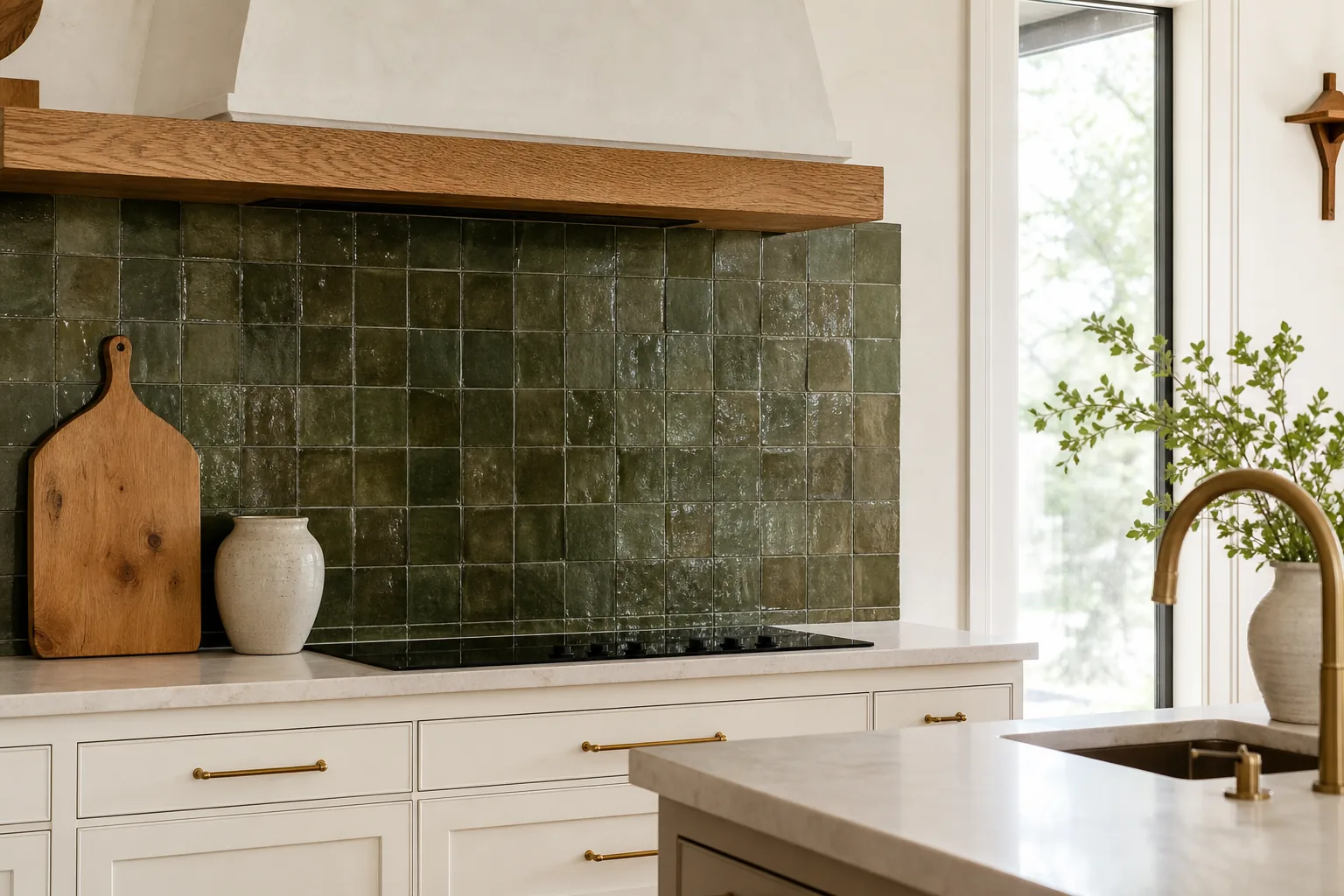
When a backsplash has color, pattern, or handmade texture, it can carry the room without much additional styling. Green tile, warm terracotta, soft blue, or a subtle checkerboard gives the eye a focal point while keeping the counters relatively clear.
If replacing tile is not part of the plan, the same principle applies to the existing backsplash: repeat one of its colors in a towel, bowl, or artwork. Renters can investigate removable products appropriate for their surface and lease, following installation and removal instructions carefully.
Restraint matters: The stronger the backsplash, the simpler the nearby countertop decor should be.
18. Decorate Above Cabinets With Restraint
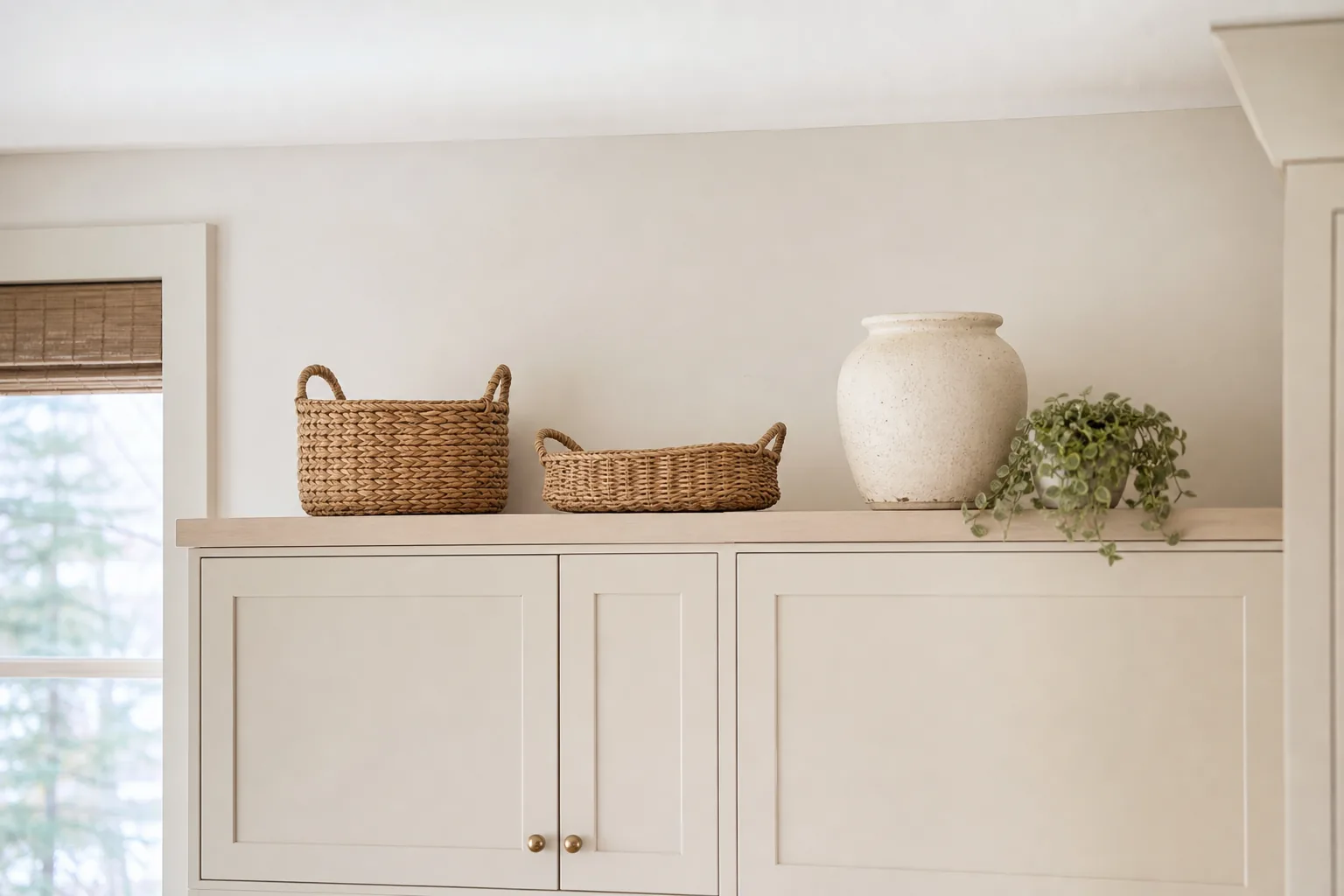
The space above cabinets can look finished without becoming a row of unrelated objects. Use a few larger pieces such as two baskets, a substantial ceramic vessel, and one trailing plant. Group items rather than spacing them evenly across the full run.
Consider cleaning access, ventilation, ceiling height, and the stability of every piece. Avoid fragile, heavy, greasy, or difficult-to-clean objects, and do not block required clearances. In a low-ceiling kitchen, leaving the area empty may be the more elegant choice.
Scale rule: Fewer large objects look calmer than many small accessories.
19. Style a Simple Kitchen Island Centerpiece
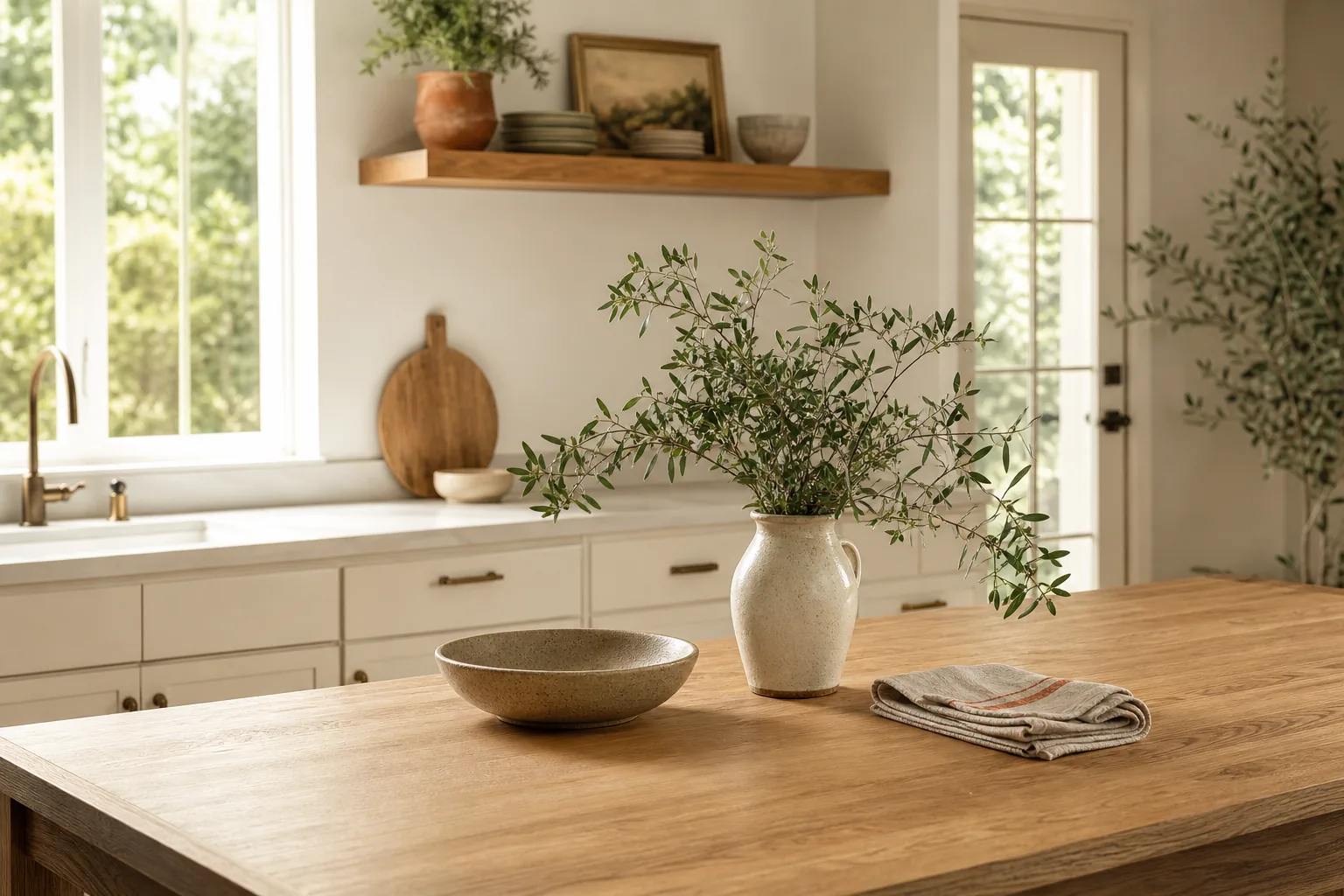
An island centerpiece should be attractive from every side and easy to move. A low bowl, a vase of branches, or one tray with a candle-free decorative grouping can provide a focal point without interfering with conversation or preparation.
Match the scale to the island and leave most of the surface available. A long island can hold one arrangement at the end, while a compact island may need only a bowl. If the surface is used constantly, choose a centerpiece that can be lifted away with one hand.
Best proportion: Keep the arrangement lower than seated eye level unless it is positioned well away from conversation.
20. Make a Small Kitchen Feel Lighter
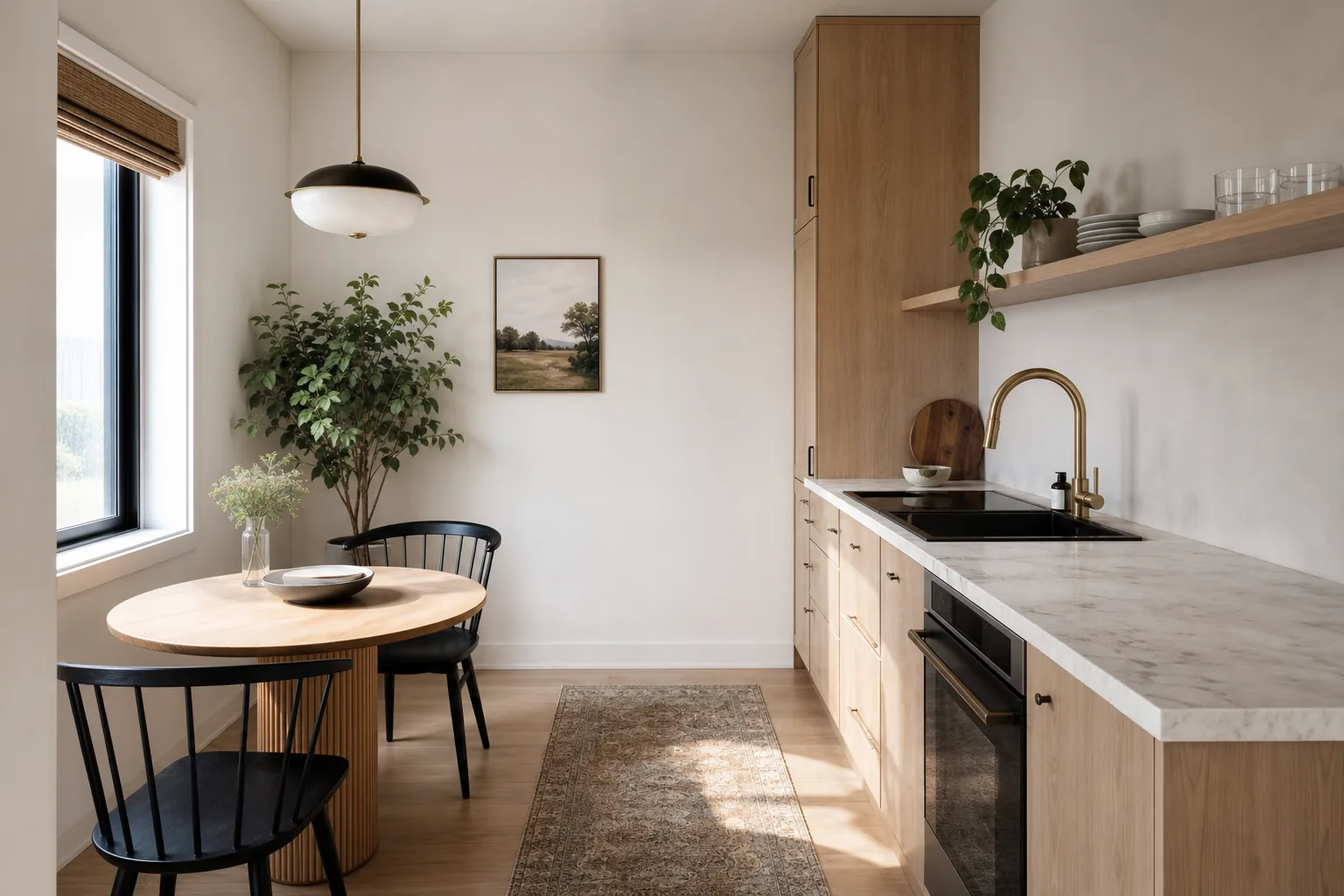
In a small kitchen, every visible object affects the sense of space. Keep the main preparation area clear, use vertical wall storage carefully, and concentrate decor in one or two controlled zones. Light walls and reflective surfaces can distribute available light, but the room does not need to be completely white.
A narrow ledge, a compact plant, one artwork, and a patterned towel may be enough. Use attractive everyday tools instead of adding objects with no function. If you need more compact-room inspiration, our dorm decor ideas include adaptable lessons for vertical storage and multifunctional layouts.
Small-space priority: Protect empty counter space before adding decoration.
21. Use Renter-Friendly Decorative Updates
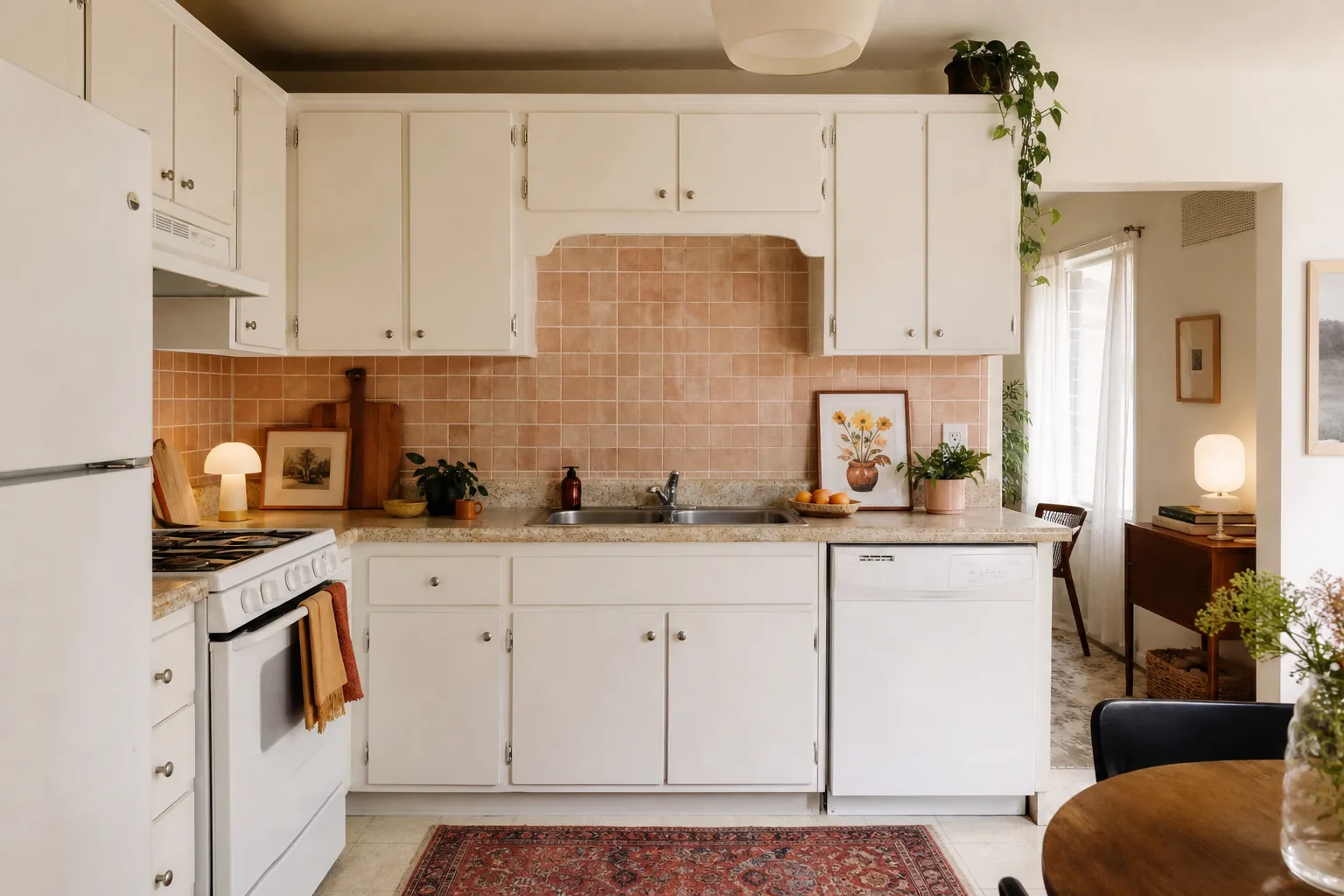
A rental kitchen can gain personality through reversible layers. Consider removable art, a washable runner, rechargeable or plug-in lighting used safely, countertop accessories, and textiles. Removable backsplash products or hardware changes may be possible only with the owner’s approval and careful surface testing.
Store original hardware, follow the lease, and avoid any product that could damage paint, tile, cabinetry, or wiring. Focus first on items you can carry to the next home: a lamp, art, stool, tray, rug, and useful ceramics.
Smart investment: Spend on portable pieces rather than temporary clutter.
22. Add One Confident Color Accent
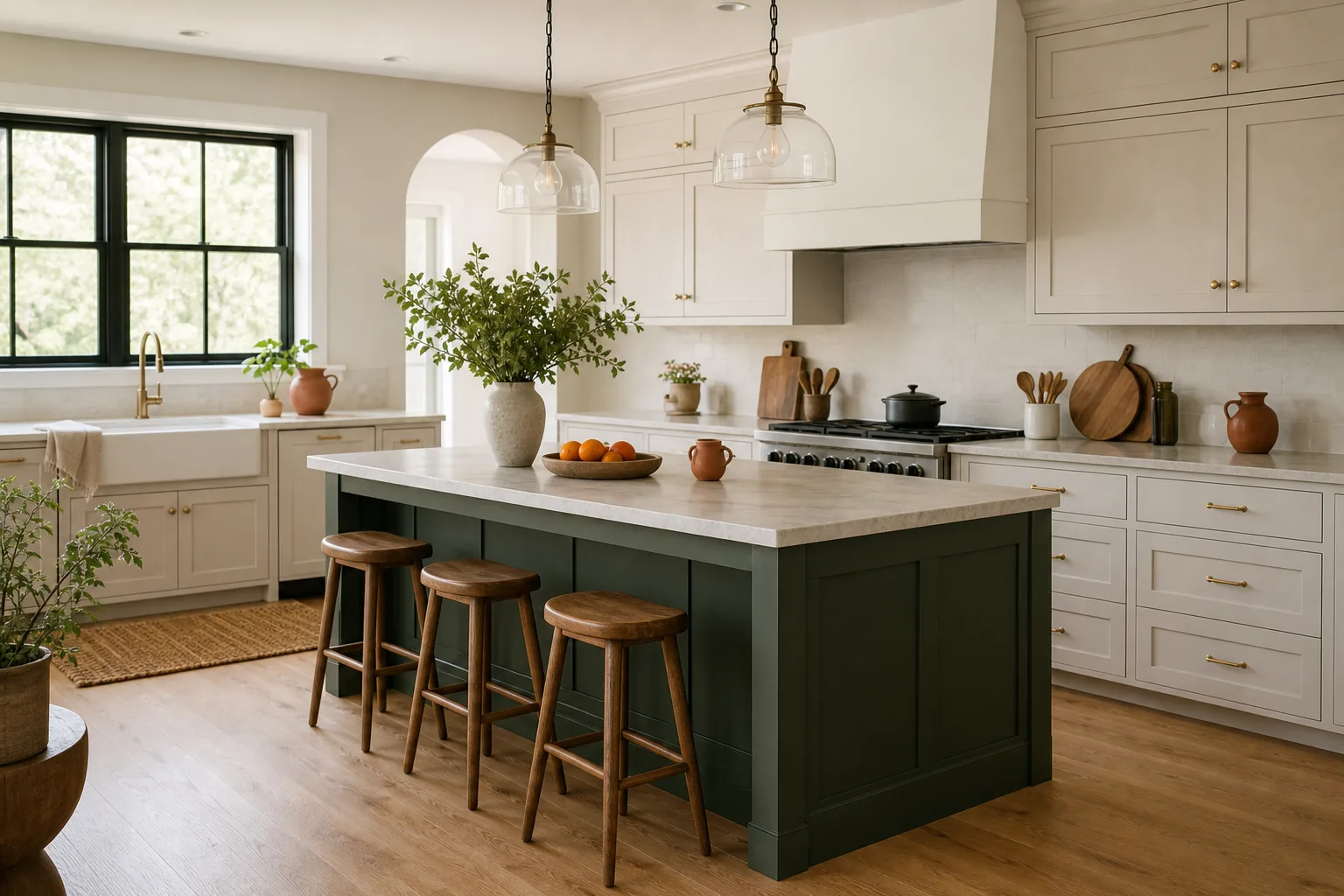
A single confident color can make a kitchen feel current without covering every surface. Dark olive on an island, butter yellow on a freestanding cabinet, terracotta stools, or muted blue pendants can provide a clear focal point. The surrounding accessories should repeat the color gently rather than matching it exactly.
Test paint and finishes in the actual light before committing, and choose products suited to the surface and wear. If permanent color is not possible, introduce the accent through a runner, artwork, pottery, or café curtain.
For longevity: Choose a color you already enjoy in clothing, art, or nearby rooms.
23. Fill an Awkward Corner With a Kitchen Hutch
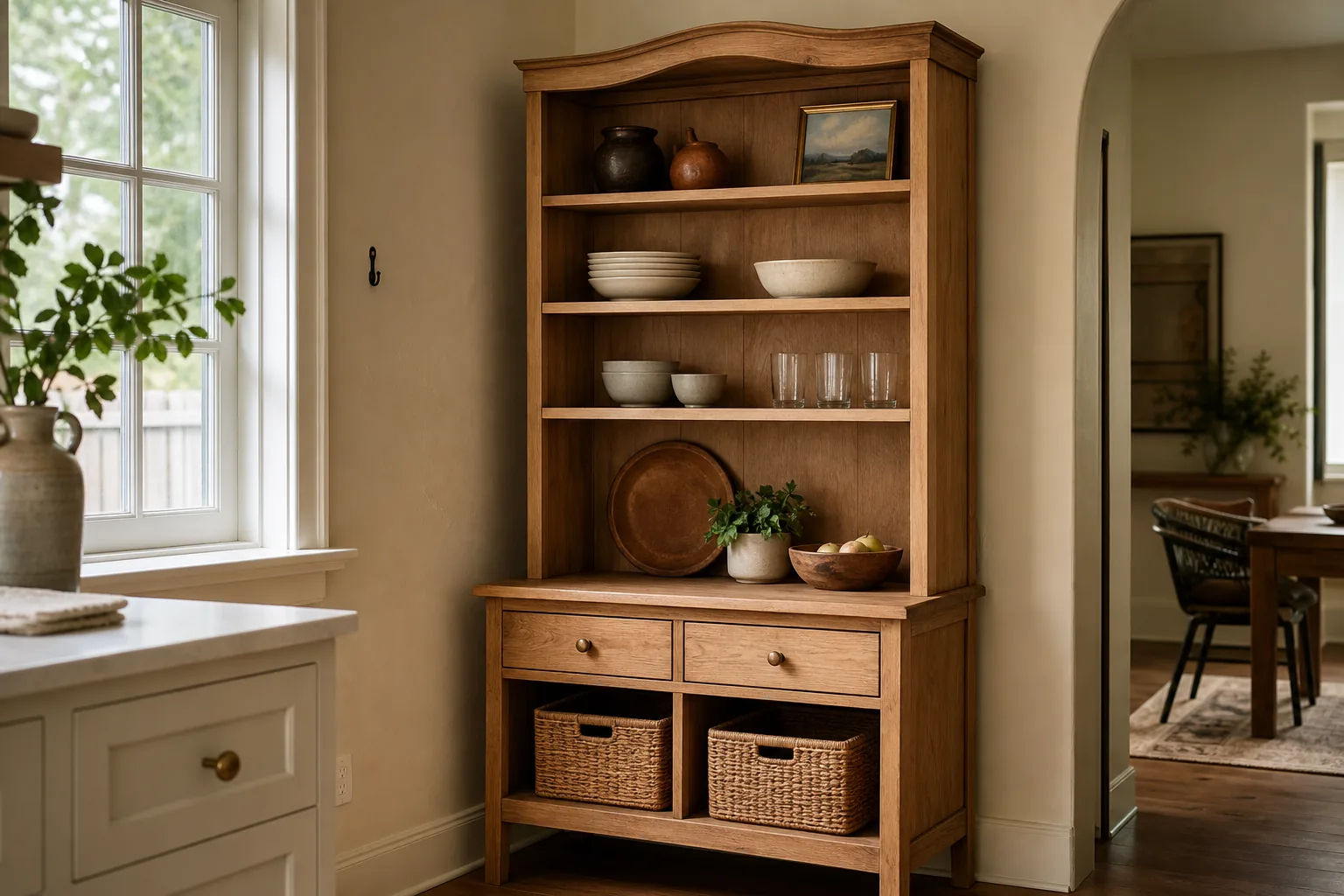
A freestanding hutch or baker’s rack can turn an unused corner into storage and a visual focal point. Use the lower section for closed or basket storage, then style the upper shelves with everyday dishes, one small artwork, and a few special pieces.
Measure circulation space, door swings, outlets, and baseboards before choosing furniture. Follow anchoring and assembly instructions, particularly for tall or top-heavy units. The piece should support the kitchen’s workflow rather than narrowing an essential path.
Collected-not-crowded: Leave one-third of the visible shelf area open.
24. Hide Visual Clutter in Attractive Containers
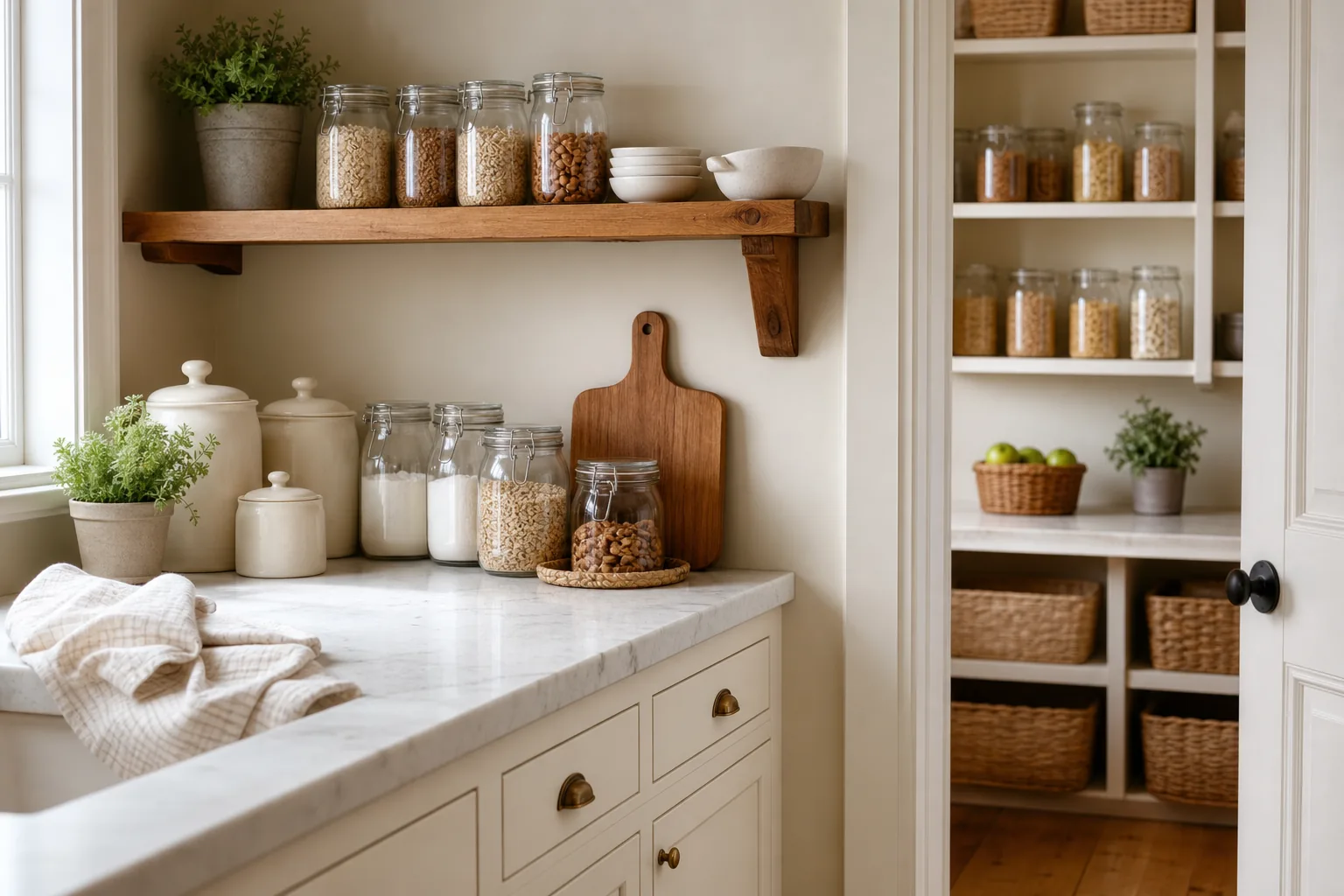
Packaging creates more visual noise than most decor. Move frequently used dry goods into suitable, clearly identified food-storage containers, or place packaged items inside baskets in the pantry. On the counter, limit canisters to ingredients the household reaches for often.
Use containers intended for the contents, maintain product information and dates as needed, and follow food-safety guidance. Matching shapes create order, while a combination of glass, ceramic, and woven texture keeps the arrangement from feeling clinical.
Decluttering principle: Contain categories, but do not decant simply for appearance.
25. Build a Small Seasonal Styling System
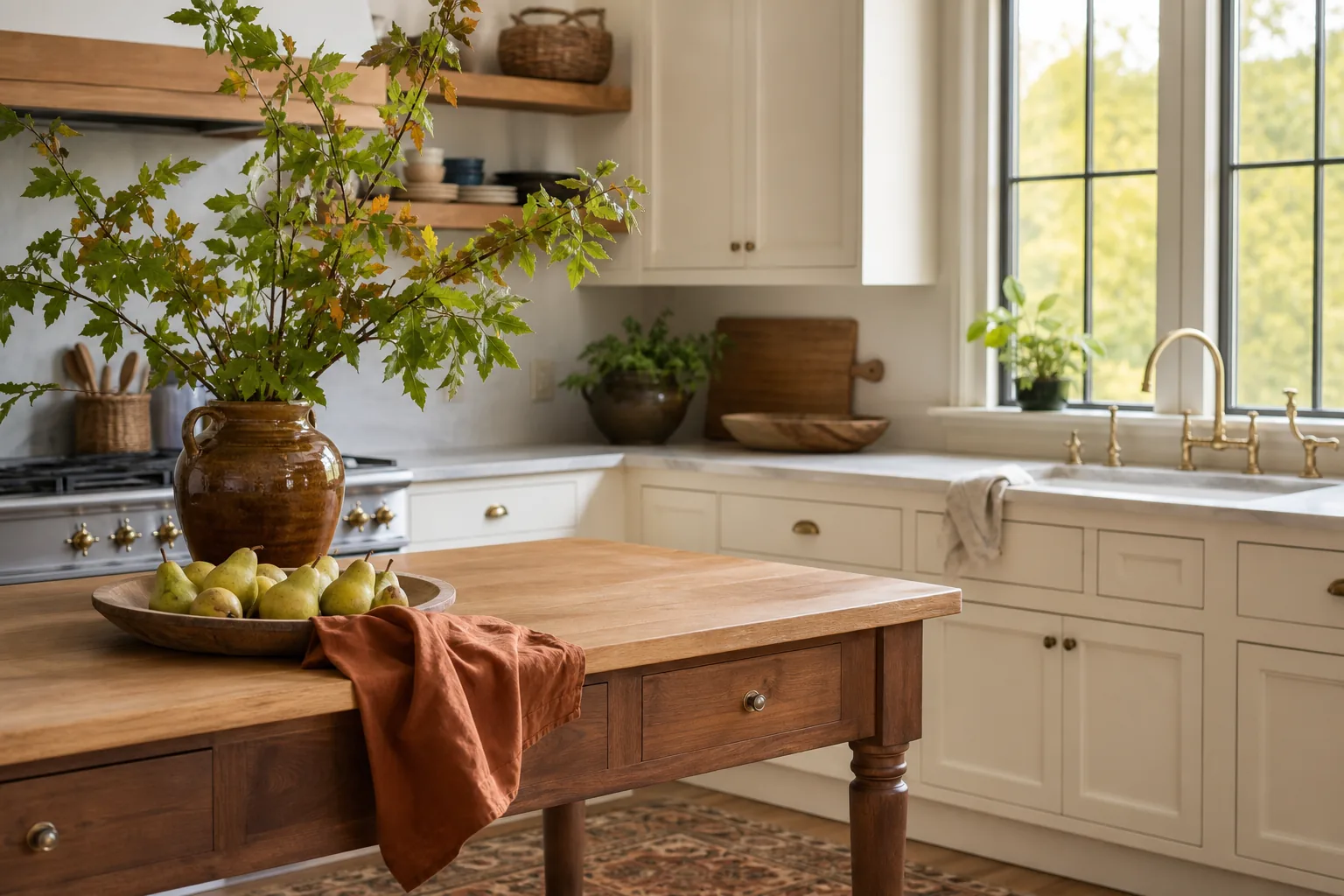
Seasonal kitchen decor feels sophisticated when only a few details change. Keep a permanent neutral foundation, then rotate one textile color, a natural branch, a bowl of seasonal produce, and a small artwork. The kitchen will feel refreshed without requiring boxes of themed accessories.
Store off-season pieces together and reuse objects in different rooms. In autumn, amber glass, pears, rust linen, and leafy branches can create warmth; in spring, switch to fresh green, light checks, and simple flowers. Keep all natural materials appropriate for the location and away from heat or food-preparation zones.
Seasonal limit: Change three elements and stop before the room loses its everyday character.
Kitchen Decor Planning Checklist
- Photograph the kitchen before shopping so clutter and empty zones are easier to identify.
- Choose a dominant neutral, one natural material, and one accent color.
- Protect the primary preparation, cooking, and washing zones.
- Style useful objects before purchasing decorative-only accessories.
- Vary height and texture while leaving visible empty space.
- Check installation, heat, water, food-safety, and cleaning requirements.
- Remove one item from every arrangement before calling it complete.
Common Kitchen Decorating Mistakes
- Covering every counter: A styled kitchen still needs generous working space.
- Using many tiny accessories: Fewer medium-scale objects create a calmer composition.
- Ignoring the existing finishes: Decor should connect with cabinetry, counters, and flooring.
- Following a theme too literally: Personality feels more natural than repeated signs and motifs.
- Choosing decor that is hard to clean: Kitchen items need realistic maintenance.
- Blocking light or ventilation: Styling must never interfere with the room’s function.
- Buying everything at once: Collected spaces become more personal over time.
Kitchen Decor Ideas FAQs
How can I decorate my kitchen without making it cluttered?
Concentrate decor in two or three defined zones, such as a cooking tray, coffee station, and one wall display. Use attractive everyday objects, leave clear space around each arrangement, and keep the main preparation counter empty.
What should I put on a kitchen countertop?
Keep items connected to the activity in that area. Good options include a utensil crock, oil and salt on a tray, a coffee setup, fruit bowl, cutting boards, or a small lamp in an appropriate dry corner. Avoid objects that reduce safety or useful workspace.
How do I decorate kitchen walls?
Try one modest artwork, a small pair of frames, a slim picture ledge, attractive plates installed securely, or a shallow shelf. Choose locations away from direct steam, grease, water, and heat.
How can I make a small kitchen look beautiful?
Keep counters mostly clear, use vertical space selectively, repeat a limited color palette, improve lighting, and choose useful objects with attractive finishes. One confident focal point is usually more effective than many small decorations.
What kitchen colors are popular in 2026?
Warm neutrals, natural wood, olive and deeper greens, terracotta, butter yellow, muted blue, and vintage pink are creating softer, more personal kitchens. The most lasting choice is a color that works with the room’s fixed finishes and the rest of the home.
How can I decorate a kitchen on a small budget?
Begin by editing the counters and restyling objects you already own. Add one washable runner, coordinated towels, thrifted artwork, a wood board, a plant, or improved lighting. Small, portable changes usually provide better value than many themed accessories.
Final Thoughts
The best kitchen decor supports the life happening in the room. It keeps useful objects close, protects working space, and adds warmth through color, texture, light, and personal pieces. Begin with one visible problem—an empty wall, a crowded counter, a dark corner, or an awkward shelf—and solve it before decorating the rest.
Choose two or three ideas from this guide, live with them for a week, and edit again. A kitchen becomes beautiful through restraint as much as addition. For more visual inspiration around the heart of the home, visit our dining room decorating ideas and carry the palette into the surrounding spaces.
One Comment