
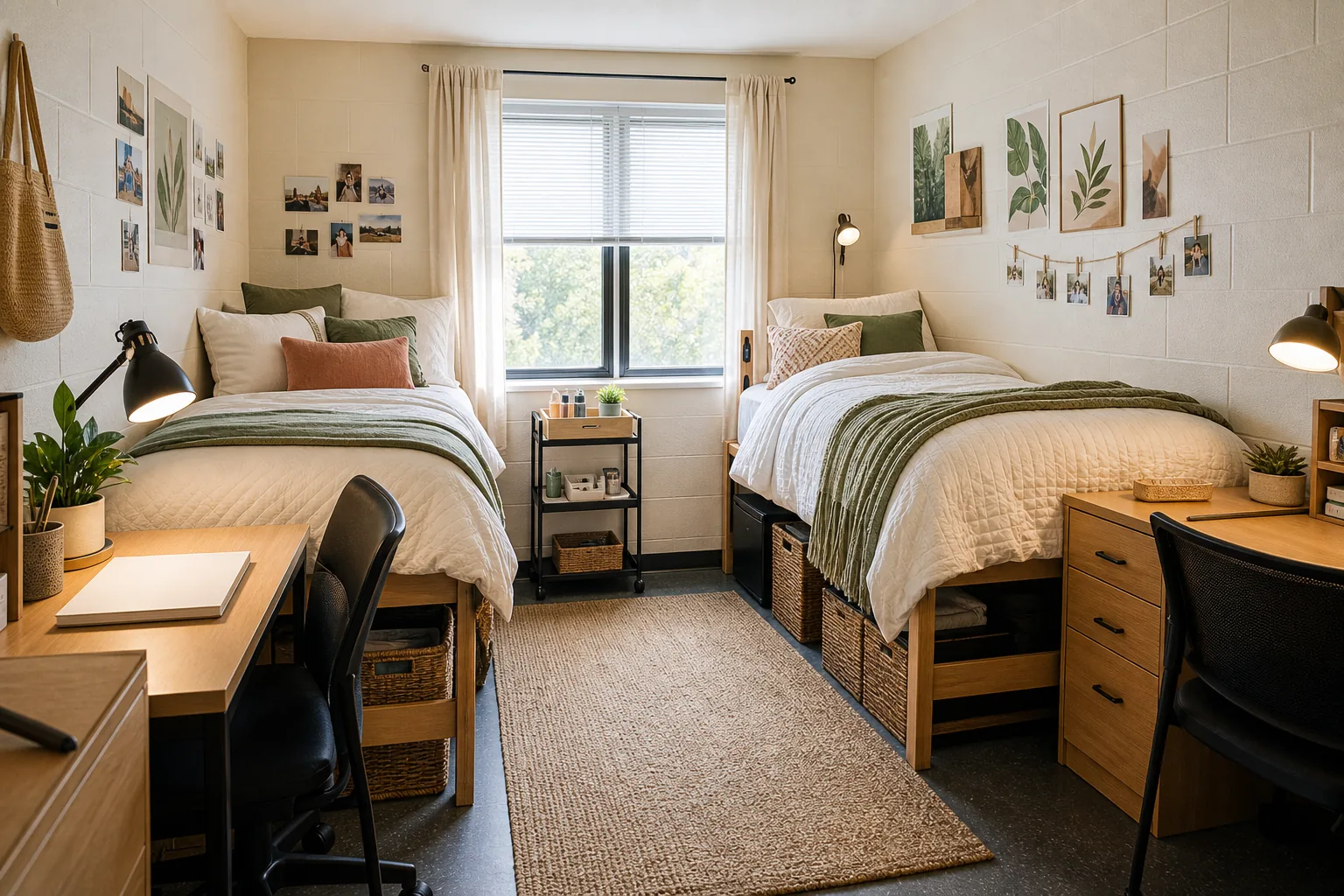
16 Dorm Decor Ideas for a Cute, Cozy and Organized College Room
A blank dorm can feel more like a storage box than a bedroom: pale walls, heavy furniture, one narrow bed, and almost no floor space. The best dorm decor ideas solve that problem without fighting the room. They add personality, comfort, storage, and a study-ready layout while respecting residence-hall rules and a student budget.
These 16 ideas are designed for real college rooms, including shared doubles, compact singles, lofted beds, awkward desks, and walls you cannot paint or drill. Each one combines an attractive look with a practical reason for being there, so your dorm feels polished without becoming cluttered.
Before you decorate
Confirm the mattress size, measure the wall and under-bed clearance, photograph the room on move-in day, and read your residence-hall rules. Policies for adhesive strips, curtains, string lights, appliances, extension cords, and furniture risers vary by campus.
If you love turning a basic sleeping space into a more personal retreat, explore our complete collection of bedroom decor ideas for more color and layout inspiration.
1. Choose a Cohesive Dorm Color Palette First
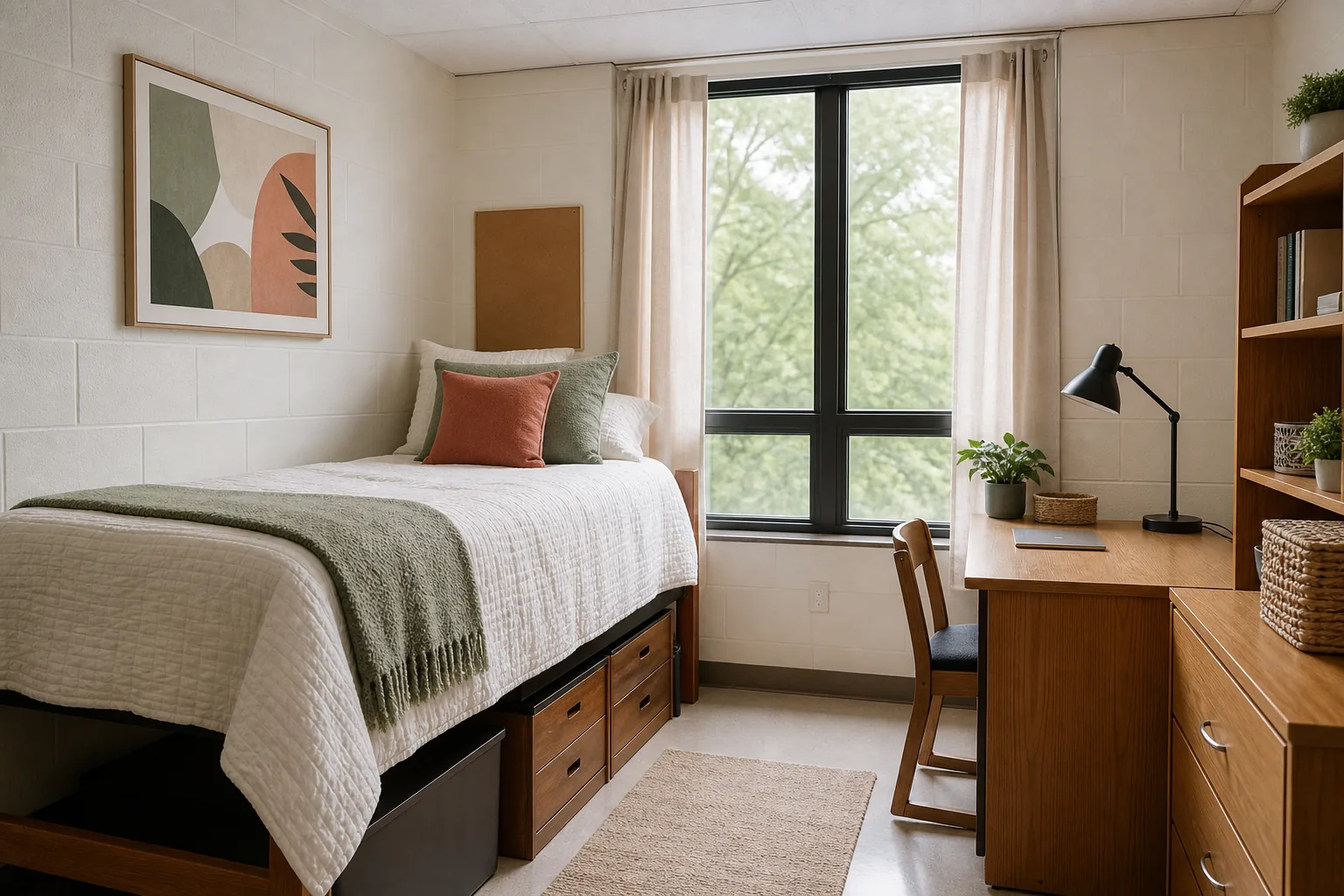
A clear palette is the fastest way to make inexpensive pieces look intentional. Start with one calm base color for the largest surfaces—usually white, cream, oatmeal, or soft gray—then add two accent colors through bedding, art, desk accessories, and storage. Sage with terracotta feels earthy; navy with pale blue feels tailored; blush with olive feels playful without becoming sugary.
Use the same wood or metal tone several times. A black desk lamp, black picture frames, and a black rolling cart will visually connect even if they come from different stores. Take a screenshot of your palette while shopping so impulse purchases do not pull the room in five different directions.
Easy formula: One light neutral + one main color + one smaller accent + one repeated finish.
2. Make the Twin XL Bed the Visual Anchor
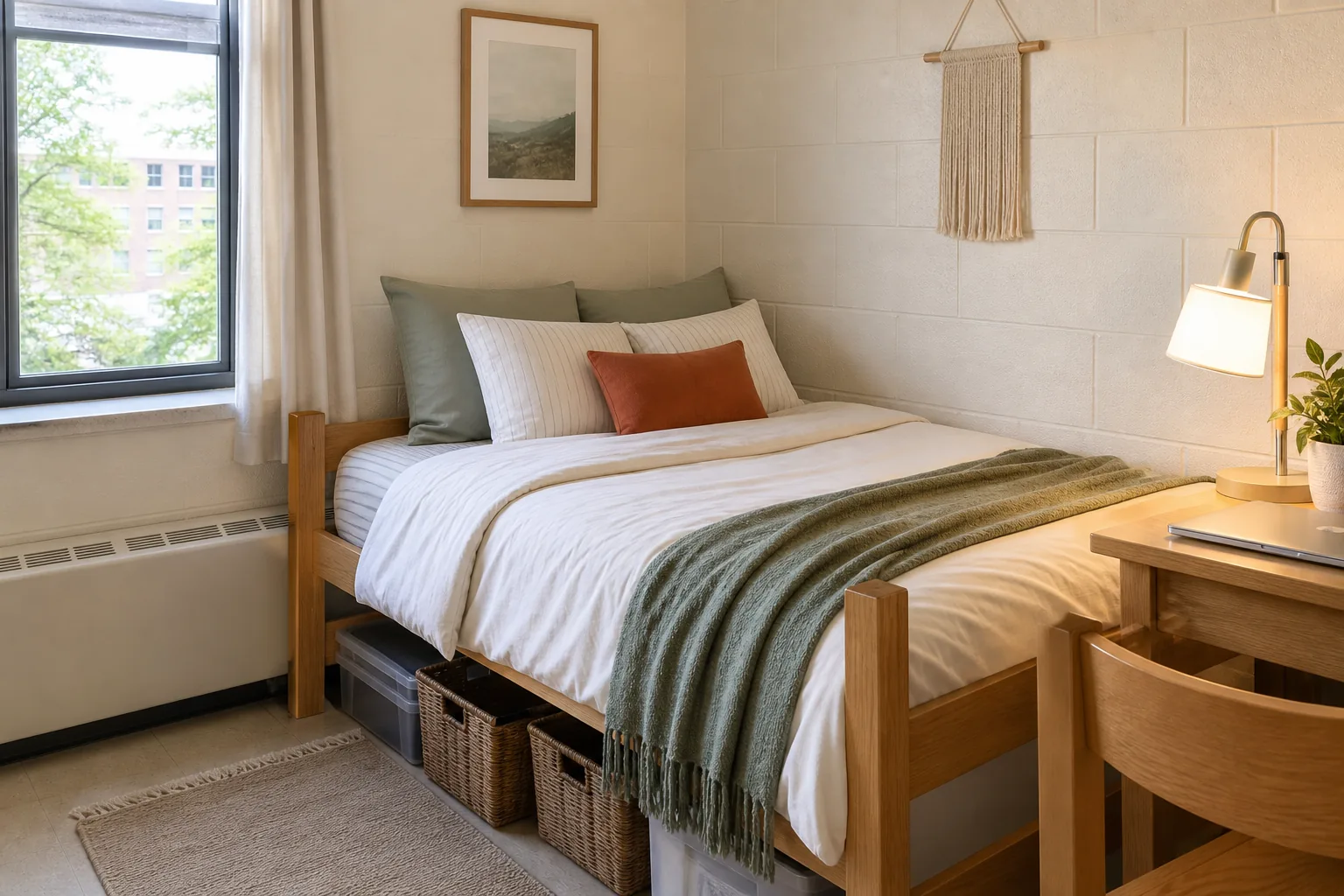
The bed occupies more visual space than anything else, so let it lead the design. Begin with washable Twin XL sheets and a simple duvet or comforter, then add one textured throw and two supportive pillows that make the bed comfortable for reading and visiting. A light foundation also reflects more daylight around a small room.
Avoid piling on pillows that must live on the floor every night. Two sleeping pillows, one firm back pillow, and one decorative cushion usually create enough depth. If the dorm runs warm, choose breathable layers instead of one heavy comforter; the room will look just as cozy but be easier to live in.
Measure first: Most college beds are Twin XL, but confirm the exact size before buying sheets or a topper.
3. Add a No-Drill Headboard
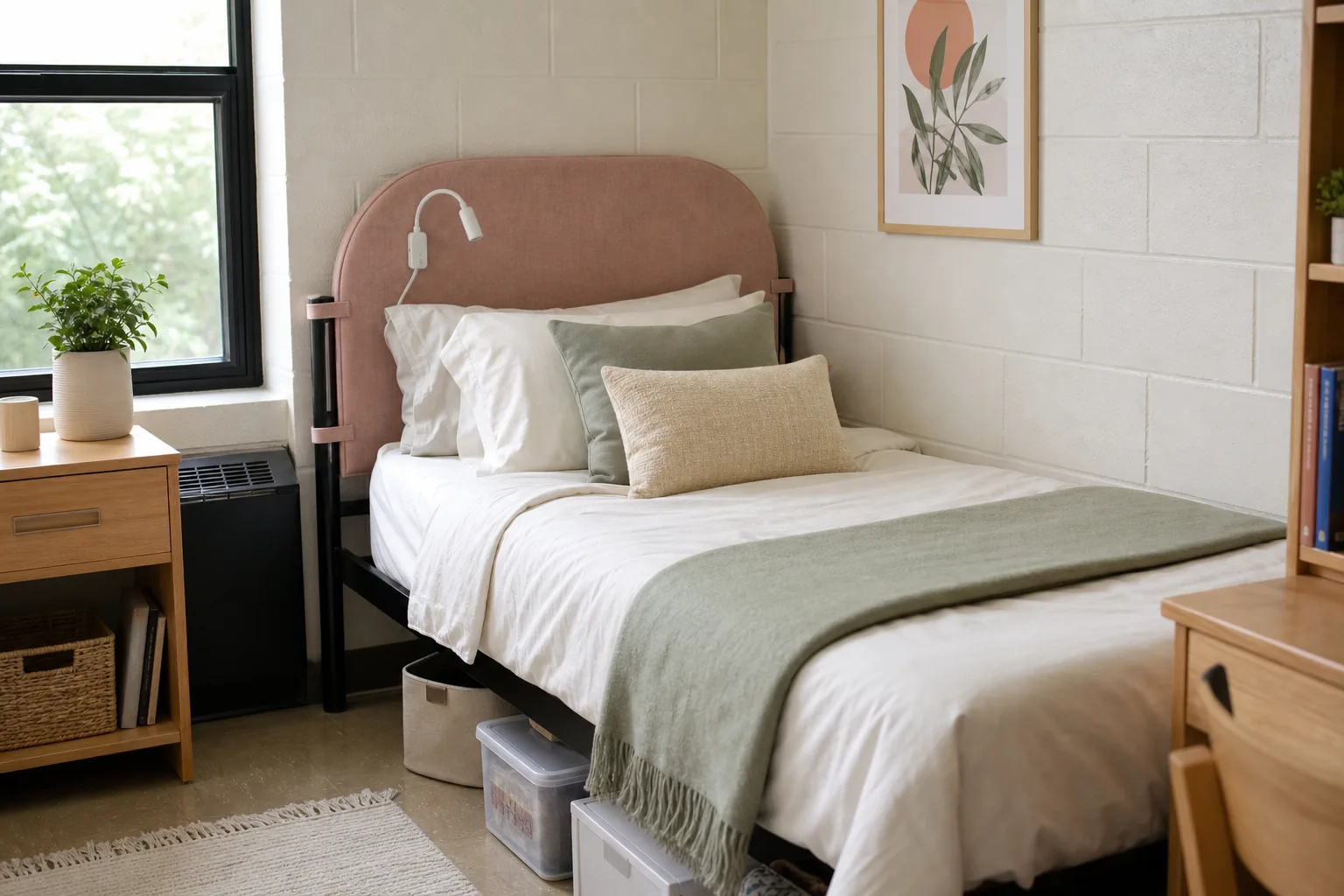
A headboard makes a standard metal or wood dorm bed feel like a finished bedroom. Choose a lightweight upholstered style that straps to the bed frame, rests between the mattress and wall, or attaches with a residence-approved removable system. Curved shapes add softness, while a slim channel-tufted design looks clean and modern.
Keep the fabric durable and mid-toned so small marks are less noticeable. If a purchased headboard is outside the budget, cover a lightweight foam board with batting and fabric, then position it securely behind the mattress without attaching it permanently to the wall.
Dorm-safe rule: Never block an outlet, vent, sprinkler, alarm, or required space around the bed.
4. Build a Damage-Free Gallery Wall
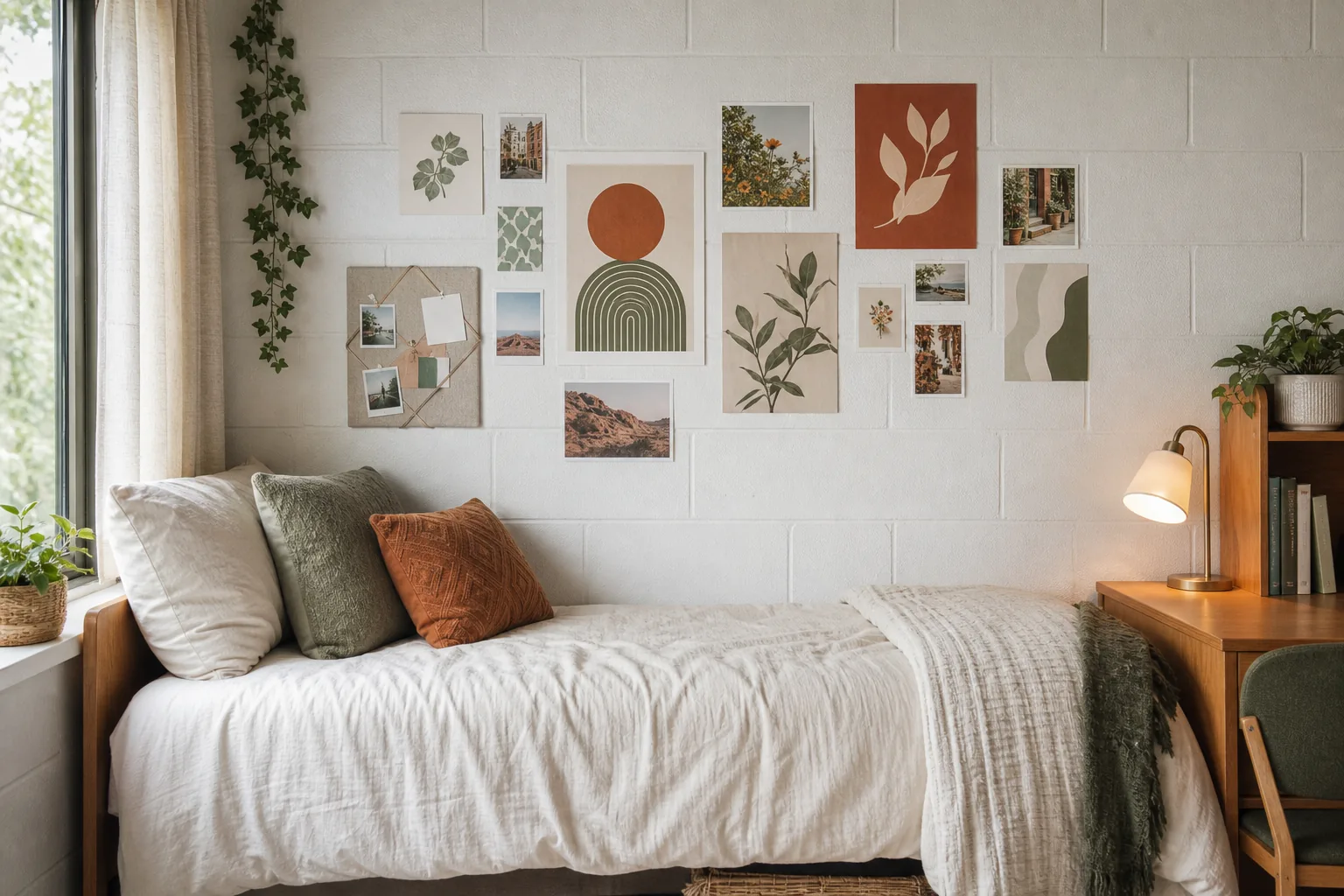
Wall decor delivers a big transformation without using precious floor space. Combine art prints, personal photos, postcards, a fabric pinboard, and one small calendar. Before hanging anything, arrange the complete composition on the floor and photograph it. This makes spacing easier and prevents the wall from becoming a random scatter of tiny pieces.
Use the mounting method approved by your residence hall. Some painted cinderblock walls do not hold ordinary adhesive strips well, while other campuses prohibit certain tapes. Lightweight frames, poster rails, and fabric panels can create a finished look with less risk than heavy glass art.
Designer trick: Repeat two colors from the bedding inside the wall art to connect the room.
5. Layer Warm, Dorm-Approved Lighting
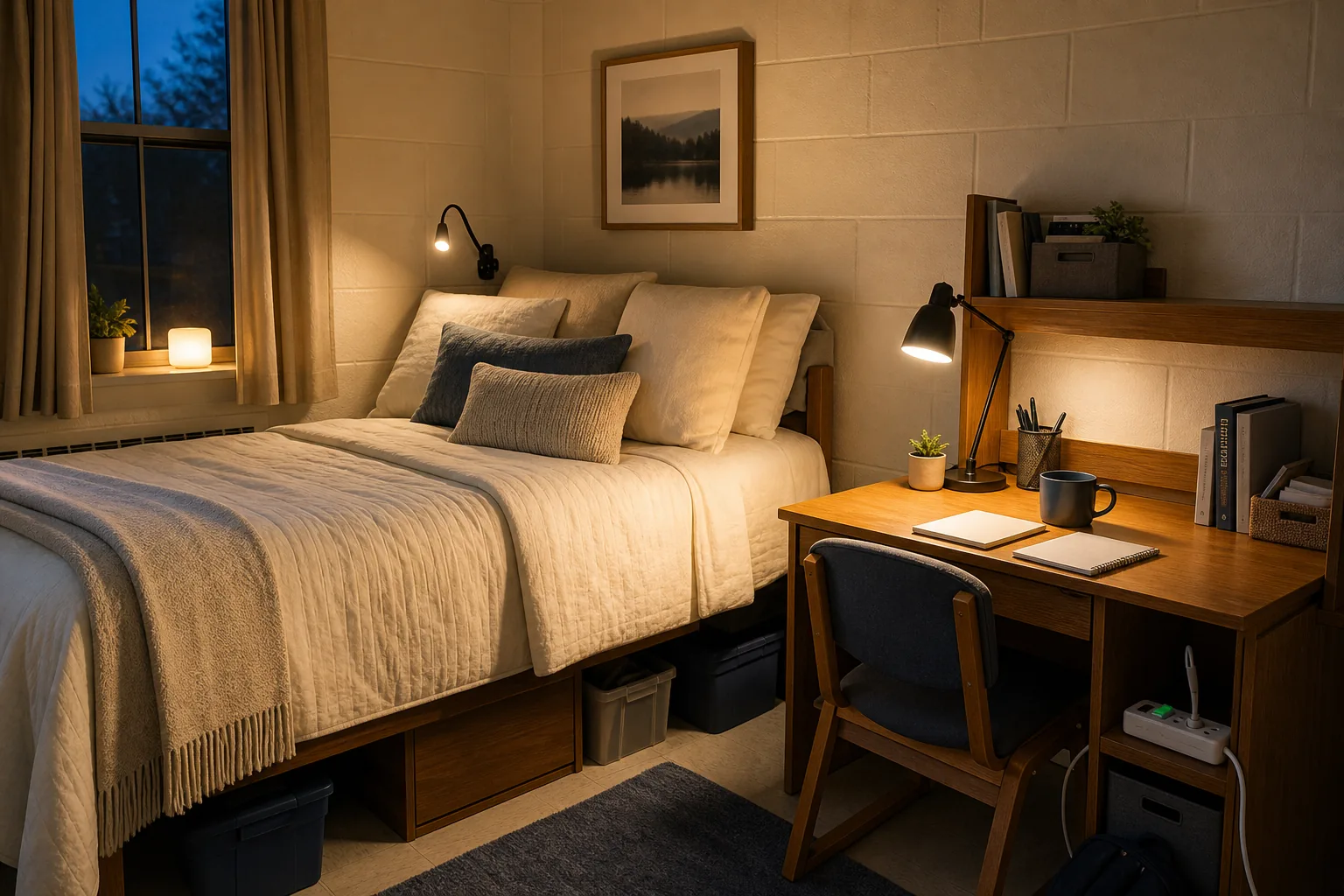
Overhead dorm lighting is rarely flattering, but one lamp cannot handle every task. Create three small layers: a focused desk lamp for studying, a clip-on or bedside light for reading, and a softer ambient source for relaxing. Warm-white bulbs make institutional walls and heavy furniture feel more comfortable.
Only use lighting and power equipment permitted by the school. Keep bulbs away from bedding and fabric, avoid overloaded outlets, and choose approved power strips rather than improvising with cords. Battery-operated accent lights can be useful where outlets are limited, provided campus rules allow them.
Best placement: Put light at different heights so the room feels dimensional instead of flat.
6. Turn Under-Bed Space Into Hidden Storage
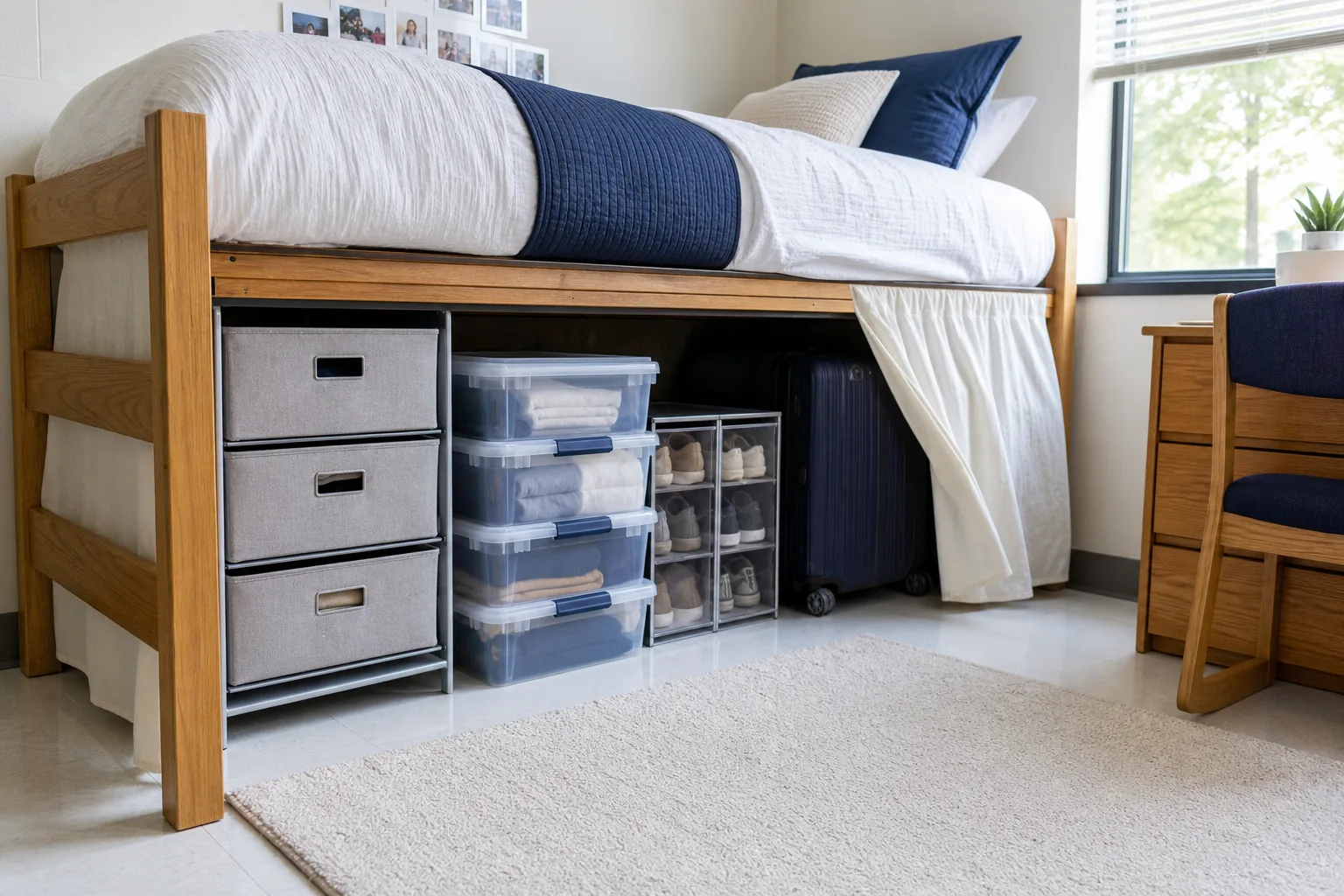
Under-bed space is the most valuable storage zone in a dorm. After measuring the available height, use matching rolling bins or fabric drawers for seasonal clothes, spare bedding, shoes, and less frequently used supplies. Labels prevent every container from becoming a mystery box by October.
Keep daily items closest to the opening and reserve the deepest section for luggage or off-season pieces. A long bed skirt or fitted fabric panel can hide mismatched bins, but make sure it does not interfere with ventilation or create a trip hazard. Use only school-approved bed heights and risers.
Organization rule: Do not fill every inch on move-in day—leave one empty bin for items accumulated during the semester.
7. Add a Bedside Caddy or Clip-On Shelf
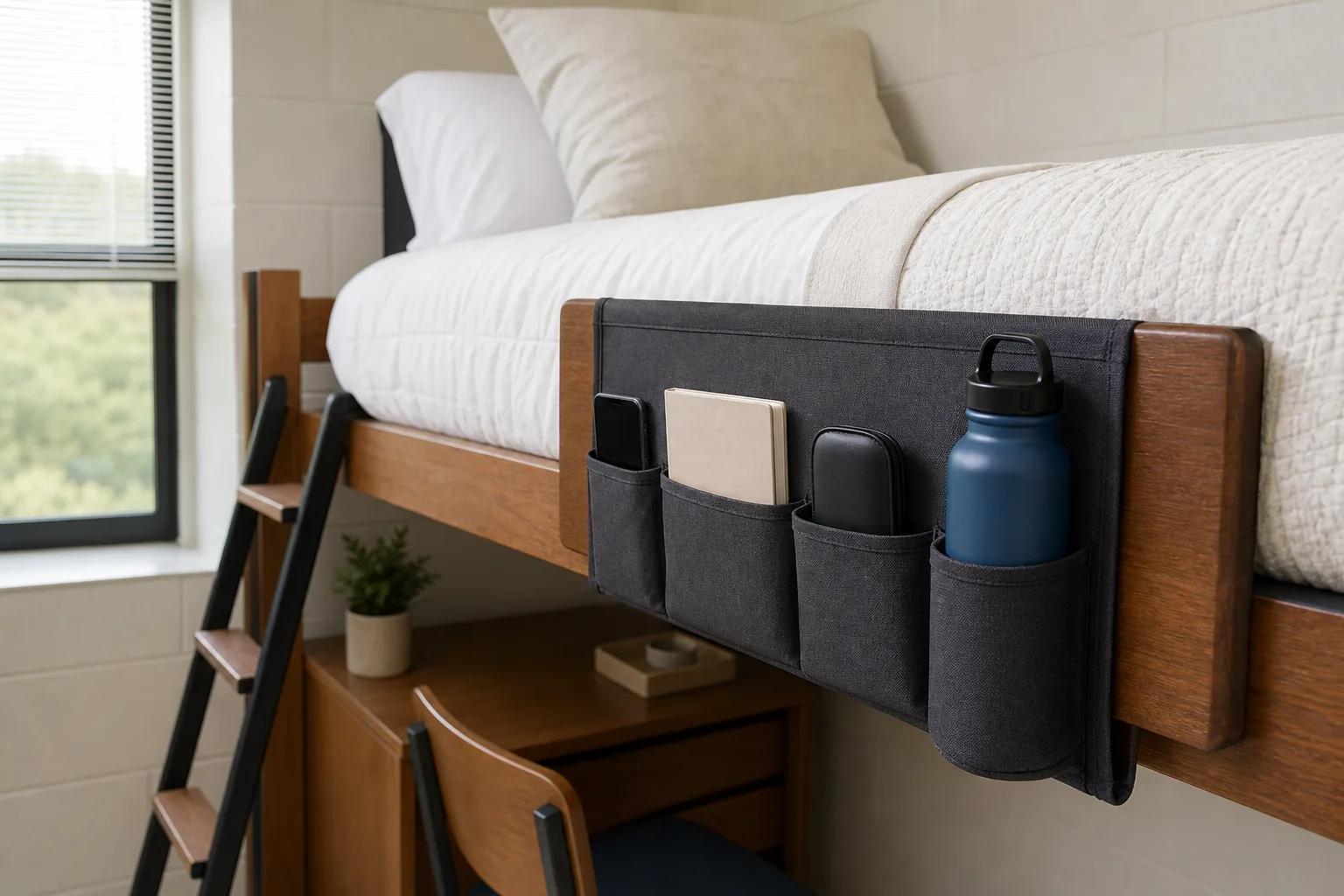
A bedside caddy gives a lofted or tightly positioned bed the function of a nightstand without taking floor space. Choose one with structured pockets for a phone, glasses, book, tissues, and a water bottle. A rigid clip-on shelf works well when the frame is compatible and the weight limit is respected.
Keep the setup deliberately small. If it becomes a place for food wrappers, cosmetics, and tangled chargers, it will make the bed feel cluttered. Store only nighttime essentials and reset it during the weekly laundry routine.
Safety note: Keep drinks separated from electronics and route charging cords according to campus rules.
8. Create a Study Zone You Will Actually Use

The standard dorm desk can feel less institutional with a padded desk mat, warm task lamp, vertical file holder, and one small personal object. Store pens and frequently used supplies within reach, then move extra stationery into a drawer or rolling cart. The goal is to preserve enough clear surface for a laptop and open notebook at the same time.
Use a wall calendar or pinboard for deadlines rather than covering the desk with loose reminders. A small cable box or reusable ties will keep chargers from spreading across the work area. When the desk looks ready, starting a study session requires less mental effort.
Five-minute reset: Clear cups, return supplies, plug in devices, and place tomorrow’s first task in the center.
9. Use a Rolling Cart as Flexible Storage
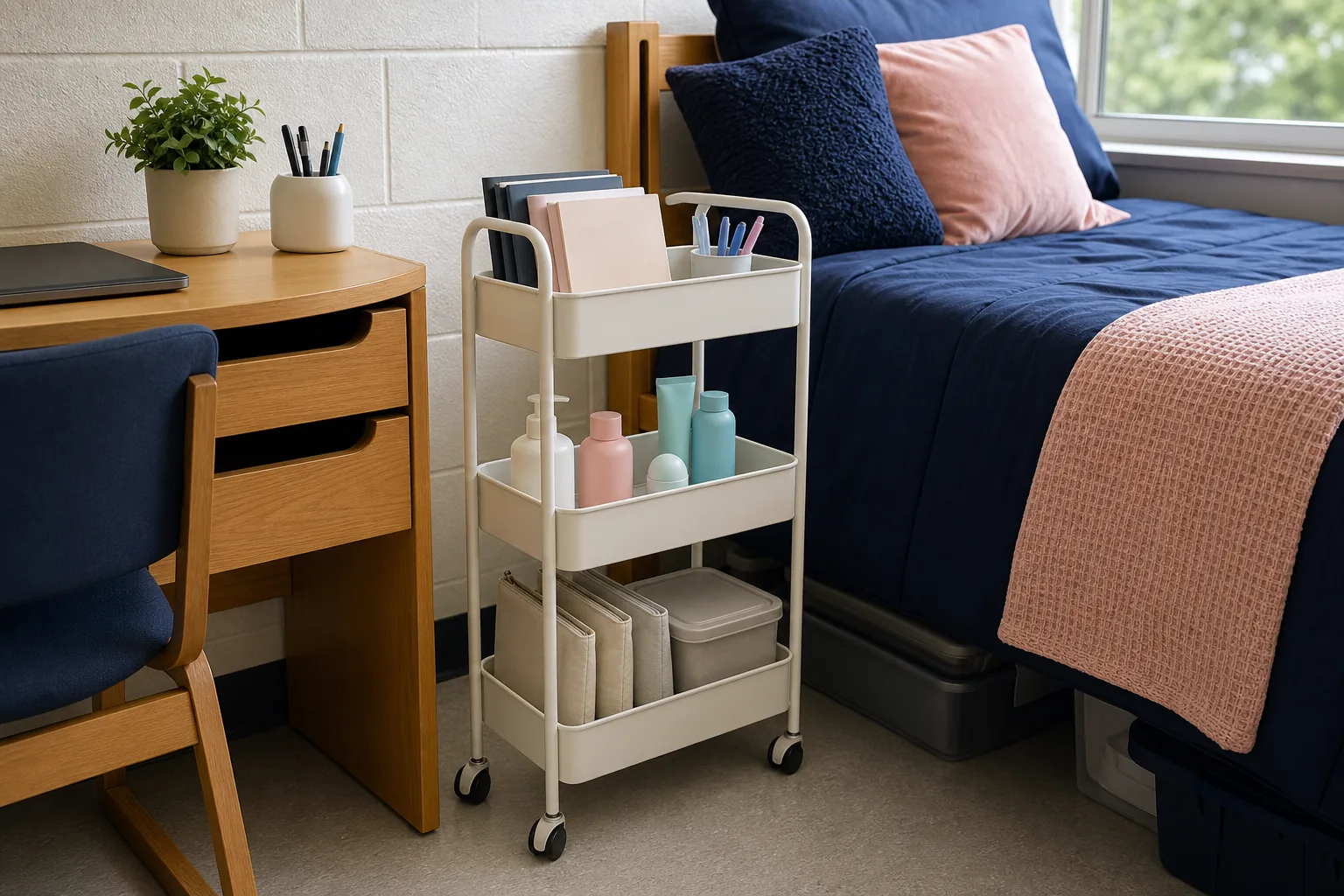
A narrow rolling cart adapts as dorm life changes. It can begin beside the desk with notebooks and technology, move near the bed during a late-night study session, or hold toiletries outside a shared bathroom. Give each tier one job so it stays functional instead of becoming a catch-all.
Use two or three small containers on the top tier for loose items and keep heavier supplies at the bottom. Matching containers make an open cart look calmer, but leave some negative space so everything remains easy to remove. Choose wheels that lock if the floor is uneven.
Useful zones: Study supplies on top, daily care in the middle, backups or snacks at the bottom.
10. Style a Compact Mini-Fridge and Snack Station
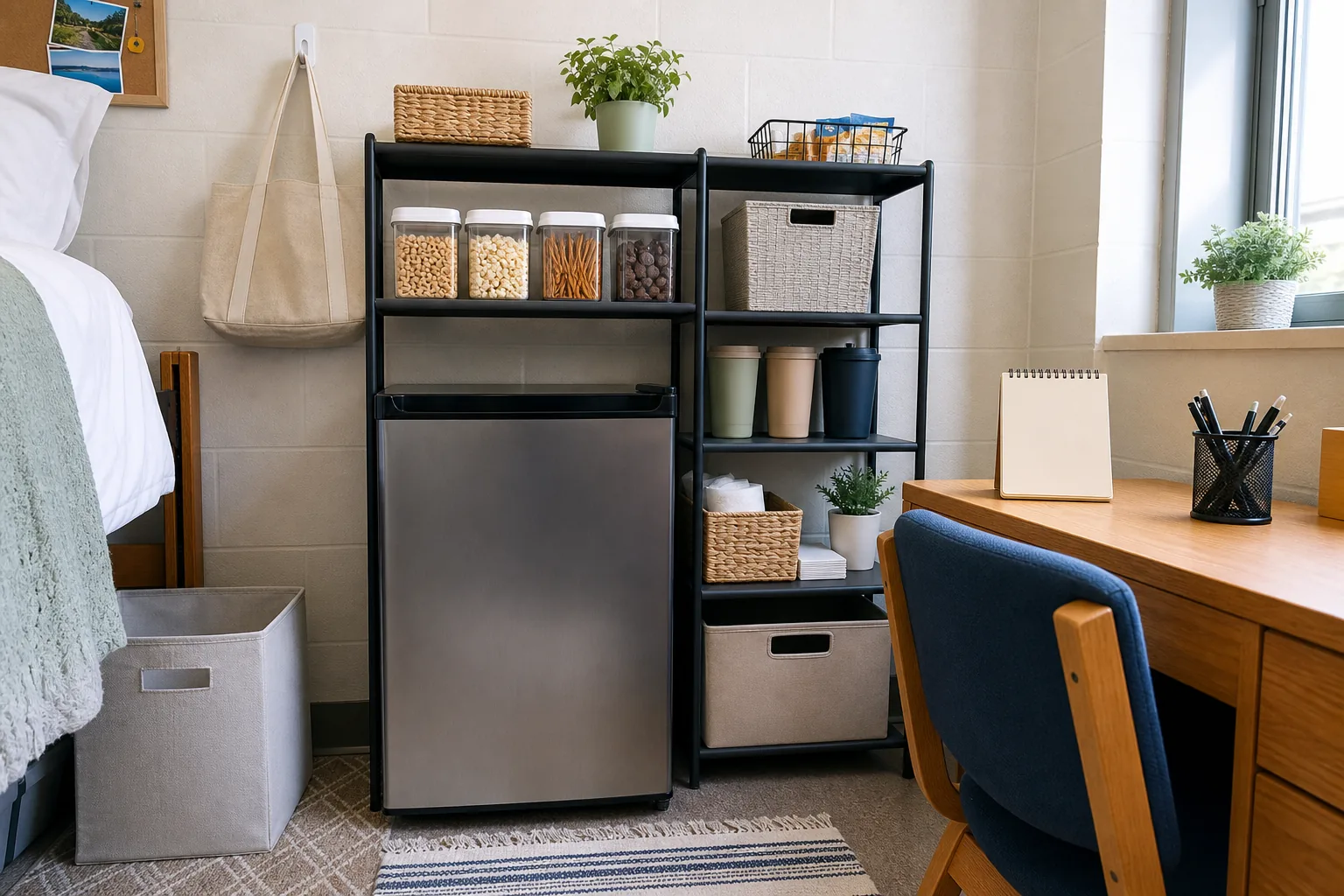
If the room includes a mini fridge, make the surrounding area useful instead of letting food spread across the desk. A narrow approved shelf or cart can hold sealed snacks, reusable cups, napkins, and a small tray for daily items. Keep the top visually simple and leave the required clearance around appliances.
Before bringing a coffee maker, kettle, microwave, or other appliance, check exactly what the residence hall permits and what is already supplied. Food should be sealed to control odors and pests, and the station needs a quick weekly clean. A single matching set of containers looks better and prevents duplicate purchases.
Practical upgrade: Add a small inventory note so roommates know what is shared and what needs replacing.
11. Use a Mirror and Washable Rug to Open the Room
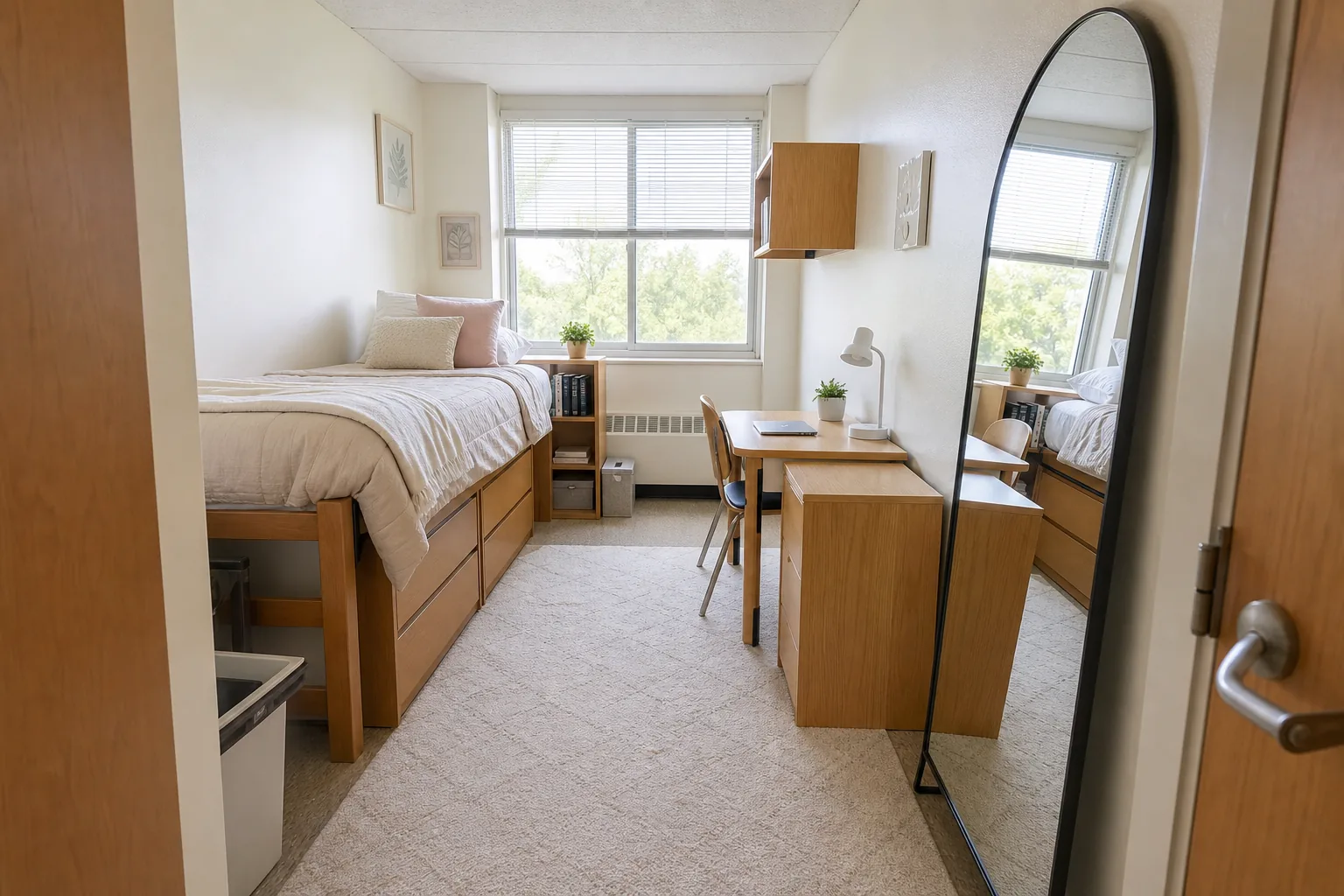
A full-length mirror reflects daylight and visually extends a narrow dorm, while a rug covers cold or worn flooring. Position the mirror where it catches light without creating glare at the desk. Use an over-door model, a safely supported leaning mirror, or another setup specifically allowed by the residence hall.
Choose a low-pile washable rug that fits between the beds or defines the shared center of the room. Light colors make the floor feel larger, but a subtle pattern hides everyday marks better than solid white. Confirm the door can still open fully and that edges do not curl.
Size tip: Measure the usable floor area after furniture is placed, not from an empty-room diagram.
12. Coordinate With a Roommate Without Matching Everything
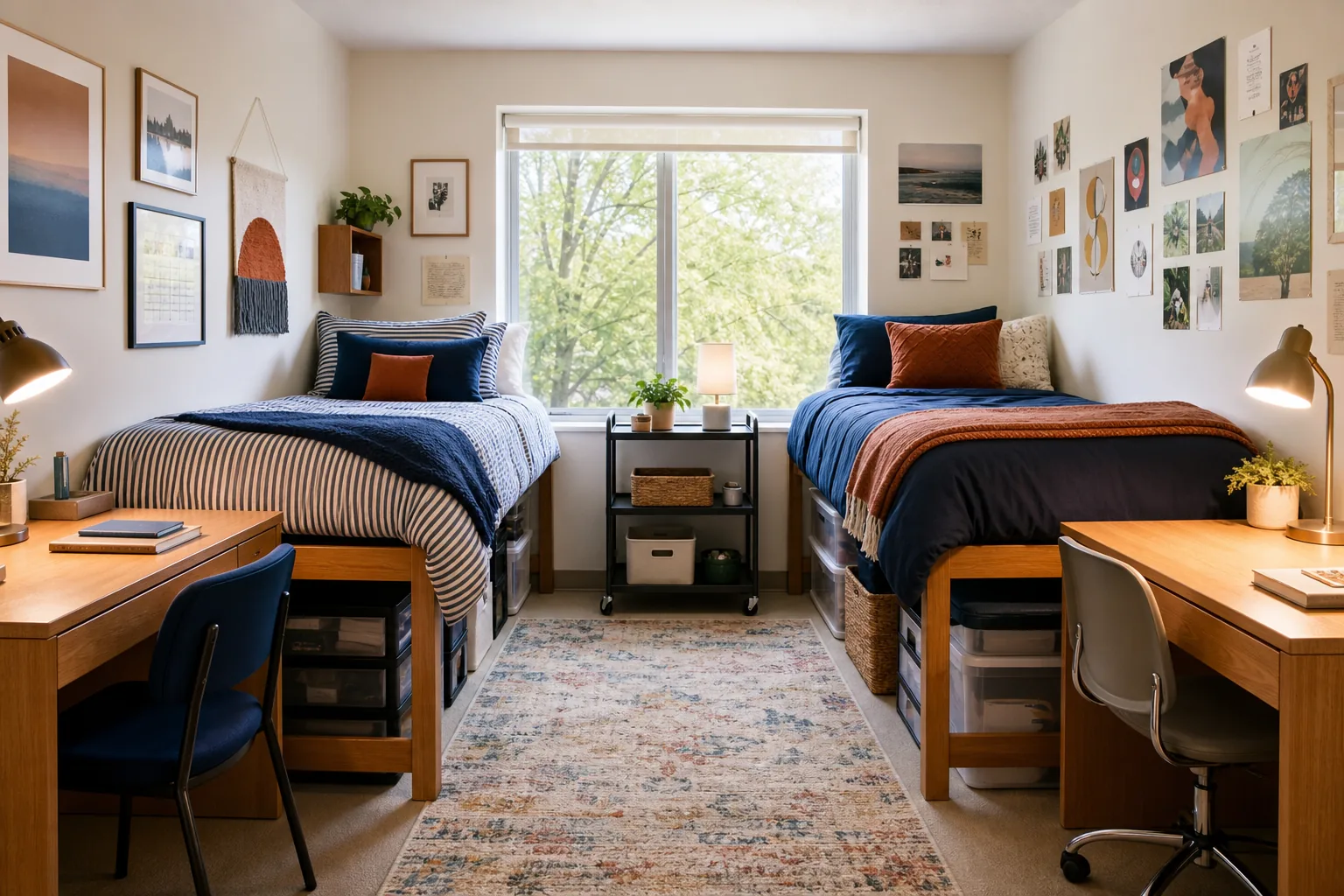
A shared dorm looks cohesive when both sides share a few visual cues, not when every object matches. Agree on one neutral, one repeated accent color, and the finish for shared pieces such as the rug, lamp, or storage cart. Each roommate can then choose different bedding patterns and personal art within that framework.
Discuss sleeping schedules, lighting, temperature, guests, fridge use, and which purchases are shared before move-in. A multi-color rug or artwork can bridge two very different aesthetics. Divide wall space fairly and avoid buying duplicate large items until the room layout is confirmed.
Best compromise: Coordinate shared zones; personalize the wall and bedding closest to each person.
13. Try a Cozy Neutral Dorm Aesthetic
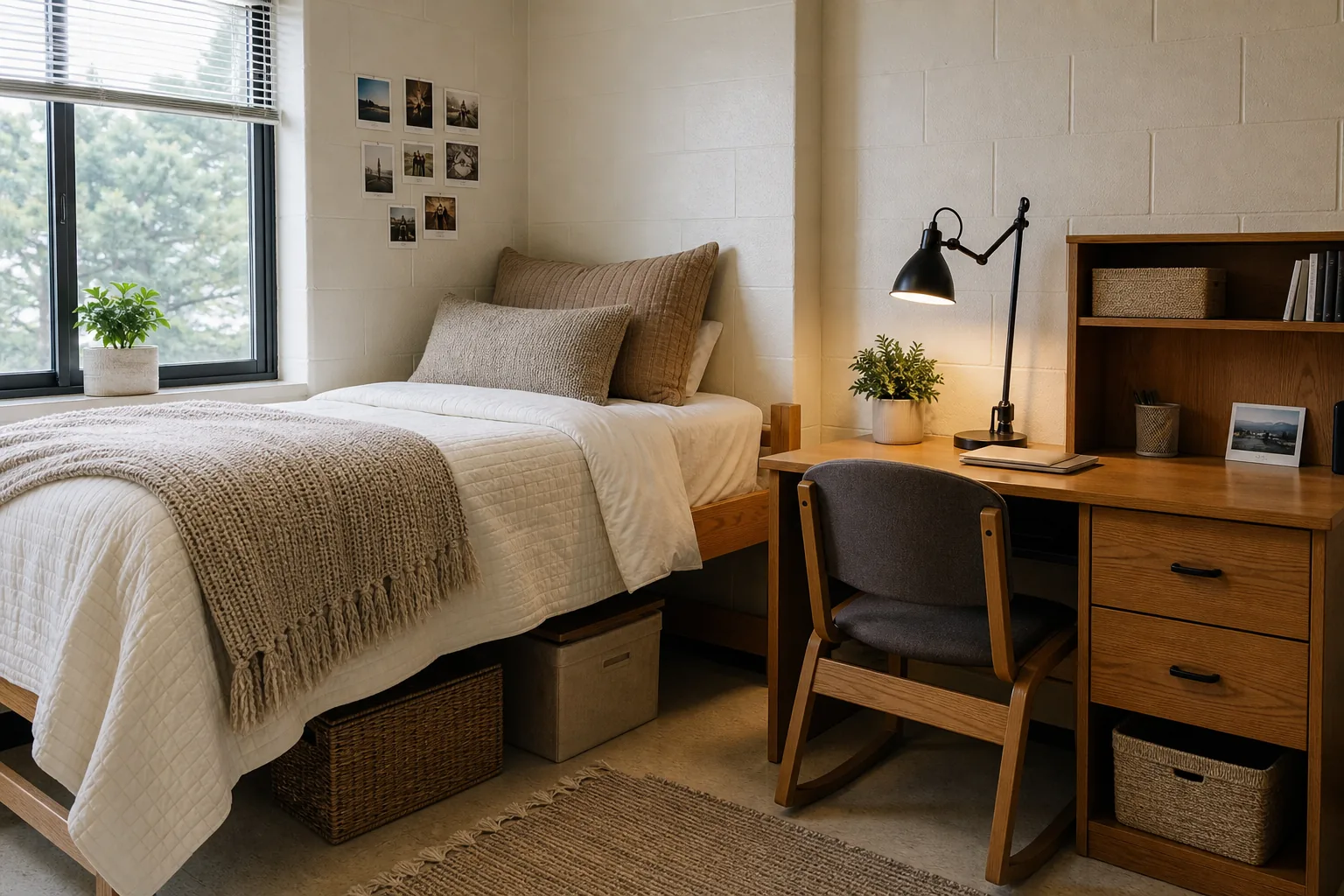
A neutral scheme can make a busy dorm feel calm, especially when the room already contains several wood and metal finishes. Layer cream, oatmeal, taupe, and soft brown through washable bedding, a textured throw, woven storage, and one warm wood accent. Black details provide enough contrast to keep the room from appearing flat.
Texture matters more than quantity. A ribbed pillow, quilted coverlet, and woven basket create depth without filling the space with decor. Add one low-maintenance plant or realistic faux branch if permitted, then let personal photographs supply the final layer.
Keep it modern: Mix smooth, woven, and quilted surfaces instead of buying every item in the same beige fabric.
14. Create a Pink and Green Dorm Room
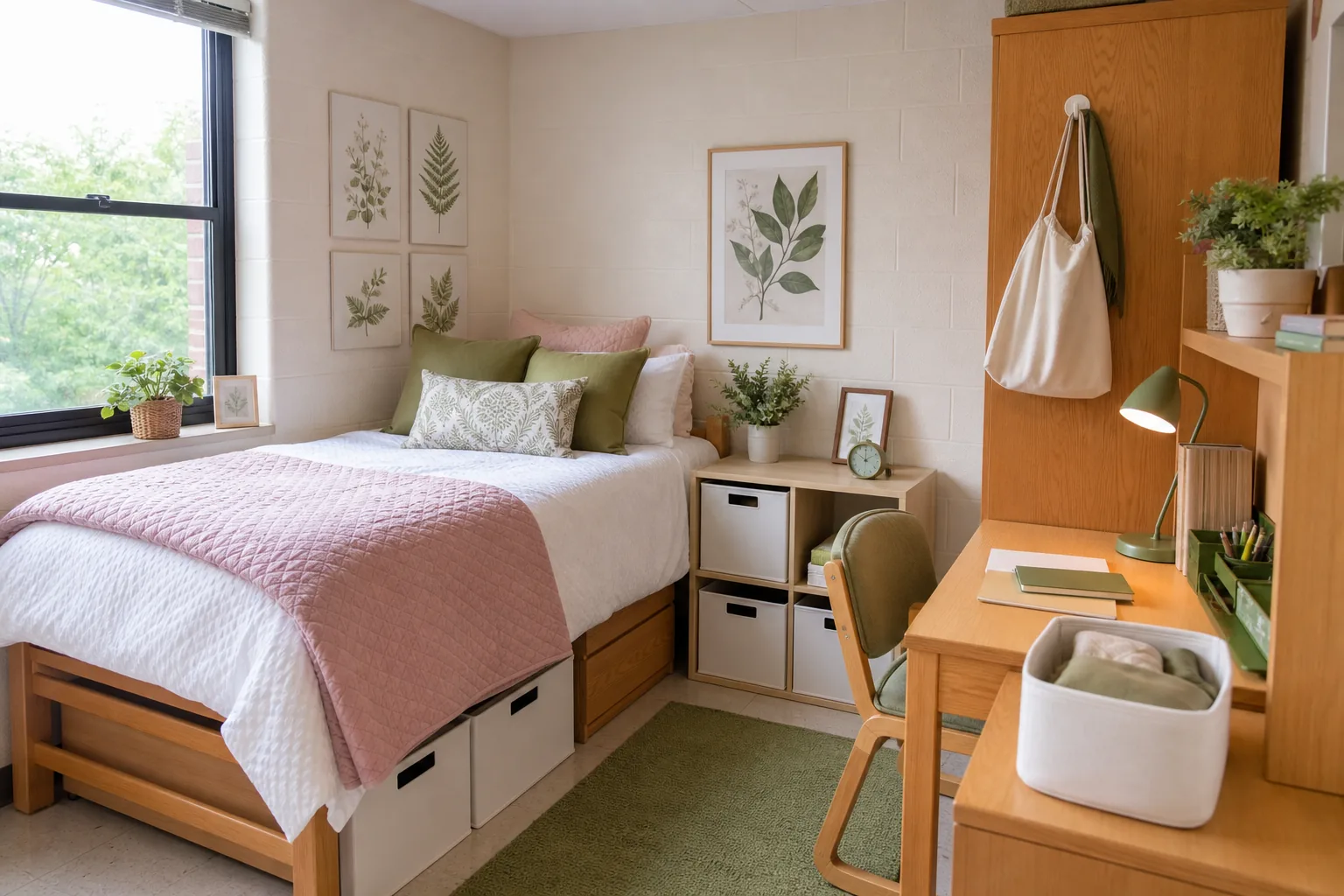
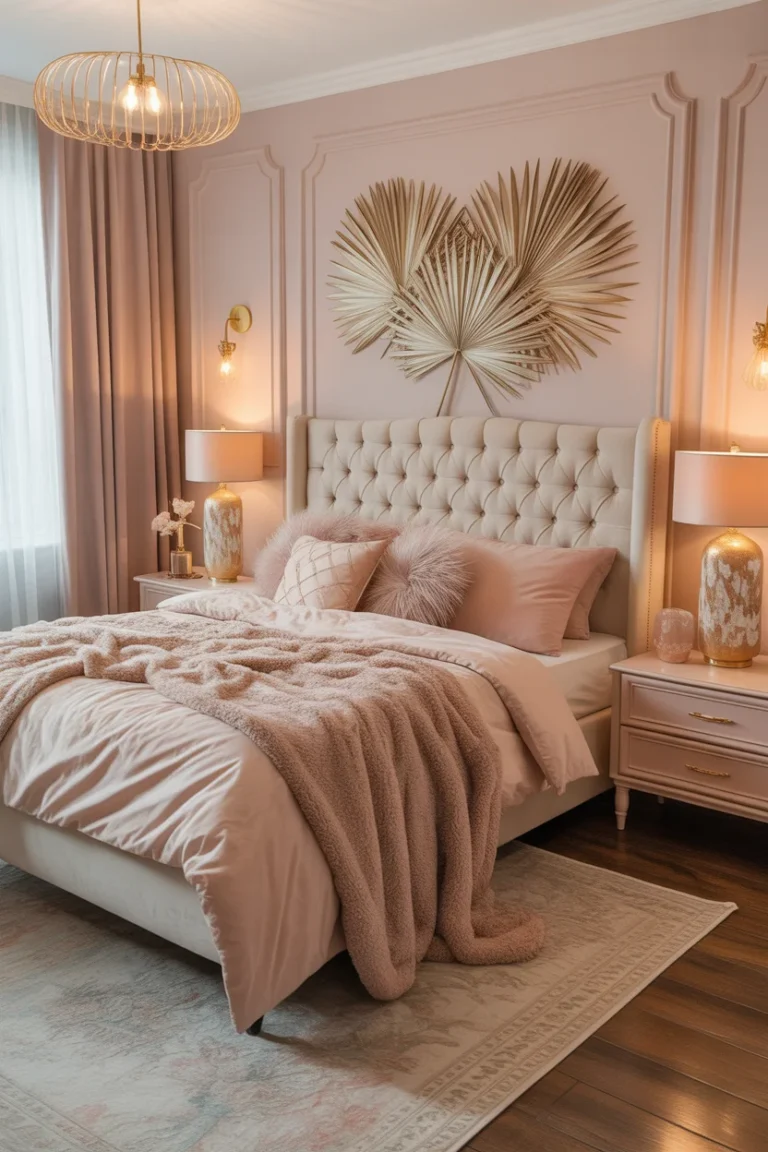
Pink and green feel fresh, optimistic, and easy to personalize. Start with white bedding, then add blush or dusty-rose textiles and sage accents through art, a desk organizer, or a small rug. Deeper olive and raspberry details can make the palette feel more grown-up than pastel alone.
Botanical prints connect the colors naturally, but keep the wall display edited so it does not compete with patterned bedding. Use one dominant color and let the second appear in smaller repeated touches. This palette also works well in shared rooms because each side can emphasize a different shade.
Balanced mix: White foundation, 25 percent green, 15 percent pink, and a small amount of dark contrast.
If your style is more dramatic, these black and hot pink room ideas show how to use saturated color while keeping the space polished.
15. Give the Dorm a Vintage Maximalist Personality
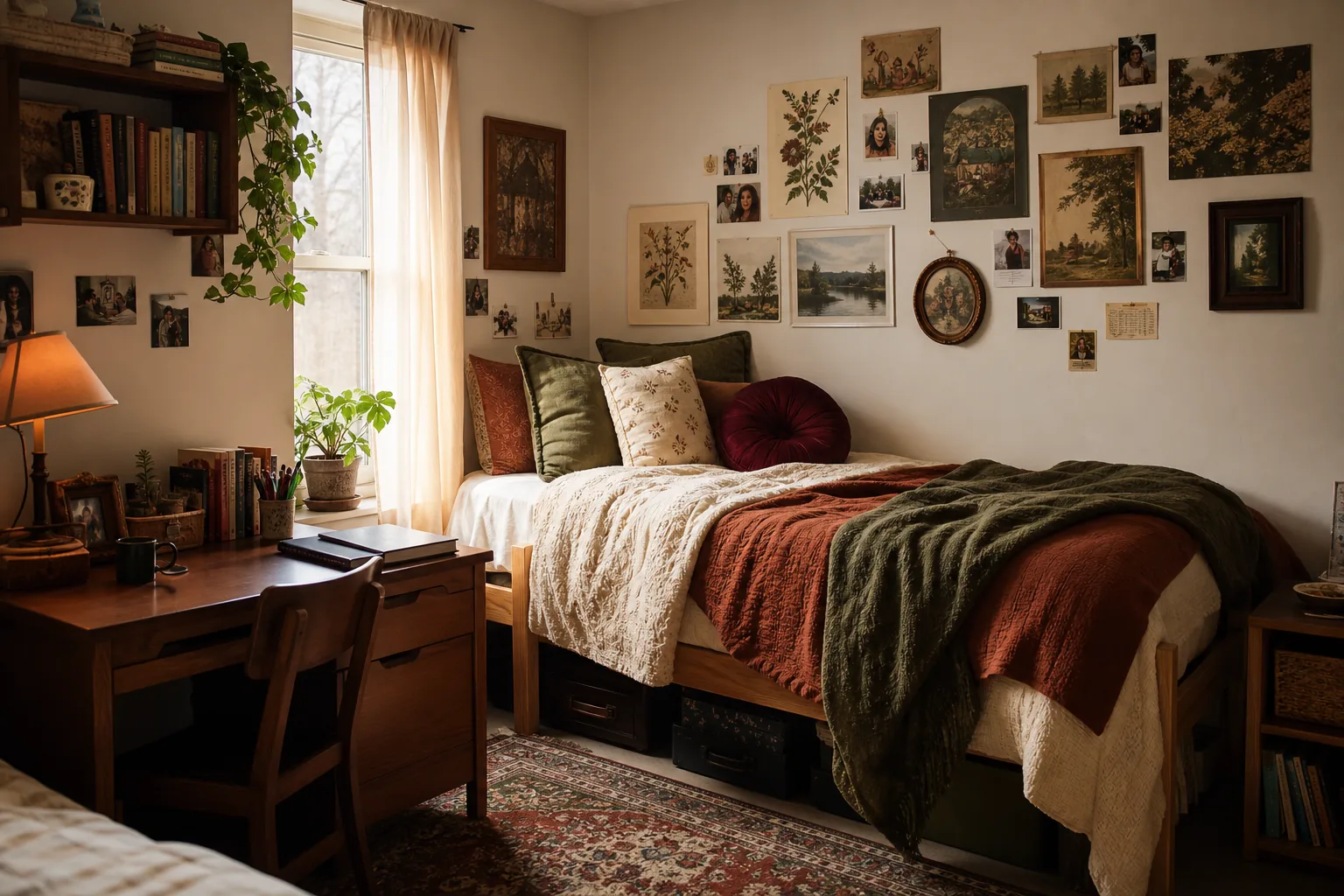
Maximalism works in a small room when the collection has boundaries. Choose a limited palette—such as rust, olive, cream, and burgundy—then layer striped bedding, vintage-inspired posters, meaningful photographs, and a few secondhand accessories. Repeating colors turns many individual objects into one story.
Keep one major surface quiet. A mostly solid duvet, clear desk, or uncovered section of wall gives the eye somewhere to rest. Display the best pieces and rotate the rest during the semester instead of placing every object out on move-in day.
Editing rule: For every new display item, remove or store one older piece.
16. Complete a Dorm Makeover for Under $150
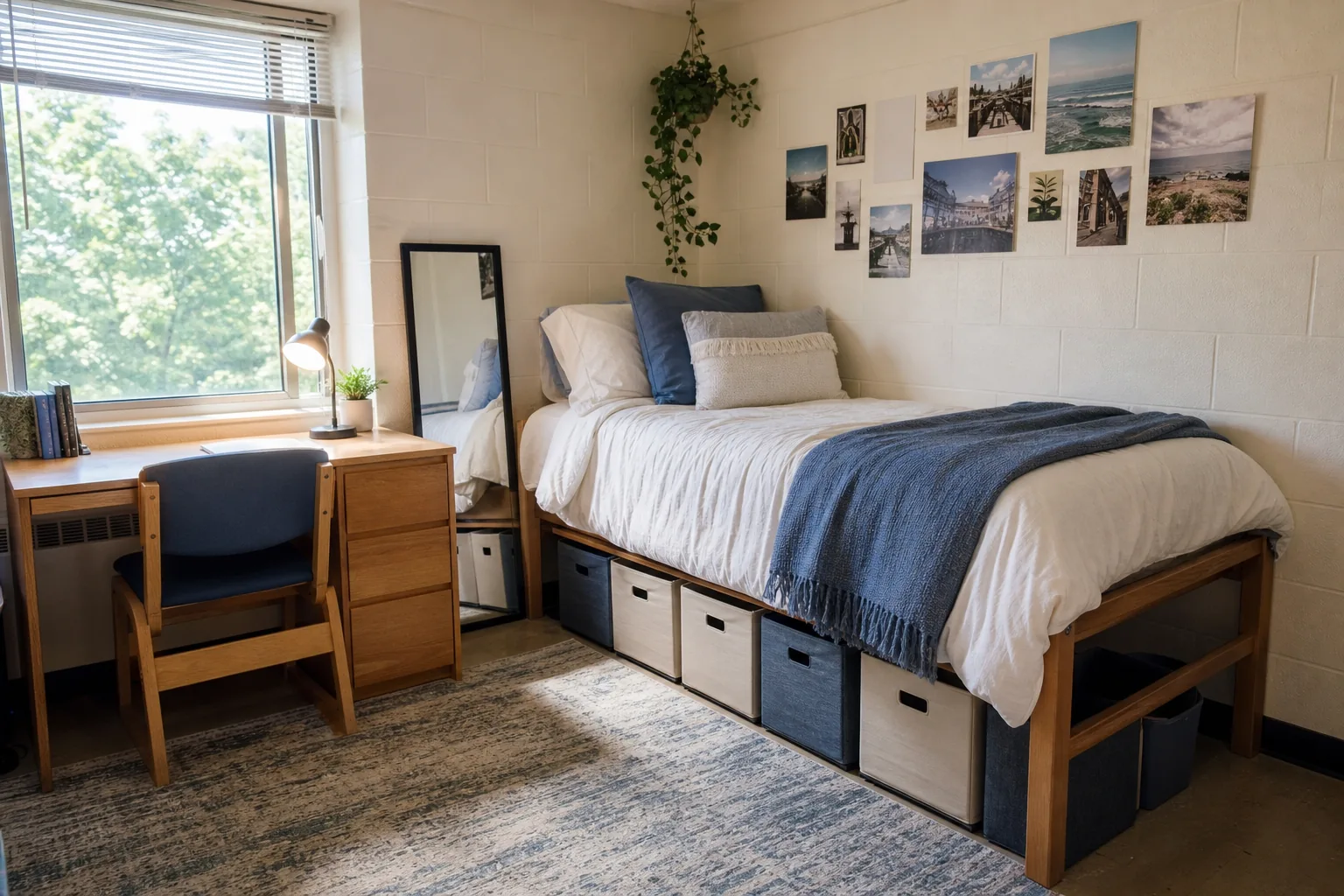
A limited budget looks most effective when spent on high-visibility pieces. Use approximately half for bedding or a comfort upgrade, then divide the rest between lighting, one rug, wall decor, and storage. Shop your home first for a lamp, mirror, frames, baskets, or throw that can be reused.
Print downloadable art, frame postcards, buy containers only after measuring, and choose storage that can move into a future apartment. Skip novelty items that perform one tiny task. A cohesive duvet, warm lamp, organized desk, and personal gallery wall will transform the room more than a cart full of themed accessories.
Sample budget: Bedding refresh $60, lamp $20, rug $30, wall decor $15, storage $25.
For more realistic high-end styling on a student-friendly budget, visit our guide to luxury bedroom ideas on a budget.
Dorm Decorating Checklist Before Move-In
- Confirm the mattress size, room dimensions, and under-bed clearance.
- Read rules for adhesives, lights, appliances, risers, and curtains.
- Coordinate shared purchases and move-in timing with your roommate.
- Bring only essential storage, then add more after living in the room.
- Pack a small toolkit permitted by the school, removable supplies, labels, and cleaning cloths.
- Photograph the condition of walls, floors, furniture, and fixtures before decorating.
Common Dorm Decor Mistakes
- Buying before measuring: Attractive storage is useless when it does not fit.
- Ignoring school rules: A prohibited light or appliance can become a safety issue.
- Using every trend at once: Choose one palette and two or three visual themes.
- Overfilling the room: Leave space for books, clothing, and belongings collected later.
- Making the bed decorative but uncomfortable: Sleep quality matters more than extra pillows.
- Forgetting the roommate: Shared items, guests, light, and storage need an early conversation.
Dorm Decor Ideas FAQs
How can I decorate a dorm room without damaging the walls?
Use only residence-approved removable products and lightweight decor. Poster rails, fabric pinboards, photos, postcards, and freestanding mirrors can add personality without paint or screws. Test any adhesive in an inconspicuous area if the school permits it.
What should I buy first for dorm decor?
Confirm the room measurements and buy the sleep essentials first: correctly sized sheets, comfortable bedding, and any approved mattress topper. Next prioritize a task lamp and practical storage. Add decorative objects after the main layout is working.
How do I make a small dorm room look bigger?
Keep the largest surfaces light, use vertical storage, place a mirror where it reflects daylight, conceal under-bed clutter, and preserve visible floor space. Fewer larger decor pieces usually look calmer than many tiny objects.
How can roommates coordinate dorm decor?
Agree on one neutral, one shared accent color, and the style of communal pieces. Bedding and personal art can remain different. Discuss shared purchases, wall space, lighting, sleep schedules, and guests before move-in.
What dorm decor is worth spending money on?
Spend on items that affect daily comfort or can move to the next home: good bedding, a supportive pillow, a reliable task lamp, a useful rug, and flexible storage. Save on trend-specific art and small accessories.
Are string lights allowed in college dorms?
Rules differ by school and building. Some residences allow certain LED lights, while others restrict hanging lights, extension cords, or anything near fabric. Check the current housing policy before buying or installing them.
Final Thoughts
The most successful dorm room is not the one with the most products. It is the one that supports sleep, study, storage, and the people living there. Begin with measurements and rules, build a cohesive bed and color palette, then add wall decor, lighting, and organization one useful layer at a time.
Choose the ideas that solve your room’s actual problems. A bedside caddy may matter more than a headboard; a calm study desk may be more valuable than another decorative pillow. When function and personality work together, even a standard dorm can feel comfortable, memorable, and unmistakably yours.


3 Comments