
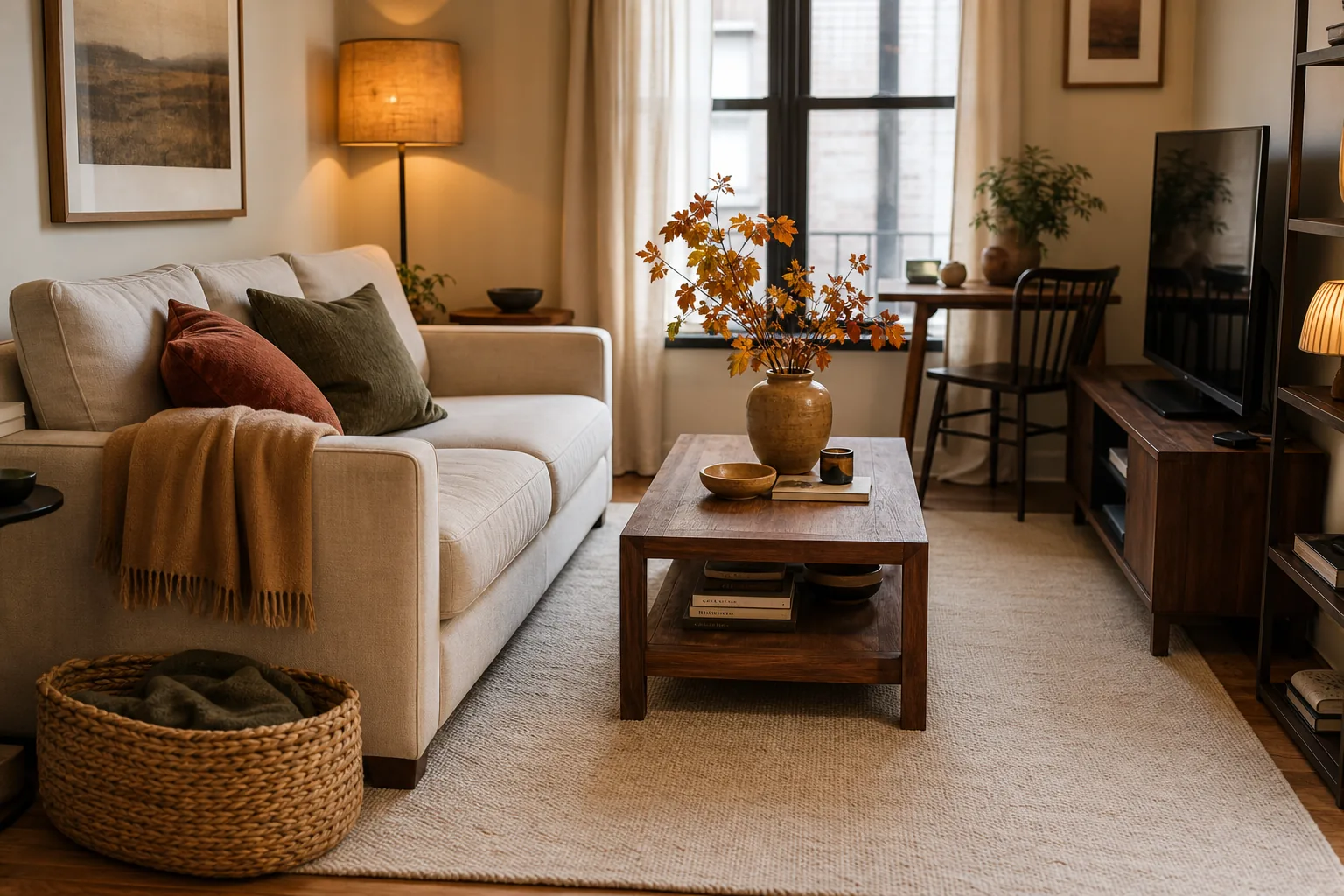
15 Small Living Room Fall Decor Ideas That Feel Cozy, Not Cluttered
Small living room fall decor ideas work best when they make the room feel warmer without stealing the space you need to sit, walk, set down a drink, or simply breathe. The goal is not to fit a full pumpkin patch into an apartment. It is to create an autumn mood with better color, softer texture, flattering light, and a few well-placed natural details.
This guide includes 15 practical looks for apartments, compact homes, rentals, and narrow living rooms. Each idea is designed to keep pathways clear and surfaces useful. Copy one complete look or combine three or four details that suit the furniture you already own.
The clutter-free fall formula
Choose one tight color palette, add one soft textile, one natural element, and one warm light source. Keep at least one-third of every visible surface empty, then remove one item before you finish.
If you are decorating beyond the living room, save our broader guide to fall room decor ideas. For furniture layouts that create more usable space year-round, see these small-space furniture ideas.
1. Choose One Quiet Fall Color Palette
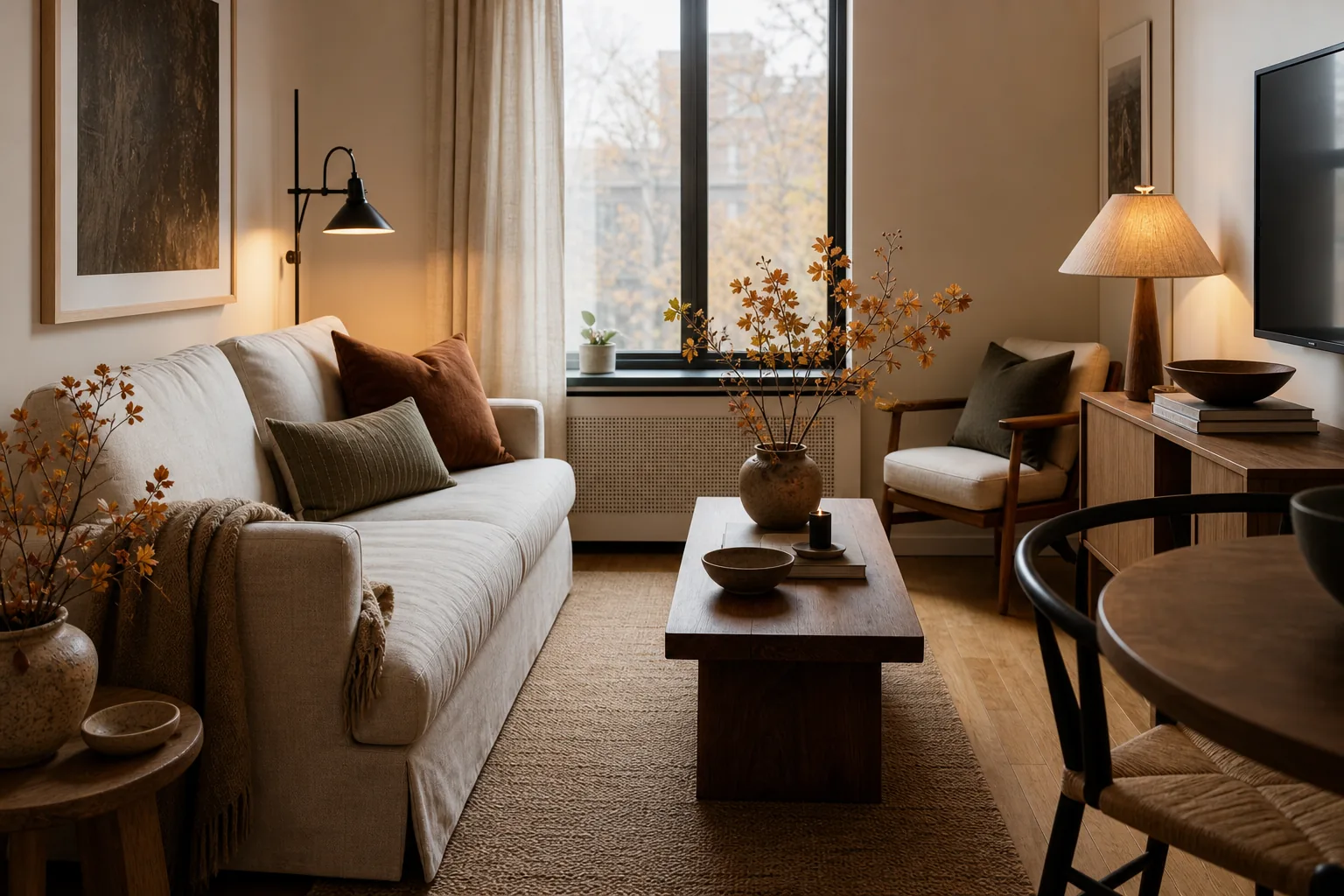
A small room feels crowded faster when several unrelated colors compete for attention. Start with the color already covering the largest area—usually the sofa, rug, or walls—then add only two autumn accents. A cream room might take rust and olive, while a gray sofa could work with camel and muted burgundy.
Repeat each accent no more than two or three times. For example, echo rust in one pillow and a small branch arrangement, then repeat olive in a second pillow and a book cover. The repetition makes the room look intentional, while the limited palette allows the eye to travel without stopping at every object.
Best for: open-plan apartments where the living room can be seen from the kitchen or entry.
2. Swap Pillow Covers Instead of Adding More Pillows
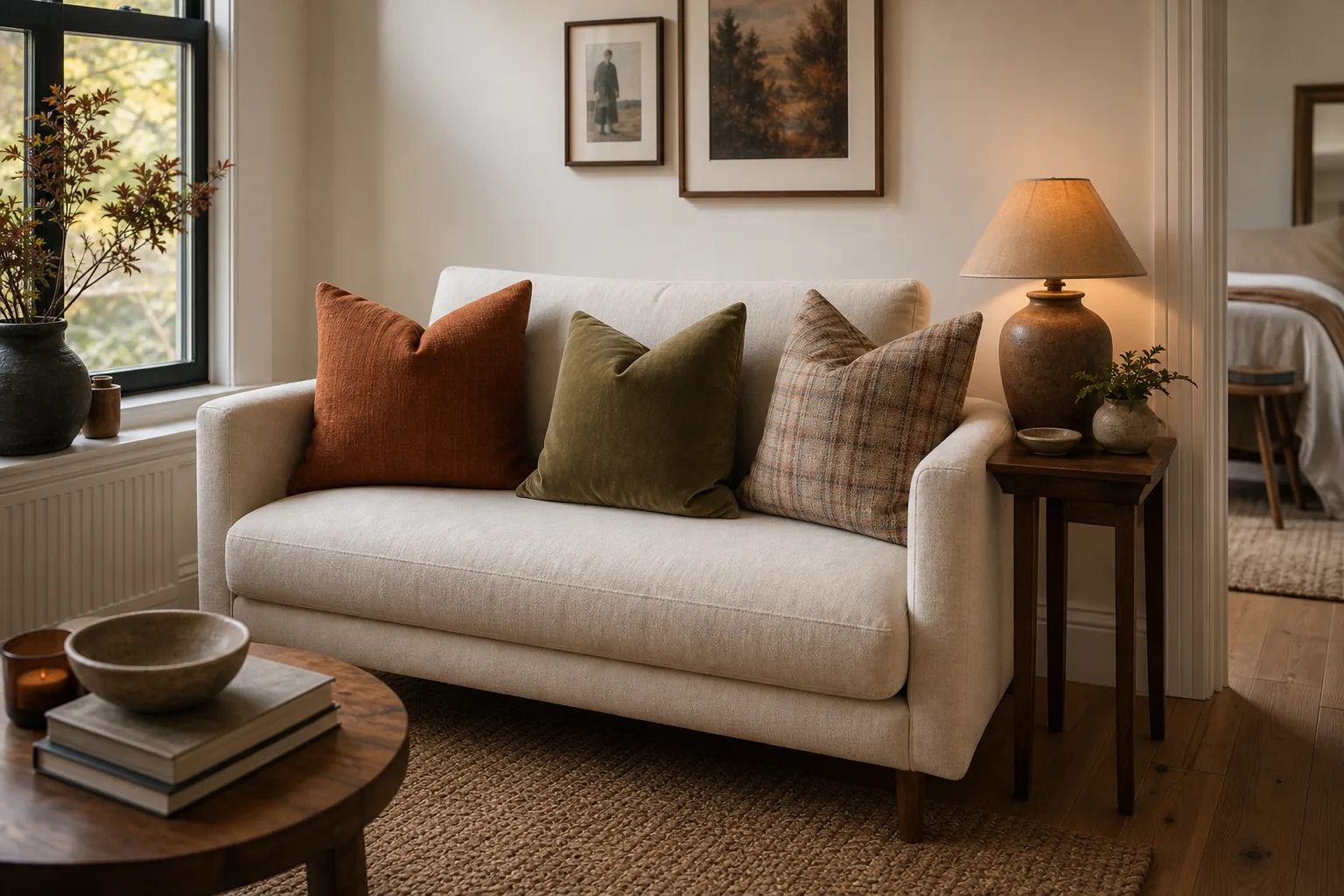
Seasonal decorating does not require another layer of cushions. Too many pillows reduce usable seating and usually end up on the floor. Keep the same inserts and change only the covers. On a compact two-seat sofa, two square pillows and one lumbar pillow are usually enough.
Mix texture rather than loud motifs: try washed linen, soft velvet, and a small-scale plaid or stripe. Connect the colors, but avoid buying a perfectly matched set. A little variation creates a collected look without visual noise. Zippered covers also fold flat after the season, which matters when storage is limited.
Budget shortcut: turn the neutral pillows around if their reverse side is plain, then buy only one autumn cover for the center.
3. Drape One Throw and Keep the Seat Clear
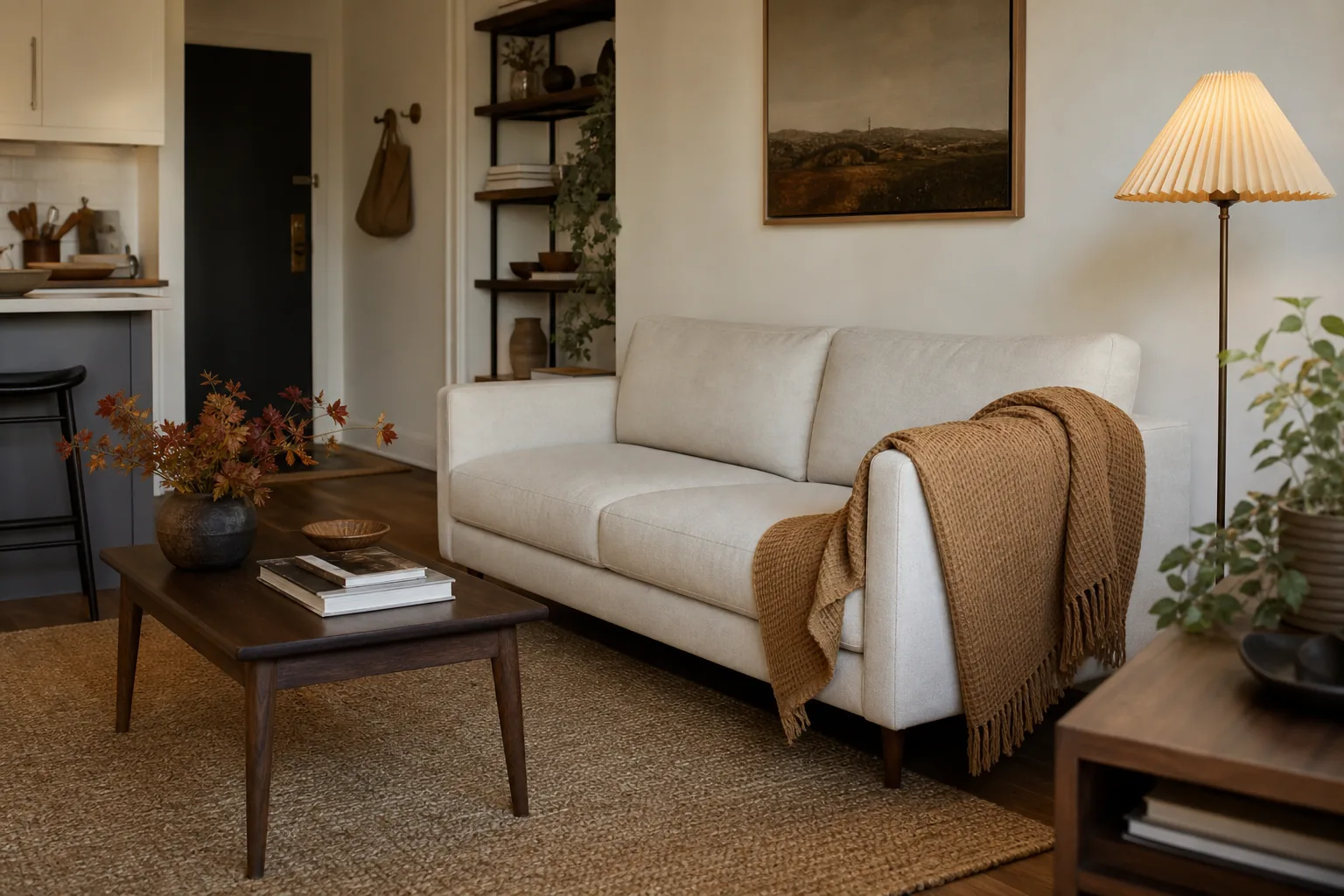
A single throw can bring more fall atmosphere than a collection of themed accessories. Choose a washable blanket with visible texture—waffle weave, brushed cotton, lightweight wool, or a relaxed knit—and drape it over one sofa arm or the corner of a chair.
Do not fold it into a perfect showroom rectangle. A loose fold feels inviting, but keep most of the seat and back cushion visible. If your room already contains several patterns, select a solid throw. If the furniture is plain, a restrained check or narrow stripe can add character without making the space busy.
Color tip: camel, tobacco, rust, moss, and deep plum feel seasonal but can remain useful after fall.
4. Contain Coffee Table Decor on One Small Tray
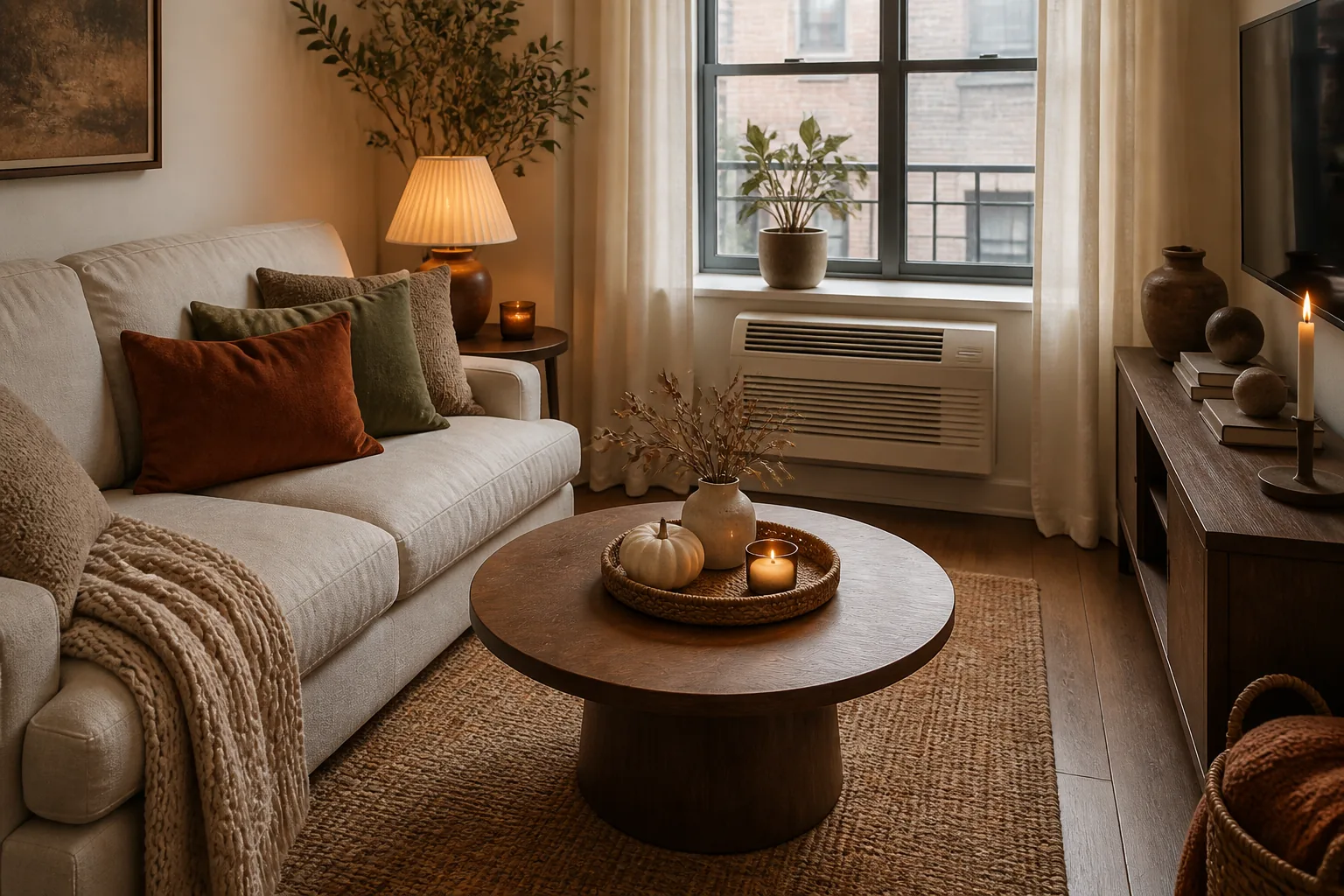
The coffee table often becomes the first place seasonal clutter gathers. Give the display a firm boundary with one shallow tray. A small ceramic pumpkin, a candle, and a low vase create three different heights without blocking conversation or the television.
Choose a tray that covers no more than about one-third of the tabletop. Leave room for mugs, remotes, and everyday life. If the table is tiny, remove the pumpkin and use a pinecone or a single pear-shaped gourd instead. When you need the entire surface, lift the complete arrangement away in one move.
Small-space rule: one contained vignette looks calmer than several objects spaced around the table.
5. Use Airy Branches to Draw the Eye Up
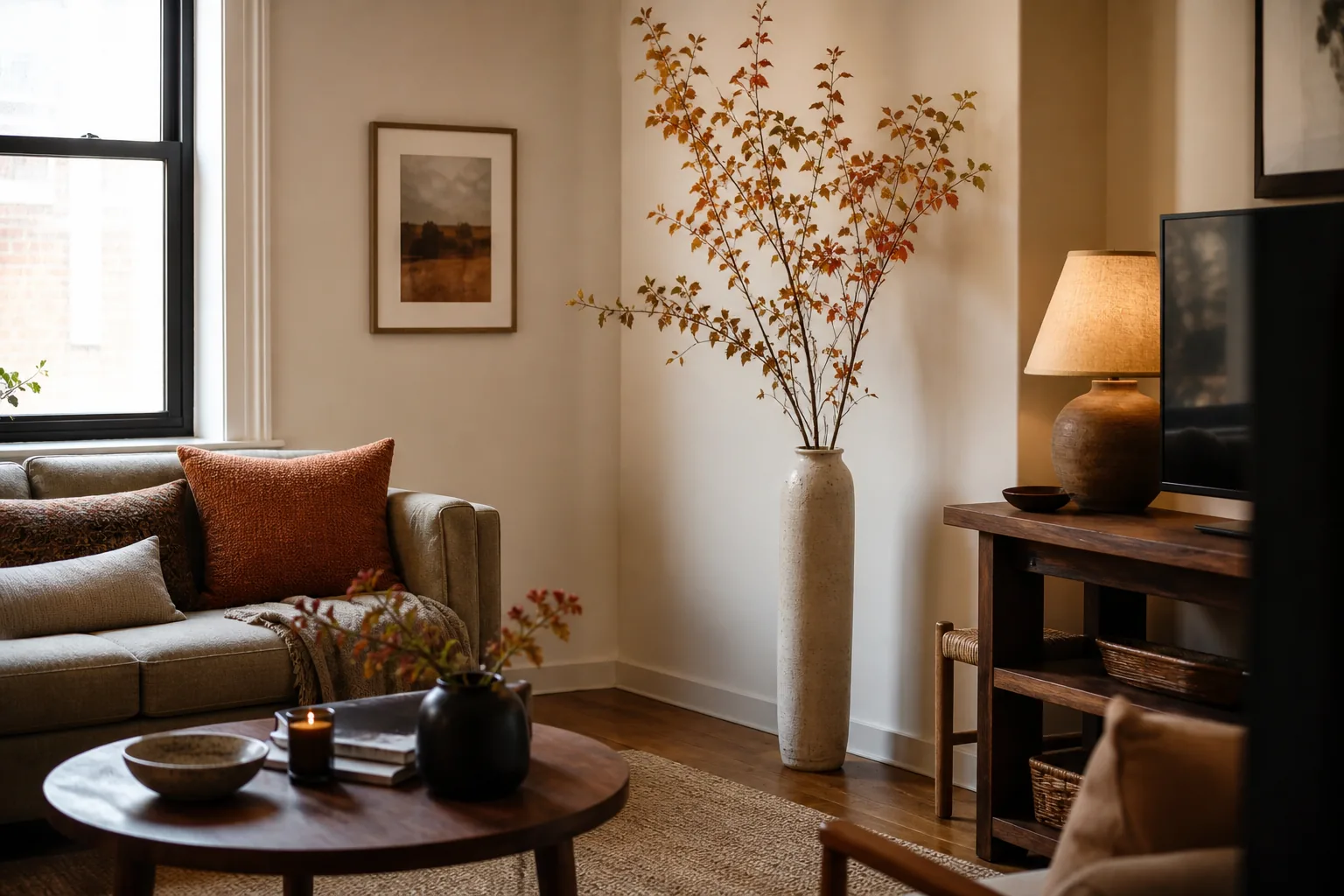
When floor space is scarce, decorate vertically. A tall, narrow vase with two or three branching stems fills an empty corner and leads the eye toward the ceiling. The effect feels generous, but the footprint can be smaller than a plant stand.
Look for branches with open space between the leaves rather than a dense bouquet. Real branches from your yard can be beautiful if they are clean, dry, pest-free, and allowed where you live. Faux stems are easier to reuse; bend them into an asymmetrical silhouette so they do not look stiff.
Placement tip: keep branches away from heaters, open flames, door swings, and the main walking route.
6. Make One Large Renter-Friendly Art Swap
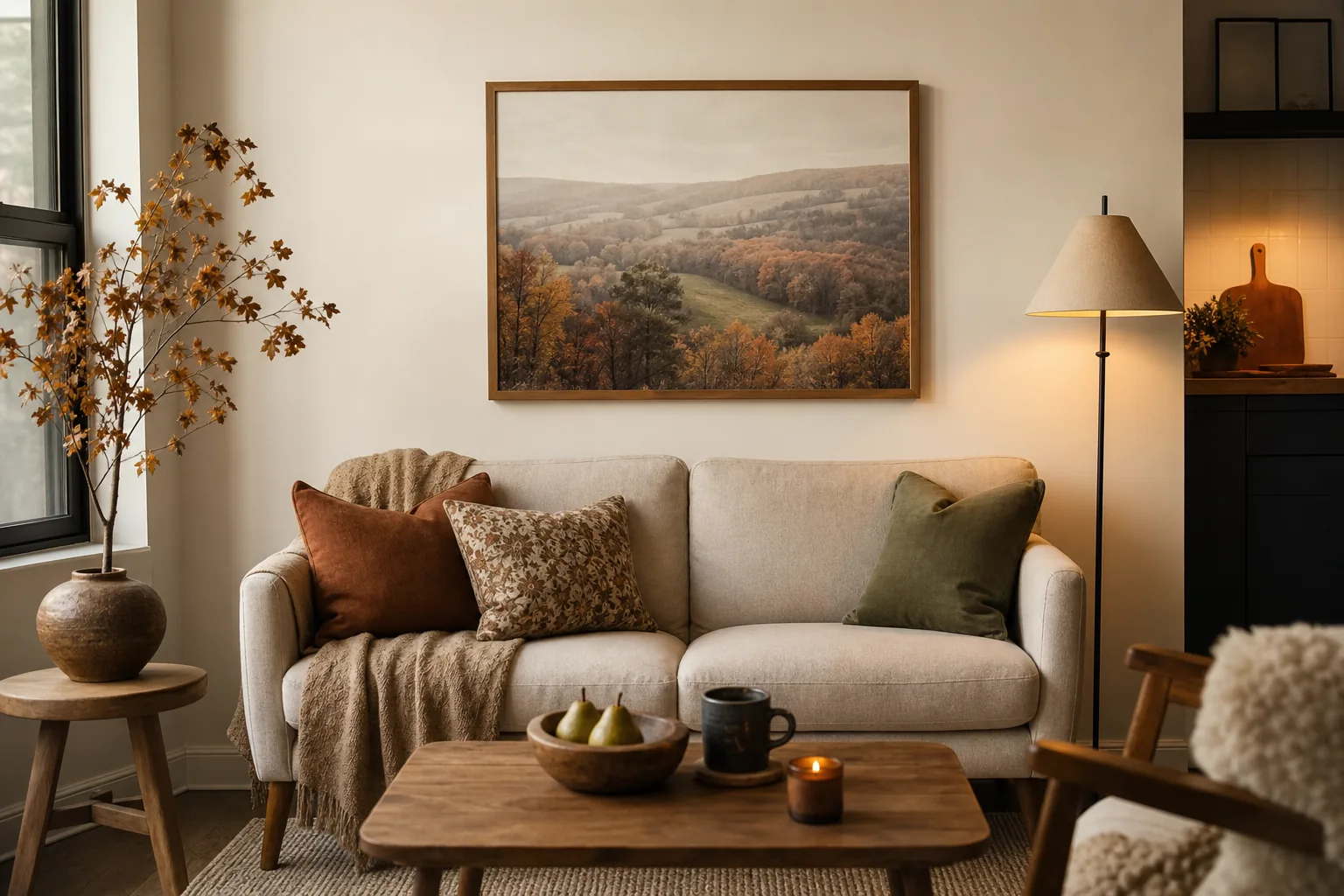
One correctly scaled image can make a small living room look more finished than a wall full of tiny seasonal signs. Replace an existing print with a muted landscape, botanical study, or abstract work in warm brown, olive, gold, and clay.
Reuse the frame already on the wall, or place a lightweight print on a picture ledge secured according to the manufacturer’s instructions. The art does not need to feature pumpkins or text. A quiet autumn palette communicates the season more elegantly and can stay up well into winter.
Scale tip: over a sofa, a single piece that visually relates to the furniture width feels calmer than several undersized frames.
7. Layer Three Small Sources of Warm Light
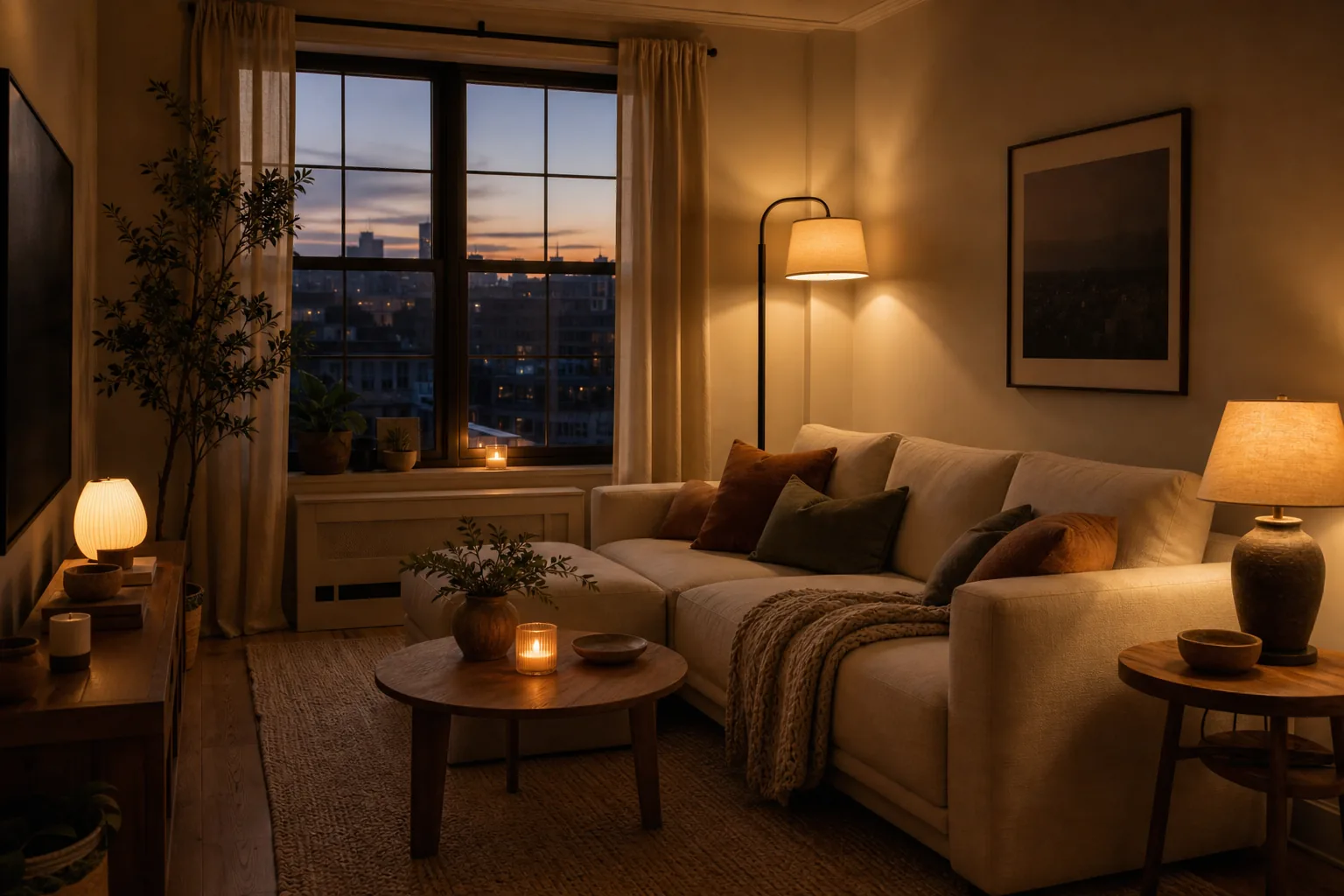
Lighting changes the mood of a compact room without adding much physical decor. Instead of relying on one bright ceiling fixture, combine a slim floor lamp, a small table lamp, and one source of low ambient glow. The different heights create depth and soften hard corners after sunset.
Use warm-white bulbs that produce a similar color so the room feels cohesive. Cord covers, clips, or furniture placement can help keep cables out of the walking path. Flameless candles are useful on low tables, around pets, or anywhere a real flame would be unsafe.
Why it works: light creates a fall feeling even when the room contains no obviously seasonal objects.
8. Use a Larger Rug to Quiet the Room
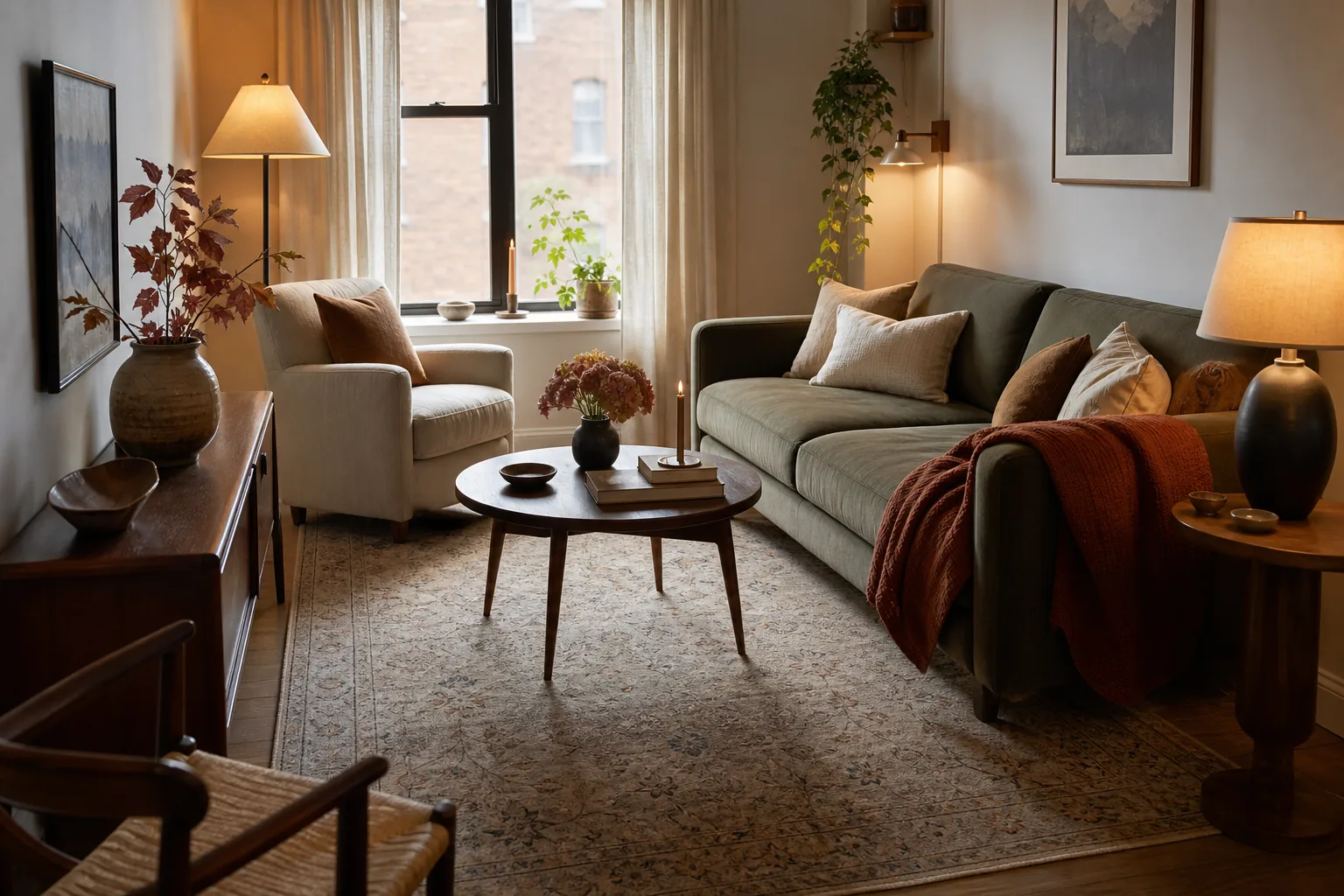
A rug that floats in the middle of the floor breaks a small living room into even smaller pieces. If possible, use a rug large enough for at least the front legs of the sofa and nearby chair to rest on it. The connected seating area looks wider and more settled.
You do not need a loud autumn pattern. A faded vintage design, warm oatmeal texture, or subtle brown-and-olive motif adds depth while supporting the rest of the palette. If a new rug is not in the budget, rotate the existing one, clean it, and move furniture fully onto its edges for a more deliberate layout.
Safety check: secure curling corners and avoid placing loose rugs where they can create a trip hazard.
9. Store Extra Blankets in One Good Basket
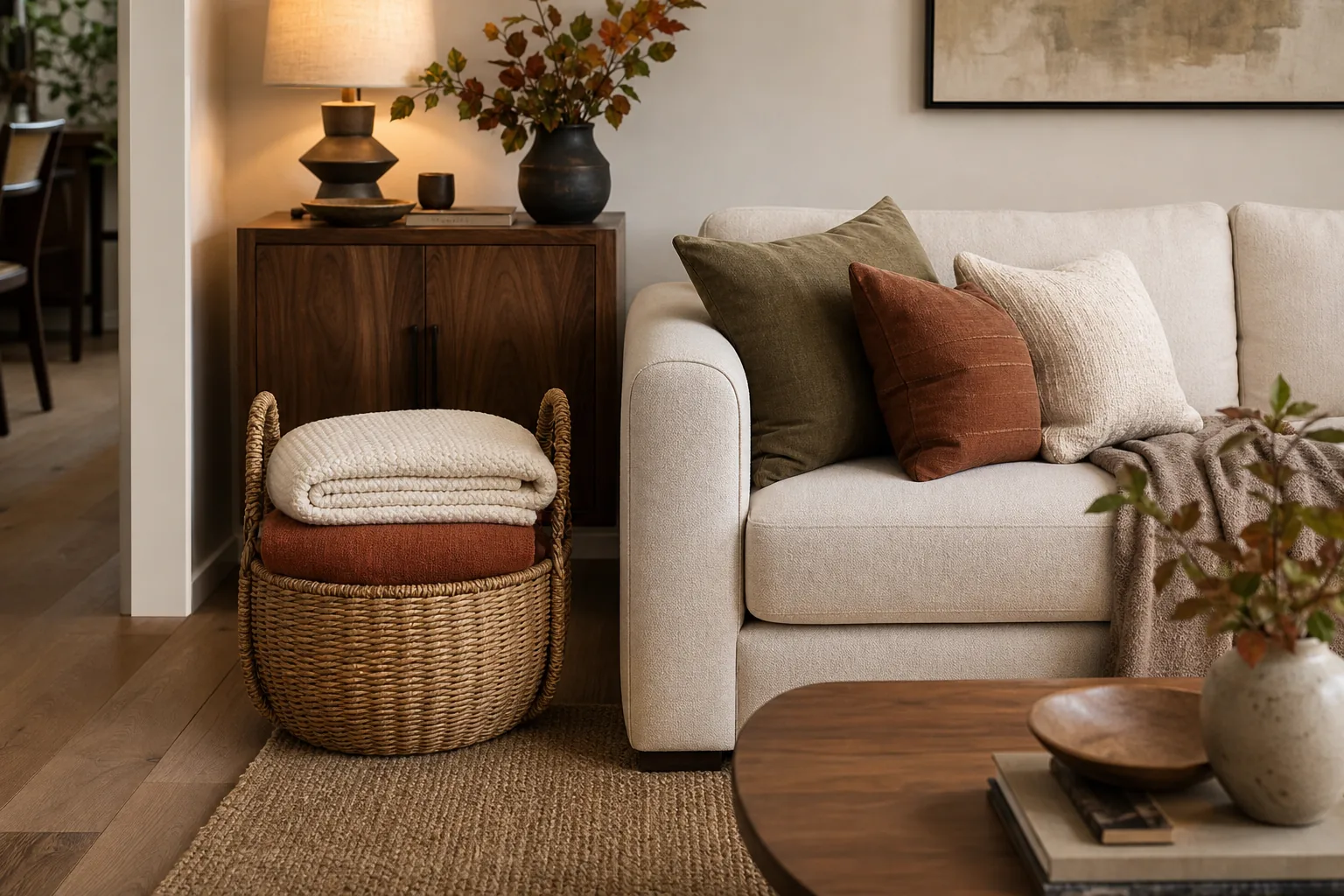
Blankets make a room feel cozy, but a pile over every chair quickly becomes clutter. Choose one sturdy basket that fits beside the sofa, beneath a console, or in an unused corner. Store the blankets you actually use and leave the decorative layers to the furniture.
A low, wide basket is easy to reach, while a taller style uses less floor area. Natural woven texture introduces warmth without another pattern. Before buying, measure the location and make sure the basket will not narrow a doorway or block a floor vent.
Decluttering tip: if the basket cannot hold the blankets comfortably, edit the collection instead of buying a second basket.
10. Group Three Mini Pumpkins Instead of Scattering Them
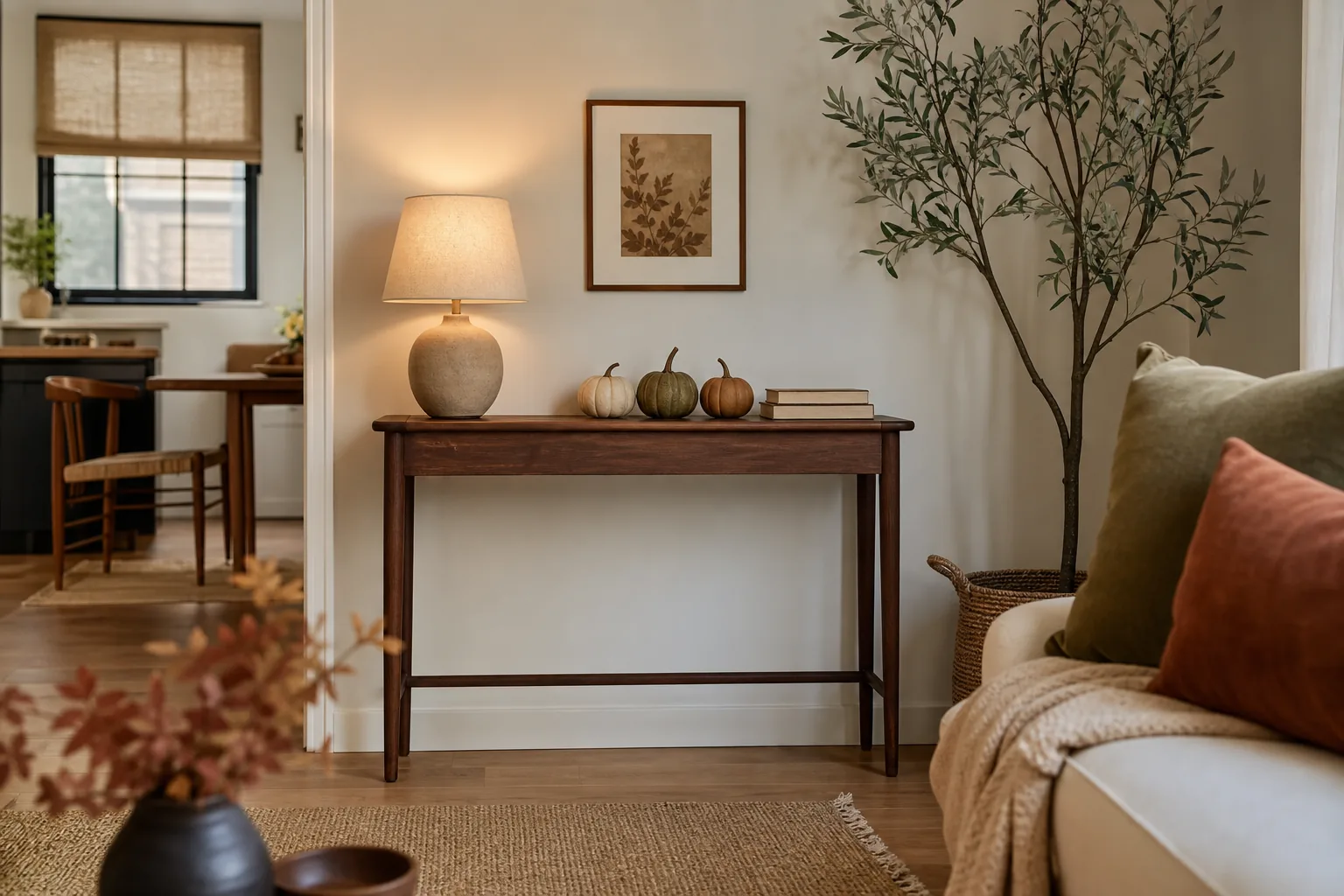
Pumpkins feel intentional when they are grouped, and messy when they appear on every shelf. Place three small pumpkins together on a console, mantel, or tray. Vary the height and shape, but keep the colors connected to the room.
Neutral cream, muted green, deep brown, or natural terracotta can blend with everyday decor. If you prefer traditional orange, use one orange pumpkin as the focal point and let the other two remain quiet. Leave generous space around the group so the composition can be understood at a glance.
Easy formula: one medium pumpkin, one small pumpkin, and one low gourd create a balanced triangle.
11. Give Only One Shelf a Fall Moment
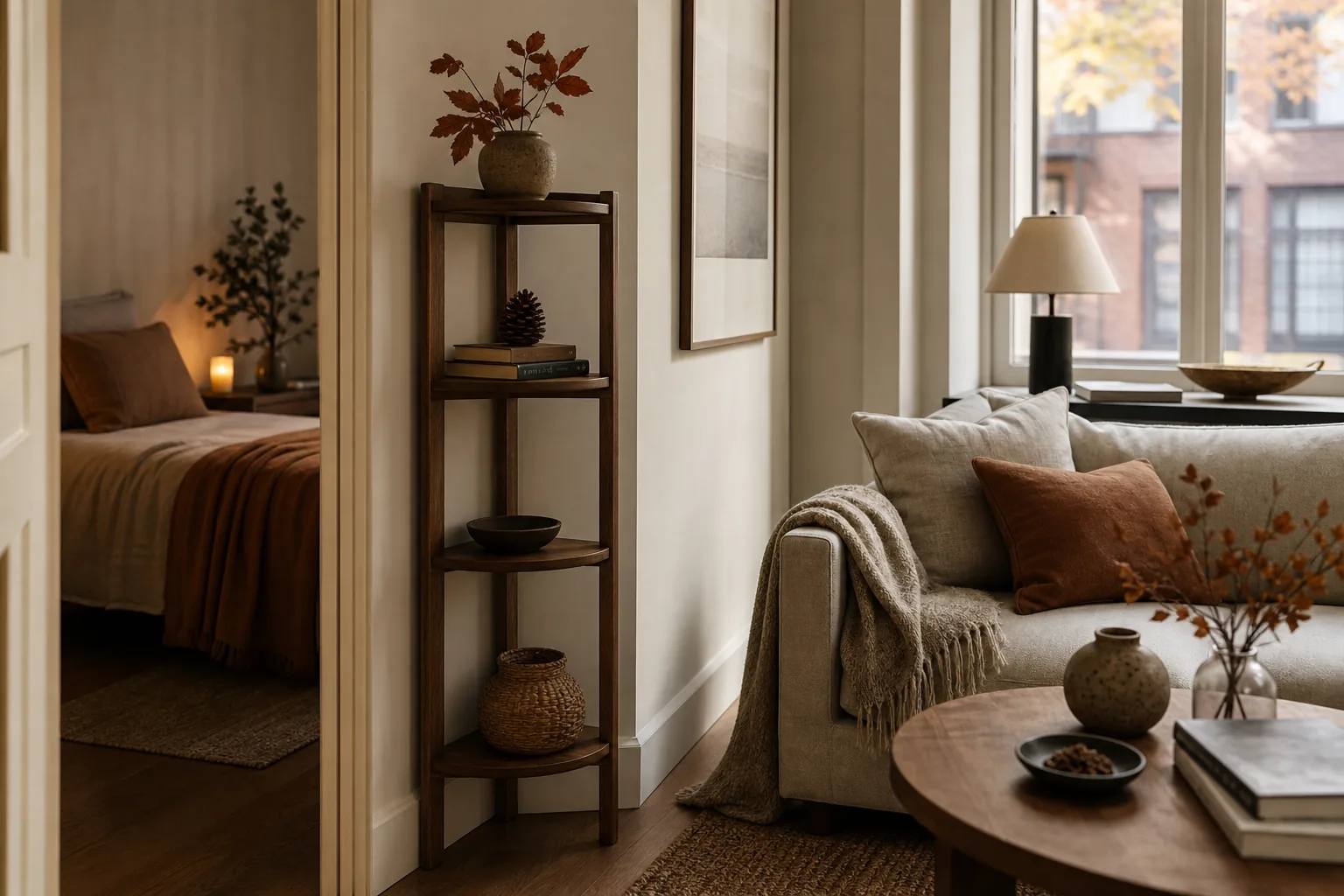
You do not need to restyle an entire bookcase for the season. Choose one shelf near eye level and make a small fall vignette with a pottery vase, two horizontal books, and one natural object such as a pinecone or small gourd.
Keep the other shelves functional and airy. Repeating autumn decor from top to bottom can make a narrow bookcase look visually heavy. One concentrated moment gives the eye a place to rest while the books, storage boxes, and everyday pieces continue doing their jobs.
Styling check: photograph the shelf from across the room. If the objects merge into one busy shape, remove the smallest item.
12. Turn a Window Nook Into the Seasonal Focal Point
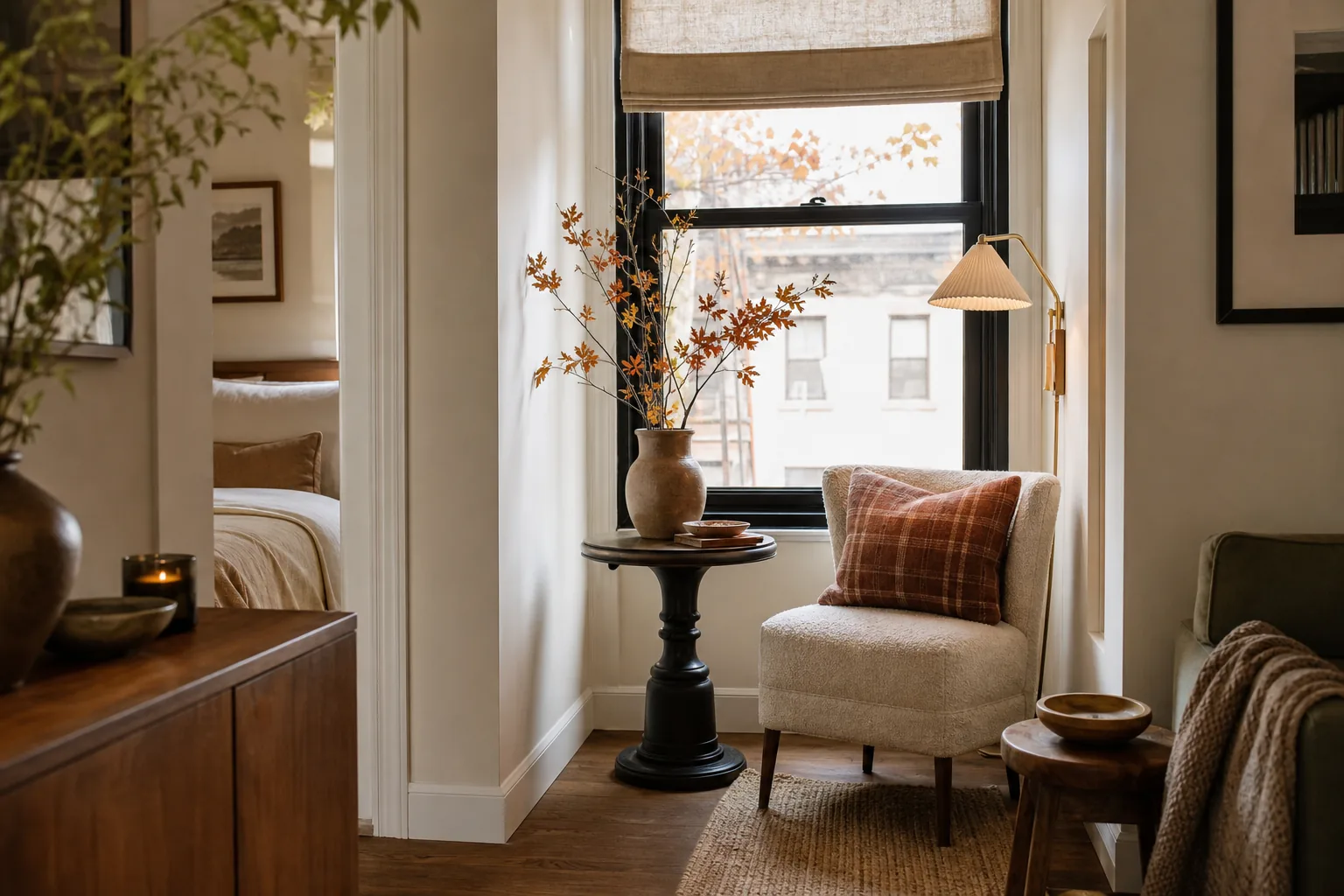
If your small living room has a chair by the window, let that single corner carry most of the seasonal story. Add one plaid or rust pillow, place a narrow vase of branches on a tiny table, and keep the surrounding floor clear.
This approach works especially well in studios because the eye reads one complete scene instead of searching for small decorations around the room. Use the daylight as part of the design: sheer curtains soften the view and allow autumn colors to glow without adding another solid visual block.
Renter-friendly idea: lean a lightweight seasonal print on the windowsill rather than attaching new hardware to the wall.
13. Build a Reading Corner With Only Four Pieces
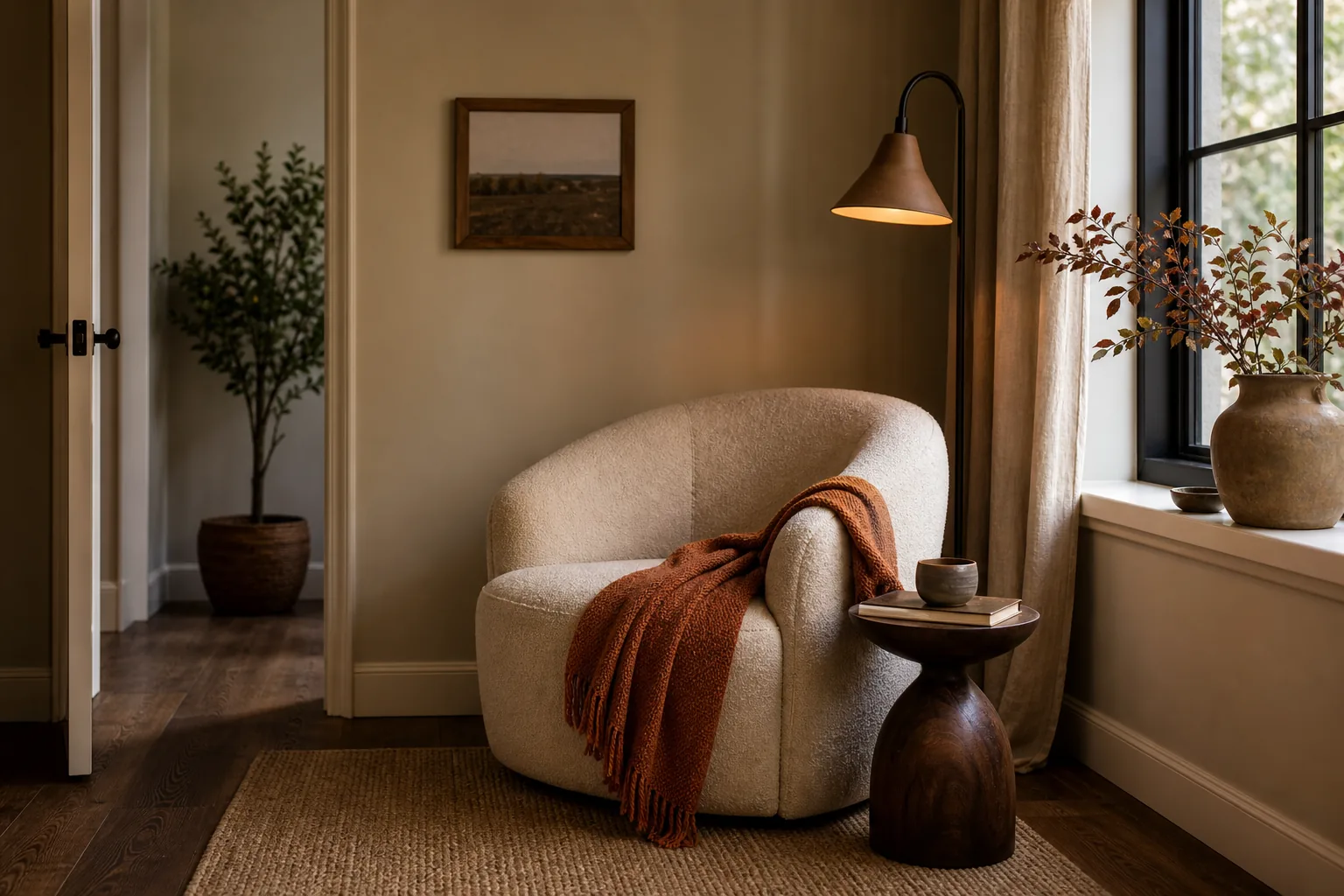
A fall reading nook does not need a separate room. Use one comfortable chair, one small table, one lamp, and one folded throw. Those four elements provide seating, a place for a drink, useful light, and softness without introducing unnecessary furniture.
Choose a table with a light visual footprint, such as a pedestal or C-shaped design. A wall-mounted plug-in sconce can replace the floor lamp when every inch matters, provided it is installed safely. Keep books in the existing bookcase or a small basket rather than stacking them around the chair.
Layout tip: angle the chair slightly toward the sofa so the nook remains part of the conversation area.
14. Add Fall Fragrance Without an Open Flame
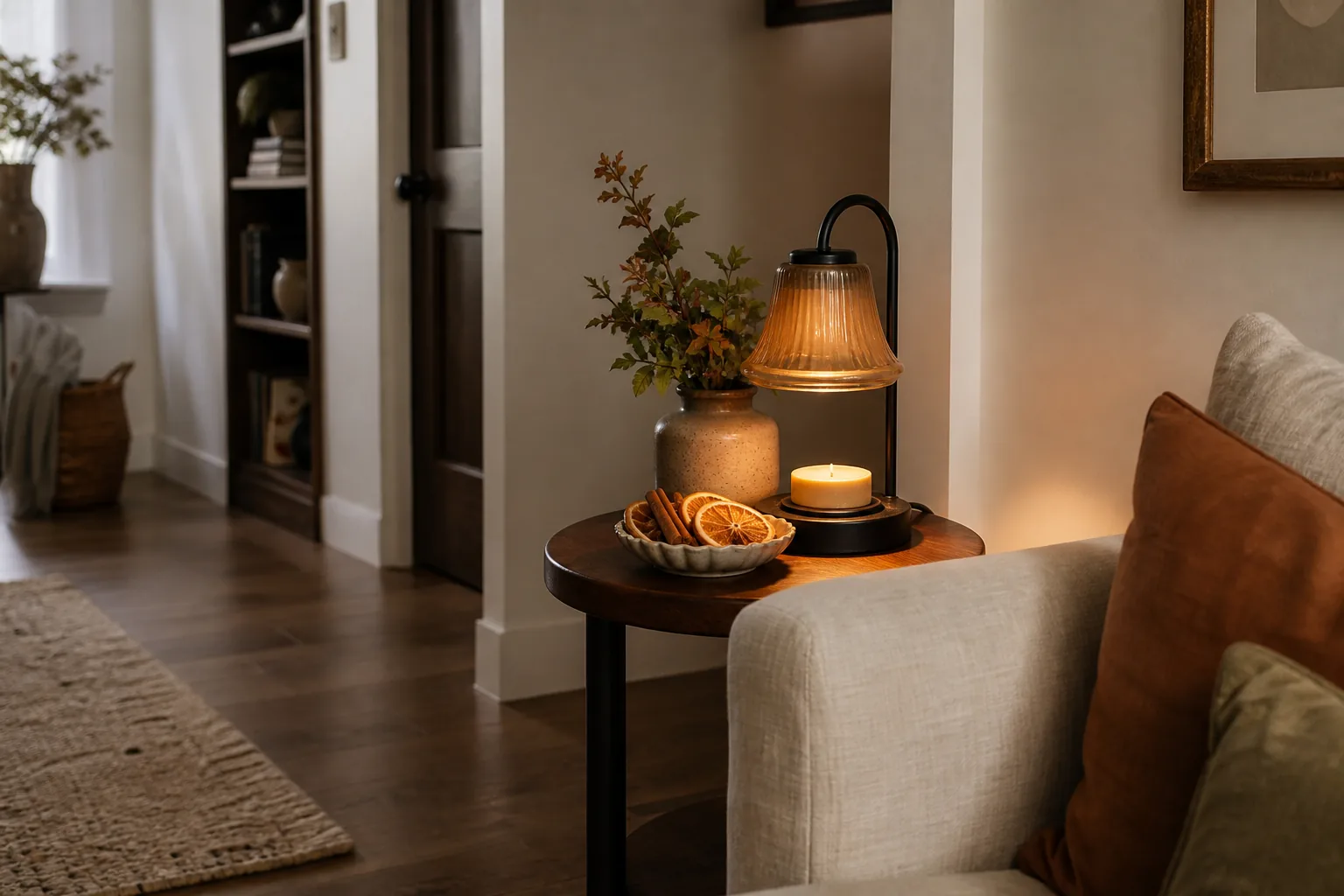
Scent can create a stronger seasonal feeling than visible decorations. Consider an electric candle warmer lamp, a properly used diffuser, or a bowl of dried orange slices and cinnamon sticks. Choose one fragrance method so the room does not feel overwhelming.
Keep fragrance products away from children and pets, follow the manufacturer’s directions, and avoid oils that are unsafe for anyone in the household. An unscented flameless candle still gives a warm glow if fragrance is not suitable for your home.
Styling tip: place the warmer or diffuser on a washable tray and keep its cord secured away from the walkway.
15. Edit the Room After You Decorate
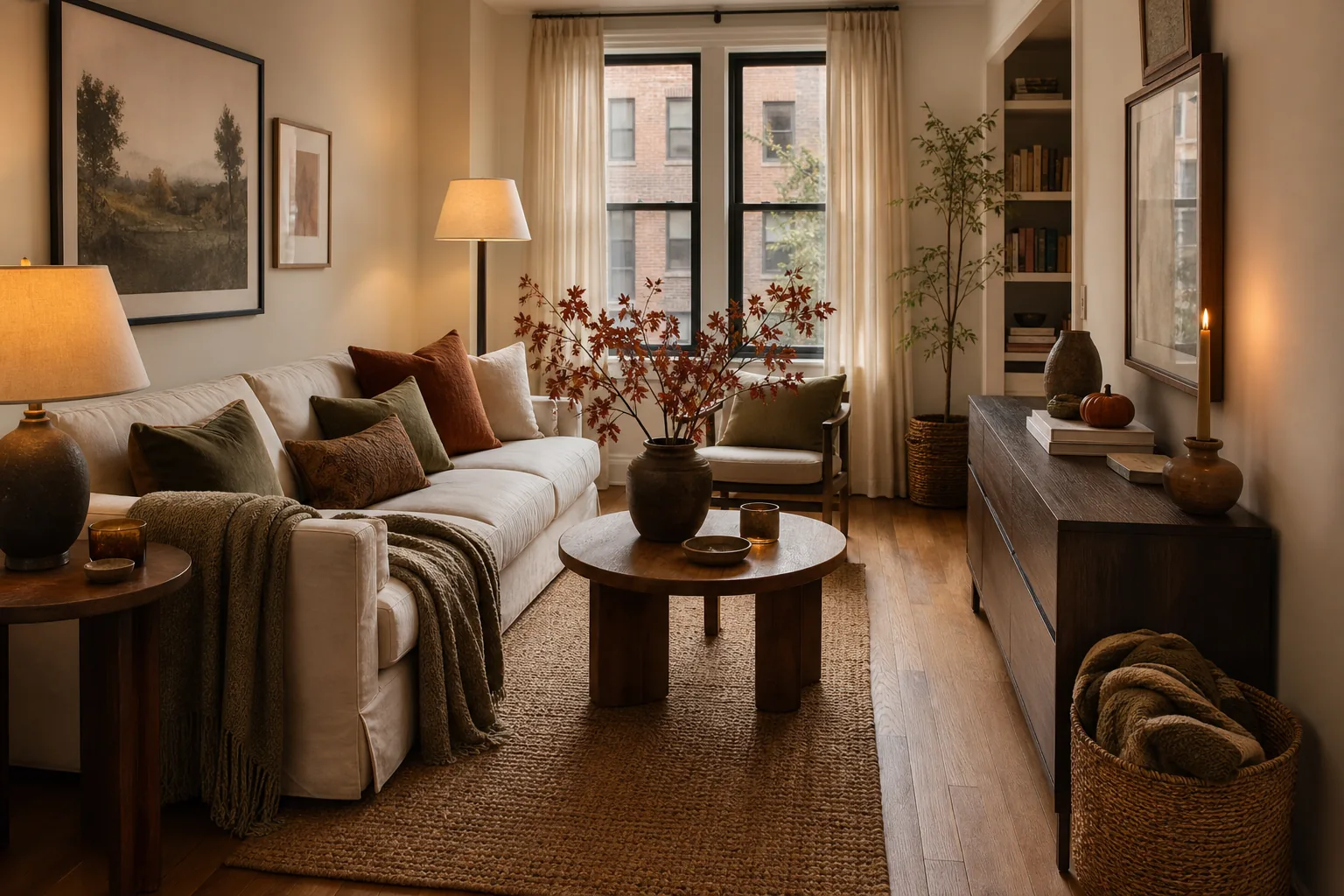
The final step is subtraction. Stand in the doorway and identify the first three things your eye notices. Ideally, they should be the focal point, the warm light, and the main seating area—not a row of tiny accessories.
Remove one item from each decorated surface, straighten the walking route, and return anything that does not support the palette. Check that doors open fully, vents remain uncovered, cords are secure, and every seat is still comfortable to use. The room should feel like your living room on a beautiful fall day, not a seasonal display area.
The 20-percent test: if the room feels almost right but slightly busy, remove roughly one-fifth of the decorative objects and reassess.
A Quick Clutter-Free Fall Decorating Checklist
- Keep one clear path from the entry to the main seating.
- Use two autumn accent colors plus the room’s existing neutral.
- Leave at least one-third of tables and shelves empty.
- Choose one focal area instead of decorating every corner.
- Swap existing covers and art before buying more objects.
- Use baskets only for items that genuinely need storage.
- Secure rug corners, cords, and anything that can tip.
- Remove one item from every vignette before finishing.
Frequently Asked Questions
How can I decorate a small living room for fall without making it look cluttered?
Use one limited palette, one focal area, and a few larger accents instead of many small objects. Swap pillow covers and artwork rather than adding more pieces, contain coffee-table decor on a tray, and keep visible surfaces partly empty.
What colors work best for small living room fall decor?
Warm cream, camel, rust, olive, muted burgundy, chocolate brown, and soft gold all feel seasonal. Begin with your existing neutral and add only two accent colors so the room remains visually calm.
How do I decorate for fall in a rental apartment?
Focus on removable changes such as pillow covers, throws, framed prints, branches, flameless candles, and small grouped accents. Reuse existing hooks and frames when possible, and follow your lease plus product instructions before attaching anything to a wall.
What is the easiest affordable fall update?
Change one pillow cover, drape a textured throw, and place two airy branches in a vase you already own. These three adjustments add color, texture, and height without requiring new furniture or storage.
When should I start decorating my living room for fall?
There is no fixed date. Many people begin with subtle textures and warm colors in late August or early September, then add more obvious pumpkins or autumn branches as the weather changes. Start when the look feels enjoyable and useful to you.
Final Thoughts
The best small living room fall decor ideas make an everyday space feel warmer while preserving everything the room needs to do. A limited palette, one soft textile, one natural detail, and layered light can create more atmosphere than a cart full of seasonal accessories.
Begin with one idea, live with it for a day, and add another only if the room still feels open and comfortable. Cozy is not the number of things in a space; it is the feeling created by thoughtful color, texture, light, and room to settle in.


One Comment