
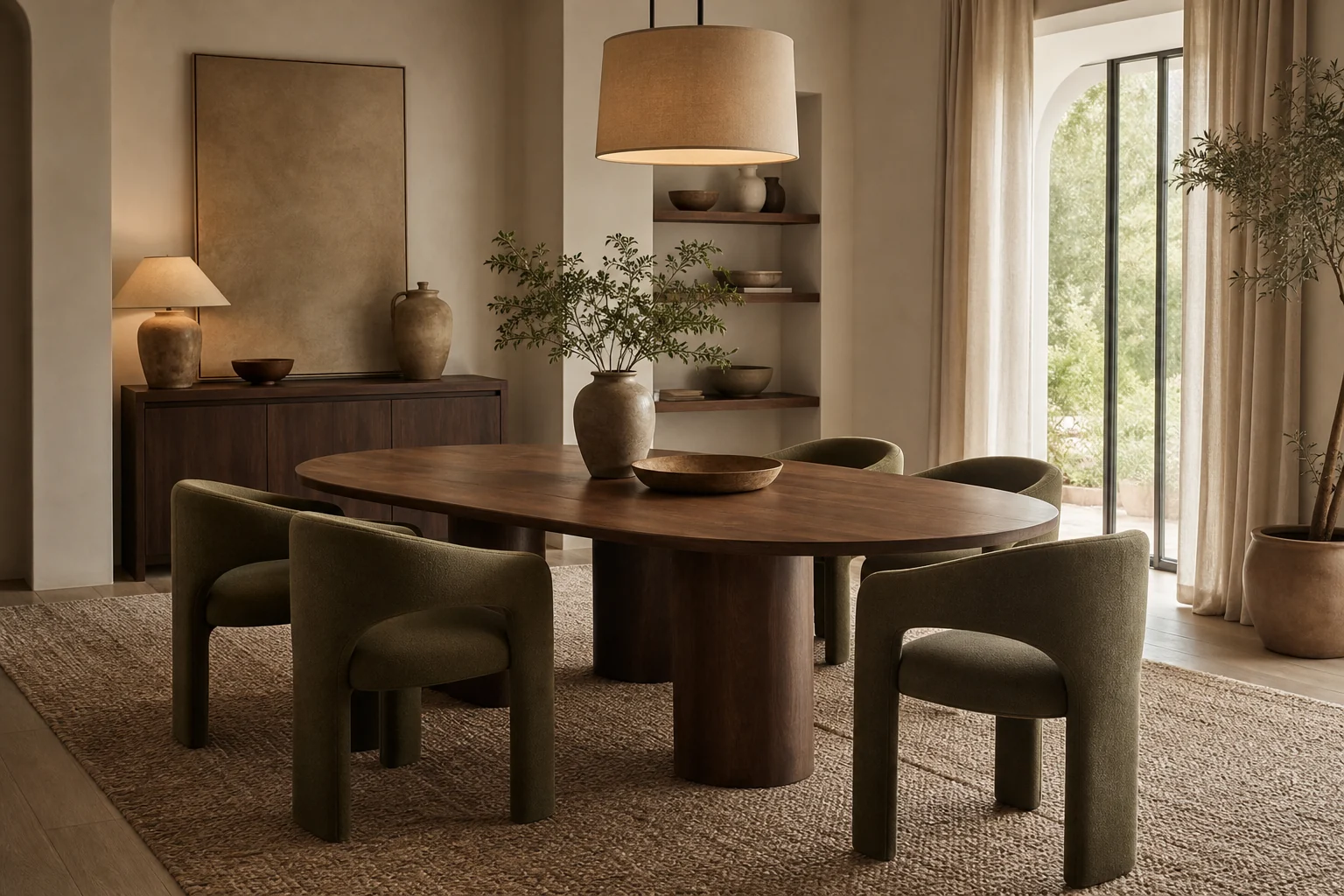
21 Dining Room Decorating Ideas That Look Expensive
A beautiful dining room should feel special enough for celebrations and comfortable enough for an ordinary Tuesday dinner. Fortunately, creating that balance does not require an oversized room or a designer-level budget. The most effective dining room decorating ideas rely on proportion, lighting, texture and a few intentional focal points—not endless accessories.
Whether you are refreshing a formal dining room, styling an open-plan eating area or trying to make a compact apartment nook feel finished, the 21 ideas below will help you create a room that looks polished, welcoming and far more expensive than it really is.
1. Begin With a Warm Neutral Color Palette
Warm neutrals are an easy foundation for an elegant dining room because they create calm without making the space feel cold. Start with cream, oatmeal, taupe or soft greige on the largest surfaces, then introduce walnut, oak or muted olive for depth.
The key is variation. If every surface is the same shade of beige, the room can look flat. Pair smooth plaster walls with visible wood grain, woven upholstery, linen curtains and handmade ceramics. These subtle differences give a neutral dining room the layered, collected appearance associated with professionally designed interiors.
Affordable update: Keep your existing table and change only the wall color, chair cushions and centerpiece to a warmer palette.
2. Make One Pendant Light the Focal Point
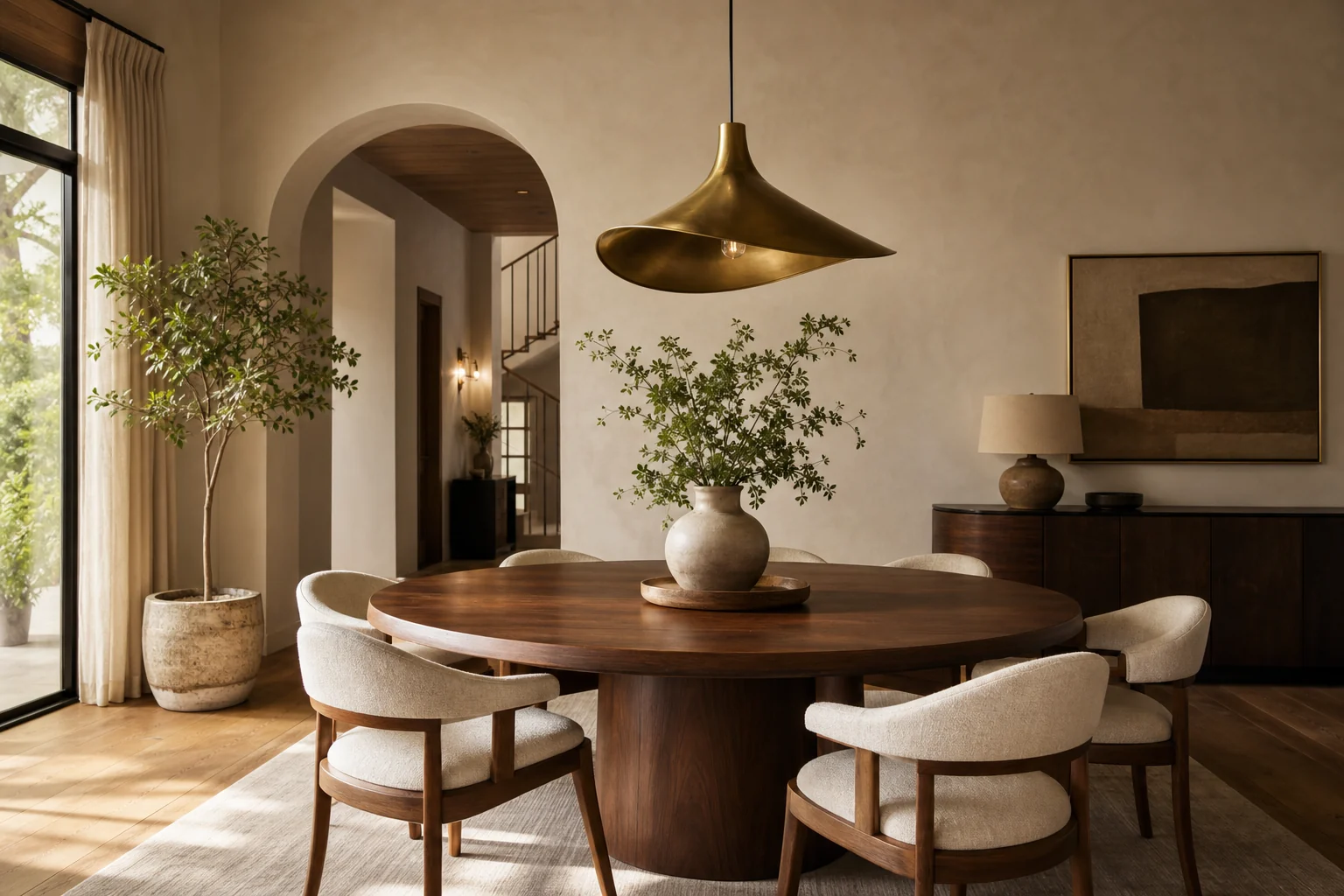 A sculptural pendant visually anchors the dining table and gives the room a clear center.
Dining room lighting has an outsized effect on how expensive a space feels. A sculptural pendant or chandelier acts like jewelry for the room and establishes a focal point even when the remaining decor is simple.
Choose a fixture that relates to the shape of your table. A single rounded pendant works beautifully above a circular or square table, while a linear fixture or a row of pendants suits a long rectangular table. As a general starting point, hang the bottom of the fixture roughly 30 to 36 inches above the tabletop, adjusting for the room and sight lines.
Install a dimmer if possible. Bright light is useful while cleaning; a softer glow makes dinners feel warmer and more intimate.
3. Choose a Rug Large Enough for the Chairs
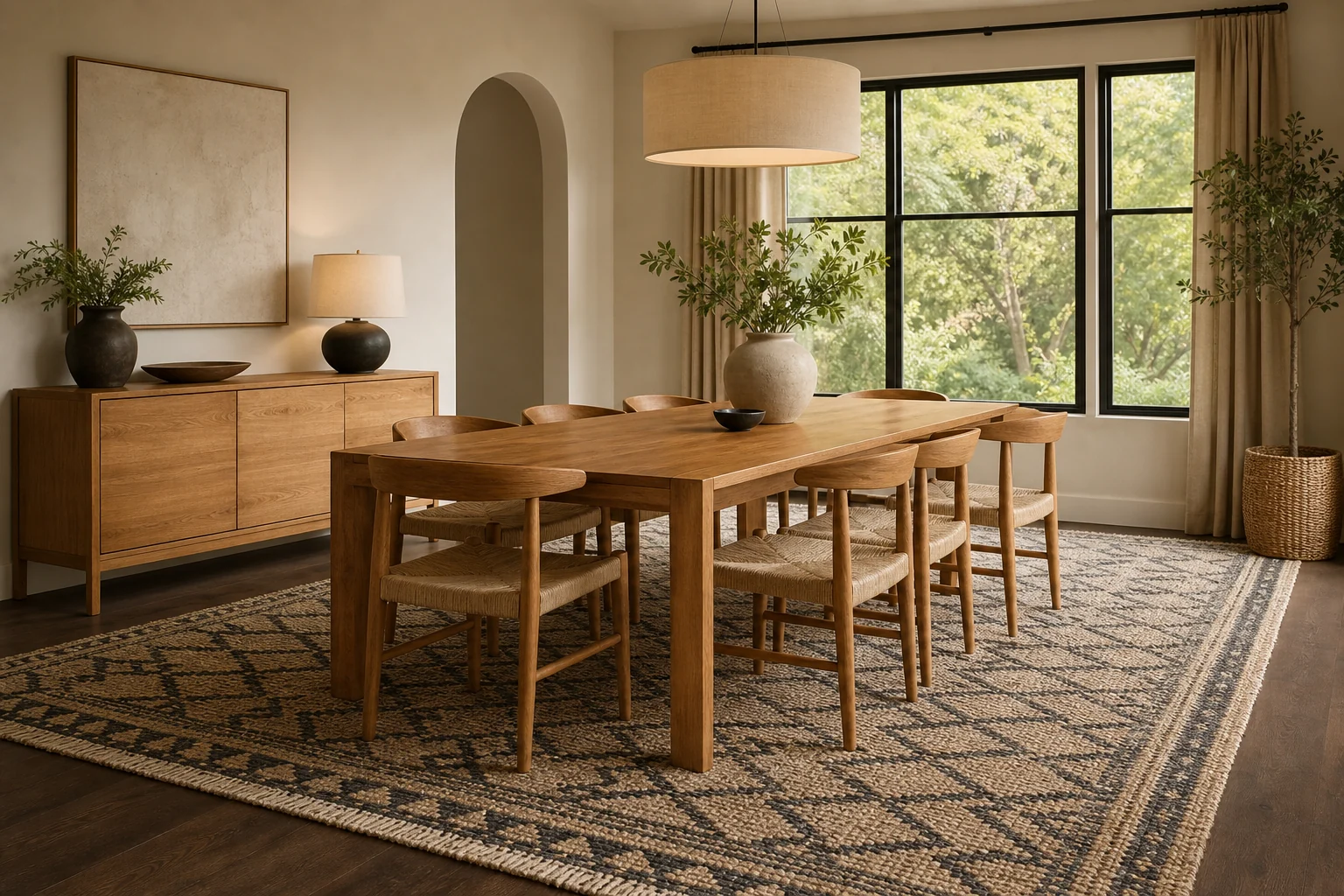 The rug should remain beneath the chair legs when guests pull their seats away from the table.
A well-proportioned rug instantly makes a dining area feel grounded. The most common mistake is choosing one that fits beneath the table but not the chairs. When the chairs are pulled out, their back legs catch on the rug edge and the entire arrangement feels cramped.
Measure the table, then look for a rug that extends approximately 24 to 30 inches beyond it on every side. Flatweave and low-pile rugs are practical because chairs move easily across them and crumbs are easier to clean. Patterns in mid-tone colors are also more forgiving than solid pale rugs.
4. Add Depth With an Accent Wall
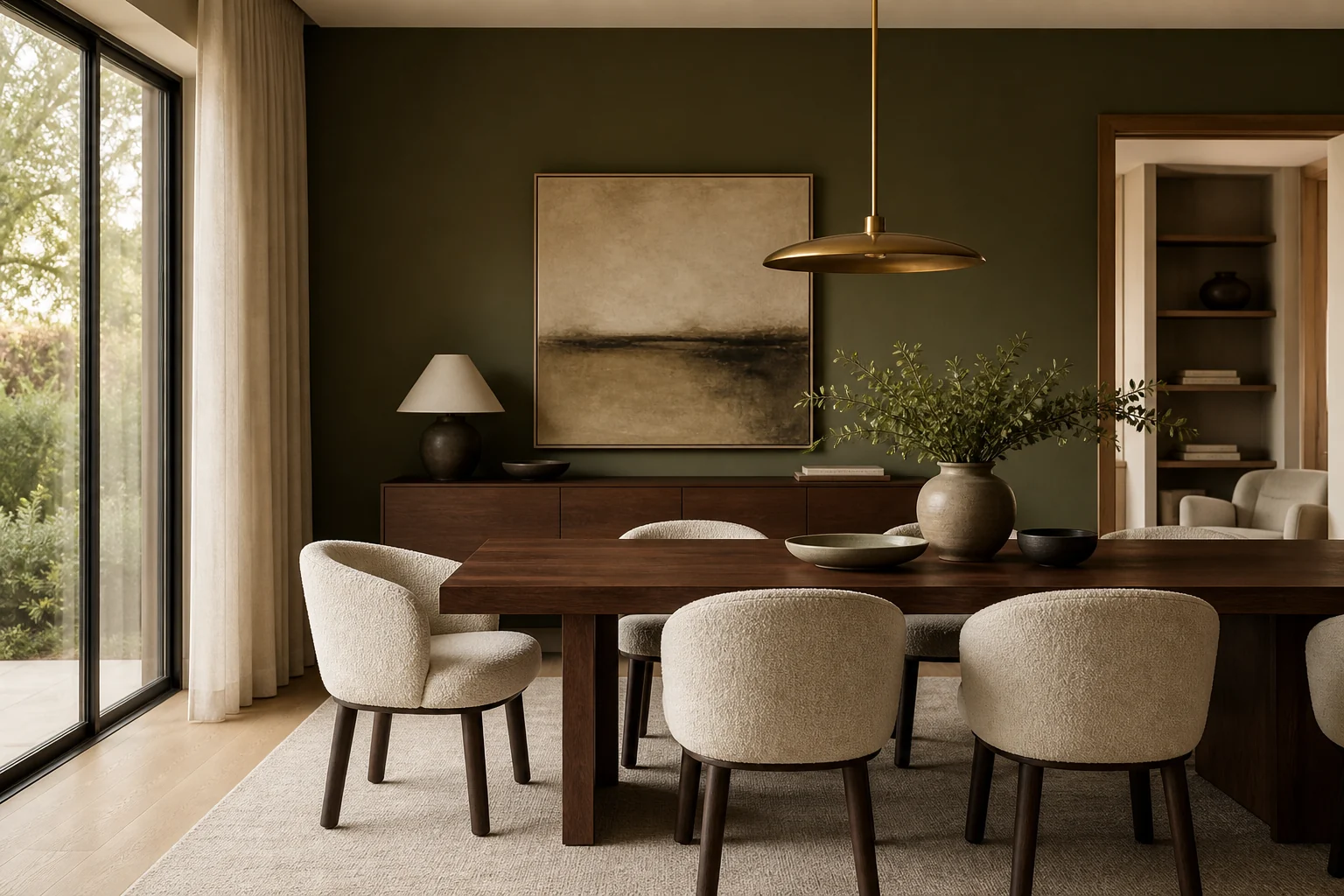 A muted olive wall adds contrast while preserving the dining room’s calm atmosphere.
An accent wall can give a dining room architectural presence without requiring a full renovation. Rich but muted colors—olive, clay, chocolate, burgundy or charcoal—look particularly sophisticated when balanced with warm wood and light upholstery.
Choose the wall that naturally holds the eye, usually the one behind a sideboard, artwork or the head of the table. Paint is the simplest option, but limewash, subtle wallpaper, picture-frame molding or vertical wood slats can create additional texture. Keep the other walls quieter so the feature feels intentional rather than busy.
5. Use One Large Piece of Wall Art
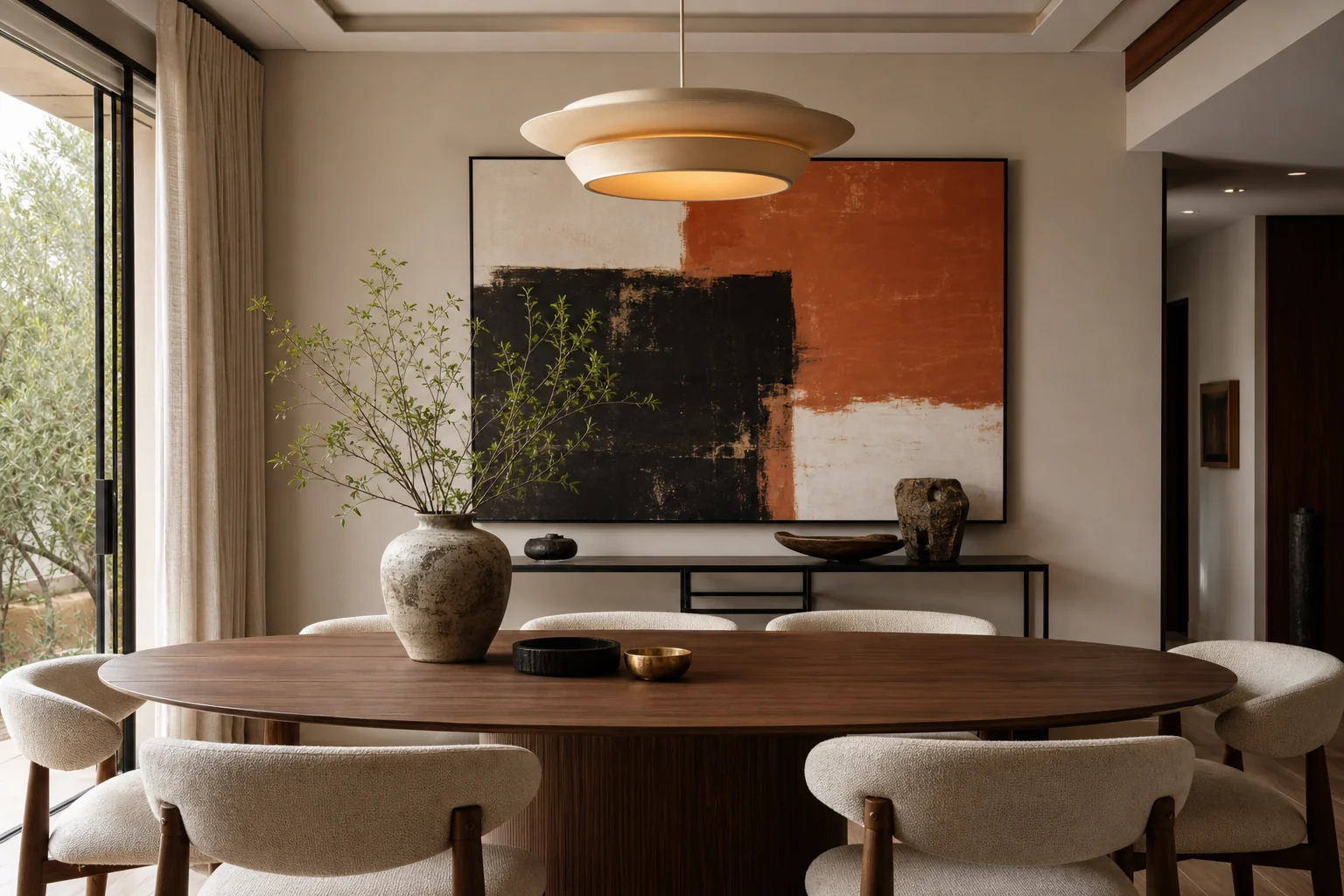 One correctly scaled artwork often looks more confident than a collection of undersized pieces.
Dining room wall decor should be visible from across the room, which is why one generously scaled piece often works better than several small frames. Large art reduces visual clutter and makes the room feel deliberate.
When hanging art above a console, aim for a composition that feels connected to the furniture rather than floating high above it. The artwork can be roughly two-thirds the width of the piece below, although the exact proportion depends on the wall. Choose colors already present in the rug, curtains or chairs to tie the room together.
6. Reflect Light With an Arched Mirror
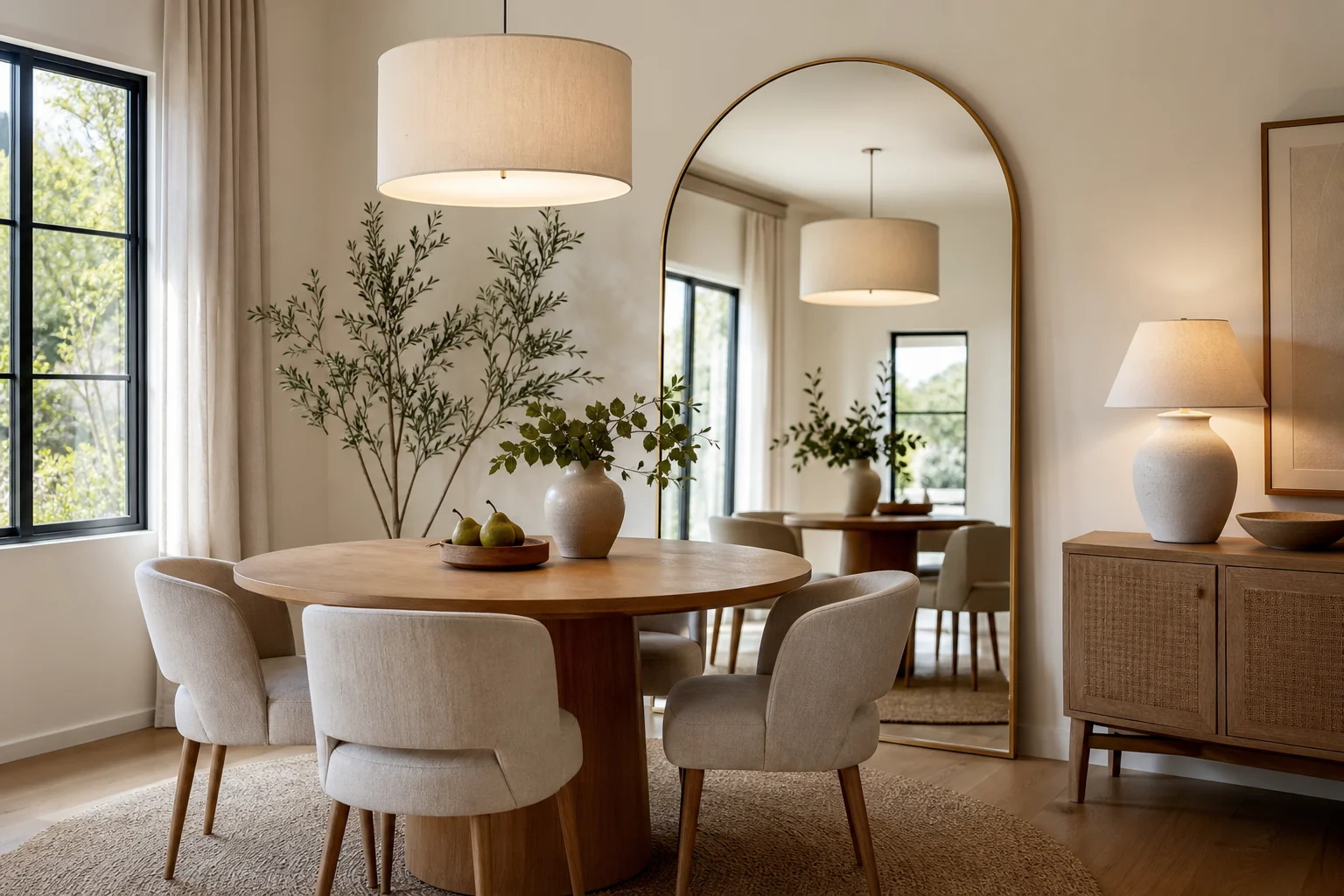 An arched mirror introduces a soft shape and sends daylight deeper into a compact room.
A large mirror is one of the hardest-working small dining room ideas. Positioned opposite or beside a window, it reflects daylight and gives the impression of greater depth. An arched frame also softens rooms dominated by the straight lines of tables, doors and cabinets.
Before hanging the mirror, check exactly what it will reflect. A view of a window, pendant or artwork adds beauty; a reflection of clutter does the opposite. For a high-end effect, choose one substantial mirror instead of a group of tiny decorative mirrors.
7. Keep the Table Centerpiece Low and Simple
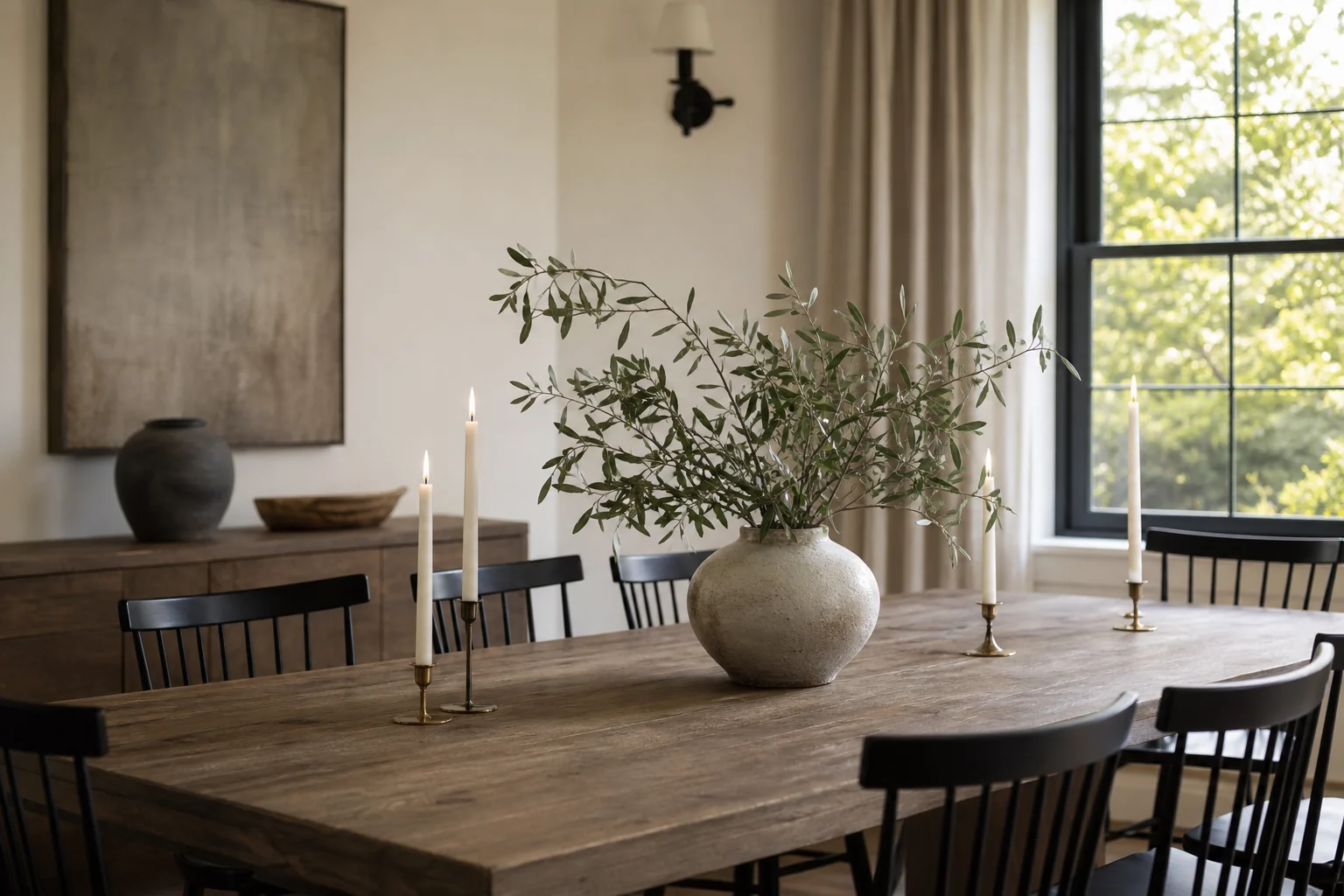 Low branches, ceramics and candles decorate the table without interrupting conversation.
The best dining table decor leaves room for the dining table to function. A low bowl, a cluster of two or three candlesticks, or loose branches in a simple ceramic vase can look finished without blocking faces across the table.
For everyday styling, work in an odd-numbered group and vary the heights slightly. Leave generous empty space around the arrangement. That negative space is what makes a modest centerpiece look elevated instead of crowded. When serving a large meal, the entire arrangement should be easy to lift away.
8. Mix Dining Chairs Intentionally
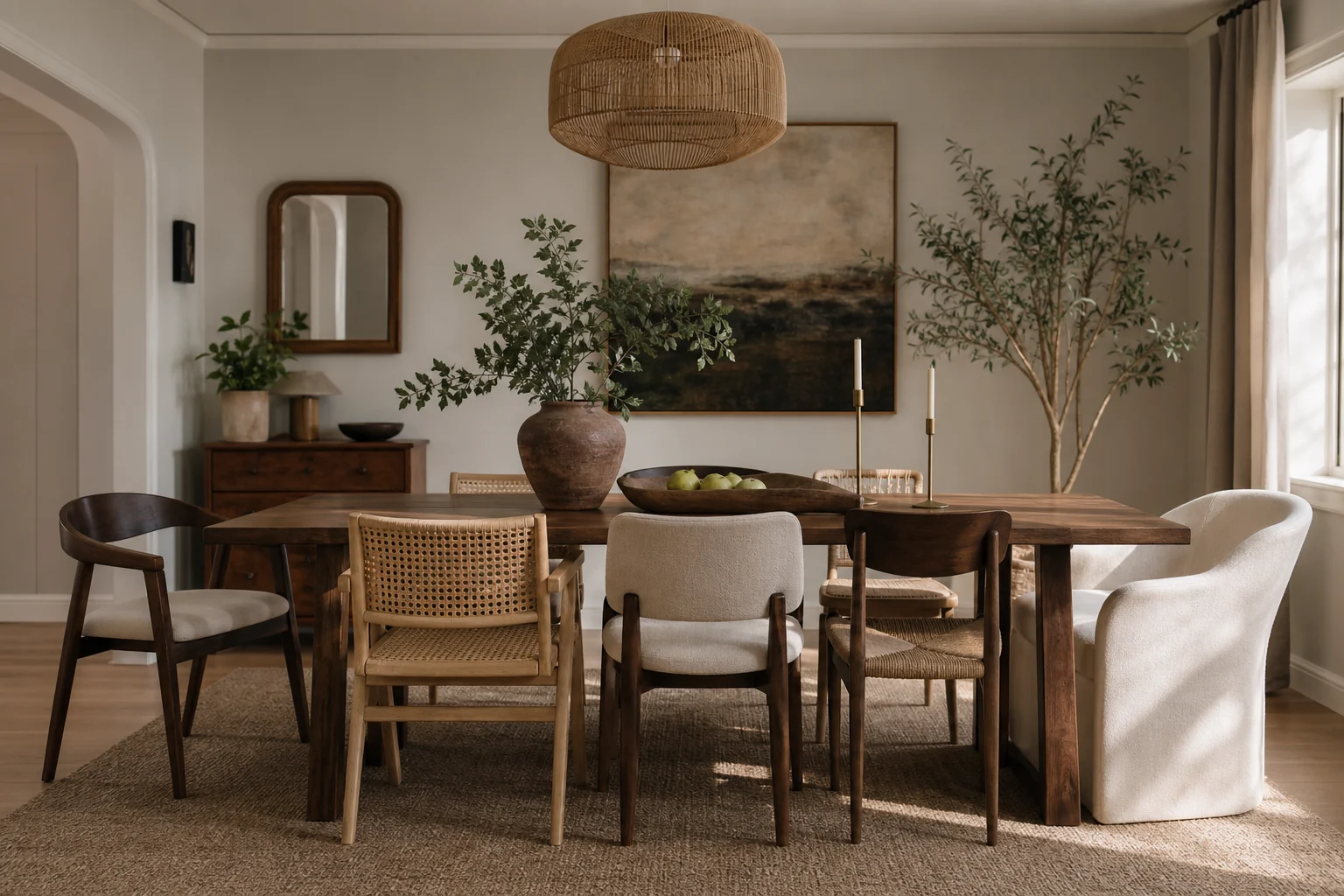 Different chair materials can coexist when their scale, color or silhouette creates a visual connection.
Matching dining sets can feel formal, but a thoughtful mix of chairs gives the room personality. The trick is to repeat at least one element: similar wood tones, matching seat heights, related curves or a shared neutral color.
Try woven cane chairs with upholstered end chairs, vintage wood chairs around a modern table, or one chair shape in two complementary finishes. Measure carefully before buying. Seats should slide comfortably beneath the table apron, and guests need enough elbow room between chairs.
9. Upgrade Only the Host Chairs
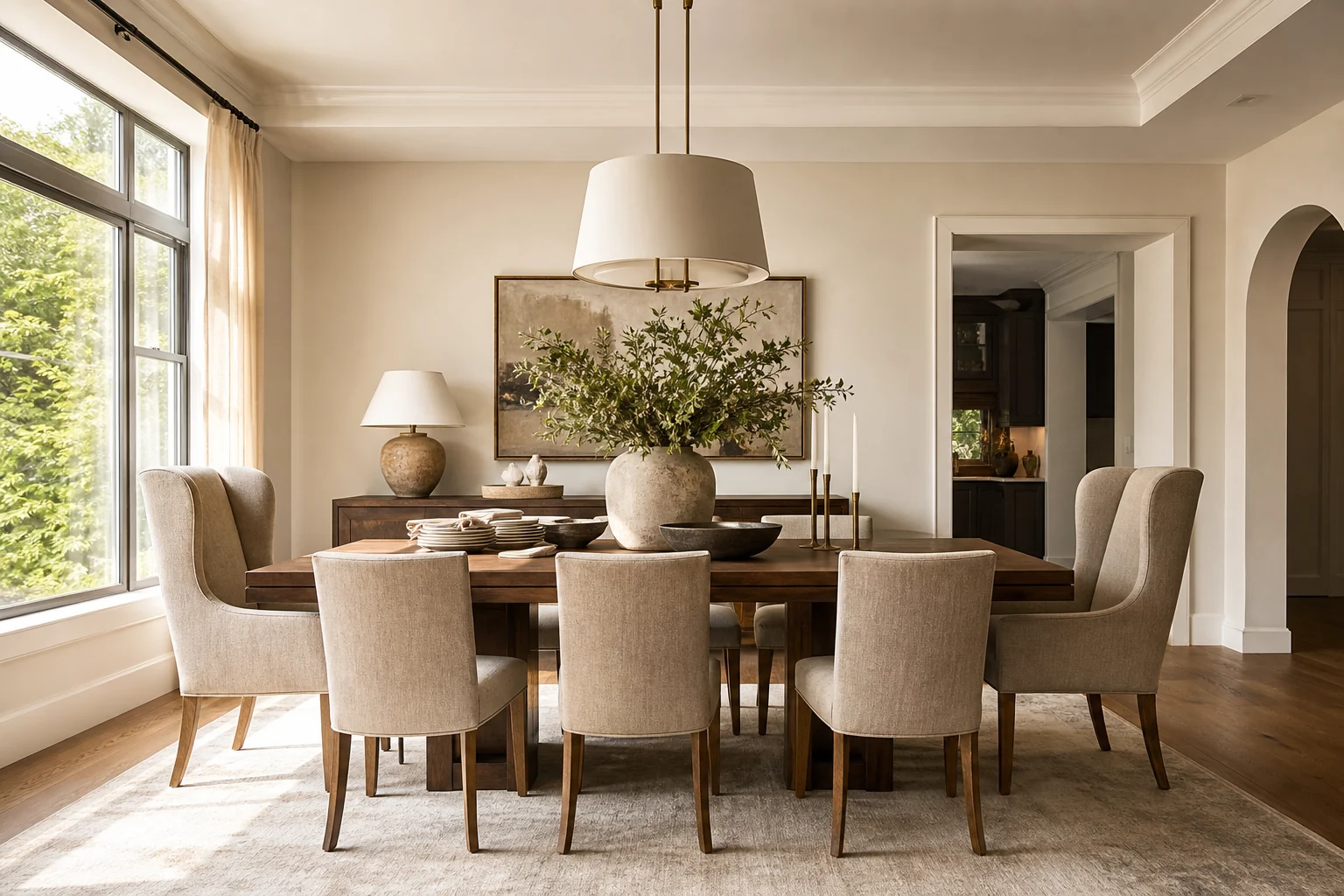 Distinctive end chairs add softness and formality without the cost of replacing every seat.
If a full set of upholstered chairs exceeds the budget, invest in just two host chairs for the ends of a rectangular table. Their larger scale creates a natural hierarchy and makes simpler side chairs look like an intentional design decision.
Choose a durable, cleanable fabric in taupe, olive, rust or another tone already present in the room. Avoid chairs so bulky that they restrict circulation. The upgrade should make the table feel more inviting, not overwhelm it.
10. Let Natural Wood Provide the Warmth
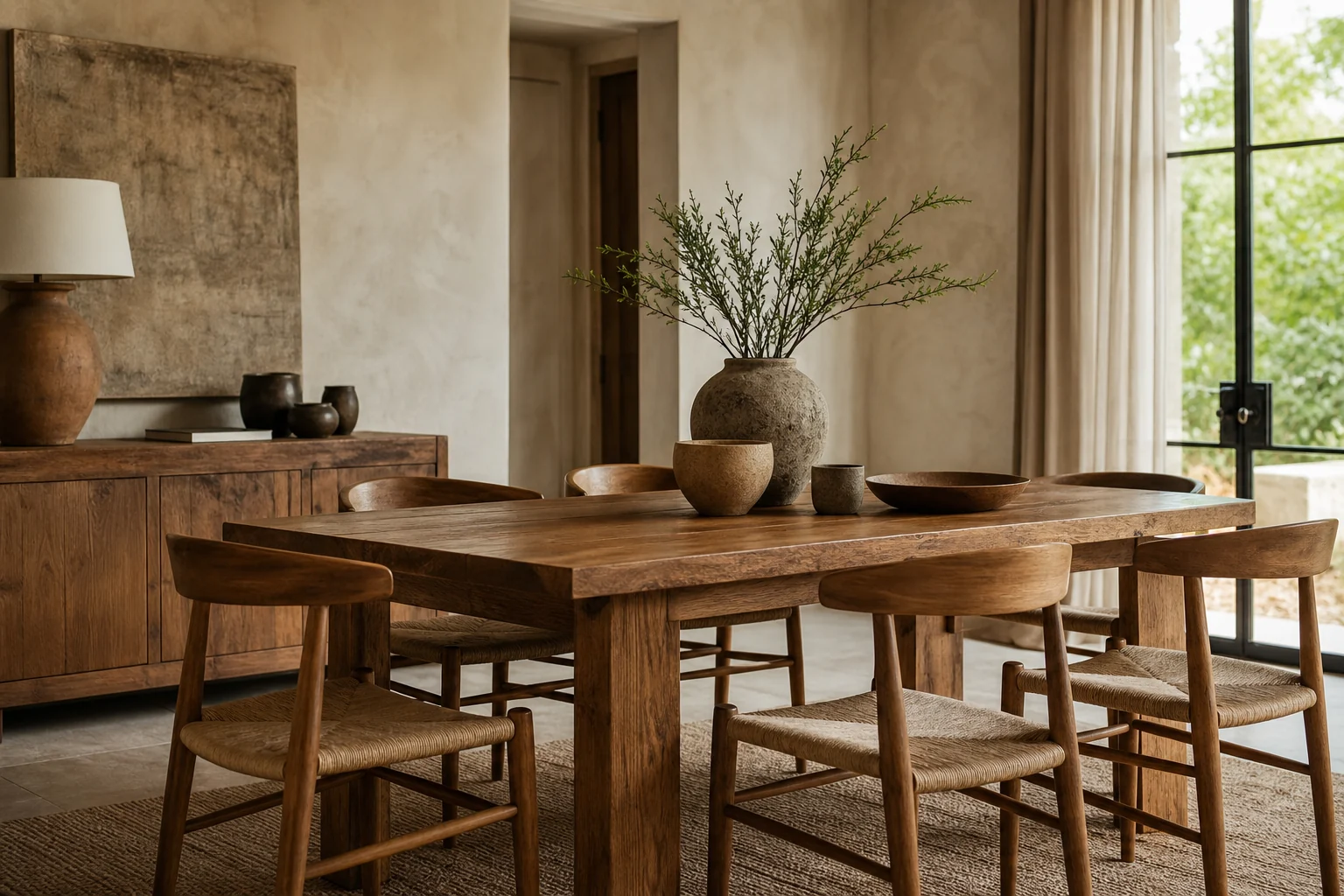 Visible wood grain brings warmth, variation and a sense of permanence to a simple room.
Natural wood prevents a modern dining room from feeling sterile. Oak, walnut, ash and reclaimed timber add grain and tonal variation that manufactured glossy finishes often lack.
You do not need every item to match. In fact, a medium-tone table can sit comfortably with slightly darker chairs when another element—such as a black pendant or cream upholstery—unifies the arrangement. If your existing table is solid but dated, refinishing it may deliver a more convincing result than replacing it with a cheaper new piece.
11. Style a Console Without Overfilling It
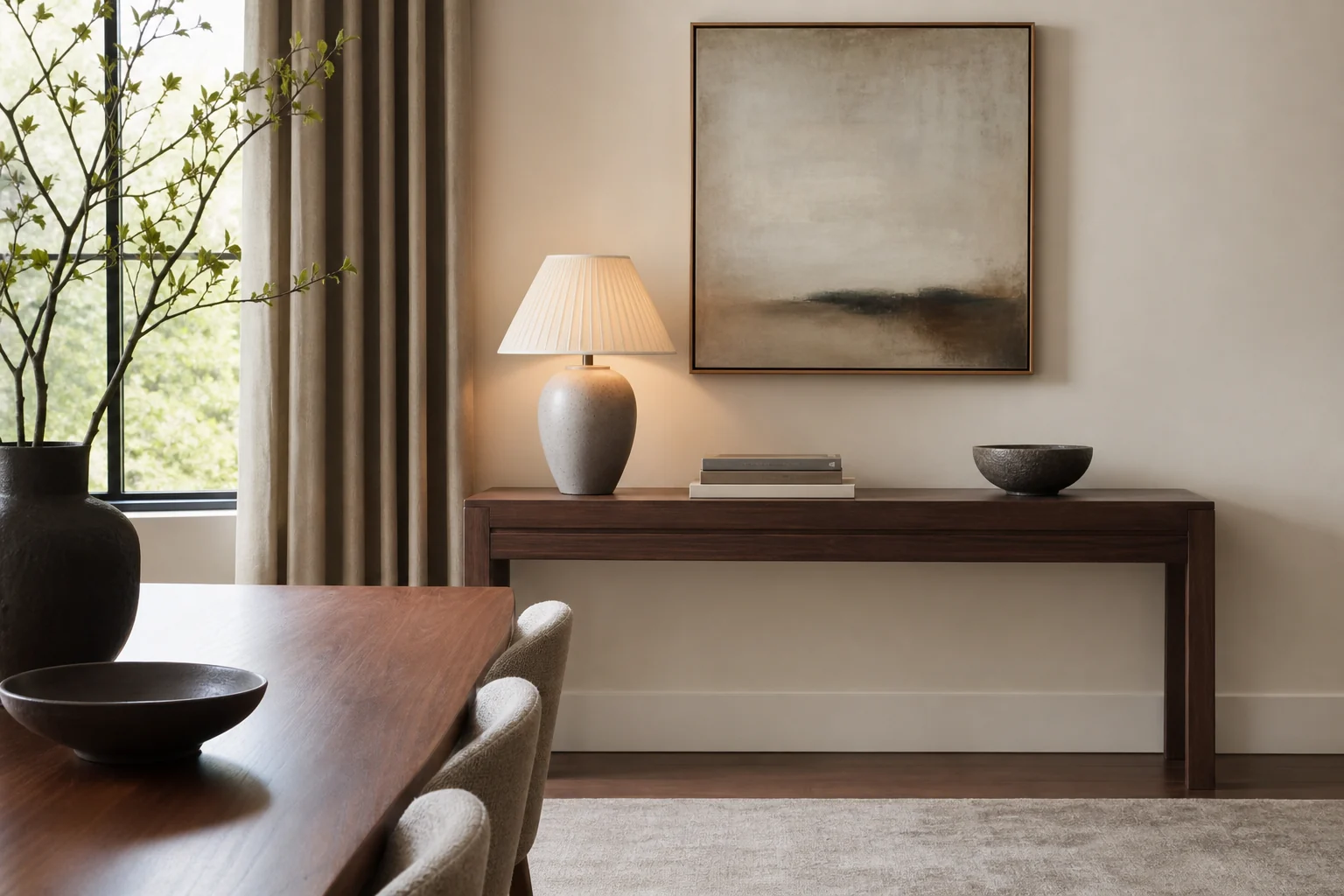 A lamp, artwork and a few sculptural objects are enough to make a dining-room console feel complete.
A console or sideboard provides storage, a serving surface and an opportunity to create a secondary focal point. Start with one anchor—art or a mirror—then add a shaded lamp and one or two sculptural objects. Vary the heights and leave visible breathing room.
Store practical items such as napkins, serving platters and candles inside. Keeping those necessities nearby makes the dining room easier to use while the surface remains calm. If the room is narrow, choose a shallow console so guests can still move comfortably behind the chairs.
12. Soften the Room With Full-Length Curtains
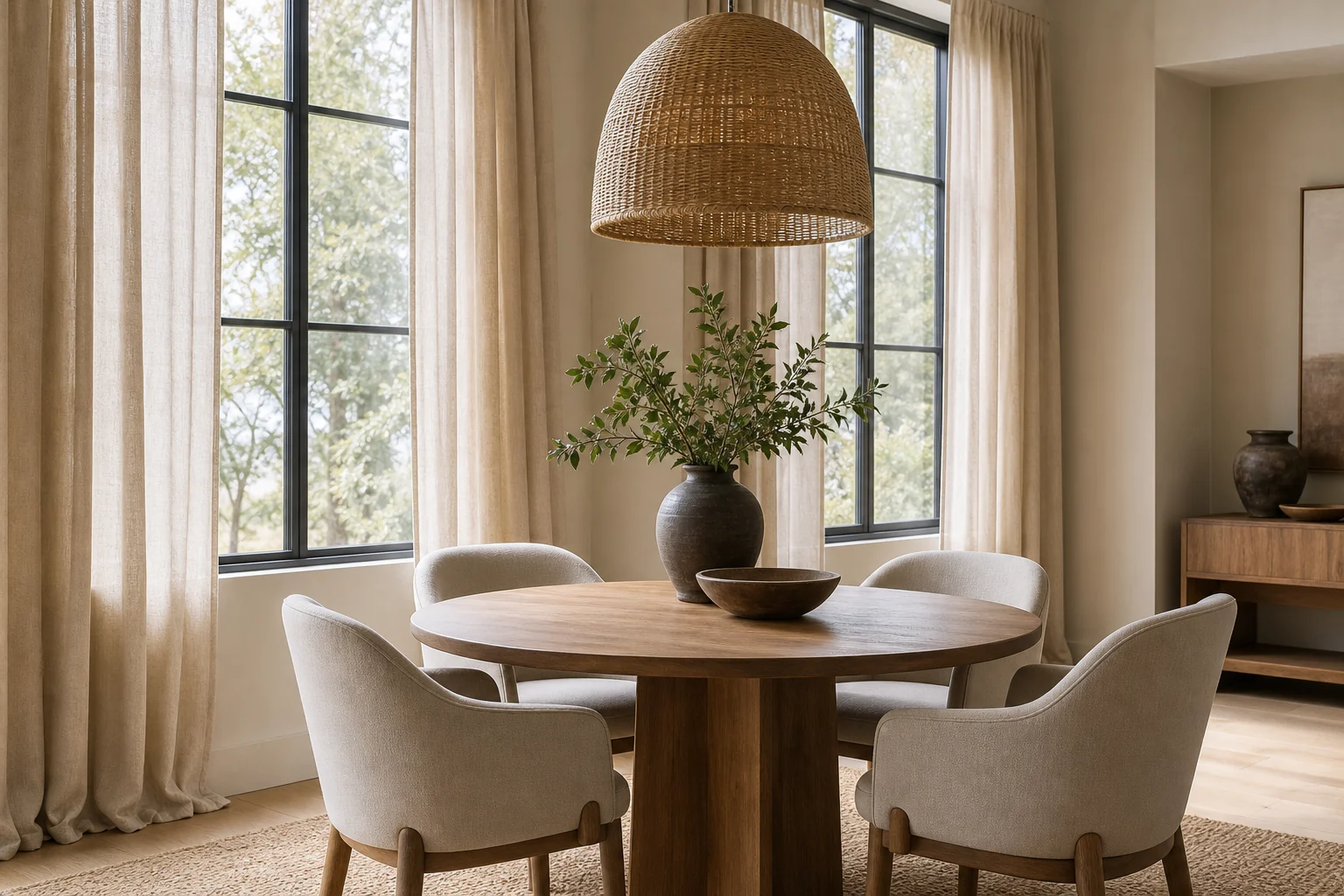 Full-height linen panels filter daylight and balance the dining room’s hard surfaces.
Dining rooms contain many hard materials—wood, glass, metal and ceramic—so fabric is essential for softness and acoustic comfort. Full-length curtains add movement and help the room feel finished.
Mount the rod above the window and extend it beyond the frame so the curtains can stack beside the glass rather than blocking daylight. Linen and linen-look fabrics provide a relaxed drape. For privacy or stronger light control, layer them with a simple shade.
13. Refine the Modern Farmhouse Look
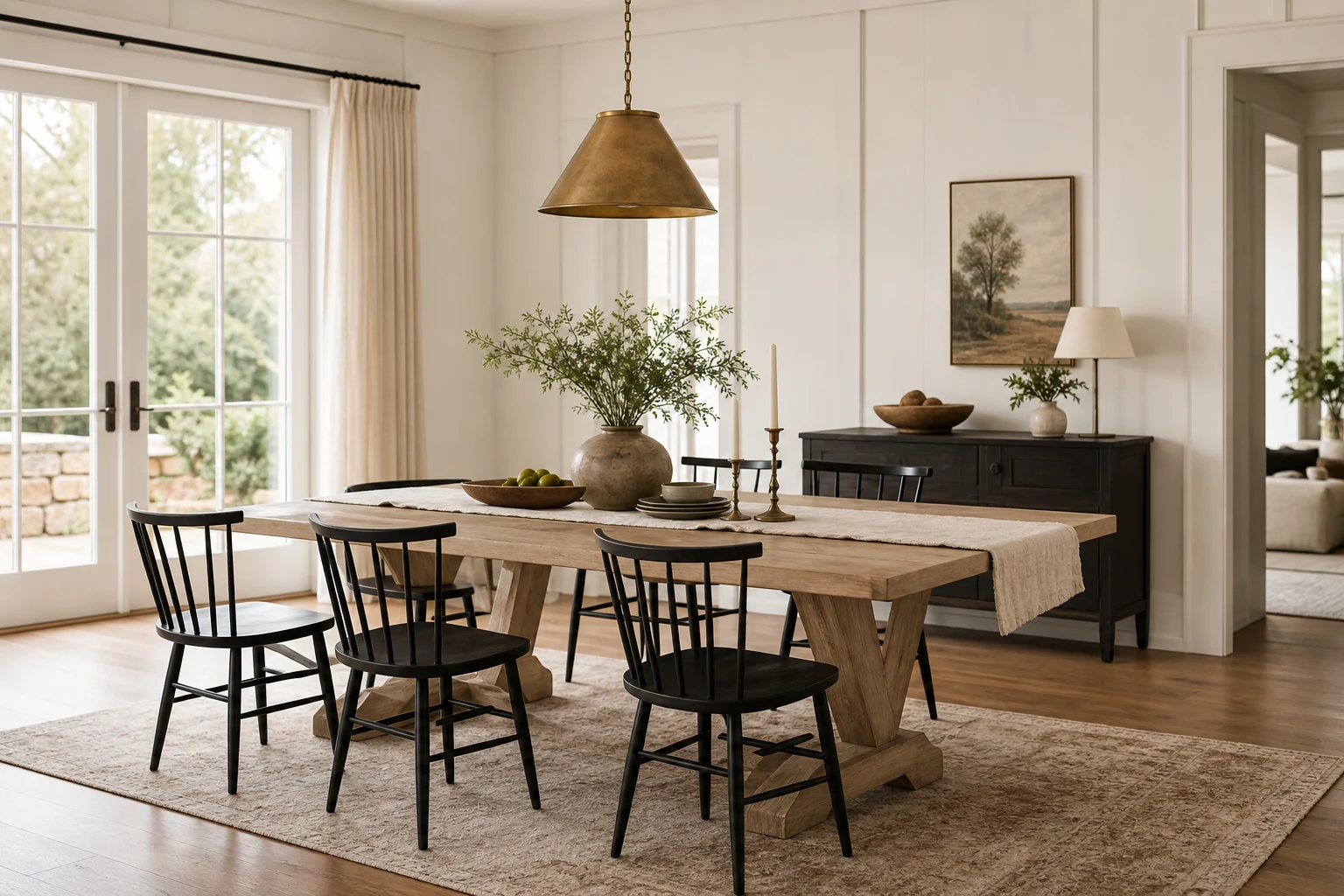 Pale oak, black spindle chairs and quiet linen create a modern farmhouse room without themed clutter.
Modern farmhouse dining rooms look most timeless when rustic references are edited rather than exaggerated. Combine a substantial wood table with clean walls, black spindle chairs, natural linen and one aged-metal light fixture.
Avoid filling every surface with signs, miniature objects or distressed accessories. Let craftsmanship and natural materials carry the style. One vintage vessel or antique stool can supply character without turning the room into a theme.
14. Use a Round Table in a Small Dining Area
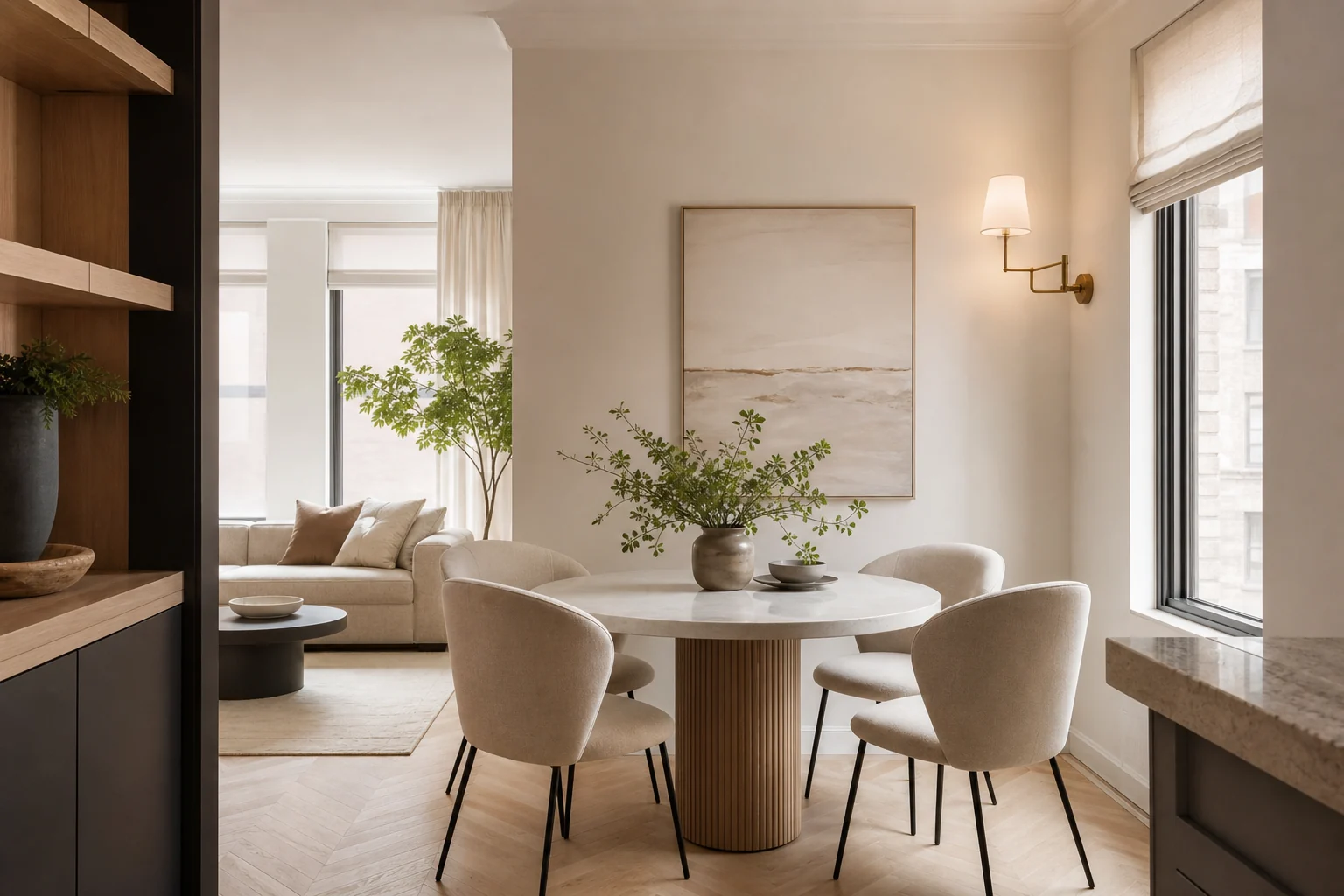 A round pedestal table improves circulation and accommodates chairs without awkward table legs.
Round tables are ideal for compact rooms and awkward corners because they eliminate sharp edges and make conversation feel natural. A pedestal base also provides more flexible legroom than four corner legs.
Choose chairs with visually light frames or curved backs that tuck close to the table. A wall sconce or compact pendant keeps the floor clear. If the dining space forms part of a living room, repeat a color or material from the adjacent area so the two zones feel connected. More ideas can be found in our small-space decor guides.
15. Add a Space-Saving Banquette
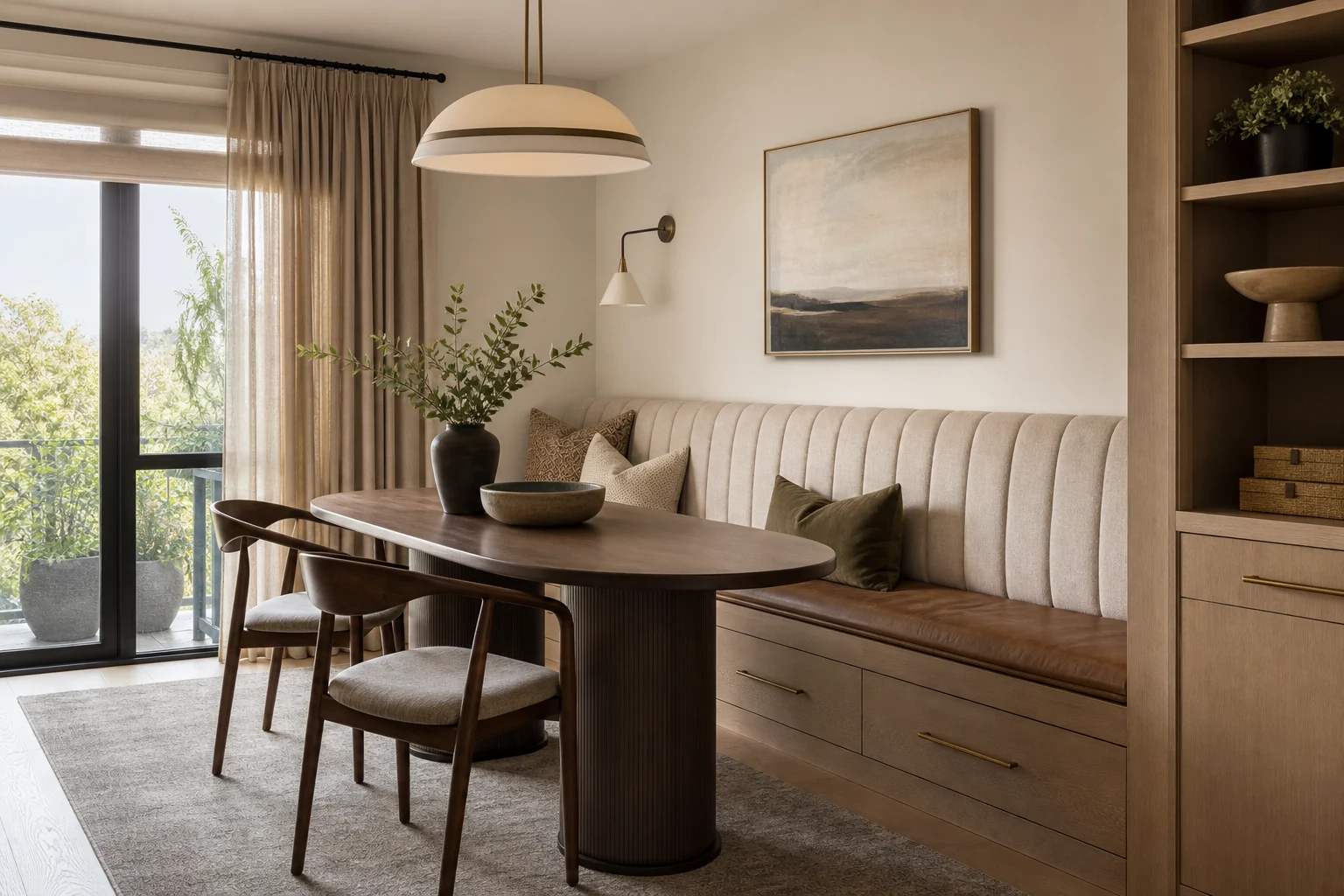 A wall-hugging banquette creates seating and storage while preserving a clear walkway.
A banquette can transform an underused wall into an efficient dining zone. Because the bench does not need clearance behind it, the table can sit closer to the wall while movable chairs remain on the open side.
Built-in drawers are useful for table linens and occasional serving pieces. Choose firm seat cushions that are comfortable at dining height, and use washable covers if children or frequent entertaining are part of daily life. A slim oval or rectangular table makes access easier than an oversized square design.
16. Bring In Greenery But Keep It Balanced
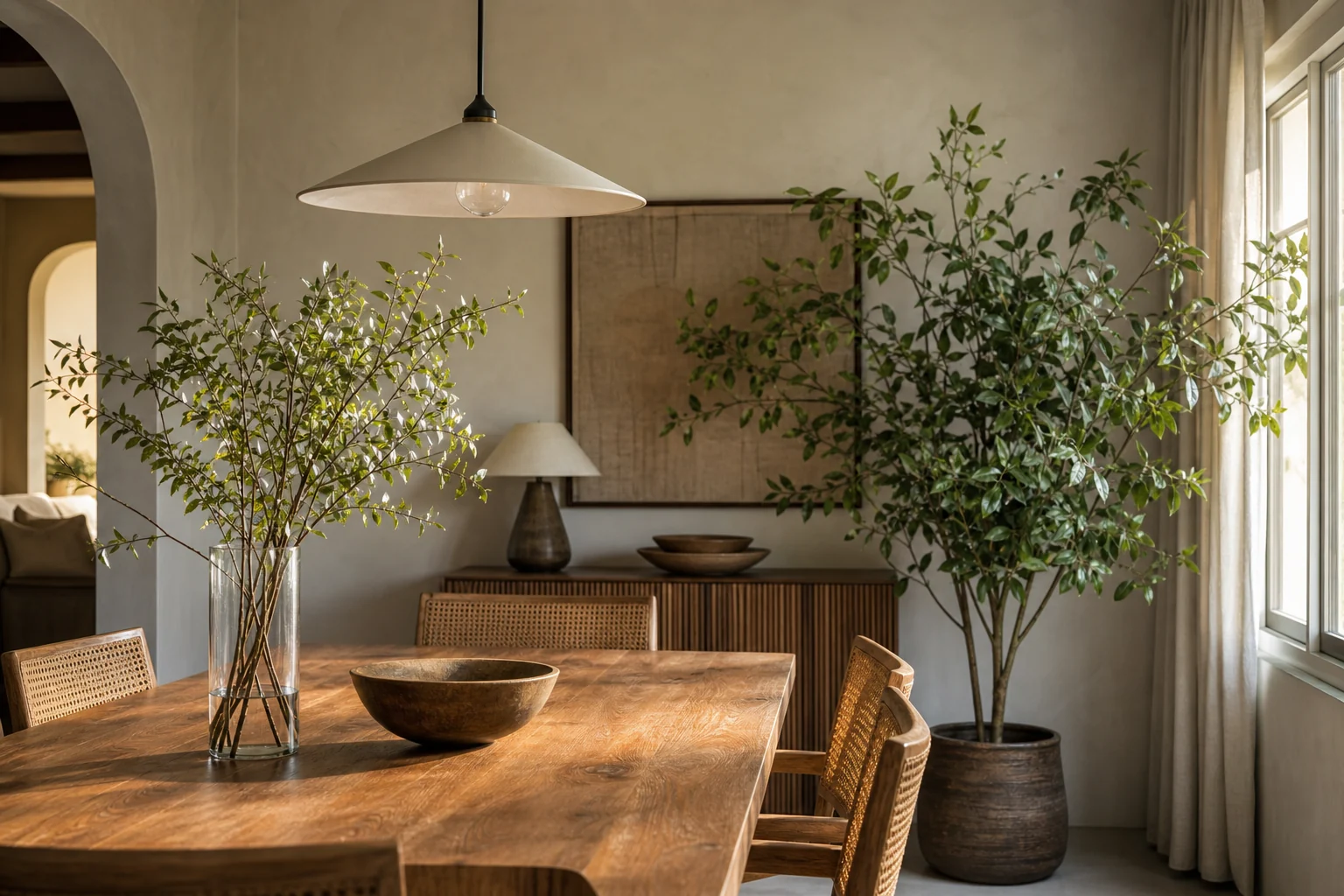 A floor plant and a few leafy branches introduce life without overwhelming the dining area.
Plants bring color, movement and organic shape to rooms filled with furniture. One floor plant near a window and a few branches on the table may be all the dining room needs.
Select plants according to the available light rather than appearance alone. Keep large leaves away from walkways and chair backs. If natural plants are impractical, use one high-quality faux branch arrangement instead of several small artificial plants—the larger gesture generally looks more convincing.
17. Introduce Metallic Accents With Restraint
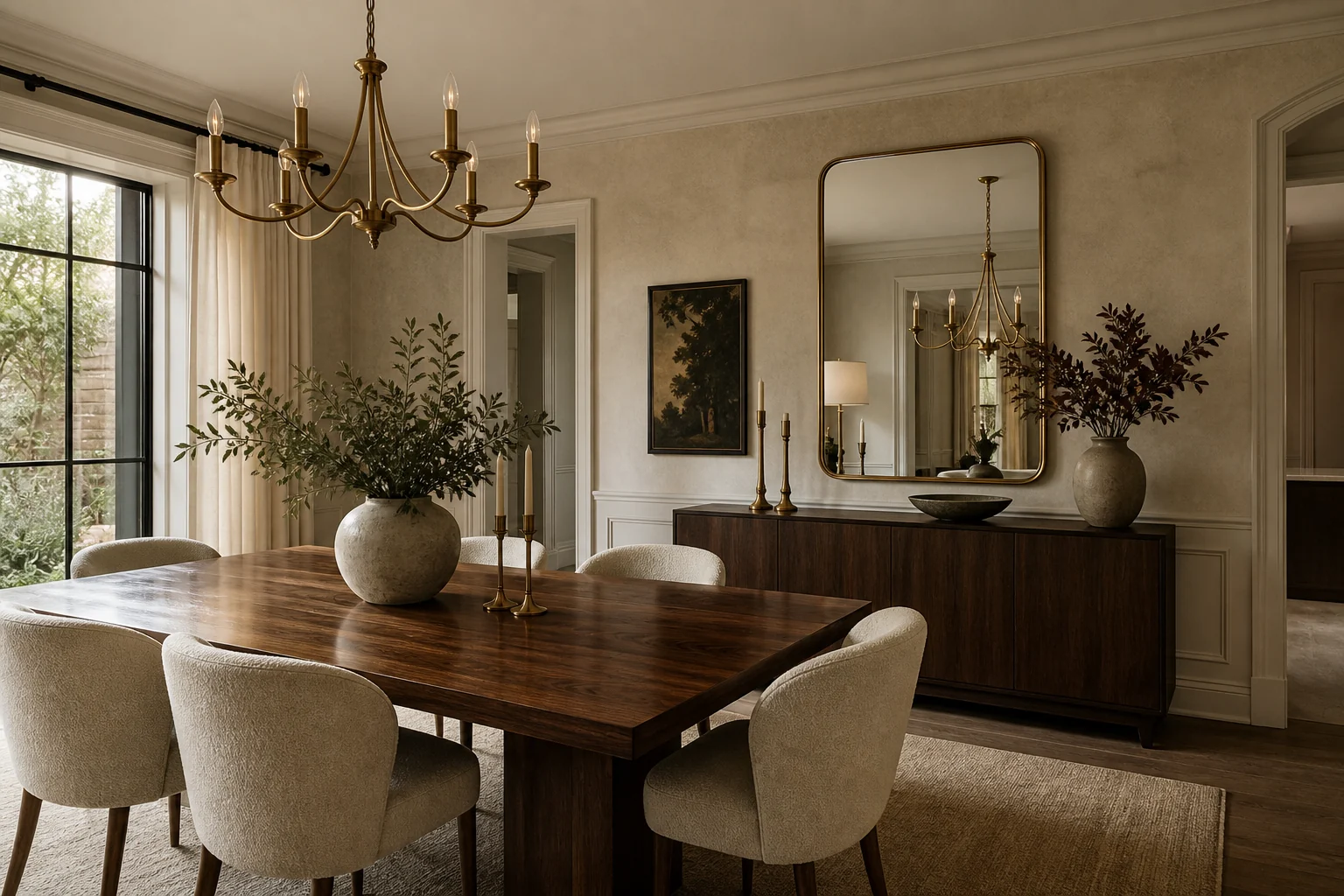 Repeating aged brass in a few locations creates cohesion without making the room flashy.
Small metallic details reflect light and give a neutral dining room definition. Aged brass, bronze and blackened metal tend to feel warmer and more forgiving than highly polished finishes.
Repeat the chosen metal two or three times—perhaps in the pendant, mirror frame and candleholders—then stop. Not every handle, chair leg and accessory needs to match. A limited repetition appears considered; too much identical metal can make the room resemble a showroom.
18. Layer Several Sources of Light
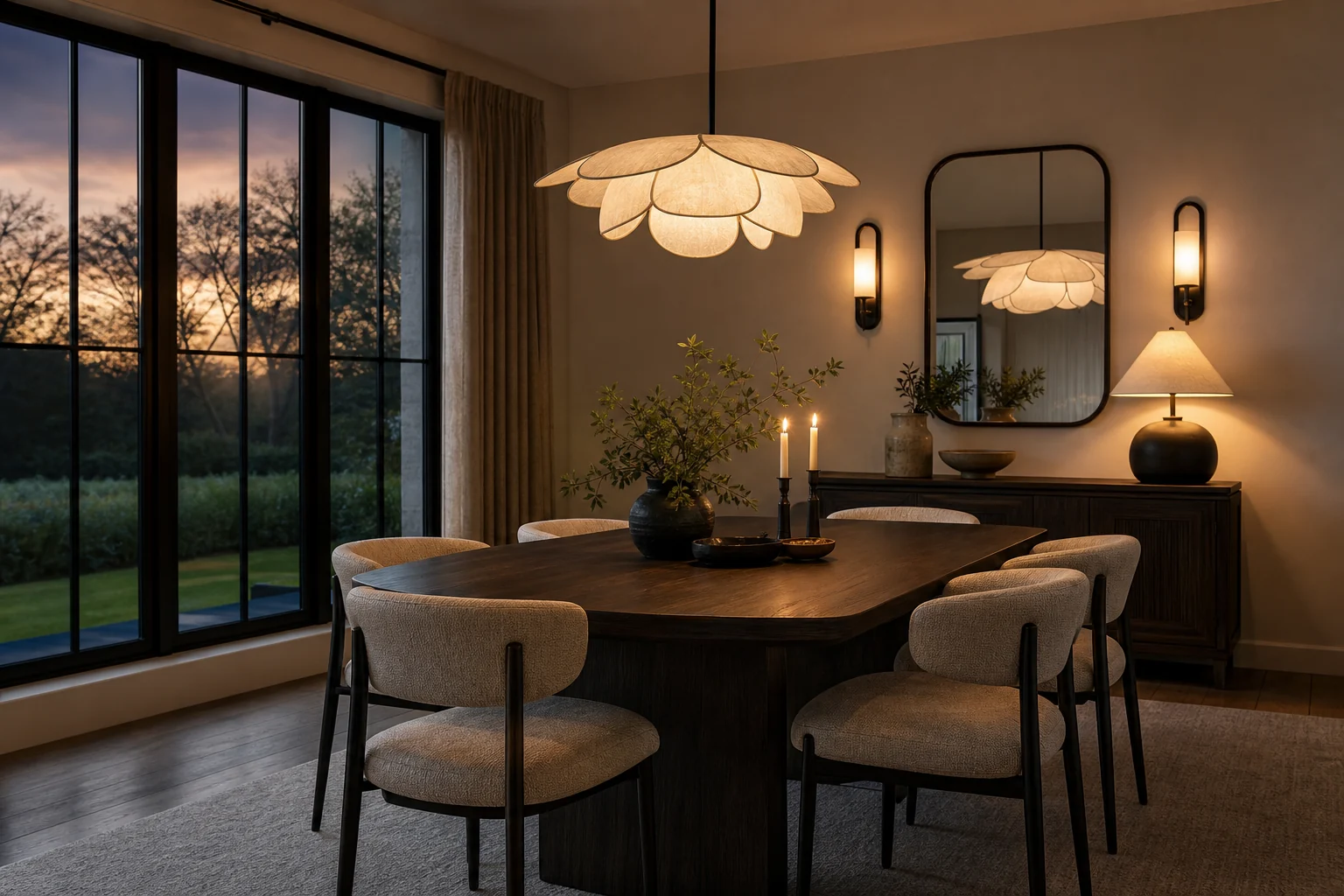 Pendant, wall and lamp light combine to create a comfortable evening atmosphere.
One overhead fixture rarely provides flattering light on its own. A layered plan combines the pendant with wall sconces, a shaded console lamp or discreet ambient lighting. Each source serves a purpose and contributes to the evening mood.
Use warm bulbs with a consistent color temperature so the room does not shift between blue and yellow light. Put the primary fixtures on dimmers where possible. This small electrical upgrade gives you bright functional light when needed and a softer setting for dinner.
19. Turn Storage Into a Design Feature
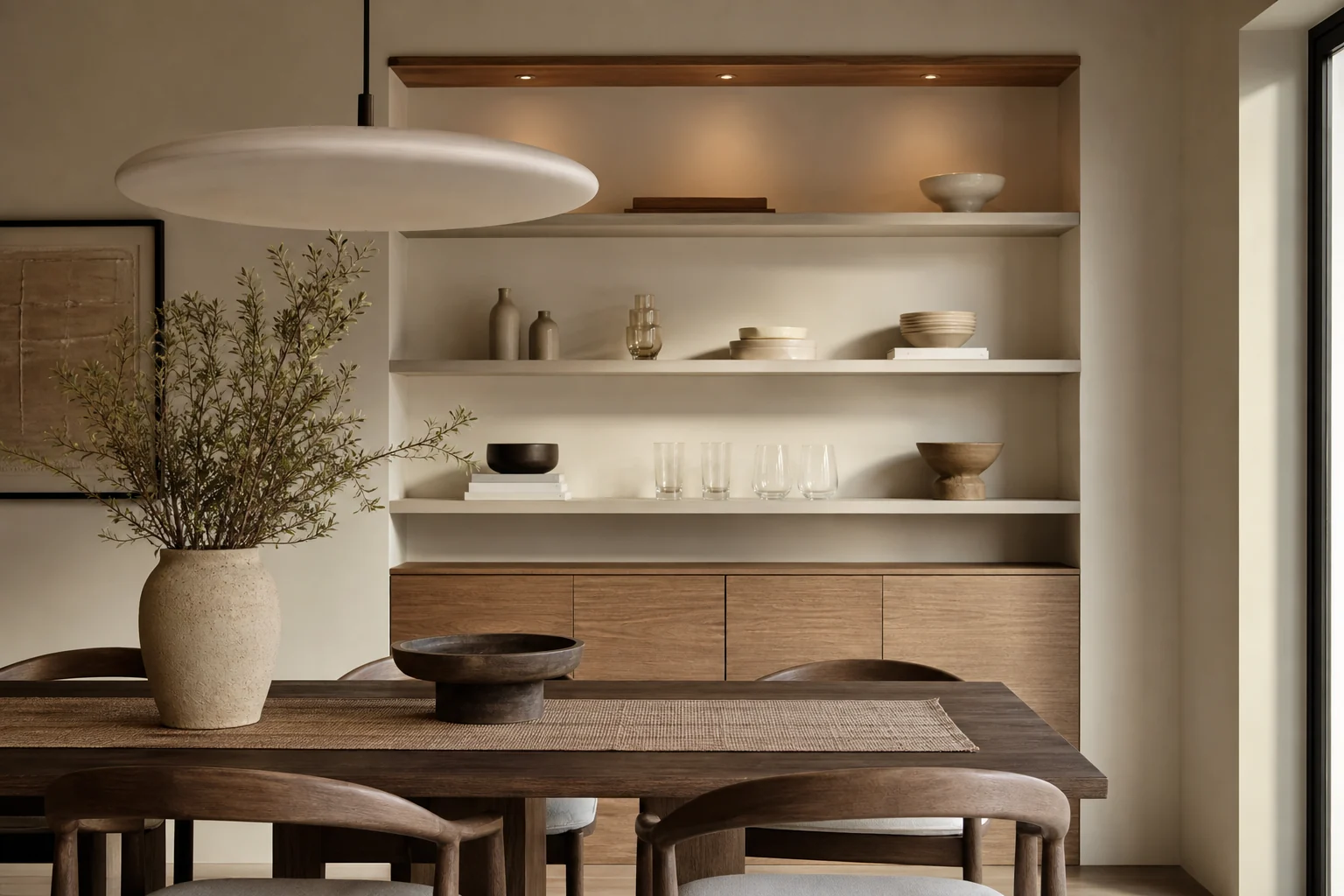 Closed storage handles clutter while a small open section displays the most attractive pieces.
Built-in cabinets, a vintage hutch or a freestanding display unit can add architecture as well as storage. The most practical arrangement combines closed doors for everyday clutter with a limited open area for glassware, ceramics or art.
Avoid lining every shelf with objects. Group pieces by material or color and leave some sections empty. If you are planning a custom unit, keep its depth appropriate to the room so it does not compete with chair clearance.
20. Refresh the Table With the Seasons
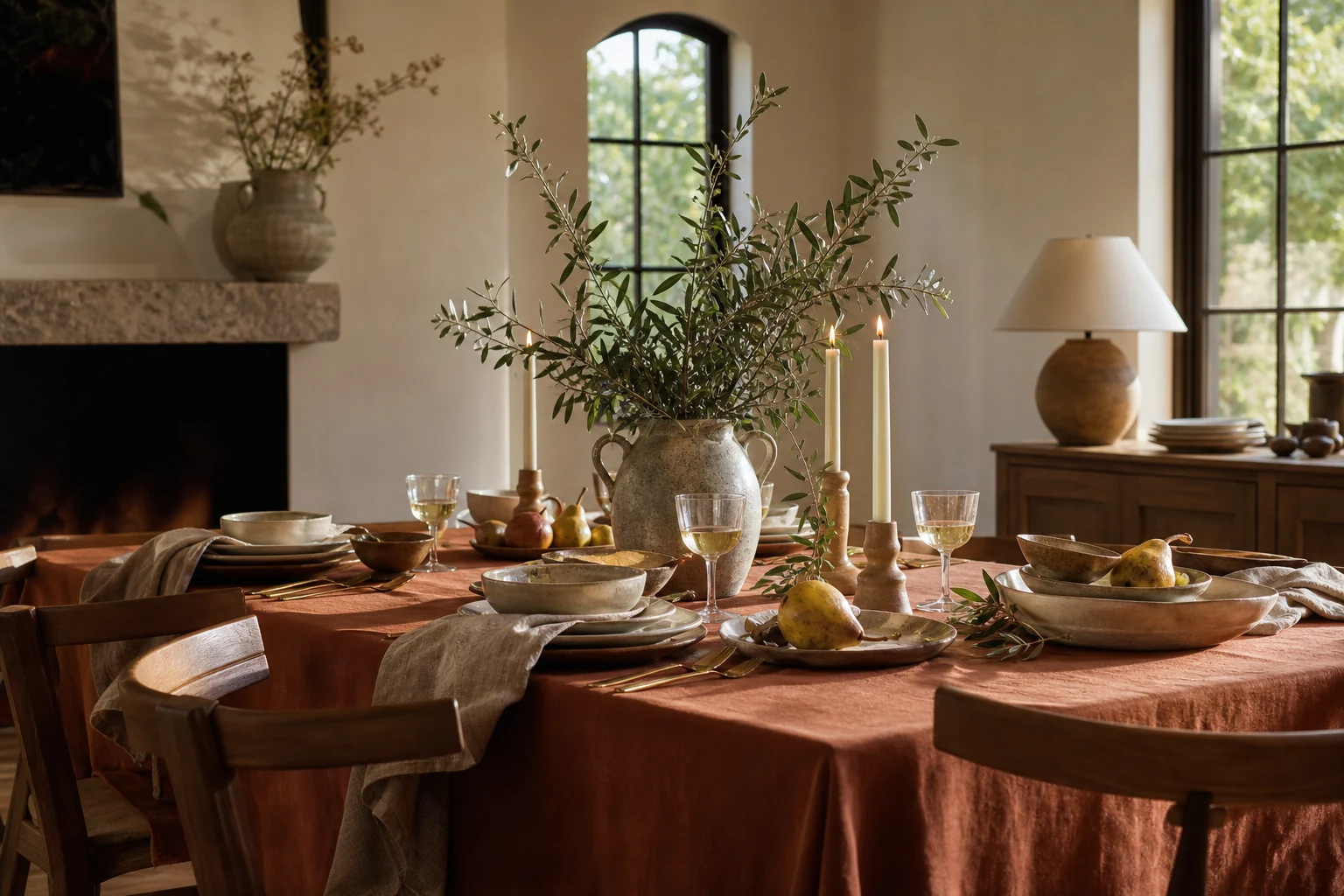 Seasonal color can come from produce, foliage and textiles instead of disposable themed decorations.
Seasonal dining room decor does not need to be literal. Introduce the season through natural materials and a restrained color shift: fresh branches in spring, fruit and woven textures in summer, rust-colored linen in fall, or evergreen cuttings and candlelight in winter.
Use items that can be eaten, composted or stored easily. This approach keeps the room current without creating boxes of single-use decorations. For emerging styles and seasonal inspiration, browse our home decor trends.
21. Protect the Room’s Empty Space
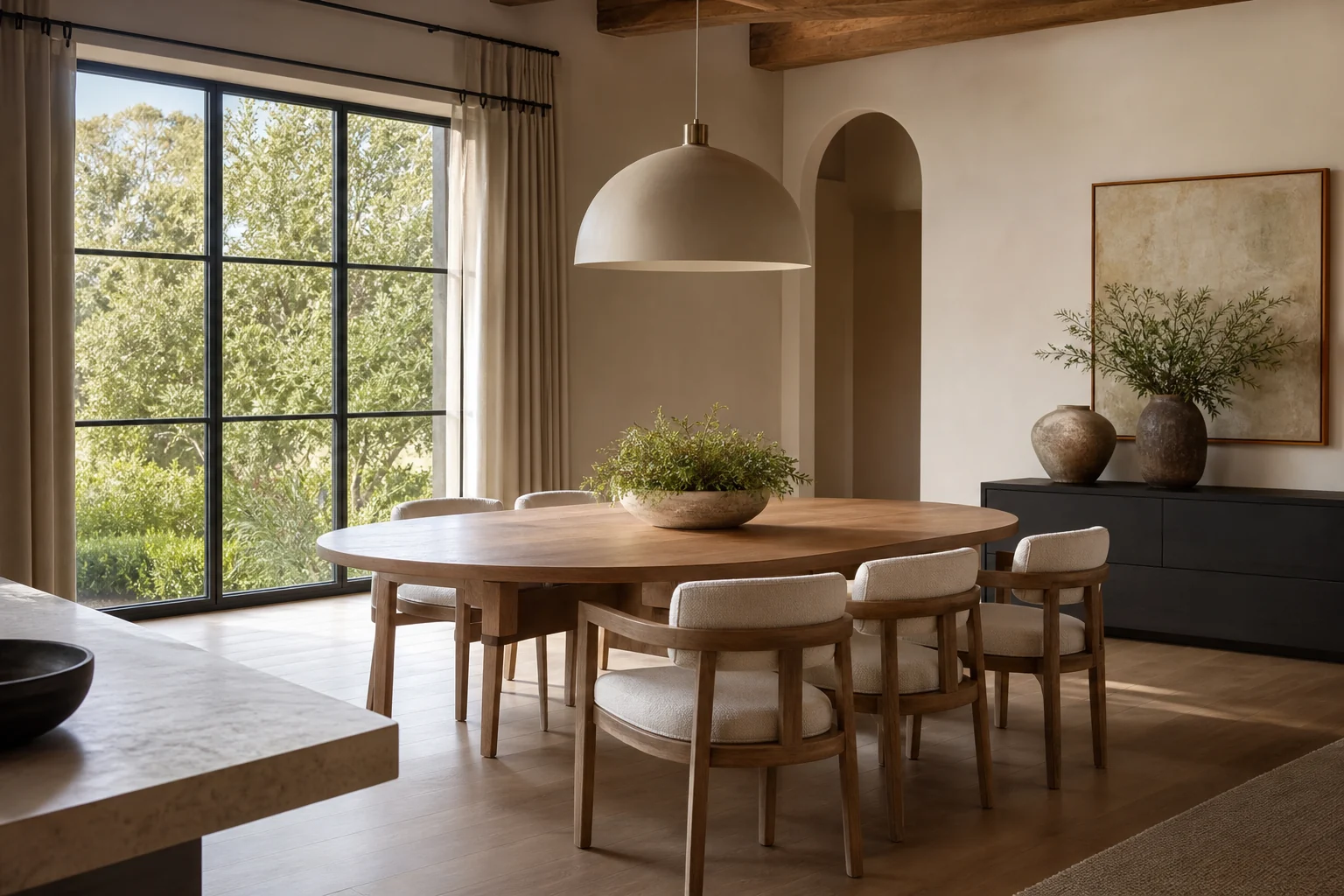 Comfortable circulation and visible negative space make even simple furniture feel more luxurious.
The final decorating idea is also the easiest to overlook: do not fill every wall and corner. Luxury is often communicated through proportion, clear walkways and confidence in a few well-chosen pieces.
Allow enough room for chairs to pull back without striking a wall or cabinet. Remove accessories that compete with the pendant, artwork or table. If the room still feels unfinished, improve one existing element—such as the lighting or curtains—before adding another small object.
Quick Dining Room Decorating Checklist
- Choose one clear focal point.
- Keep at least 24 inches of rug beyond the table where space permits.
- Confirm chair and walkway clearance before buying furniture.
- Use two or three complementary textures in a neutral room.
- Repeat one metal finish sparingly.
- Layer overhead, wall and lamp lighting.
- Keep the centerpiece low enough for conversation.
- Store practical dining items near the table.
- Leave some walls and surfaces intentionally quiet.
If your dining area connects directly to another room, coordinate it with our living room decor ideas and modern kitchen design inspiration for a more cohesive home.
Dining Room Decorating Ideas: Frequently Asked Questions
How can I make my dining room look expensive on a budget?
Prioritize scale and lighting. Hang one correctly sized pendant, use full-length curtains, choose substantial wall art and remove excess accessories. Refinishing an existing wood table and changing only the host chairs can also create a high-end result without replacing the entire set.
What is the best color for a dining room?
The best color depends on the natural light and mood you want. Warm neutrals are versatile, while muted olive, clay, navy, chocolate and burgundy can create a more intimate atmosphere. Test large samples in daylight and artificial light before committing.
How should I decorate a small dining room?
Use a round pedestal table, compact chairs and a large mirror to improve circulation and reflect light. Choose one strong focal point rather than many small accessories, and consider a wall-hugging banquette when floor space is limited.
What should I put on a dining room wall?
Large artwork, an arched mirror, subtle molding, a restrained gallery wall or a shallow display cabinet can all work. Select one treatment that suits the wall’s scale and avoid spreading unrelated small objects across every surface.
How big should a dining room rug be?
Ideally, the rug should extend approximately 24 to 30 inches beyond the table on every side so the chair legs remain on it when pulled out. Always measure the table and available room before ordering.
Final Thoughts
The strongest dining room decorating ideas are not about following every trend. They are about creating a room that supports real meals, conversation and everyday life. Begin with the layout, improve the lighting, introduce natural texture and then add only the decor that strengthens the room’s focal point.
Save your favorite ideas before beginning, measure twice and make one thoughtful change at a time. A dining room that feels collected gradually will usually look more personal—and more expensive—than one decorated all at once.
2 Comments